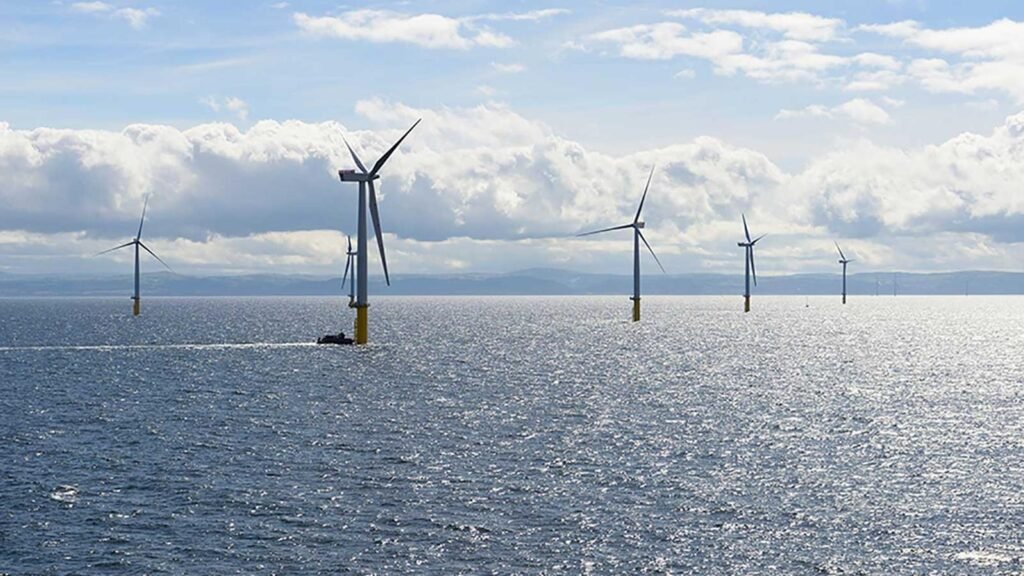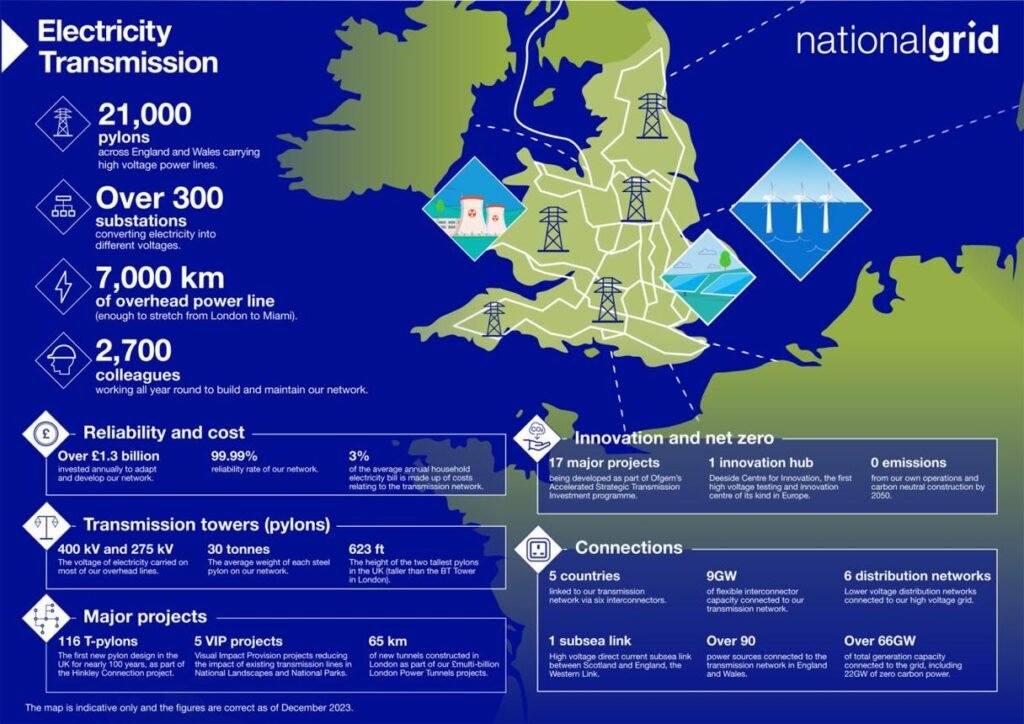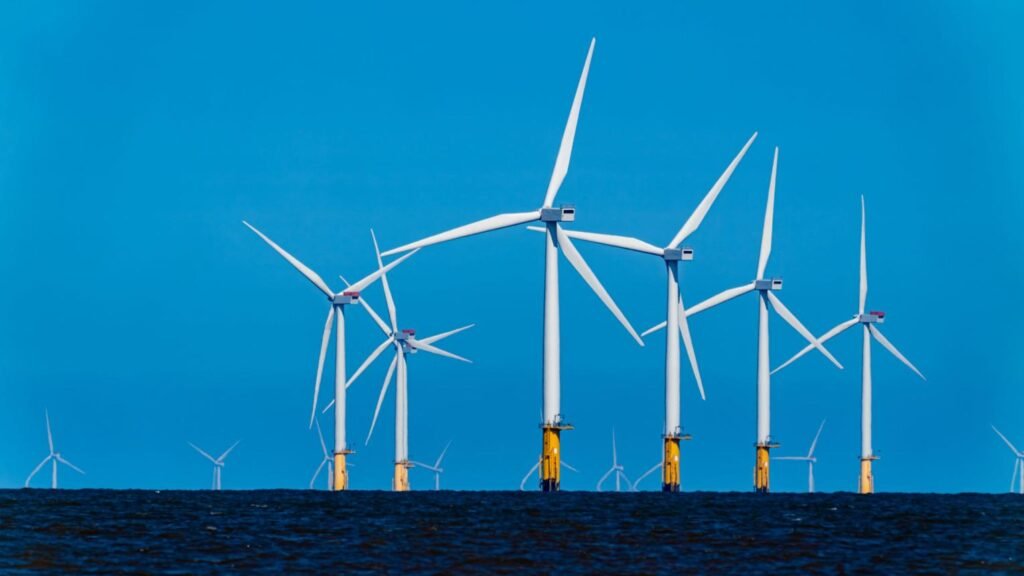
Offshore wind has become one of the most important sources of renewable electricity in the UK. Vast wind farms in the North Sea, Irish Sea and around the British coastline now generate enough electricity to power millions of homes.
However, offshore wind farms face major challenges. Wind speeds constantly change, turbines operate in harsh marine conditions, maintenance costs are extremely high and operators must maximise every megawatt generated to achieve profitability.
Artificial intelligence is increasingly being used to solve these challenges. Rather than simply generating electricity, modern offshore wind farms are becoming intelligent energy systems that continuously analyse data, predict problems and optimise performance.
The result is higher energy production, lower operating costs and improved reliability.
The same AI technologies discussed in How Is AI Helping Solar Energy Generation? are now transforming offshore wind operations across Europe and beyond.
Why Offshore Wind Needs AI
Offshore wind turbines generate enormous amounts of operational data.
A single modern turbine can contain hundreds of sensors monitoring:
- Wind speed
- Wind direction
- Blade performance
- Gearbox condition
- Generator temperatures
- Electrical output
- Vibration levels
- Structural stress
Large offshore wind farms may contain hundreds of turbines producing billions of data points every year.
Without AI, much of this information would be impossible to analyse effectively in real time.
AI systems can process this data continuously and identify patterns that human operators would never detect.

AI Improves Wind Forecasting Accuracy
One of the biggest challenges in offshore wind generation is predicting future wind conditions.
Traditional forecasting relies on weather models that provide useful guidance but can still produce significant inaccuracies.
AI systems combine:
- Historical weather data
- Satellite observations
- Ocean measurements
- Turbine sensor information
- Real-time meteorological forecasts
This allows operators to predict wind conditions more accurately.
Better Energy Forecasting
Improved forecasting helps operators:
- Predict electricity generation
- Plan maintenance windows
- Sell electricity more effectively
- Reduce balancing costs
- Improve grid stability
This links closely with the principles discussed in Could AI Predict Renewable Energy Output?
Even small improvements in forecasting accuracy can save millions of pounds annually across large offshore wind portfolios.
AI Optimises Turbine Performance
Wind turbines are not static machines.
Modern turbines continuously adjust:
- Blade pitch
- Rotor speed
- Yaw direction
- Power output
AI can analyse operating conditions and determine the most efficient settings.
Individual Turbine Optimisation
Every turbine experiences slightly different wind conditions.
AI allows operators to optimise each turbine individually rather than applying a single operating strategy across an entire wind farm.
This can increase overall energy production without constructing any additional infrastructure.
Wake Effect Management
One major offshore wind challenge is the wake effect.
When wind passes through a turbine, turbulence is created behind it. This can reduce performance of downstream turbines.
AI systems can adjust turbine settings to minimise wake losses across an entire wind farm.
Researchers have demonstrated energy gains through AI-driven wake management that would otherwise be lost.

AI Predicts Equipment Failures
Maintenance is one of the largest expenses facing offshore wind operators.
Sending engineers offshore often requires:
- Specialist vessels
- Helicopters
- Weather windows
- Safety teams
- Expensive equipment
Unexpected failures can cost hundreds of thousands of pounds.
Predictive Maintenance
AI analyses turbine data continuously to identify signs of developing faults.
This includes:
- Abnormal vibration patterns
- Temperature changes
- Electrical anomalies
- Lubrication issues
- Mechanical wear
Instead of waiting for equipment to fail, operators can intervene before breakdowns occur.
Reducing Downtime
Every hour a turbine remains offline represents lost electricity generation.
Predictive maintenance allows repairs to be scheduled efficiently, reducing downtime and improving annual energy production.
Many operators report significant reductions in maintenance costs through AI-based monitoring systems.
AI Supports Offshore Wind Maintenance Planning
Weather conditions determine when maintenance crews can safely access offshore turbines.
Poor planning can result in costly delays.
AI helps by predicting:
- Wave conditions
- Wind conditions
- Vessel availability
- Maintenance requirements
- Technician scheduling
This enables operators to deploy resources more effectively.
The result is faster repairs and lower operational costs.
AI Helps Integrate Offshore Wind Into The Grid
Generating electricity is only part of the challenge.
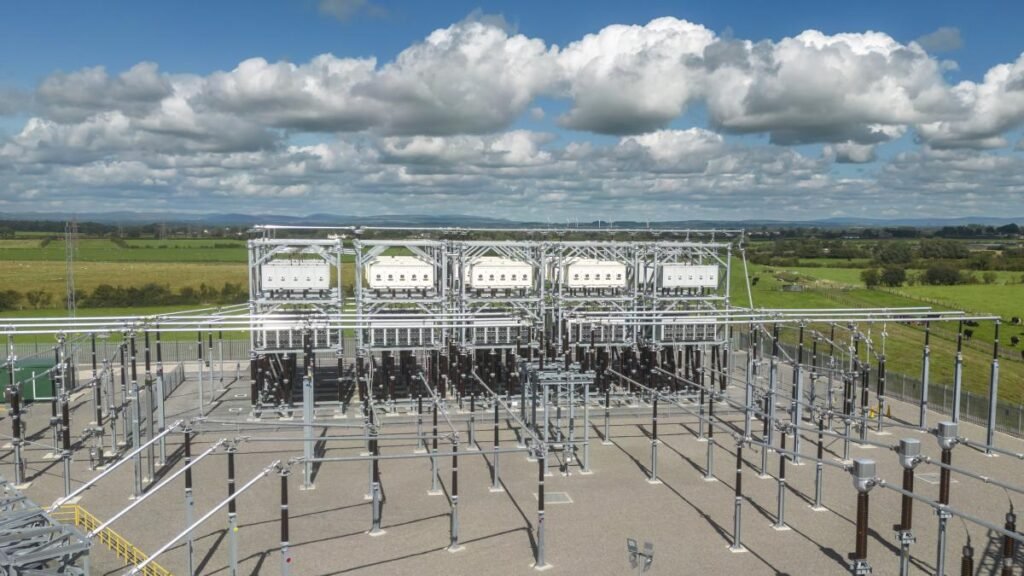
That electricity must also be delivered reliably through the national grid.
Large-scale offshore wind generation can create fluctuations in supply.
AI systems help electricity networks:
- Forecast renewable generation
- Balance demand and supply
- Manage battery storage
- Reduce curtailment
- Improve grid stability
These developments are closely connected with Can AI Accelerate Smart Grid Deployment? and What Is a Smart Grid and Why Does AI Need One?
Without intelligent grid management, much of the renewable electricity generated offshore could be wasted.
AI Can Reduce Renewable Energy Waste
Wind farms are sometimes instructed to reduce output because the grid cannot absorb all available electricity.
This process is known as curtailment.
Curtailment costs the UK energy system millions of pounds annually.
AI can reduce these losses by:
- Improving demand forecasting
- Managing battery storage
- Optimising transmission networks
- Coordinating renewable generation
The wider implications are explored in Could AI Reduce Renewable Energy Waste?
As renewable generation increases, reducing wasted electricity becomes increasingly important.

Digital Twins Are Transforming Offshore Wind
One of the most advanced AI applications is the use of digital twins.
A digital twin is a virtual model of a physical turbine or entire wind farm.
The model continuously updates using real-world operational data.
Benefits Of Digital Twins
Digital twins allow operators to:
- Simulate future performance
- Test operating strategies
- Predict equipment failures
- Optimise maintenance schedules
- Improve energy production
Rather than experimenting on real turbines, operators can test scenarios virtually first.
This reduces risk and improves decision-making.
Real-World Examples
Several major offshore wind operators are already deploying AI technologies.
United Kingdom
The UK operates some of the world’s largest offshore wind farms.
Developers are increasingly using AI for:
- Predictive maintenance
- Asset management
- Performance optimisation
- Grid forecasting
Denmark
Denmark has long been a leader in wind energy innovation.
AI-supported forecasting and optimisation systems help maximise renewable generation across both offshore and onshore wind assets.
United States
New offshore wind projects along the Atlantic coast are incorporating advanced analytics and AI monitoring systems from the outset.
This allows operators to build intelligence into infrastructure from day one.
Challenges Still Remain
AI is not a miracle solution.
Several challenges remain:
- Data quality issues
- Cybersecurity risks
- Integration complexity
- High implementation costs
- Skills shortages
Operators must also ensure that AI recommendations remain transparent and understandable.
Poor decisions made by automated systems could have significant operational consequences.
The Future Of AI And Offshore Wind
The future offshore wind farm is likely to be highly autonomous.
AI systems may eventually:
- Control turbine optimisation automatically
- Schedule maintenance independently
- Manage offshore battery storage
- Coordinate multiple wind farms
- Balance renewable generation across national grids
As offshore wind capacity continues to expand, intelligent management will become increasingly important.
The combination of AI, advanced forecasting, predictive maintenance and smart grid technology could significantly increase renewable electricity generation without requiring additional turbines.
For countries such as the UK, where offshore wind forms a central part of future energy strategy, AI may become just as important as the turbines themselves.
References
- UK Department for Energy Security and Net Zero
- National Grid ESO
- Offshore Renewable Energy Catapult
- International Energy Agency (IEA)
- International Renewable Energy Agency (IRENA)
- RenewableUK
- Crown Estate Offshore Wind Reports
- European Wind Energy Association
- National Renewable Energy Laboratory (NREL)
- WindEurope
In short, AI cannot make the wind blow harder. If it could, every energy minister in Europe would already be feeding prompts into a laptop on a windy beach. What it can do is squeeze more electricity, reliability and value from every gust that already exists, which is considerably more useful than most corporate buzzwords manage.