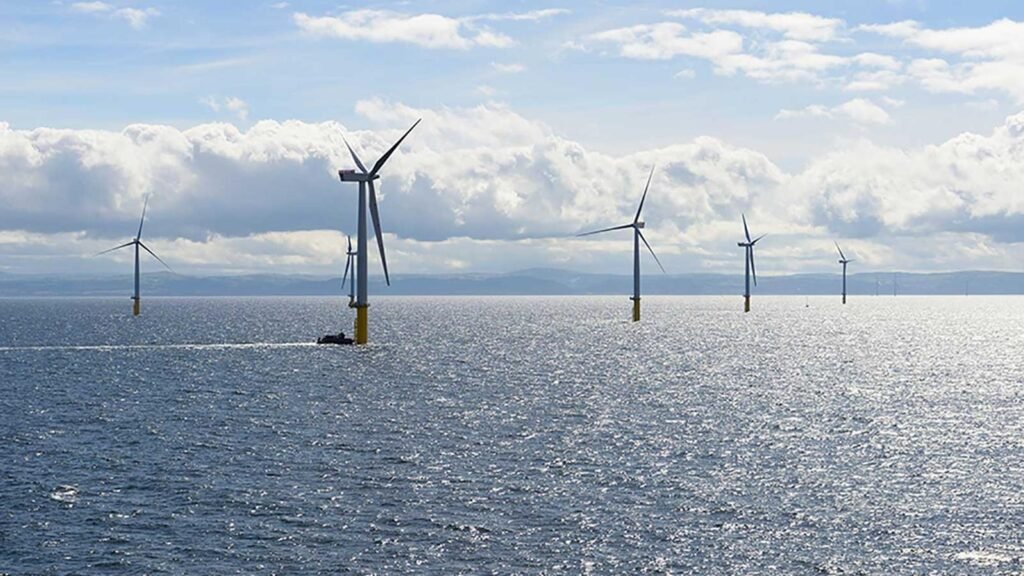
Renewable energy has one major challenge that fossil fuel power stations largely avoid: variability.
The wind does not blow at a constant speed. Clouds move across solar farms. Weather systems can change unexpectedly. Electricity grids require a near-perfect balance between supply and demand, meaning energy operators need accurate forecasts to avoid shortages, wasted generation and expensive backup power.
Artificial intelligence is increasingly becoming one of the most important tools in solving this challenge. Across the UK and globally, AI is being used to predict renewable energy output hours, days and even weeks in advance with growing accuracy.
The result is a cleaner, more efficient electricity system that can rely on larger amounts of renewable energy.
Why Renewable Energy Forecasting Matters
Renewable generation depends heavily on environmental conditions.
Wind farms require suitable wind speeds.
Solar farms depend on sunlight levels.
Hydroelectric facilities rely on rainfall and water availability.
Even small forecasting errors can have significant consequences.
If National Grid expects 15 GW of wind generation but only receives 12 GW, replacement electricity must be sourced rapidly from gas generation, energy storage or imports.
If renewable output is underestimated, valuable clean electricity may be wasted.
Accurate forecasting reduces both risks.
How AI Predicts Renewable Energy Output
Analysing Massive Weather Datasets
Traditional forecasting models rely on meteorological predictions.
AI enhances these forecasts by processing enormous quantities of historical and real-time data.
This can include:
- Satellite imagery
- Radar data
- Wind speed measurements
- Cloud cover observations
- Temperature readings
- Atmospheric pressure systems
- Historical generation data
- Grid demand patterns
Machine learning systems identify relationships that human analysts or conventional software may miss.
As more data becomes available, AI models continuously improve.
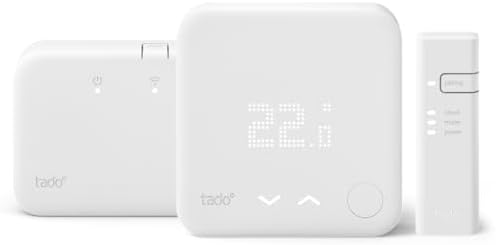
- Full control over your heating with the tado° app from anywhere, reduce your energy consumption and save money with the …
- Heating Boost: heat up all rooms for 30 minutes with one click in the app
- Smart Schedules for the perfect temperature individually in each room, at any time; only active when someone’s home; can…
Learning Local Weather Behaviour
Every renewable energy site behaves differently.
A coastal wind farm in Scotland experiences different weather patterns from an inland solar farm in southern England.
AI can learn site-specific characteristics.
For example:
- Local terrain effects
- Coastal wind acceleration
- Seasonal cloud patterns
- Temperature-related efficiency changes
This enables more accurate predictions than broad regional forecasting models.
AI and Solar Power Forecasting
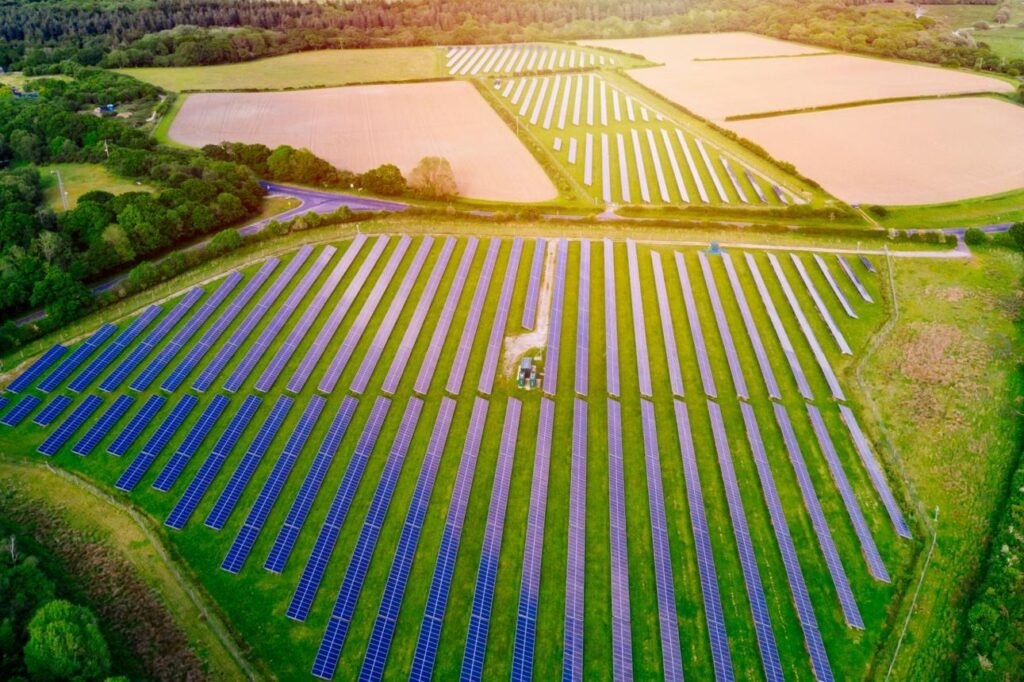
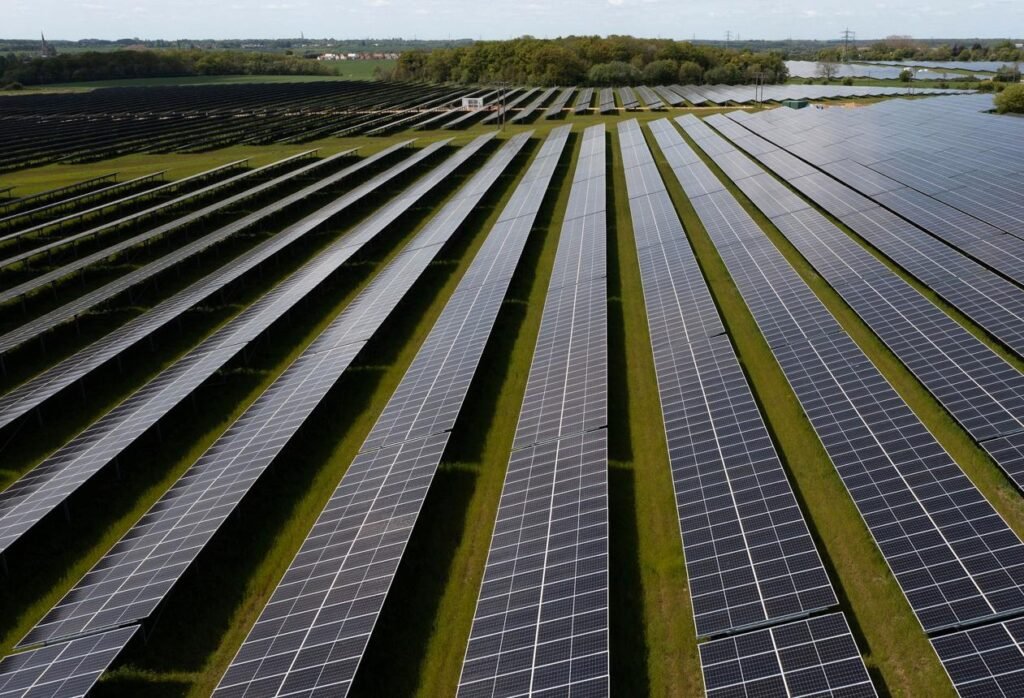
Solar generation forecasting has become one of AI’s most successful renewable applications.
Cloud movement is often the biggest challenge.
A large cloud bank moving across a solar farm can significantly reduce electricity production within minutes.
AI systems analyse:
- Satellite imagery
- Cloud movement
- Historical weather data
- Real-time generation performance
These systems can predict solar output with increasing accuracy throughout the day.
This is one reason utilities are investing heavily in technologies discussed in How Is AI Helping Solar Energy Generation?

Major operators use these forecasts to schedule battery storage and balance electricity supply.
AI and Wind Power Forecasting
Wind forecasting is even more complex.
Wind speeds vary significantly with:
- Altitude
- Terrain
- Temperature
- Atmospheric pressure
- Weather fronts
Modern AI systems combine weather prediction models with operational turbine data.
They can forecast:
- Hourly generation
- Daily generation
- Weekly trends
- Extreme weather impacts
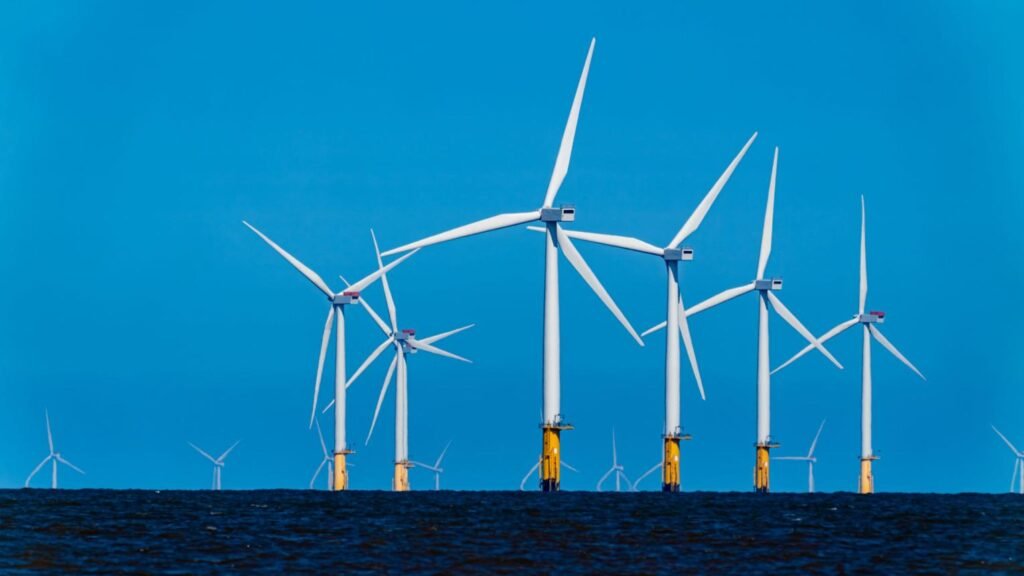
Offshore wind operators increasingly rely on AI because forecasting errors can become extremely expensive when dealing with gigawatts of generation capacity.
The UK’s rapidly expanding offshore wind sector is particularly dependent on accurate prediction technologies.
Can AI Predict Renewable Output Days Ahead?
In many cases, yes.
Short-term forecasting is generally the most accurate.
Typical forecasting windows include:
| Forecast Window | Typical Accuracy |
|---|---|
| 15 minutes | Very high |
| 1-6 hours | High |
| 24 hours | High |
| 3-7 days | Moderate |
| Weeks ahead | Lower but improving |
Forecast accuracy declines as weather uncertainty increases.
However, AI generally improves forecast quality compared with traditional approaches.
This allows energy companies to make better operational decisions.
Reducing Renewable Energy Waste
One of the biggest benefits of AI forecasting is reducing renewable curtailment.
Curtailment occurs when renewable generators are paid to reduce output because the grid cannot absorb all available electricity.
This has become a growing issue in parts of the UK.
By forecasting renewable generation more accurately, operators can:
- Prepare battery storage
- Schedule flexible demand
- Manage interconnectors
- Improve grid balancing
This directly supports many of the benefits discussed in Could AI Reduce Renewable Energy Waste?
Helping Smart Grids Operate Efficiently
Future electricity systems will contain:
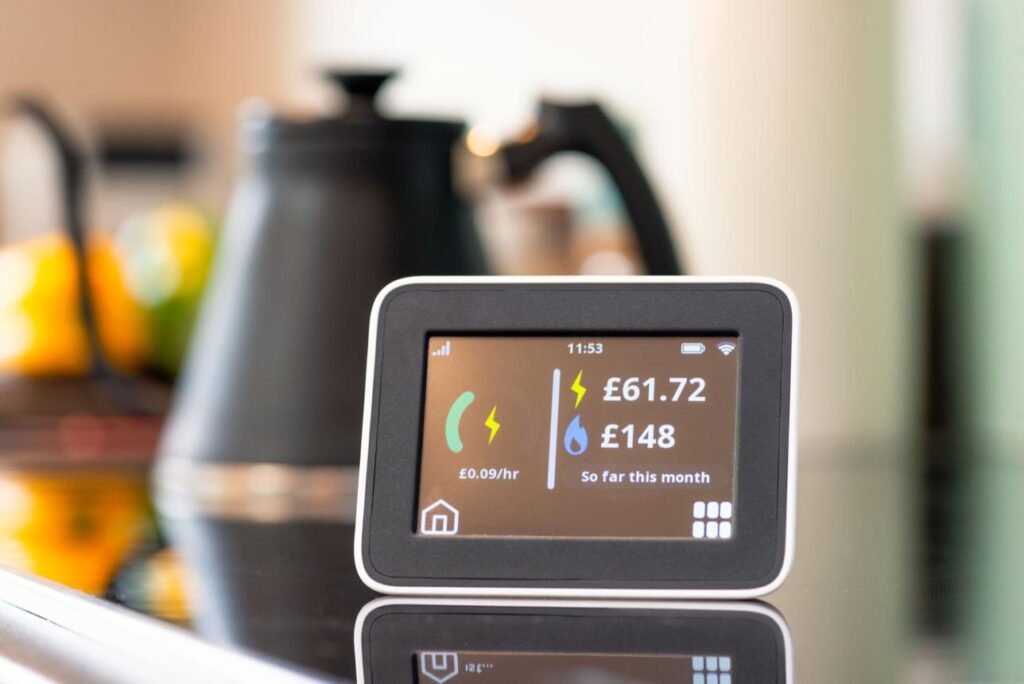
- Millions of smart meters
- Electric vehicles
- Heat pumps
- Battery systems
- Distributed renewable generators
Managing this complexity manually becomes increasingly difficult.
AI forecasting allows smart grids to react proactively rather than reactively.
The technologies explored in Could AI Accelerate Smart Grid Deployment? and What Is a Smart Grid and Why Does AI Need One? depend heavily on accurate renewable forecasting.

The more accurately generation can be predicted, the more efficiently electricity can be distributed.
Real-World Examples
Google and DeepMind
Google’s DeepMind has demonstrated machine learning systems that improve wind power forecasting.
The company reported significantly improved prediction accuracy for wind generation, enabling more valuable electricity scheduling.
National Grid ESO
The UK’s electricity system operator increasingly uses advanced forecasting technologies to manage renewable generation and grid stability.
As renewable penetration increases, forecasting becomes more important.
European Grid Operators
Across Europe, transmission operators use AI-enhanced forecasting to improve balancing markets and reduce reliance on fossil fuel backup generation.
- Learning function
Could AI Ever Predict Renewable Output Perfectly?
No.
Weather systems remain inherently uncertain.
Unexpected storms, cloud formation, atmospheric disturbances and changing local conditions will always introduce some forecasting error.
However, perfect accuracy is not required.
Even modest improvements in forecasting can save millions of pounds, reduce carbon emissions and improve grid stability.
The goal is not perfection.
The goal is making better decisions earlier.
The Future of AI Renewable Forecasting
Over the next decade, AI forecasting is expected to become increasingly sophisticated.
Future systems may combine:
- Real-time satellite feeds
- Advanced weather models
- Digital twins of power grids
- Smart meter data
- Battery storage information
- Electric vehicle charging patterns
Forecasts could become highly localised and continuously updated.
As renewable energy expands across Britain, forecasting technology may become just as important as the wind turbines and solar panels themselves.
Final Thoughts
AI is already proving highly effective at predicting renewable energy output.
By analysing vast amounts of weather, generation and grid data, AI can forecast solar and wind production with greater accuracy than traditional methods alone.
This helps reduce waste, improve grid stability, lower operating costs and support larger amounts of renewable generation.
As Britain moves towards a more electrified and renewable future, AI forecasting is likely to become one of the hidden technologies making the entire system work more efficiently. In many ways, the future power grid may depend as much on algorithms as it does on turbines and solar panels.
And unlike arguing with the weather, the algorithms occasionally listen.