What Is an AI Data Centre?
Artificial intelligence is now quietly pushing up electricity demand across the world, including in the UK. Not because robots are stomping around Birmingham demanding extension leads, but because AI relies on enormous data centres packed with high-performance computer servers running day and night.
Most people imagine AI as a harmless chatbot or image generator sitting inside a laptop screen. In reality, every AI request travels through huge energy-hungry facilities filled with processors, cooling systems, networking equipment and backup power systems. The physical infrastructure behind AI is enormous, expensive and increasingly difficult for national energy systems to ignore.
As AI adoption grows across businesses, government departments, finance, healthcare, logistics and media, Britain faces an awkward balancing act between technological growth and electricity demand.
An AI data centre is a specialised facility containing thousands of powerful computing systems designed to train and run artificial intelligence models.
Unlike traditional office servers, AI infrastructure uses advanced processors such as GPUs and AI accelerators. These systems consume significantly more electricity because they process huge amounts of data simultaneously.
Typical AI data centre components include:
- GPU server clusters
- High-speed networking equipment
- Industrial cooling systems
- Backup battery systems
- Diesel generators
- Water cooling infrastructure
- Continuous power management systems
AI training workloads can run for weeks or months without interruption.
That means electricity usage remains extremely high 24 hours a day.
Why AI Uses So Much Electricity
Traditional internet services already consume large amounts of energy. AI pushes this much further.
A normal Google search requires relatively modest computing power. Generative AI systems process language models containing billions or even trillions of parameters. Every question, image request or AI task activates large server clusters.
Training AI models is even more energy intensive.
For example:
- Large language models can require thousands of GPUs
- AI image generation requires heavy parallel computing
- Video AI processing massively increases power loads
- Real-time AI assistants operate continuously
The more advanced the AI model becomes, the larger the energy requirement.
Industry estimates suggest advanced AI workloads can use several times more electricity than conventional cloud computing tasks.

- Special Edition Finish: The perfect companion to your Aurora Collection Logitech G headset, mouse and keyboard, Yeti mic…
- Exclusive Streamlabs Aurora Collection Themes: Download exclusive themes that match the look of your Yeti broadcast micr…
- Blue VO!CE Effects: Yeti USB condenser microphone improves your sound and stream with fun vocal effects, HD samples, and…
The UK’s Growing Data Centre Electricity Demand
The UK already has one of Europe’s largest data centre markets.
London is a major global hub because of:
- Financial services
- Cloud infrastructure
- International connectivity
- Proximity to European markets
- Strong telecoms infrastructure
However, AI growth is changing electricity demand patterns rapidly.
According to the International Energy Agency and UK industry estimates, global data centre electricity consumption could more than double over the next several years due largely to AI expansion.
The UK faces several specific pressures:
- Limited grid capacity in parts of England
- Rising commercial electricity prices
- Delays in grid connection approvals
- Growing competition for renewable power
- Increasing cooling requirements
Some proposed UK data centre projects reportedly face waiting times of years for sufficient grid access.
People spent decades electrifying everything, then collectively decided machines should also write emails, generate pictures of cats in medieval armour and summarise meetings nobody wanted to attend in the first place. The National Grid must be thrilled.
Download the AI Data Centres & the UK Electricity Grid Report for a structured briefing on how artificial intelligence infrastructure is reshaping Britain’s power network.
Where UK AI Data Centres Are Concentrated
Most UK data centres are heavily concentrated around:
- London
- Slough
- Manchester
- Birmingham
- Leeds
- Cardiff
- Edinburgh
The London and Slough corridor remains especially significant because of financial and cloud infrastructure demand.
Slough alone has become one of Europe’s biggest data centre clusters.
This creates regional electricity strain because multiple high-consumption facilities operate in close proximity.

How Much Electricity Does an AI Data Centre Use?
Electricity usage varies enormously depending on size and workload.
A small enterprise data centre may consume electricity equivalent to a few hundred homes.
Large AI facilities can consume power comparable to small towns.
Some hyperscale facilities globally operate at:
- 100MW+
- 200MW+
- In some cases approaching 500MW developments
To put this into perspective:
A 100MW data centre operating continuously could theoretically consume:
100 MW×24 hours/day×365 days=876,000 MWh/year
That is enormous electricity demand from a single site.
AI workloads increase this further because GPUs consume far more power than standard server processors.
Cooling Systems Are a Massive Hidden Energy Cost
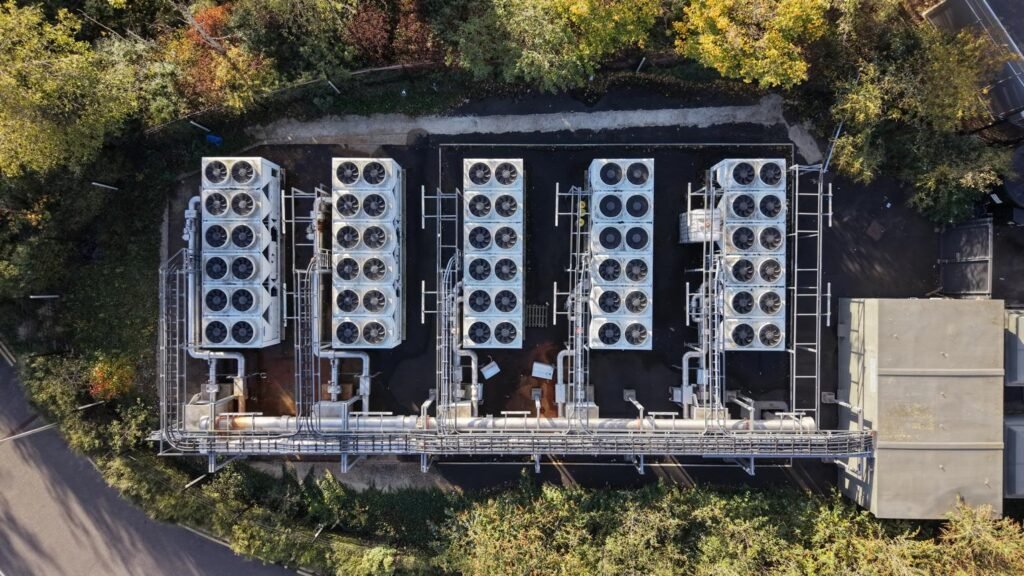
One of the biggest hidden electricity demands comes from cooling.
AI servers generate huge amounts of heat. Without cooling systems, equipment would fail rapidly.
Cooling technologies include:
- Industrial air conditioning
- Liquid cooling
- Immersion cooling
- Chilled water systems
- Heat exchange systems
In some facilities, cooling can account for a substantial percentage of total electricity consumption.
The hotter the processors become, the harder the cooling systems must work.
This creates a cycle:
- More AI processing
- More heat
- More cooling
- More electricity demand
During warmer UK summers, cooling requirements increase further.

- 【OBSBOT × EWC 2025 Official Partnership】OBSBOT is thrilled to be the 2025 Esports World Cup (EWC) Official Camera & Webc…
- 【OBSBOT Tiny 2 – New Era of Webcam】Our 4K Webcam is equipped with 1/1.5″ CMOS Sensor, which is the largest and most adva…
- 【Superior AI-Tracking, Up 4 Tracking Modes】Our Tracking Webcam has fully upgraded the AI algorithm to make the auto-trac…
Could AI Increase UK Electricity Bills?
Indirectly, yes.
AI data centres themselves are commercial customers, but their electricity demand can contribute to wider market pressures.
Potential impacts include:
- Increased grid investment costs
- Higher infrastructure spending
- Greater competition for renewable energy
- Regional network upgrades
- Peak demand pressures
The UK already has relatively high industrial electricity prices compared with some international competitors.
If AI infrastructure growth accelerates rapidly, energy networks may require major upgrades funded partly through broader electricity systems.
Consumers may not see a line on bills labelled “chatbot electricity tax”, but infrastructure costs eventually move through the energy system somewhere.
UK Energy Market Analysis and Predictions
As AI Infrastructure expands across Britian, energy demand forecasts are becoming increasingly important PowerguardianUK tracks pricing trends, supplier movements and wider market prrssures.
Renewable Energy and AI
Technology firms are increasingly investing in renewable energy because AI electricity demand is becoming politically sensitive.
Many operators now seek:
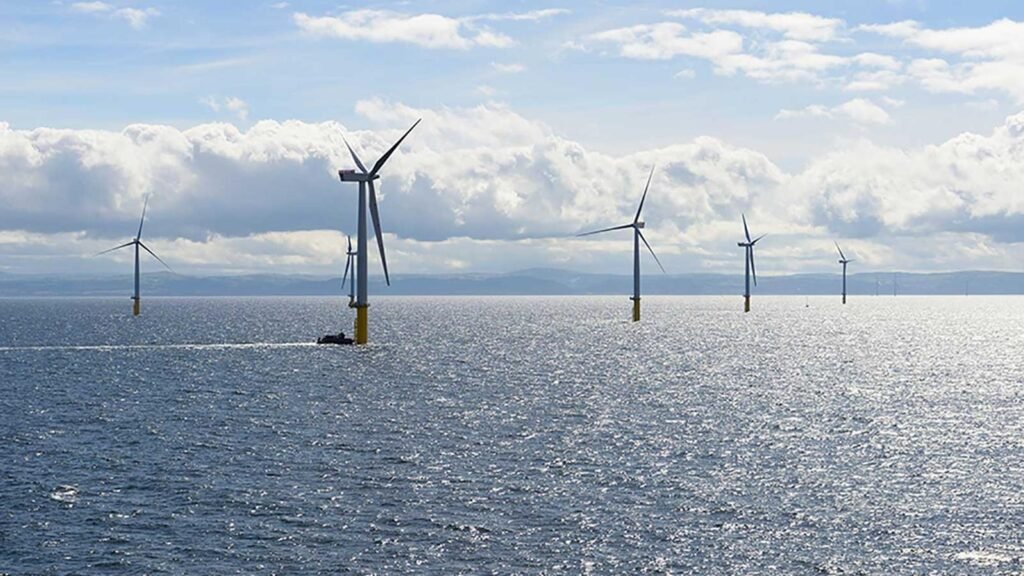
- Offshore wind agreements
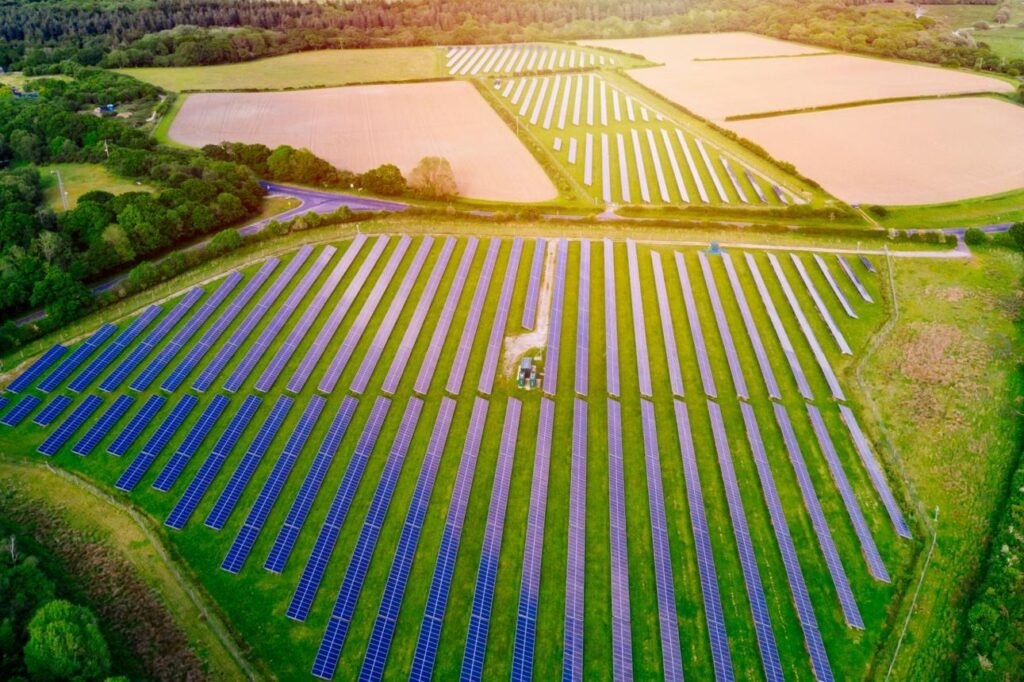
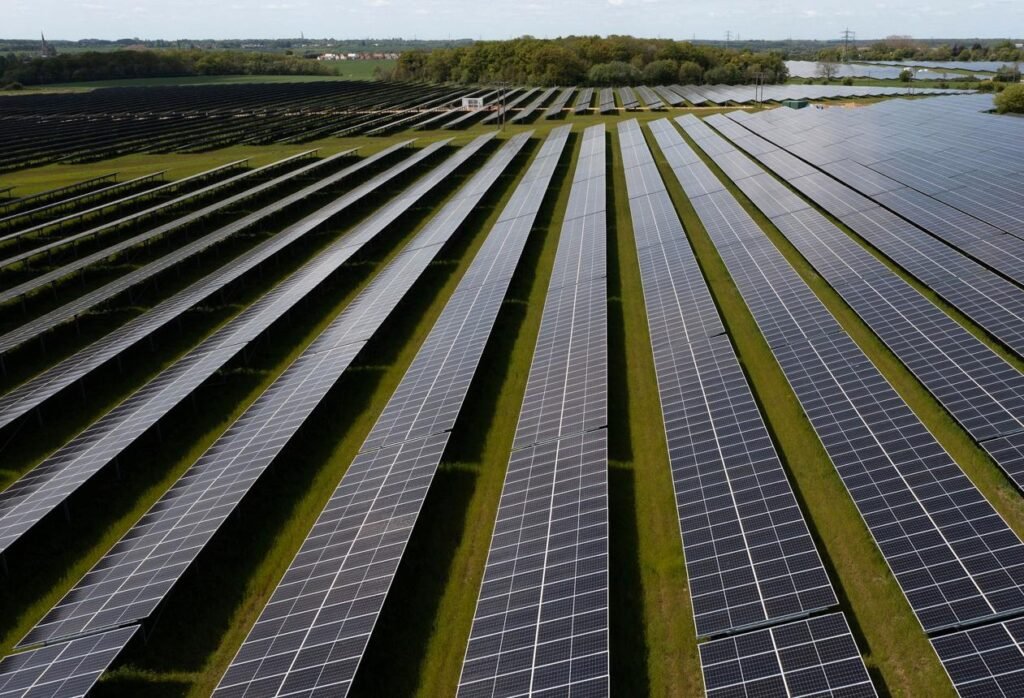
- Solar partnerships
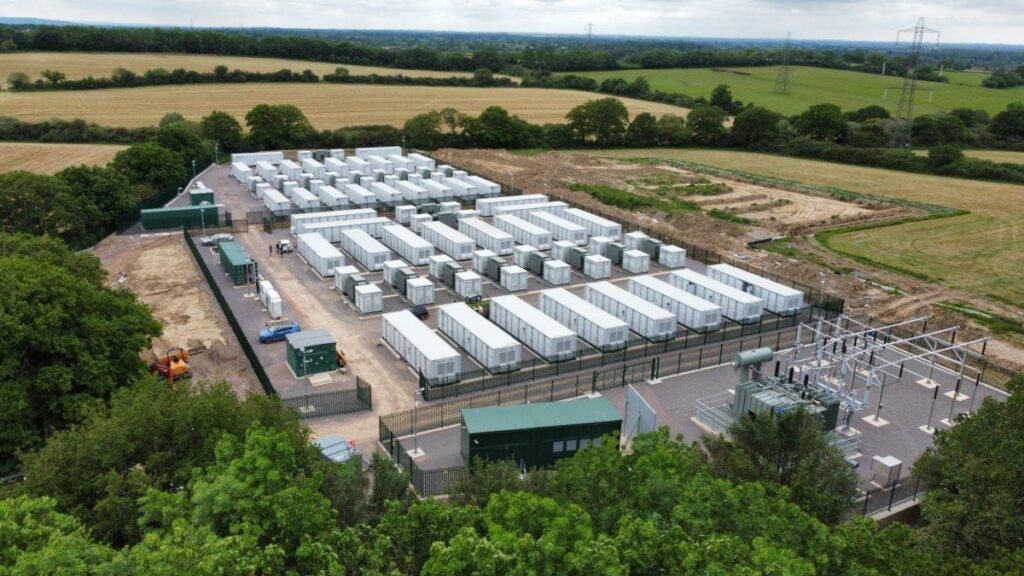
- Battery storage integration
- Long-term renewable purchase agreements
- Nuclear energy discussions
Major cloud companies globally are investing billions into clean energy procurement.
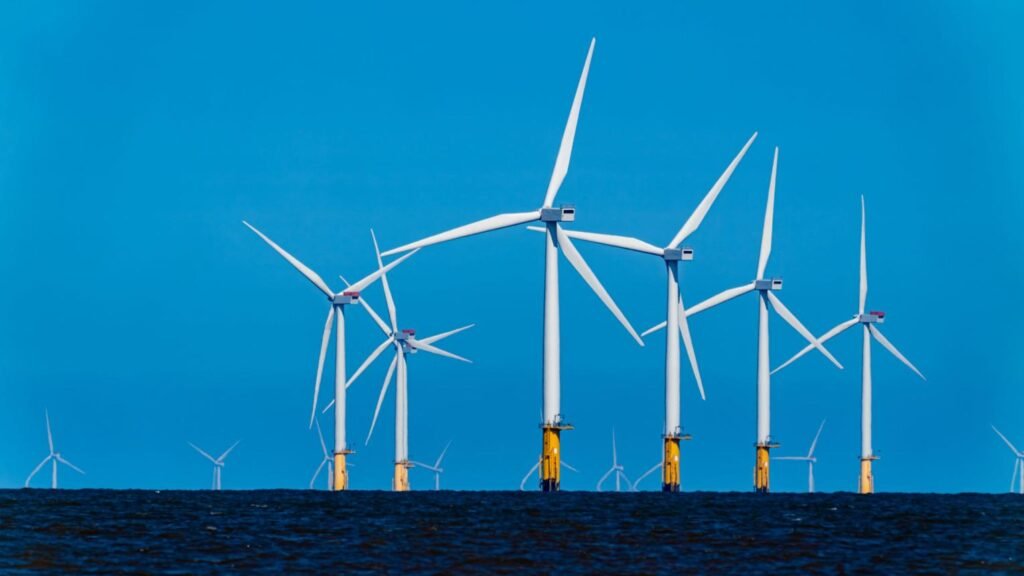
In the UK, offshore wind may become increasingly important for supporting future AI infrastructure growth.
However, there are still challenges:
- Renewable generation is variable
- Storage remains expensive
- Grid bottlenecks slow deployment
- Data centres require continuous reliable power
AI systems cannot simply pause because the wind stops blowing over the North Sea for a few hours.

Real-World Examples of AI Infrastructure Expansion
Globally, AI infrastructure spending has exploded.
Companies including Microsoft, Google, Amazon and Meta are investing heavily in AI computing facilities.
The UK also continues attracting international infrastructure investment because of:
- Stable legal systems
- Strong internet connectivity
- Financial markets
- Existing cloud infrastructure
However, planning and electricity constraints are becoming increasingly important issues.
Some industry analysts now believe electricity availability could become one of the biggest limiting factors for future AI expansion.
Environmental Concerns Around AI Electricity Usage
Critics argue AI growth risks undermining climate targets if electricity demand rises faster than clean energy supply.
Key concerns include:
- Rising carbon emissions
- Increased water usage for cooling
- Land use pressures
- Electronic waste
- Local infrastructure strain
Supporters argue AI may also improve energy efficiency through:
- Smarter grid management
- Building optimisation
- Traffic reduction
- Industrial automation
- Renewable forecasting
The reality is more complicated.
AI can improve efficiency in some areas while simultaneously increasing overall electricity demand elsewhere. Economists sometimes call this the rebound effect.
In plain English:
People save energy in one place, then consume more somewhere else because technology became easier or cheaper.
Civilisation in a sentence, really.
Could Small Modular Nuclear Reactors Power AI?
This idea is increasingly discussed internationally.
Future AI infrastructure may eventually use:
- Small modular nuclear reactors (SMRs)
- Dedicated renewable energy systems
- Local battery storage
- Direct private energy infrastructure
The UK government has shown interest in SMR development as part of future energy planning.
AI infrastructure investors are watching closely because reliable baseload electricity is becoming strategically important.

- Multiple Display Modes – The external screen for laptop supports three display modes: Duplicated Mode, Extended Mode and…
- Plug and Play – The portable monitor for laptop does not require drivers and installation applications, and you only nee…
- Wide Compatibility – The laptop monitor extender is compatible with a wide range of laptops (14-17 inches) and supports …
What This Means for UK Businesses
Businesses using AI tools may eventually face indirect cost impacts including:
- Rising cloud service prices
- Higher hosting costs
- Increased software subscription costs
- Energy surcharge pressures
- Sustainability reporting requirements
Many companies currently treat AI as “cheap automation”.
In reality, the infrastructure behind AI is extremely expensive.
Someone always pays for the electricity eventually.
Is The UK Ready for AI Electricity Demand?
The UK has advantages:
- Strong renewable expansion
- Mature digital infrastructure
- International investment appeal
- Advanced financial sector
But there are growing risks:
- Grid congestion
- Slow infrastructure planning
- High energy costs
- Delayed connections
- Limited regional capacity
AI infrastructure growth may become one of the defining energy challenges of the next decade.
Not because Britain lacks innovation, but because modern AI requires industrial-scale electricity systems operating continuously behind the scenes.
Most people still think AI is floating magically inside “the cloud”. The cloud, unfortunately, is mostly warehouses full of very hot computers attached to enormous electricity bills.
English References and Further Reading
- International Energy Agency (IEA) Data Centres and AI Report
- National Grid ESO UK Energy Insights
- Ofgem UK Energy Market Information
- UK Government Energy Security Strategy
- Uptime Institute Data Centre Research
- The Royal Society AI and Energy Discussions
AI Playbooks
We have created Professional High Quality Downloadable PDF’s at great prices specifically for Personal or Business use in the UK. Which include help and advice on understanding what Artificial Intelligence is all about and how it can improve your business. Find them here.