Supermarkets are among the most energy-intensive commercial buildings in Britain. Large stores operate refrigeration systems 24 hours a day, extensive lighting networks, heating and ventilation equipment, bakery ovens, distribution systems and increasingly electric vehicle charging infrastructure.
Energy can account for millions of pounds of annual operating costs across a major supermarket chain.
Artificial intelligence is becoming one of the most effective tools available for reducing those costs. Rather than simply turning equipment on and off, AI analyses thousands of data points every minute to optimise energy consumption without affecting food safety, customer comfort or store operations.
Why Supermarkets Use So Much Electricity
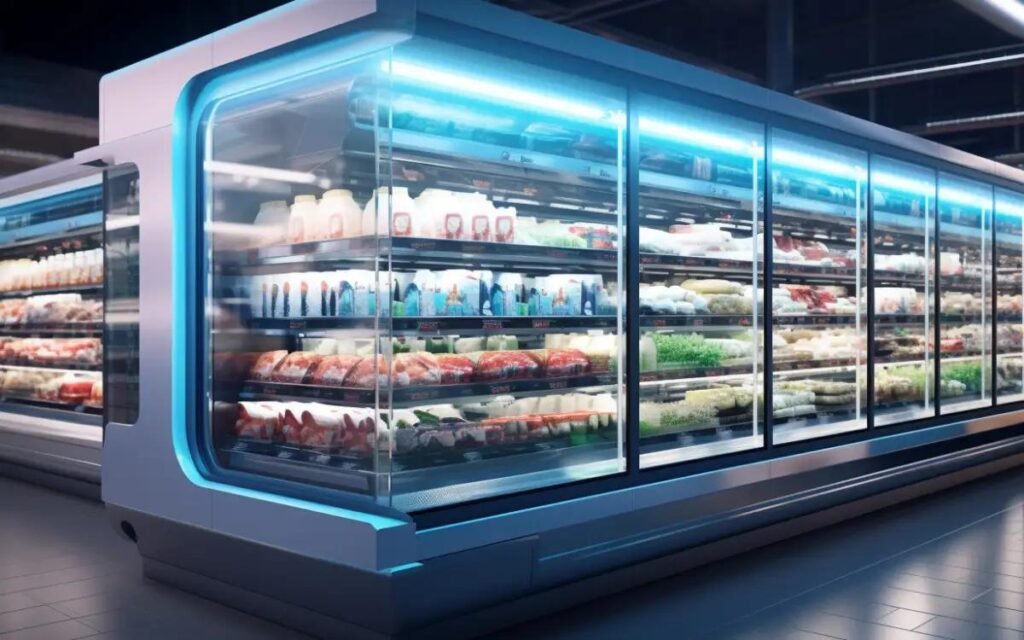
Refrigeration Dominates Energy Consumption
Refrigeration typically represents between 40% and 60% of a supermarket’s total electricity consumption.
This includes:
- Chilled display cabinets
- Freezers
- Cold storage rooms
- Distribution centre refrigeration
- Ice production systems
- Food preparation cooling equipment
Even small efficiency improvements can generate substantial savings.
A large supermarket may consume as much electricity as several hundred homes combined.
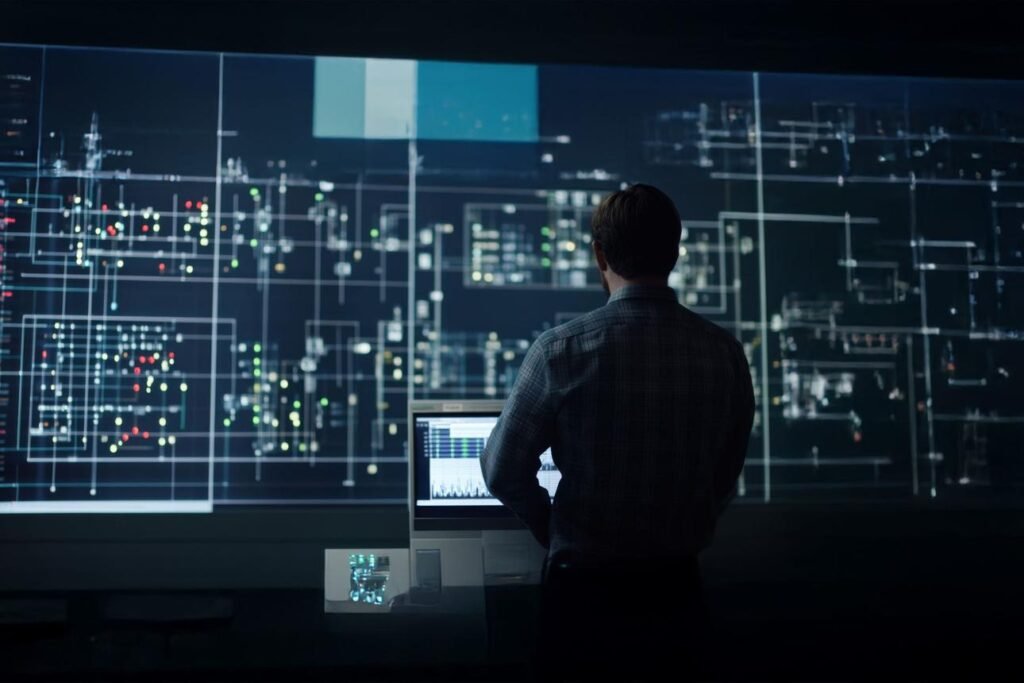
AI Monitors Energy Use in Real Time
Detecting Waste Before Humans Notice
Traditional energy management often relies on periodic inspections and monthly energy reports.
AI systems work continuously.
Thousands of sensors monitor:
- Temperature
- Humidity
- Power demand
- Equipment performance
- Occupancy levels
- Weather conditions
- Electricity prices
The AI identifies unusual behaviour instantly.
For example:
- A refrigeration unit running longer than normal
- Store lighting remaining active unnecessarily
- Ventilation systems overcooling an area
- Freezer doors causing temperature instability
This approach is similar to the techniques discussed in How Can AI Identify Wasted Energy in the Home?, but on a vastly larger commercial scale.
AI Optimises Refrigeration Systems
The Largest Energy Saving Opportunity

Modern supermarkets increasingly use AI to control refrigeration compressors.
Instead of running at fixed settings, AI predicts demand and adjusts operation dynamically.
The system can analyse:
- Outside temperature
- Store footfall
- Product temperatures
- Historical energy patterns
- Weather forecasts
The result is lower electricity use while maintaining food safety standards.
Even a 5% reduction in refrigeration energy use can save large supermarket groups millions of pounds annually.

- Installs in circuit panel of most small businesses with clamp-on sensors. Supports Single phase, Single-split phase, and…
- 24/7 Energy Management and Monitoring: Automate and monitor your business’ real power anywhere, anytime to prevent costl…
- Lower Your Electric Bill: Configure settings in the Emporia Energy App to automate energy management for time of use, pe…
Predictive Maintenance
AI also identifies equipment likely to fail.
Small performance changes often appear weeks before a breakdown.
The system may detect:
- Compressor wear
- Refrigerant leaks
- Fan inefficiencies
- Sensor failures
This concept mirrors the principles behind predictive maintenance discussed in AI-powered appliance monitoring systems.
Preventing failures avoids both energy waste and food spoilage.
Smart Lighting Control
Lights That Respond to Store Activity
Supermarket lighting traditionally operated on simple timers.
AI introduces much more sophisticated control.
Systems can:
- Adjust brightness by time of day
- Respond to weather conditions
- Detect customer movement
- Optimise warehouse lighting
- Reduce overnight consumption
Many stores now use AI-controlled LED systems that automatically adapt to real-world conditions.
The savings may appear modest per light fitting, but supermarkets often contain thousands of fixtures.
AI Improves Heating and Cooling
Managing Customer Comfort Efficiently

Heating and air conditioning consume significant energy.
AI can predict:
- Customer numbers
- Weather changes
- Internal heat loads
- Refrigeration heat output
Rather than reacting after temperatures change, AI predicts future conditions and adjusts systems proactively.
This reduces unnecessary heating and cooling cycles.
Reducing Refrigeration and HVAC Conflict
One of the biggest hidden inefficiencies in supermarkets occurs when refrigeration systems cool an area while heating systems simultaneously warm it.
Humans somehow managed to design buildings where expensive equipment fights itself all day.
AI identifies and prevents these conflicts.
The result is lower electricity consumption and better environmental control.
AI Helps Manage Electricity Prices
Using Power When It Is Cheapest
Electricity prices increasingly fluctuate throughout the day.
AI systems analyse:
- Real-time electricity markets
- Forecast demand
- Store operating requirements
The software can shift certain activities to cheaper periods.
Examples include:
- Ice production
- Battery charging
- Distribution centre operations
- Refrigeration pre-cooling
This reduces costs without affecting customers.
The same forecasting principles underpin technologies explored in Could AI Predict Renewable Energy Output?
AI and Battery Storage
Storing Cheap Energy for Later Use
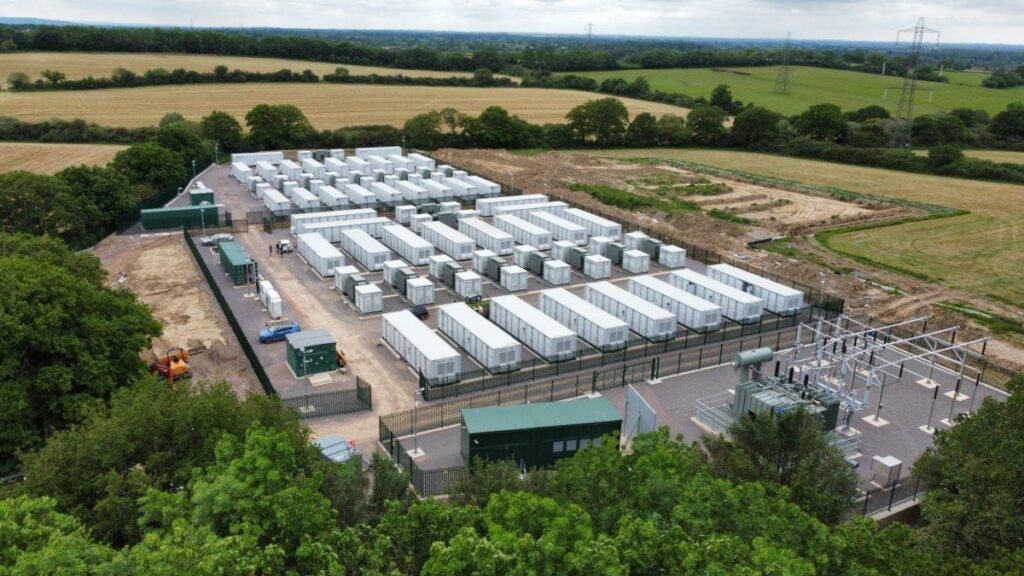
Many retailers are now installing battery systems.
AI determines:
- When to charge batteries
- When to discharge batteries
- How much energy to store
- Future electricity demand
This allows supermarkets to avoid expensive peak electricity periods.
The technology is closely linked to developments covered in How Does AI Help Battery Storage Systems?
Real-World Supermarket Examples
Tesco
Tesco has invested heavily in energy management technologies including advanced refrigeration controls, LED lighting and data-driven optimisation systems across its estate.
Sainsbury’s
Sainsbury’s has deployed smart energy technologies and carbon reduction initiatives aimed at reducing store electricity consumption while supporting sustainability targets.
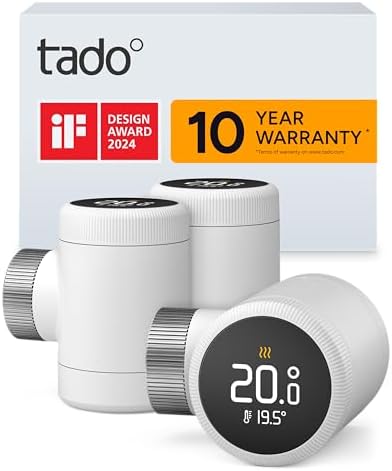
- SAVES ENERGY AND HEATING COSTS: With the intelligent heater thermostat X from tado°, the experts for smart heating, user…
- EASY DIY INSTALLATION, EVEN OFFLINE: The included adapter allows the thermostat to be fitted to almost every radiator va…
- CONTROL VIA APP: The thermostat has numerous features for your heating system, such as smart scheduling, temperature con…
Walmart
Walmart uses advanced machine learning systems to optimise refrigeration, logistics and building management across thousands of stores worldwide.
Carrefour
Carrefour has adopted AI-powered energy management systems to improve efficiency and reduce emissions in multiple markets.
How Much Electricity Can AI Save?
Typical Savings
The exact figure varies by store type and technology deployment.
However, studies across commercial buildings commonly report:
- 10% to 20% reductions from smart building controls
- 15% to 30% reductions from advanced HVAC optimisation
- 5% to 15% reductions from refrigeration improvements
- Significant maintenance savings through predictive analytics
These results support findings discussed in How Much Energy Could AI Save Through Optimisation?
For large supermarket groups, savings can reach tens of millions of pounds annually.
See our AI Query Energy Calculator – Estimate the electricity consumption associated with your AI usage across text prompts, image generations and video generations.
The Future AI-Powered Supermarket
Towards Fully Autonomous Energy Management
Future supermarkets will increasingly operate as intelligent energy ecosystems.
AI will coordinate:
- Refrigeration
- Lighting
- Heating
- Cooling
- Solar generation
- Battery storage
- EV charging
- Energy trading
The system will make thousands of decisions every hour to minimise costs and emissions.
Customers may never notice.
Finance directors certainly will.
Final Thoughts
Supermarkets are using AI to reduce electricity consumption through smarter refrigeration, predictive maintenance, intelligent lighting, HVAC optimisation, battery management and real-time energy forecasting.
Because refrigeration alone can account for more than half of a supermarket’s electricity use, even small improvements create significant savings.
As energy prices remain volatile and sustainability targets become more demanding, AI is rapidly becoming a standard tool rather than an experimental technology. For supermarket operators, saving a few percentage points of electricity across hundreds of stores can mean millions of pounds in reduced costs, lower carbon emissions and a more resilient energy strategy.