Artificial intelligence is rapidly becoming one of the most important drivers of future electricity demand in the United Kingdom. While AI is often discussed in terms of software, chatbots and automation, its real impact on the energy system comes from the enormous computing infrastructure required to train and operate advanced models.
Between 2026 and 2035, AI could become one of the largest sources of new electricity demand added to the UK economy. The question is not whether AI will increase electricity consumption. The question is how much, where that demand will appear, and whether the UK’s power system can keep pace.
Recent forecasts from the National Energy System Operator (NESO), National Grid and international organisations such as the International Energy Agency suggest that data centre demand could increase dramatically during the next decade, largely because of AI.

Why AI Is Different From Previous Digital Technologies
AI Requires Vast Computing Power
Traditional software applications generally consume modest amounts of computing power. AI systems are different.
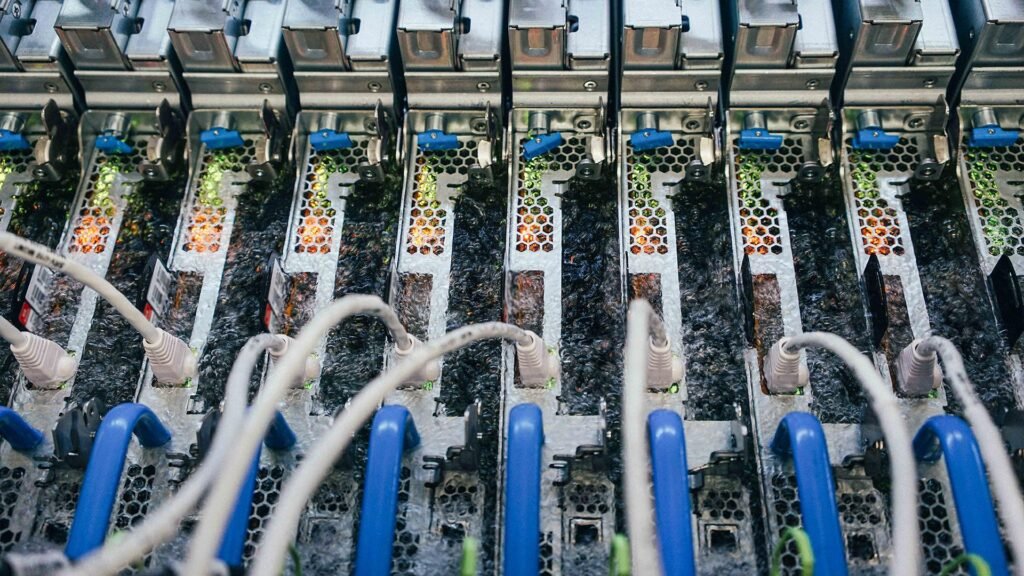
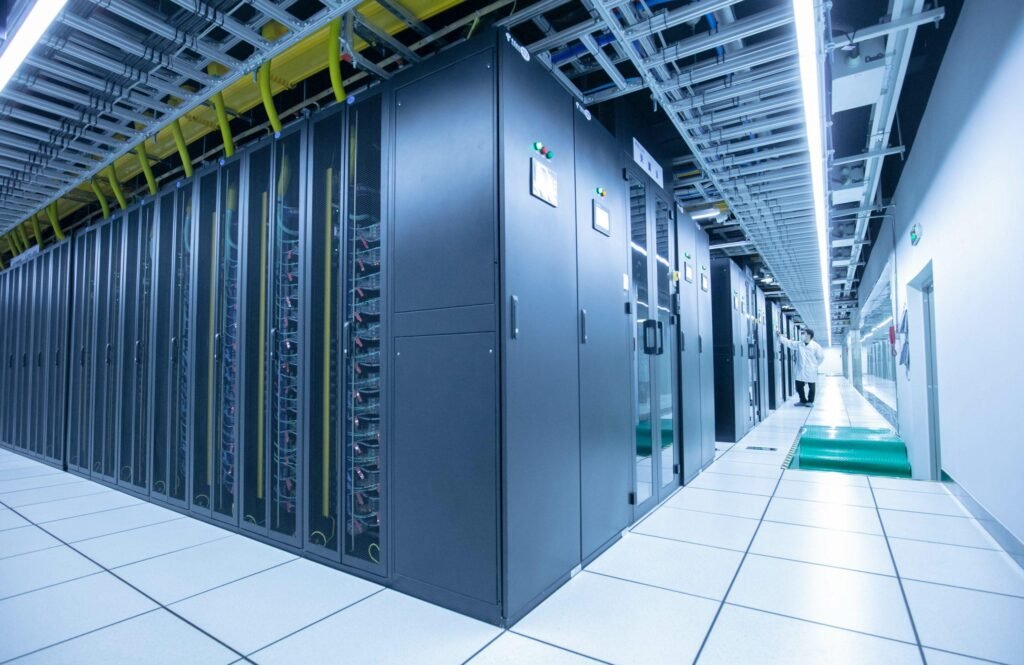
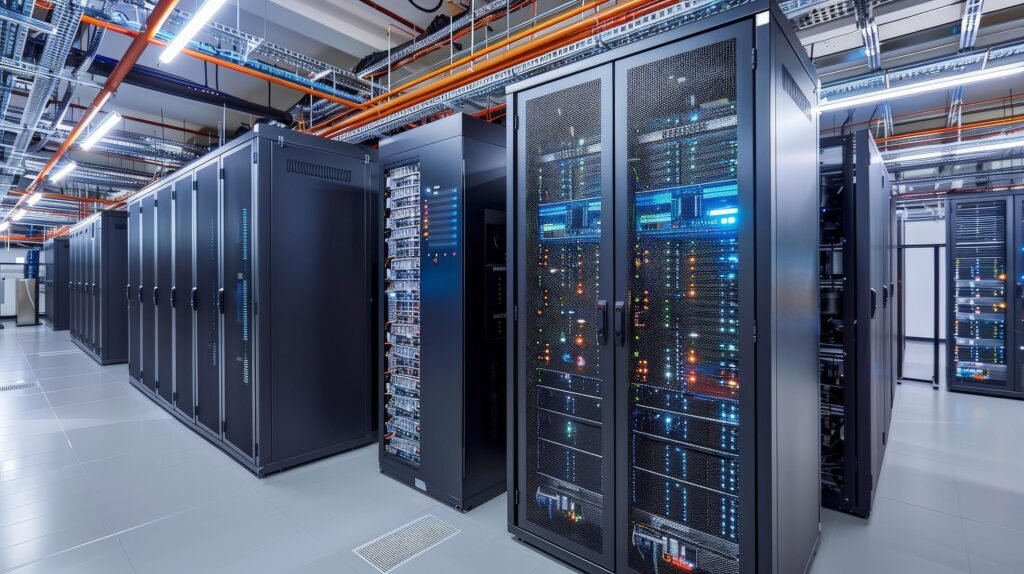
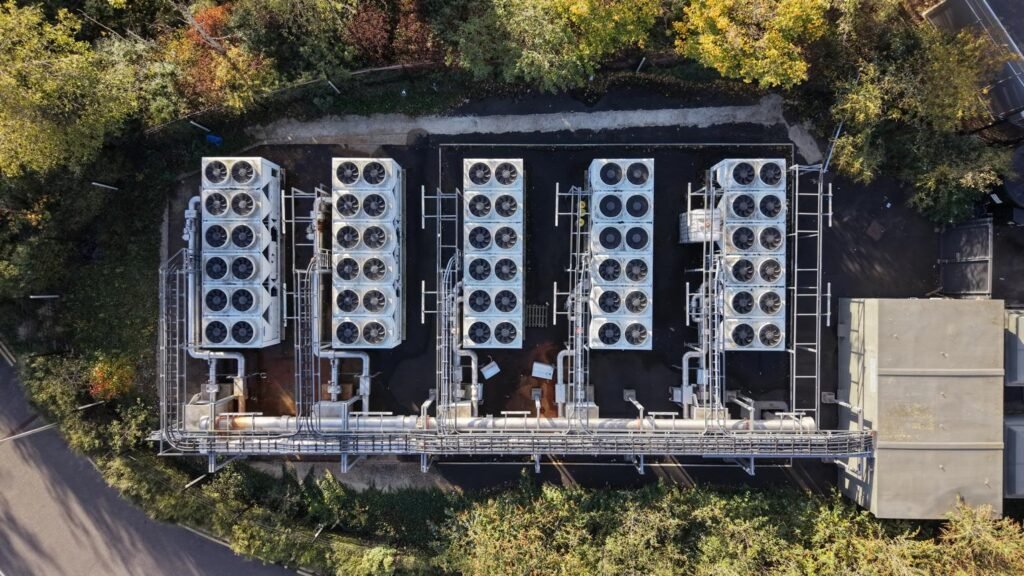
Large language models, image generators, video creation tools and advanced business AI platforms require thousands of high-performance processors operating simultaneously. These processors consume large amounts of electricity and generate significant heat, which must then be removed through cooling systems.
Training a major AI model can require weeks or months of continuous computing activity. Once deployed, millions of users may interact with it every day, creating additional demand through what the industry calls inference workloads.
This is why the article How Much Electricity Does AI Use? is becoming increasingly important for understanding the true cost of AI adoption.
AI Demand Continues After Training
One common misconception is that AI only consumes large amounts of energy during training.
In reality, the ongoing operation of AI services often uses more electricity over time than the original training process. Every search query, chatbot interaction, image generation request or AI-assisted task requires computing resources.
As AI becomes embedded within business software, government services, healthcare, education and consumer applications, this ongoing electricity demand will continue to grow.

- Back-UPS BX provides guaranteed power and surge protection for desktop computers, wireless networks, gaming consoles and…
- 700 VA/390 Watts – Automatic Voltage Regulation (AVR)
- PowerShute shutdown software – USB Connector
Current UK Electricity Demand From Data Centres
Data Centres Already Consume Significant Electricity
Data centres currently account for a relatively small but growing proportion of UK electricity demand.
According to National Grid and NESO forecasts, UK data centre electricity consumption was approximately 7.6 TWh annually in 2024.
That figure may not sound large, but it already exceeds the annual electricity consumption of many towns and cities.
The important point is that AI is expected to accelerate growth far beyond previous forecasts.
Forecasts To 2035
Most credible forecasts suggest UK data centre demand could rise to somewhere between 20 TWh and 41 TWh annually by 2035.
That represents an increase of between 160% and 440% compared with current levels.
Under some scenarios, data centres could account for around 11% of total UK electricity demand by the mid-2030s.
Such growth would make data centres one of the largest expanding electricity-consuming sectors in Britain.

The Timeline Of AI Electricity Demand Growth
2026-2027: Rapid Expansion Begins
During the next two years, AI demand is likely to continue growing faster than electricity infrastructure can adapt.
Many proposed UK data centre projects are already waiting for grid connections.
Developers are increasingly identifying power availability as one of the biggest barriers to expansion.
The issue is not a lack of investor interest. The issue is obtaining access to sufficient electricity at the right locations.
2028-2030: AI Becomes An Energy Policy Issue
By the late 2020s, AI infrastructure is expected to become a major national policy concern.
Government initiatives such as AI Growth Zones are specifically designed to accelerate the development of AI infrastructure by improving planning and energy access.
As demand increases, energy planners will need to balance AI requirements against:
- Housing growth
- Heat pump adoption
- Electric vehicle charging
- Industrial electrification
- Hydrogen production
- Battery storage projects
Competition for grid capacity is likely to intensify.
2031-2035: AI Becomes A Major Electricity User
By the early 2030s, AI infrastructure may become a standard component of electricity demand forecasts.
Large AI facilities could require hundreds of megawatts of power, similar to major industrial sites.
At that point, AI demand will no longer be considered an emerging trend. It will be a permanent feature of Britain’s energy landscape.
Where Electricity Demand Will Grow Most
London And The South East
London remains the UK’s largest concentration of data centre capacity.
The surrounding regions, particularly areas such as Slough and West London, host many of the facilities that support financial services, cloud computing and internet infrastructure.
These locations already face significant grid constraints.
Future expansion may become increasingly difficult without major network upgrades.

- SAVES ENERGY AND HEATING COSTS: With the intelligent heater thermostat X from tado°, the experts for smart heating, user…
- EASY DIY INSTALLATION, EVEN OFFLINE: The included adapter allows the thermostat to be fitted to almost every radiator va…
- CONTROL VIA APP: The thermostat has numerous features for your heating system, such as smart scheduling, temperature con…
Oxfordshire And AI Growth Zones
The Government’s designation of Culham in Oxfordshire as an AI Growth Zone highlights a growing link between AI development and energy planning.
Future AI clusters are likely to emerge where reliable power, available land and high-speed connectivity can be secured simultaneously.
This is one reason why Which UK Cities Are Becoming AI Infrastructure Hubs? is likely to become increasingly relevant over the next decade.
Northern England
Large industrial sites across Northern England offer attractive opportunities for AI infrastructure development.
Many locations have:
- Available land
- Existing power infrastructure
- Political support for investment
- Lower development costs
As a result, some of Britain’s largest future AI facilities could be built outside the South East.

The Biggest Risk Is Not Electricity Generation
Local Grid Constraints Matter More
Britain is capable of generating more electricity through offshore wind, solar, nuclear and other low-carbon technologies.
The larger challenge is delivering that electricity to the exact locations where AI infrastructure wants to operate.
A single hyperscale AI data centre may require hundreds of megawatts of capacity.
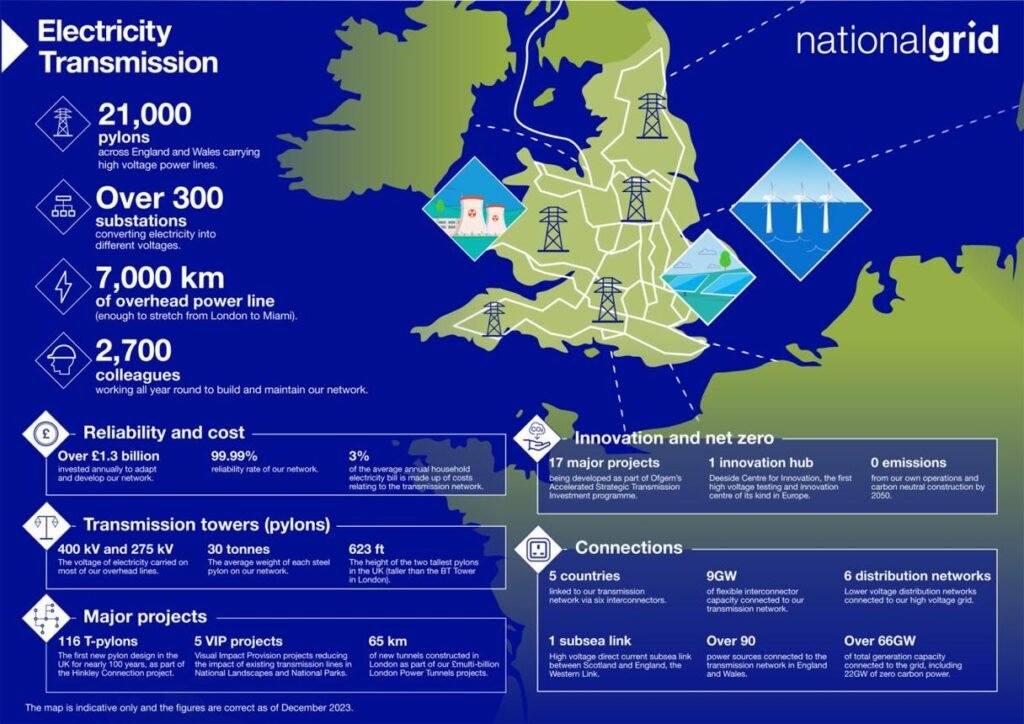
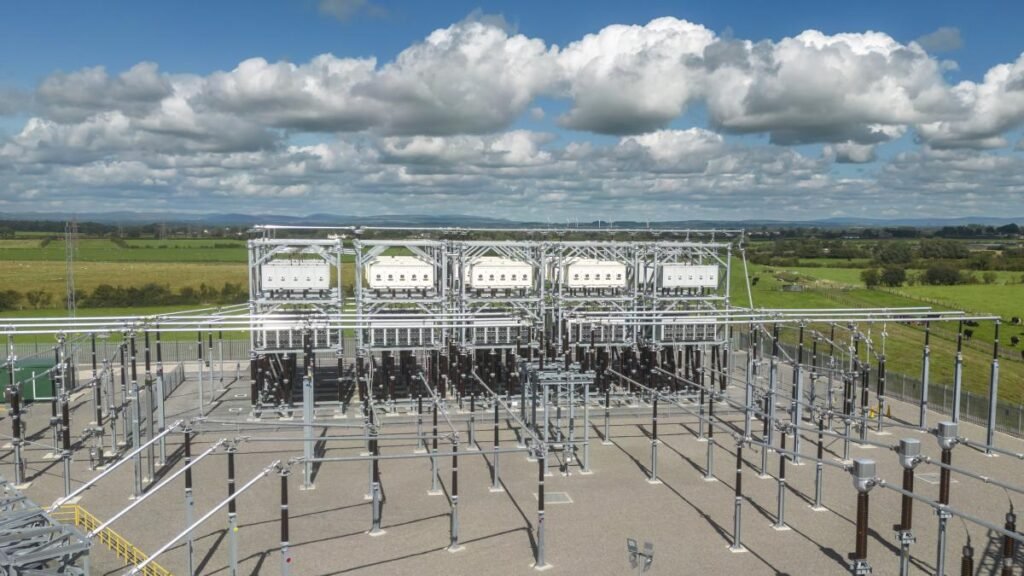
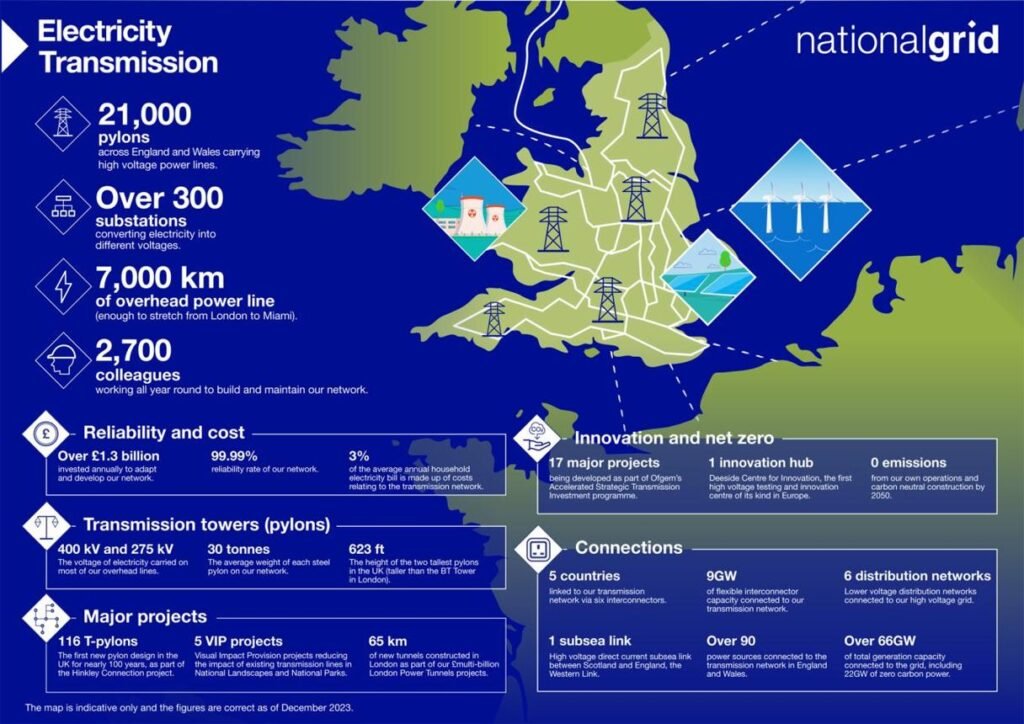
That can place enormous pressure on local substations and transmission networks.
This is why What Happens If AI Outgrows the Power Grid? is becoming a critical question.
Grid Connection Queues
One of the biggest challenges facing AI infrastructure developers today is the growing grid connection queue.
Projects can wait years for network upgrades and approvals.
The speed at which Britain reforms grid connections may determine how quickly AI infrastructure expands during the next decade.
Will AI Increase Household Energy Bills?
The Answer Is Potentially
AI does not directly increase household electricity bills.
However, infrastructure upgrades required to support major data centre growth may eventually influence overall system costs.
The key issue is how those costs are allocated.
If large technology companies fund the necessary network investments, the impact on consumers may be limited.
If costs are socialised across the electricity system, households could eventually bear part of the burden.
Flexible Pricing May Become More Common
The growth of AI could accelerate the adoption of flexible electricity pricing.
Large data centres may increasingly operate under arrangements that encourage them to consume electricity when renewable generation is abundant.
This could help reduce stress on the network while improving grid efficiency.
The topic links naturally with Will AI Change the Way We Pay for Electricity?
Could AI Also Reduce Electricity Demand?
AI May Improve Efficiency
AI is not simply a source of new demand.
It could also help reduce energy consumption elsewhere.
Potential benefits include:
- Better renewable forecasting
- Smarter grid management
- Improved building efficiency
- Industrial optimisation
- More effective battery management
- Smarter EV charging systems
These improvements could offset some of the electricity consumed by AI itself.

- [Fastest Charging in the Industry] – Fully recharge using an AC outlet in only 70 minutes with EcoFlow’s X-Stream fast c…
- [Power 80% of Your Appliances] – With an output of up to 1600W, run 80% off all your appliances, even high wattage ones….
- [LFP Long-Life Battery] – Using LFP battery cells, use and recharge RIVER 2 Pro more than 3000 times before hitting 80%….
The Rebound Effect
History suggests efficiency gains often lead to increased overall consumption.
As AI becomes cheaper and more capable, organisations may simply use more of it.
This means total electricity demand can continue rising even as individual systems become more efficient.
This challenge sits at the heart of Could AI Help Britain Reach Net Zero Faster?
What Could Reduce Future AI Electricity Demand?
More Efficient Hardware
Chip manufacturers continue to improve processor efficiency.
Future AI systems may perform significantly more work using less electricity.
Smaller AI Models
Businesses are increasingly adopting specialised AI models rather than relying exclusively on enormous general-purpose systems.
Smaller models can often deliver excellent results while consuming far less energy.
Energy Prices
If UK electricity remains expensive compared with competing markets, some AI infrastructure investment may occur elsewhere.
This would reduce domestic electricity demand growth but could weaken Britain’s position in the global AI industry.
What Could Increase Demand Even Further?
Widespread Business Adoption
Many businesses are still in the early stages of AI adoption.
As deployment expands across sectors such as:
- Finance
- Healthcare
- Manufacturing
- Retail
- Logistics
- Government
electricity demand could rise faster than current forecasts suggest.
National AI Sovereignty
There is growing interest in ensuring Britain possesses its own domestic AI infrastructure.
If policymakers prioritise AI sovereignty, additional computing capacity may be built within the UK rather than relying on overseas providers.
This would increase domestic electricity demand but could improve national resilience.
What Does 2035 Look Like?
Best-Case Scenario
Britain successfully expands renewable generation, upgrades transmission networks and develops AI infrastructure in suitable locations.
AI demand grows substantially but remains manageable.
Economic benefits outweigh infrastructure costs.
Moderate Scenario
AI demand grows rapidly and requires significant investment in networks and generation.
Grid constraints periodically slow development, but the overall system adapts.
This is probably the most realistic outcome.
Worst-Case Scenario
Infrastructure development outpaces network upgrades.
Connection queues grow longer, local electricity constraints become common and major projects face delays.
In this scenario, Britain’s AI ambitions become constrained by energy infrastructure rather than technology itself.
Final Verdict
Between 2026 and 2035, AI is likely to become one of the most important new drivers of UK electricity demand.
Current forecasts suggest data centre consumption could rise from approximately 7.6 TWh annually today to between 20 TWh and 41 TWh by 2035.
The UK can generate the electricity required, particularly through continued expansion of renewable energy and new nuclear capacity.
The bigger challenge will be delivering power to the right places, at the right time, and at a cost that remains acceptable to businesses and households.
The future of AI in Britain will not be determined solely by software innovation.
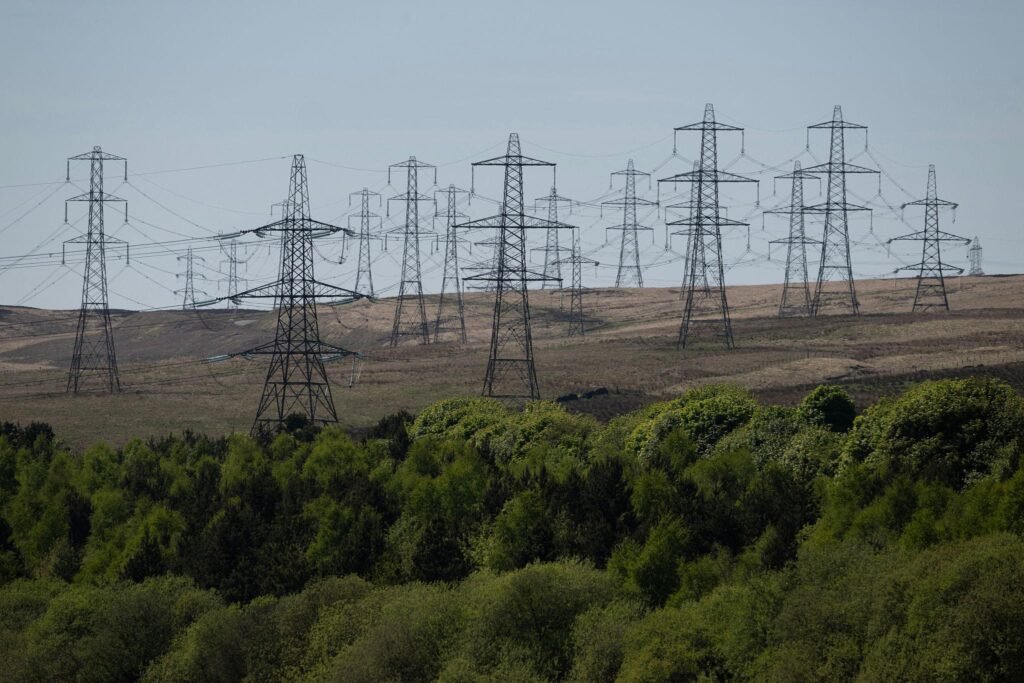
It will be determined just as much by substations, transmission lines, transformers and electricity policy.
Technology may capture the headlines, but electricity will decide how far AI can actually grow.
Reference Material And Research
- National Energy System Operator (NESO) Future Energy Scenarios
- International Energy Agency (IEA) Energy and AI Reports
- National Grid Data Centre Impact Studies
- UK Government AI Opportunities Action Plan
- Department for Energy Security and Net Zero (DESNZ)
- Ofgem Future Energy Network Planning Reports
- UK Parliament Research Briefings on Data Centres and Energy
- Energy Systems Catapult Research
- Royal Academy of Engineering Reports on AI Infrastructure
- International Renewable Energy Agency (IRENA) Digitalisation Studies