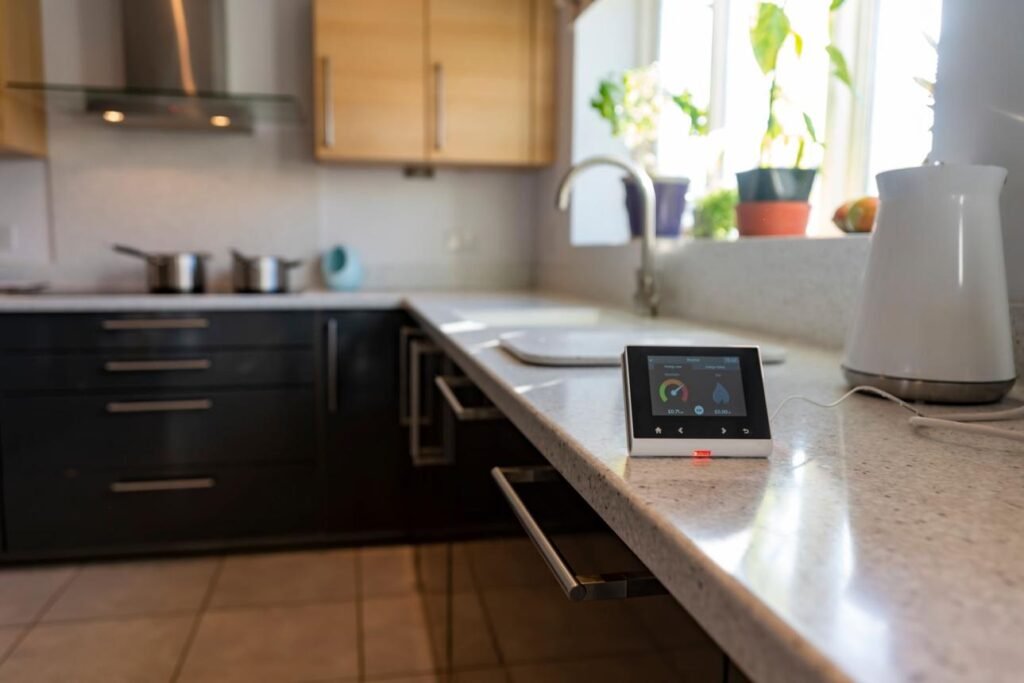
UK energy bills have become one of the biggest financial pressures facing households and small businesses. Even after wholesale gas prices eased from the worst points of the energy crisis, many people are still paying far more than they were a few years ago. Standing charges remain controversial, electricity prices are high compared to much of Europe, and many households still do not fully understand how tariffs actually work. Modern life increasingly resembles a subscription service operated by stressed accountants.
According to Ofgem and National Grid ESO, the UK energy market is under pressure from global gas dependency, infrastructure investment costs, renewable transition spending and ageing parts of the electricity network.
Artificial intelligence is now starting to play a serious role in helping households reduce waste, predict costs, optimise heating and make smarter energy decisions. Not in a science-fiction “robot controls your kettle” sense. More in a “finally identifying why your heating comes on like a Victorian furnace at 3am” sense.
AI Is Helping Households Understand Energy Usage
One of the biggest problems for UK consumers is visibility. Many people simply do not know:
- Which appliances cost the most to run
- Whether their heating schedule is inefficient
- If they are overpaying on tariffs
- How much standby devices cost annually
- Whether EV charging is increasing bills dramatically
AI-powered monitoring systems can now analyse household energy behaviour and identify unusual patterns automatically.
See our AI vs Household Appliance Calculator – Compare your estimated AI energy use with common UK household appliances to put the numbers in everyday terms.
Common examples include:
- Smart thermostats learning occupancy habits
- Apps predicting monthly energy spend
- Smart plugs identifying “energy vampires”
- AI dashboards spotting excessive overnight usage
- Heating systems adapting to weather forecasts
Real World Example: Smart Heating Systems

- Full HD streaming: Logitech C922 provides two streaming qualities to choose from. Whether you’re after full HD 1080p at …
- Multiple mounting options including tripod: This HD streaming webcam comes equipped with a versatile tripod. Mount the U…
- Auto-lighting corrections: Alongside full HD streaming over wifi, this gaming webcam is equipped with autofocus and inst…
Systems such as Google Nest, Hive and tado° use machine learning to understand heating behaviour over time.
For example:
- If a household regularly lowers heating at 10pm, the system learns this pattern
- If outside temperatures suddenly rise, heating cycles may reduce automatically
- Some systems monitor humidity and occupancy to avoid unnecessary heating
A poorly configured traditional heating timer may run a boiler unnecessarily for hours. AI-assisted systems attempt to reduce this waste automatically.
According to research from Energy Saving Trust, effective heating controls can reduce heating costs significantly depending on insulation quality and household behaviour.
AI-Powered Tariff Comparison Is Becoming More Important
The UK Tariff Market Is Confusing By Design
Many UK consumers struggle with:
- Fixed vs variable tariffs
- EV tariffs
- Time-of-use pricing
- Export tariffs for solar
- Smart meter compatibility
- Standing charges
- Exit fees
Energy suppliers frequently advertise attractive rates that only suit certain usage patterns.
AI comparison tools are improving because they analyse real consumption behaviour instead of simply estimating average use.
Real World Example: EV Owners

A standard tariff may not suit an EV owner at all.
AI tools can analyse:
- When the vehicle is charged
- How often charging occurs
- Peak-hour electricity use
- Solar generation patterns
- Battery storage behaviour
The system may then recommend:
- Overnight EV tariffs
- Off-peak appliance scheduling
- Battery charging windows
- Export optimisation
Some UK suppliers already use intelligent scheduling systems that automatically charge vehicles during cheaper periods when grid demand is lower.
This is increasingly important because EV charging confusion in the UK is growing rapidly. Different providers, apps, pricing models and memberships have created what many drivers see as an unnecessarily fragmented market. Humans have somehow recreated airline pricing for electricity. Remarkable achievement really.
Smart Meters And AI: Helpful Or Frustrating?
Smart Meters Provide The Data AI Needs
AI systems rely heavily on detailed data.
Without smart meter information, AI tools are effectively guessing usage patterns.
Smart meters can provide:
- Half-hourly consumption data
- Real-time usage monitoring
- Peak demand identification
- Appliance usage patterns
- Time-of-day consumption trends
This allows AI systems to build a much clearer picture of household behaviour.
If you want to learn more about Energy prices, problems and solutions find them here PowerGuardian UK
But The UK Smart Meter Rollout Still Has Problems

Many UK households still experience:
- Connectivity failures
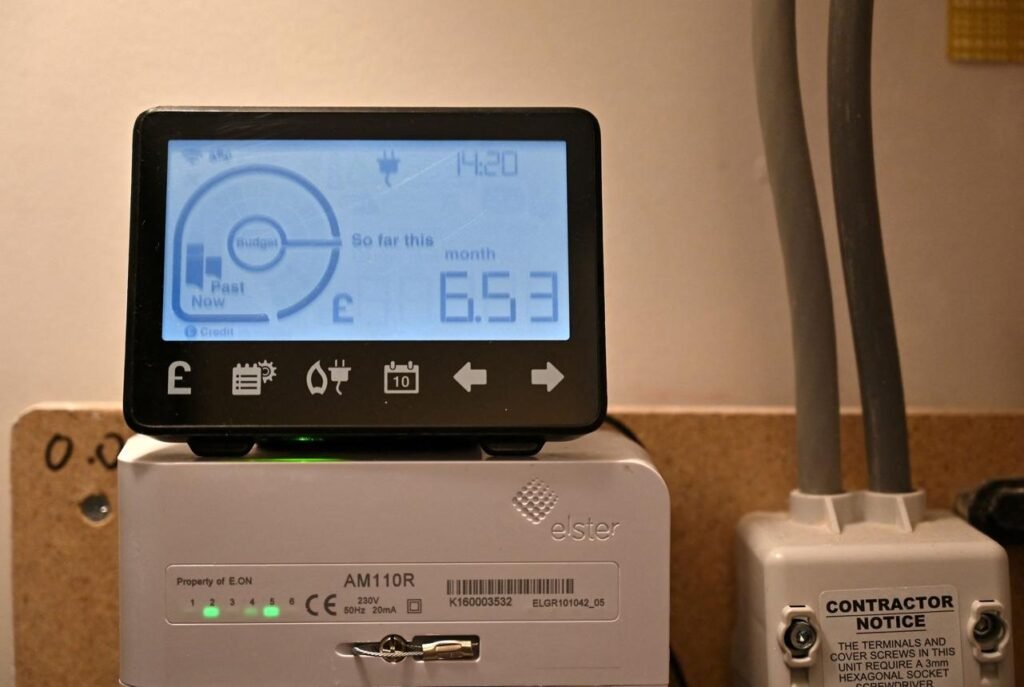
- In-home displays stopping updates
- Supplier switching issues
- Poor rural signal coverage
- Confusing billing changes
According to data discussed by Citizens Advice and Ofgem, smart meter complaints remain significant despite years of rollout efforts.
AI can only work properly if the underlying data is accurate. If a meter stops communicating, the “intelligent” platform becomes considerably less intelligent. Like many modern systems, it is only as good as the infrastructure nobody notices until it breaks.
AI Can Help Detect Waste Most Households Miss
Small Inefficiencies Become Expensive
One major advantage of AI is identifying patterns humans overlook.
Examples include:
- Old fridge freezers consuming excessive power
- Immersion heaters left permanently active
- Faulty electric heaters cycling continuously
- Poorly timed heating schedules
- High standby consumption overnight
Real World Example: Standby Consumption
Many households underestimate standby electricity use.
AI-powered monitoring plugs and dashboards can identify:
- TVs drawing power continuously
- Games consoles never fully shutting down
- Office equipment left active
- Old broadband routers using excessive energy
Individually these devices may seem minor.
Combined across a year, they can contribute noticeable costs, particularly with modern electricity prices.
AI Forecasting Could Help Consumers Avoid Price Shocks
Predictive Energy Intelligence Is Expanding
AI forecasting systems are increasingly used to predict:
- Wholesale energy price movements
- Seasonal demand spikes
- Weather-driven consumption surges
- Solar generation trends
- EV charging demand
This matters because households often react too late.
Consumers usually search for fixed tariffs after prices have already risen sharply.
AI-based forecasting platforms may help identify:
- When fixing tariffs could make sense
- Whether variable pricing is becoming risky
- Seasonal high-cost periods
- Areas vulnerable to grid strain
Small Businesses Could Benefit Even More
Small businesses are especially vulnerable because many commercial tariffs are less protected than domestic ones.
AI systems can help businesses:
- Identify unusual consumption spikes
- Compare supplier rates automatically
- Forecast seasonal energy costs
- Optimise heating and lighting schedules
- Reduce waste outside trading hours
For example:
- A restaurant may discover refrigeration costs surging overnight
- A warehouse may identify unnecessary heating usage
- An office may learn hybrid working patterns allow heating reductions
AI And Renewable Energy Management
Solar Panels And Battery Storage Benefit From AI
Households with solar systems increasingly use AI-assisted software to:
- Predict solar generation
- Decide when to store electricity
- Determine when to export power
- Schedule EV charging
- Reduce peak-grid imports

Without intelligent management, many households fail to maximise the financial benefits of solar.
AI systems can automate decisions such as:
- Running washing machines during solar peaks
- Charging home batteries before price rises
- Exporting excess electricity during profitable periods
This becomes increasingly valuable as flexible tariffs expand across the UK.
The Risks And Limitations Of AI In Energy
AI Is Not A Magic Bill Reduction Machine
There is growing marketing hype around “AI energy savings”.
Some claims are exaggerated.
AI cannot:
- Fix poor insulation
- Replace an inefficient boiler physically
- Eliminate standing charges
- Stop global gas price volatility
- Repair failing infrastructure
A badly insulated property with outdated heating may still face very high bills regardless of software.
If you want to learn more about Energy prices, problems and solutions find them here PowerGuardian UK
Privacy Concerns Are Increasing
Energy usage data can reveal surprisingly detailed household behaviour patterns.
Smart systems may infer:
- When occupants are home
- Sleeping schedules
- Appliance usage
- EV ownership
- Work-from-home routines
Consumers should understand:
- What data is collected
- Who owns the data
- Whether suppliers share analytics
- Which devices rely on cloud services
This area will likely face greater regulatory scrutiny in coming years.

- Multiple Display Modes – The external screen for laptop supports three display modes: Duplicated Mode, Extended Mode and…
- Plug and Play – The portable monitor for laptop does not require drivers and installation applications, and you only nee…
- Wide Compatibility – The laptop monitor extender is compatible with a wide range of laptops (14-17 inches) and supports …
Practical Ways UK Households Can Use AI Today
Affordable AI Energy Tools Already Available
Consumers do not necessarily need expensive systems.
Useful lower-cost options include:
| Tool Type | Potential Benefit |
|---|---|
| Smart plugs | Identify expensive appliances |
| AI thermostat | Reduce heating waste |
| Energy monitoring apps | Track usage patterns |
| EV charging schedulers | Lower charging costs |
| Smart radiator valves | Heat only occupied rooms |
| Solar monitoring apps | Improve export/storage timing |
Best Starting Point For Most Homes
For most UK households:
- Install accurate energy monitoring
- Review heating schedules
- Identify peak electricity usage
- Reduce standby waste
- Compare tariffs regularly
- Understand standing charges properly
Many households still waste significant energy simply because they cannot see where it is going.
That is where AI genuinely helps. Not by replacing common sense, but by exposing patterns humans miss while distracted by work, bills, endless subscriptions and the general administrative obstacle course of modern Britain.
Final Thoughts
AI is unlikely to solve the UK energy crisis on its own. The deeper problems involve infrastructure investment, market structure, gas dependency, regulation and long-term energy strategy.
But at household level, AI can genuinely help people:
- Understand energy usage
- Reduce waste
- Optimise heating
- Improve EV charging costs
- Make smarter tariff decisions
- Forecast spending more accurately
The biggest benefit may actually be visibility.
For years, many consumers have been effectively blind to how energy is consumed inside their homes. AI-powered monitoring is beginning to change that.
And frankly, considering how complicated UK energy billing has become, people need all the help they can get. Some energy statements now resemble encrypted ransom notes produced by economists during a nervous breakdown.
English References
- Ofgem
- Energy Saving Trust
- Citizens Advice Energy Advice
- National Grid ESO
- UK Government Smart Meter Information
AI Playbooks
We have created Professional High Quality Downloadable PDF’s at great prices specifically for Personal or Business use in the UK. Which include help and advice on understanding what Artificial Intelligence is all about and how it can improve your business. Find them here.