Artificial Intelligence is rapidly becoming one of the biggest drivers of electricity demand in the modern world. While most people think about AI as chatbots, image generators, or automated office tools, the real story is happening behind the scenes inside enormous data centres filled with power-hungry servers running day and night.
The question facing the UK is becoming increasingly serious:
Can the national energy grid actually cope with an AI boom?
The short answer is: yes, but only if major investment happens quickly enough. Otherwise, parts of the system could face increasing strain, rising costs, infrastructure bottlenecks, and political arguments that make ordinary energy debates look calm. Which is impressive, because Britain already treats energy policy like a national hobby mixed with a pub argument.
Why AI Uses So Much Electricity
AI models are extremely energy intensive
Modern AI systems require vast amounts of computing power. Training advanced models involves thousands of specialised processors running continuously for weeks or months.
Companies such as OpenAI, Google, Microsoft and Meta are now investing billions into AI infrastructure globally.
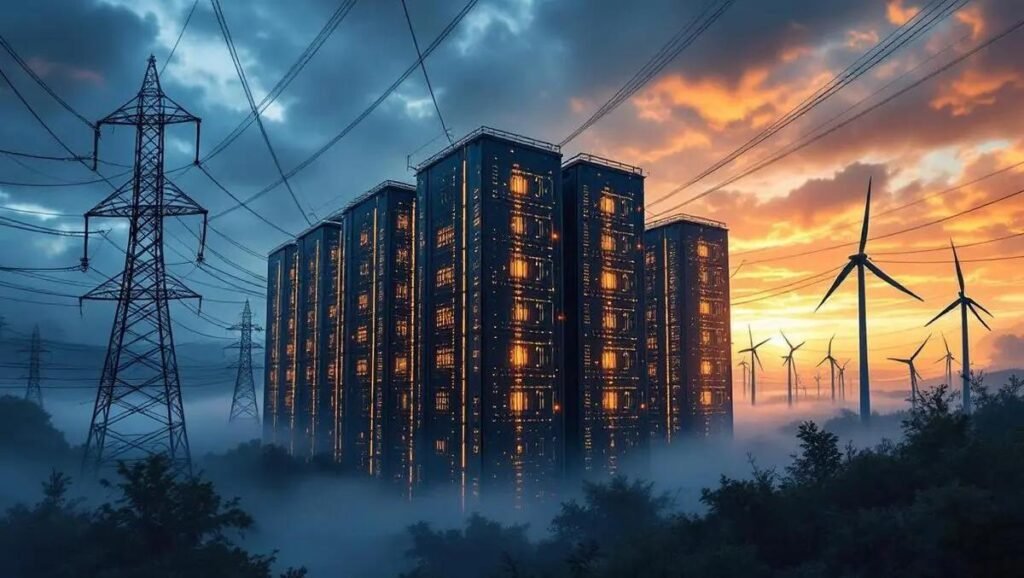
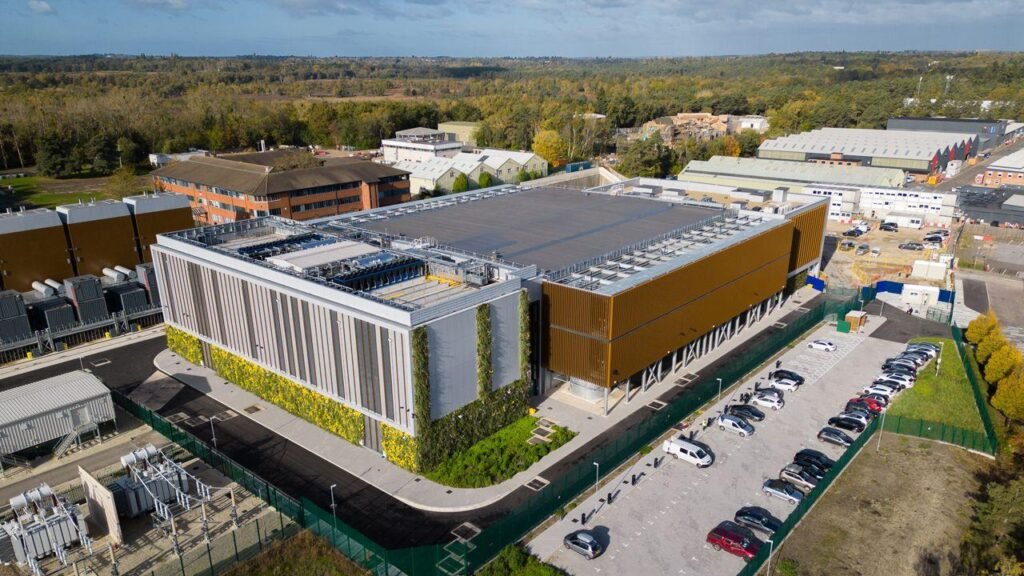
A single advanced AI data centre can consume as much electricity as a medium-sized town.
The International Energy Agency (IEA) has warned that electricity demand from data centres worldwide could more than double by 2030, largely because of AI expansion.
AI workloads run continuously
Unlike traditional office computing, AI systems often run constantly:
- Training AI models
- Processing chatbot requests
- Generating images and video
- Running recommendation engines
- Managing cloud infrastructure
- Analysing business data
- Supporting autonomous systems
The more people use AI tools, the larger the infrastructure becomes.
This creates a difficult reality for the UK grid because demand growth is happening at the same time Britain is electrifying transport, heating, and industry.
In simple terms:
The country is trying to move cars, homes, heating systems, factories, and AI onto electricity simultaneously. Humanity really does enjoy attempting five giant transitions at once while arguing online about kettles.
The UK Grid Was Not Originally Built for AI
Britain’s electricity system evolved differently
The UK grid was designed decades ago around predictable industrial and residential demand patterns.
Historically:
- Peak demand came during winter evenings
- Heavy industry was concentrated regionally
- Coal and gas plants provided stable baseload generation
- Demand growth happened gradually
AI changes this pattern.
Modern hyperscale data centres:
- Require enormous constant power
- Need high reliability
- Operate 24/7
- Demand rapid expansion
- Often cluster around major cities or fibre routes
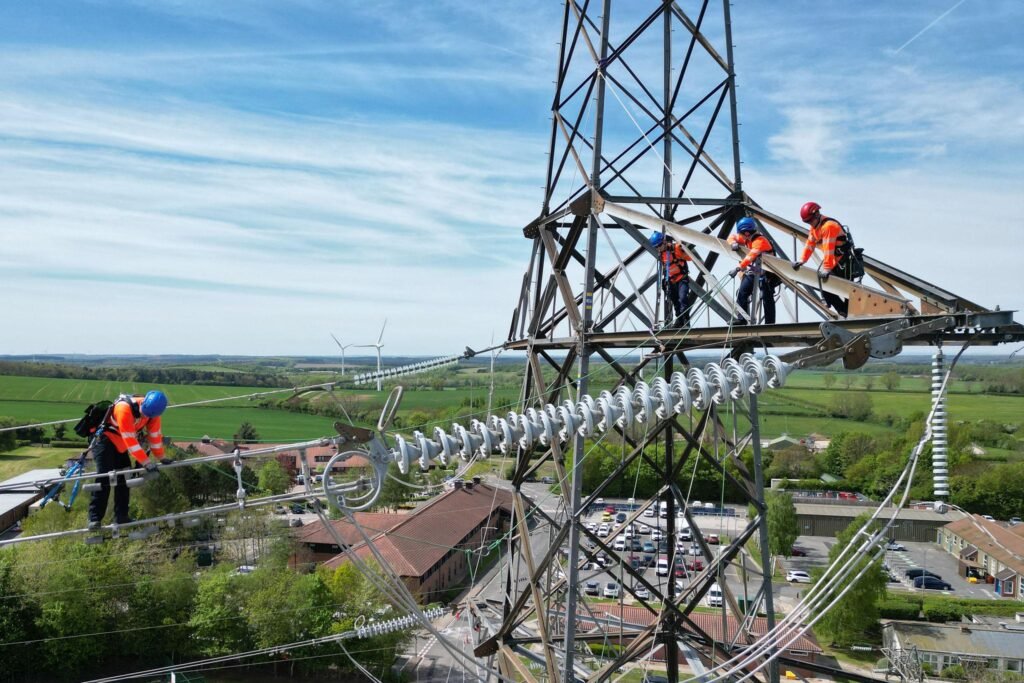
This creates localised pressure on substations, transmission lines, and generation capacity.
Some regions are already seeing pressure
Parts of the UK already face delays connecting new large-scale electricity users to the grid.
According to National Grid and industry reports, some large projects are encountering long waiting times for grid connections because infrastructure upgrades are required.
This affects:
- AI data centres
- EV charging hubs
- Renewable energy projects
- Battery storage systems
- Industrial electrification
In some cases, connection delays can stretch for years.
Why Data Centres Need So Much Cooling
Electricity is only part of the issue
AI servers generate enormous amounts of heat.
That means data centres require:
- Industrial-scale cooling systems
- Air conditioning
- Water cooling infrastructure
- Backup power systems
- Ventilation systems
Cooling itself consumes substantial energy.
Some large data centres also use significant quantities of water for cooling operations, particularly during warmer periods.
This has become controversial globally, especially in areas already facing water stress.
AI hardware runs hotter than traditional servers
AI processors such as NVIDIA GPUs operate at extremely high performance levels.
Training advanced AI models can push server racks to intense thermal limits.
That means newer AI-focused data centres often need:
- Liquid cooling systems
- High-density power delivery
- Reinforced electrical infrastructure
- Advanced heat management
The UK’s cooler climate can actually help reduce cooling costs compared with hotter countries, which is one reason Britain remains attractive for some data centre investment.
Even so, the electricity demand remains massive.
Can Renewable Energy Power AI?
In theory, yes
The UK is rapidly expanding:
- Offshore wind
- Solar generation
- Battery storage
- Interconnectors
- Smart grid technology
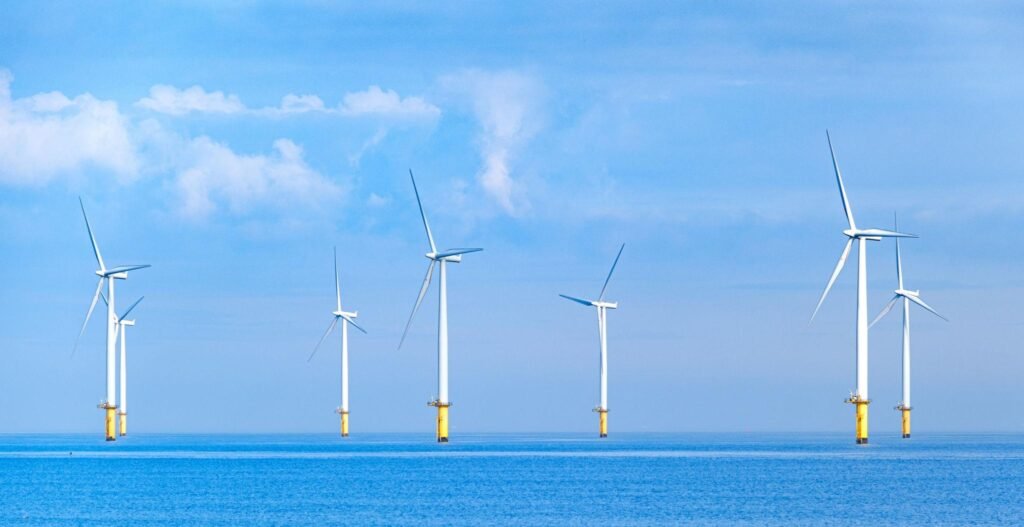
Britain is already a global leader in offshore wind capacity.
Supporters argue AI growth could be matched with renewable expansion over time.
Some data centres are also increasingly:
- Signing renewable energy contracts
- Building private solar installations
- Investing in battery storage
- Locating near renewable generation
The problem is consistency
AI infrastructure requires reliable power every second of the day.
Renewables are variable:
- Wind output changes
- Solar disappears overnight
- Weather affects generation
This means AI growth increases the importance of:
- Grid balancing
- Gas backup generation
- Large-scale batteries
- Nuclear power
- Demand management
Without sufficient backup infrastructure, AI expansion could increase system instability risks during high-demand periods.
Nuclear Power May Become More Important
AI could strengthen the case for nuclear energy
One major side effect of AI growth is renewed interest in nuclear power.
Nuclear provides:
- Stable baseload electricity
- Low carbon generation
- Long-term reliability
- Continuous output
Countries worldwide are reconsidering nuclear partly because of expected AI electricity demand.
In the UK, projects such as Hinkley Point C and proposed small modular reactors are increasingly discussed in the context of future electricity demand growth.
Technology firms themselves are also exploring direct nuclear partnerships internationally.
Small modular reactors are attracting attention

- Data centres
- Industrial sites
- Remote energy hubs
Supporters argue they could help power AI infrastructure more reliably.
Critics point to:
- High costs
- Construction delays
- Waste concerns
- Political opposition
The reality is that Britain may eventually need almost every major energy source available if AI demand grows as forecast.
Could AI Increase UK Energy Bills?
Potentially, yes
Large electricity demand growth can place upward pressure on:
- Wholesale electricity prices
- Infrastructure investment costs
- Grid balancing costs
If grid upgrades become extremely expensive, some costs could ultimately filter down to consumers.
However, there is another side to the argument.

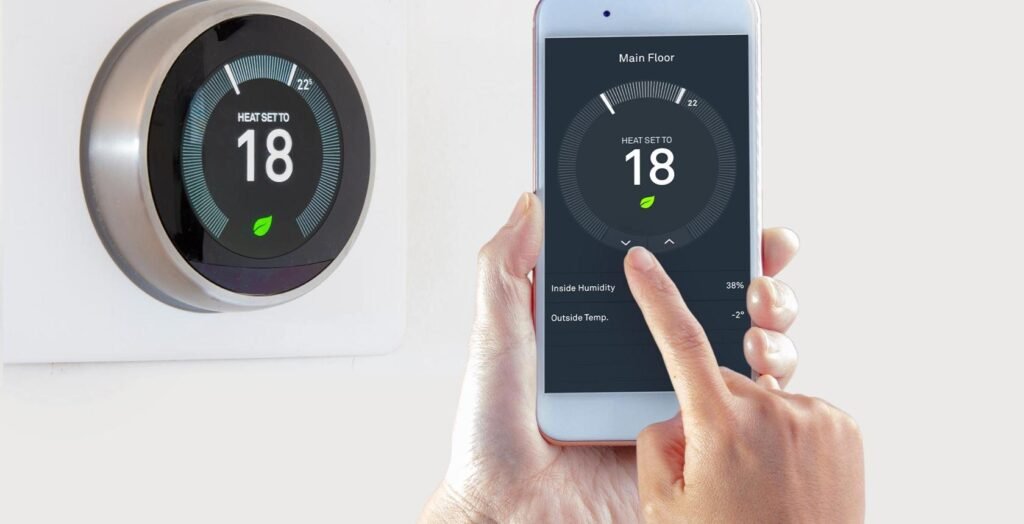
- SAVES ENERGY AND HEATING COSTS: With the intelligent heater thermostat X from tado°, the experts for smart heating, user…
- EASY DIY INSTALLATION, EVEN OFFLINE: The included adapter allows the thermostat to be fitted to almost every radiator va…
- CONTROL VIA APP: The thermostat has numerous features for your heating system, such as smart scheduling, temperature con…
AI could also improve grid efficiency
AI systems are increasingly being used to:
- Predict electricity demand
- Improve renewable balancing
- Detect faults faster
- Optimise energy trading
- Improve battery management
- Reduce wastage
In theory, smarter grid management could offset some additional demand costs.
The problem is timing.
The UK needs infrastructure upgrades now, while many AI efficiency benefits may take years to fully materialise.
The Biggest Challenge Is Infrastructure Speed
The grid can cope eventually
Britain is not running out of electricity tomorrow.
The real challenge is whether infrastructure upgrades happen quickly enough.
Key issues include:
- Slow planning approvals
- Grid connection delays
- Transmission bottlenecks
- Skills shortages
- Rising construction costs
- Political uncertainty
- Public opposition to new infrastructure
The UK has historically struggled to build major infrastructure quickly.
AI expansion moves far faster than traditional energy planning cycles.
That mismatch could become one of the biggest problems.
Real World Examples From Around the World
Ireland has already experienced concerns
Ireland became a major European data centre hub.
At one stage, data centres accounted for a very large share of national electricity demand growth, creating serious debate over grid capacity and sustainability.
This has become a warning example for other countries.
The United States is seeing rapid demand growth
Parts of the US are now forecasting huge electricity demand increases directly linked to AI infrastructure.
Some utilities are delaying coal plant closures partly because AI-related demand is rising faster than expected.
That creates an awkward contradiction: AI is supposed to help create futuristic efficiency while simultaneously increasing electricity consumption dramatically. Humans invent tools to optimise civilisation and then accidentally build industrial-scale electricity monsters. Remarkably consistent behaviour.

- Full control over your heating with the tado° app from anywhere, reduce your energy consumption and save money with the …
- Heating Boost: heat up all rooms for 30 minutes with one click in the app
- Smart Schedules for the perfect temperature individually in each room, at any time; only active when someone’s home; can…
Is the UK Prepared?
Partially, but not fully
The UK has advantages:
- Strong renewable growth
- Advanced financial markets
- Established digital infrastructure
- Cooler climate
- Existing data centre industry
But major weaknesses remain:
- Slow infrastructure delivery
- Grid congestion
- Political inconsistency
- High electricity prices
- Planning delays
If AI adoption accelerates sharply over the next decade, the grid will require:
- Massive investment
- Faster planning reform
- More generation capacity
- Better storage technology
- Smarter balancing systems
Final Verdict
The UK energy grid can probably cope with the AI boom, but only with major upgrades, serious long-term planning, and significant investment.
Without rapid expansion of:
- Generation capacity
- Grid infrastructure
- Energy storage
- Nuclear and renewables
- Smart grid systems
Britain could face rising costs, localised grid strain, and increasing political pressure over energy priorities.
The AI revolution is not just a software story.
It is rapidly becoming an electricity story.
And behind every chatbot answer, AI image, or automated business tool sits a very physical reality: vast buildings full of servers consuming extraordinary amounts of power while giant cooling systems work around the clock to stop them melting into expensive electronic soup.
English References
- International Energy Agency (IEA)
- National Grid UK
- Ofgem
- UK Department for Energy Security and Net Zero
- Energy Networks Association
- Uptime Institute
- Royal Academy of Engineering
- UK Parliament Energy Security Reports
AI Playbooks
We have created Professional High Quality Downloadable PDF’s at great prices specifically for Personal or Business use in the UK. Which include help and advice on understanding what Artificial Intelligence is all about and how it can improve your business. Find them here.