Yes, but not overnight, because apparently civilisation built itself around burning ancient swamp sludge and then acted surprised when changing that became awkward.
Oil and gas are likely to be reduced heavily rather than fully eliminated quickly. In the UK, the replacement will mainly be a mix of:
- Offshore and onshore wind
- Solar power
- Nuclear power
- Battery storage and grid flexibility
- Heat pumps instead of gas boilers
- Electric vehicles instead of petrol and diesel vehicles
- Green hydrogen for some heavy industry
- Carbon capture for limited hard-to-decarbonise uses
- Biogas and synthetic fuels in niche sectors
The Climate Change Committee says the UK’s route to net zero requires a major shift away from fossil fuels, especially gas, towards electricity, heat pumps, electric vehicles and renewables. It has also said UK emissions have already fallen by about 50% since 1990, although much harder work remains.
The real-world answer
Oil and gas will probably not vanish completely by 2050, but their role should shrink sharply. They may remain in aviation, shipping, chemicals, plastics, emergency backup, some industrial heat and possibly gas-fired power stations fitted with carbon capture.
The UK Parliament noted that the CCC’s Seventh Carbon Budget pathway reduces fossil fuels from around 73% of UK energy in 2025 to 14% in 2050. That is not “no fossil fuels”, but it is a very different economy.
Advertisement

- 23.8″ FULL HD DISPLAY – 1920 x 1080 resolution in 16:9 format with 100Hz refresh rate and IPS technology for vibrant col…
- SMOOTH VISUALS – The 100Hz refresh rate reduces flicker for seamless scrolling and clear motion visuals – perfect for wo…
- TÜV RHEINLAND 3-STAR + COMFORTVIEW PLUS – Built-in ComfortView Plus reduces harmful blue light without compromising colo…
What will replace oil and gas?
Wind power, especially offshore wind
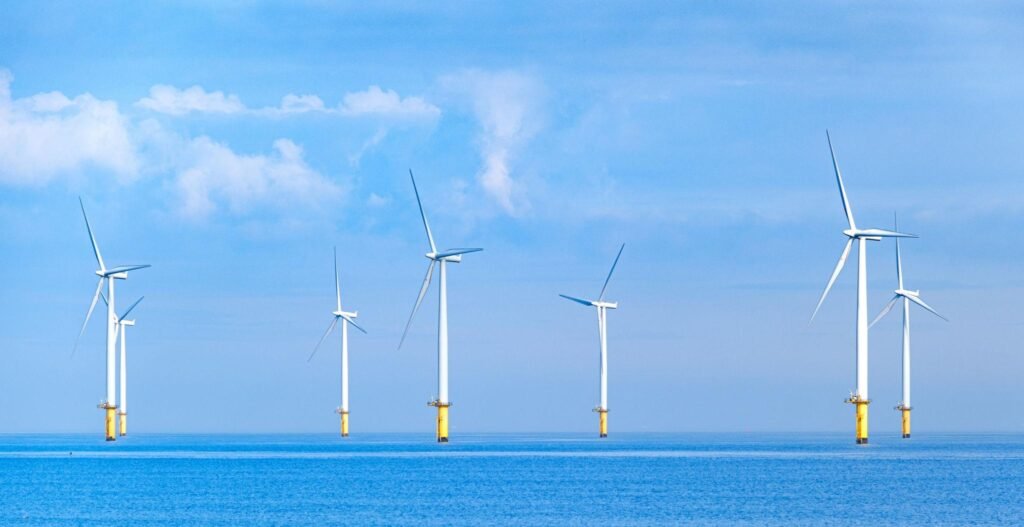
For the UK, offshore wind is the big one. Britain has strong wind resources, especially in the North Sea, which is handy because the North Sea already has energy infrastructure, ports, engineers and offshore workers.
Offshore wind can replace gas-fired electricity generation when paired with grid upgrades, batteries and long-duration storage. National Energy System Operator’s Future Energy Scenarios 2025 describes Britain’s net zero pathway as requiring whole-system change across electricity, heating, transport and industry.
Image suggestion: Offshore wind farm in the North Sea
Source: Getty Images / UK offshore wind imagery
Use near this section as the main featured image.
Solar power and battery storage
Solar is cheaper and faster to install than many other technologies. It works best when combined with batteries, smart meters and flexible tariffs, so homes and businesses can use cheaper electricity when generation is high.
Globally, the IEA says renewables have been setting deployment records, while fossil fuel use remains high. In plain English: clean energy is growing fast, but humanity has not stopped burning fossil fuels yet, because apparently one energy revolution at a time was too tidy.
Advertisement

- 16 Million Colors: This gu10 smart bulb (bulb shape size: MR16) provides millions of vivid colors plus cool & warm ambie…
- Adjustable Brightness & Color Temp: Brightness (0-400lm) and color temperature (2700-6500K) can be tailored precisely to…
- Convenient Intelligent Controls: You can control the gu10 led bulb via Alexa and Google Home to free your hands, and wit…
Nuclear power
Nuclear will not replace oil and gas by itself, but it can provide reliable low-carbon electricity when wind and solar output is low. Its drawbacks are cost, construction delays, waste management and public concern.
For the UK, nuclear is likely to remain part of the mix, especially for baseload electricity, but it is not a magic wand. It is more like a very expensive kettle that takes 15 years to plug in.
Heat pumps
Gas boilers are one of the biggest household uses of fossil gas. Heat pumps replace gas heating by moving heat rather than creating it by combustion. They are much more efficient, but installation costs, insulation quality and electricity pricing still matter.
The environmental benefit is large if the electricity grid keeps getting cleaner. The consumer benefit improves when electricity becomes cheaper relative to gas.
Electric vehicles
Petrol and diesel vehicles are oil demand machines on wheels. Electric vehicles reduce oil use, especially as the electricity grid decarbonises.
For drivers, benefits include lower running costs, less local air pollution and fewer moving parts. The awkward bits are charging access, upfront costs, battery supply chains and grid capacity.
Hydrogen
Hydrogen is often oversold, because apparently every energy conference needs one shiny molecule to worship.
Green hydrogen may be useful for:
- Steel
- Chemicals
- Fertiliser
- Some shipping
- Some long-duration energy storage
- Heavy transport in limited cases
It is unlikely to be the main answer for ordinary home heating because producing hydrogen wastes more energy than using electricity directly through heat pumps.
Carbon capture and storage
Carbon capture may help with cement, industrial processes and possibly some gas power stations. It will not justify endless fossil fuel use. It is a specialist tool, not a permission slip to carry on as normal.
Environmental benefits
Lower carbon emissions
The biggest benefit is reduced greenhouse gas emissions. Burning oil and gas releases carbon dioxide, which drives climate change. Replacing them with renewables, nuclear and electrified systems cuts emissions dramatically.
The IEA’s World Energy Outlook says energy security, emissions and technology trends are now deeply linked, and that renewables are growing rapidly even while oil, gas and coal demand remain high globally.
Cleaner air
Less petrol, diesel, gas and coal means lower levels of nitrogen oxides, particulates and other pollutants. This matters in UK towns and cities, where poor air quality contributes to respiratory and heart problems.
Electric vehicles, heat pumps and cleaner power generation can reduce pollution where people actually live, which is a charmingly sensible idea.
Less environmental damage from extraction
Oil and gas extraction can involve spills, methane leaks, drilling impacts, flaring, seabed disturbance and industrial pollution. Reducing demand reduces the need for new drilling and lowers long-term risk.
Better energy security
Renewables do not require imported fuel. Wind and sunlight are not shipped through global chokepoints or priced by geopolitical panic. The CCC has argued that the cost of reaching net zero is less than the damage caused by a major fossil fuel price shock.
What industries will lose out?
Oil and gas extraction
The clearest losses will be in:
- Offshore drilling
- Exploration
- Oilfield services
- Platform maintenance
- Specialist marine operations
- Refining
- Gas processing
- Fossil fuel logistics
North Sea oil and gas is already in long-term decline. The question is not whether employment changes, but whether workers are moved into new industries properly or tossed into the economic blender and told to “reskill” via a webinar.
Refineries and fuel distribution
As electric vehicles grow, demand for petrol and diesel falls. That affects refineries, fuel tanker drivers, petrol station networks, maintenance contractors and associated supply chains.
Some petrol stations may become charging hubs, but not every job transfers neatly. A refinery worker cannot simply be handed a solar panel and a motivational leaflet.
Gas boiler installation and servicing
Gas engineers may face lower demand over time as heat pumps and district heating expand. However, many of their skills can transfer into low-carbon heating, plumbing, controls, ventilation and building retrofit.
The key issue is training access, certification cost and whether small firms can afford to adapt.
Advertisement

- Perfect Home Power Station:The setup includes an MPPT hybrid inverter and two batteries. One inverter supports 120V and …
- 48V 100AH LiFePO4 Battery for Solar Systems:The ECO-WORTHY 48V (51.2V) 100AH LiFePO4 battery supports CAN/RS485 communic…
- Multi-Layer Safety Protection:Robust all-metal casing + 125A circuit breaker for physical safety.The inverter has protec…
Petrochemicals and plastics
Oil and gas are not only fuels. They are feedstocks for plastics, fertilisers, solvents, lubricants and chemicals. These industries will face pressure to use recycled materials, bio-based feedstocks, electrified processes and cleaner hydrogen.
This transition will be slower than electricity because chemical supply chains are complicated, global and deeply embedded.
What happens to workers?
Some jobs disappear
There will be job losses in parts of oil and gas. Anyone claiming otherwise is selling a comforting bedtime story, probably printed on recycled paper for irony.
The House of Commons Library has already covered the issue of transitional support for North Sea oil and gas workers, showing that this is a live political and economic concern, not a theoretical debate.
Some jobs move into new energy
Many offshore oil and gas skills are relevant to:
- Offshore wind
- Subsea engineering
- Floating wind
- Carbon capture and storage
- Hydrogen infrastructure
- Decommissioning
- Grid construction
- Marine logistics
- High-voltage electrical work
Offshore Energies UK says the UK can “grow jobs, ensure good jobs, and guard jobs” across oil and gas, wind, hydrogen and carbon capture if policy and investment are handled properly.
The risk is regional damage
The biggest employment risk is not just the number of jobs. It is where they are.
Communities linked to Aberdeen, the North East of Scotland, Teesside, Humberside, parts of Norfolk, the East Coast and industrial clusters could be hit if investment does not arrive in the same places where fossil fuel jobs decline.
A “just transition” means workers need real jobs, real retraining, real wages and real local investment. Not a PDF, a badge and a minister standing beside a wind turbine looking concerned.
Expert quotes
International Energy Agency
The IEA says its World Energy Outlook examines energy security, access, emissions, technology and possible futures, and its latest analysis shows renewables growing fast while fossil fuel demand remains high.
Useful quote for article:
“Renewables set new records for deployment in 2024 for the 23rd consecutive year.”
Source: International Energy Agency, World Energy Outlook 2025.
Climate Change Committee
The CCC says UK emissions have already fallen by around half since 1990, but further action is needed across electricity, buildings, transport and industry.
Useful quote for article:
“The UK’s emissions have halved since 1990.”
Source: Climate Change Committee, 2025 Progress Report.

Offshore Energies UK
OEUK argues that the UK offshore energy workforce can be protected and expanded if oil and gas, wind, hydrogen and carbon capture are developed together.
Useful quote for article:
“With the right policies and investment, the UK can grow jobs, ensure good jobs, and guard jobs.”
Source: Offshore Energies UK, Workforce Insight 2025.
Who benefits?
Households
Potential benefits:
- Cleaner air
- Lower exposure to gas price shocks
- Cheaper running costs from EVs and heat pumps
- Better insulated homes
- More energy control through smart tariffs and batteries
Potential downsides:
- Upfront cost of heat pumps, EVs and home upgrades
- Disruption from grid works
- Unequal access for renters and lower-income households
- Confusing tariffs, because apparently energy bills were not already painful enough
Businesses
Potential benefits:
- Lower long-term energy volatility
- New markets in retrofit, energy services, software, batteries and engineering
- Better ESG performance
- Lower carbon costs over time
Potential downsides:
- Capital costs
- Skills shortages
- Supply chain disruption
- Higher short-term electricity network charges
- Risk for firms tied to fossil fuel supply chains
Realistic timeline
2025 to 2030
Expect rapid growth in renewables, grid upgrades, EVs, batteries and early hydrogen/CCS projects. Gas will still matter, especially for heating and backup power.
Advertisement

- Upgraded to Cubix 100: ECO-WORTHY 48V 100Ah Server Rack LiFePO₄ Battery V3 is now renamed Cubix 100, featuring an update…
- Real-time Battery Monitoring: ECO-WORTHY 48V(51.2V) Server Rack Battery supports CAN/RS485 for seamless communication wi…
- Space-Saving Design: Perfectly compatible with standard 3U cabinets, this 48v 100ah lithium battery allows for vertical …
2030 to 2040
Oil demand should fall as electric transport grows. Gas demand should fall if heat pumps, insulation and clean power expand properly. Industrial clusters may shift towards hydrogen and carbon capture.
2040 to 2050
Oil and gas should become smaller, more specialised and more expensive to justify. They may remain in aviation, chemicals, shipping, backup power and some industrial uses.
The honest conclusion
Oil and gas will be replaced in many areas, but not by one single miracle technology. The future energy system will be a messy combination of wind, solar, nuclear, batteries, heat pumps, electric vehicles, hydrogen, carbon capture and smarter grids.
The environmental benefits could be huge: lower carbon emissions, cleaner air, less pollution, fewer oil spills, reduced methane leakage and better energy security.
The human cost could also be serious if workers are ignored. Oil and gas employees need proper transition plans, funded training, regional investment and credible jobs in offshore wind, hydrogen, carbon capture, decommissioning and grid infrastructure.
The technology exists. The harder part is policy, planning, money and not pretending that workers can be “transitioned” by a government press release and a stock photo of a smiling engineer holding a tablet.
AI Playbooks
We have created Professional High Quality Downloadable PDF’s at great prices specifically for Personal or Business use in the UK. Which include help and advice on understanding what Artificial Intelligence is all about and how it can improve your business. Find them here.