
Artificial Intelligence is now being used across thousands of UK small and medium-sized businesses for customer service, marketing, recruitment, bookkeeping, analytics, and automation. Which sounds wonderfully efficient until someone uploads a spreadsheet full of customer data into an AI chatbot and accidentally turns GDPR compliance into a small bonfire behind the office. Humanity continues its proud tradition of adopting technology first and reading the legal guidance sometime around the third disaster.
For UK SMEs, the important point is this:
Using AI is not illegal under UK GDPR.
Using AI carelessly absolutely can become a GDPR problem.
The Information Commissioner’s Office (ICO) has already published guidance around AI, automated decision-making, profiling, lawful basis, and data protection responsibilities. SMEs are increasingly expected to understand where their data goes, who processes it, and whether AI tools are handling personal data properly.
This guide explains what UK businesses actually need to know in the real world.
What Does GDPR Actually Mean When Using AI?
UK GDPR applies whenever personal data is processed.
That includes:
- Names
- Email addresses
- Customer records
- CVs
- Employee information
- Support tickets
- Payment details
- IP addresses
- Voice recordings
- AI-generated profiles or scoring systems
If an AI system uses personal data in any way, GDPR is relevant.
Many SME owners mistakenly assume:
“The AI company handles GDPR, not us.”
That is not how regulators see it.
If your business uploads customer or employee information into an AI system, your company usually remains the data controller under UK GDPR. The AI provider is often the data processor.
That means the responsibility still largely sits with the business using the tool.
Why AI Creates New GDPR Risks for SMEs
Traditional software usually stores and processes data in predictable ways.
AI tools are different because they may:
- Learn from inputs
- Retain prompts
- Transfer data internationally
- Generate inaccurate outputs
- Profile individuals
- Make recommendations automatically
- Create content using uploaded documents
This creates several GDPR concerns simultaneously.

The Biggest GDPR Mistake UK SMEs Make With AI
Staff Uploading Sensitive Data Into Public AI Tools
This is currently one of the biggest real-world risks.
Employees frequently paste:
- Customer complaints
- Contracts
- Staff HR records
- Financial spreadsheets
- Medical details
- Internal reports
- Meeting notes
into public AI systems like OpenAI OpenAI, Google Google Gemini, or Microsoft Microsoft Copilot without understanding how the data is processed.
Some AI providers:
- Store prompts temporarily
- Use data for model improvement unless disabled
- Process data outside the UK
- Share infrastructure across regions
Even when providers offer enterprise protections, many SMEs accidentally use consumer-grade accounts instead of business-grade environments.
That distinction matters enormously.

What The ICO Says About AI
The UK’s Information Commissioner’s Office (ICO) has repeatedly warned organisations that data protection laws still apply when using AI.
The ICO expects businesses to:
- Understand how AI systems process data
- Assess risks properly
- Be transparent with users
- Minimise unnecessary data collection
- Maintain security controls
- Ensure fairness in automated decisions
The ICO also focuses heavily on:
- Bias
- Profiling
- Transparency
- Human oversight
- Accuracy
- Data retention
For SMEs, regulators are generally more concerned about reckless behaviour than sophisticated AI innovation.
A small business using AI sensibly with clear policies is in a far stronger position than a larger business deploying AI chaotically.
Lawful Basis Still Matters
AI Does Not Override GDPR Rules
UK businesses still need a lawful basis for processing personal data.
Common lawful bases include:
- Contract
- Legitimate interests
- Consent
- Legal obligation
For example:
| AI Activity | Possible Lawful Basis |
|---|---|
| AI customer support chatbot | Legitimate interests |
| AI payroll automation | Contract/legal obligation |
| AI recruitment screening | Legitimate interests |
| AI marketing emails | Consent or legitimate interests |
| AI fraud detection | Legitimate interests |
The lawful basis must be documented.
Many SMEs skip this entirely because they think:
“It’s just an AI tool.”
Regulators tend to dislike sentences beginning with “we assumed”.
AI Recruitment Tools Are Becoming A Major Risk Area
Recruitment AI is growing rapidly in the UK.
Businesses are using AI for:
- CV screening
- Candidate ranking
- Interview summaries
- Personality analysis
- Automated responses
- Skills matching
But this creates GDPR and equality law risks.
Real-World Problem
An AI recruitment tool trained on biased historical hiring data may unintentionally:
- Favour certain demographics
- Penalise career gaps
- Misinterpret disabilities
- Filter candidates unfairly
This can create:
- GDPR issues
- Equality Act concerns
- Reputational damage
- Potential legal claims
The ICO has already highlighted concerns around automated decision-making and profiling.
If AI significantly affects people, businesses may need:
- Human oversight
- Transparency notices
- Appeals processes
- Additional safeguards

What Counts As Personal Data In AI Systems?
Many SMEs underestimate what qualifies as personal data.
Personal data can include:
- Customer conversations
- Support tickets
- Audio recordings
- CCTV footage
- Browser behaviour
- Device identifiers
- Chat transcripts
- AI-generated summaries about people
Even anonymised data can become risky if individuals can still be identified indirectly.
For example:
“The only estate agent in a small village with five staff”
might still identify a specific business or person.

International Data Transfers Matter More Than SMEs Realise
Many AI platforms process data globally.
That means data may leave:
- The UK
- The EEA
- Approved jurisdictions
UK GDPR restricts international data transfers unless safeguards exist.
Businesses should check:
- Where data is stored
- Whether UK adequacy rules apply
- Whether Standard Contractual Clauses (SCCs) are used
- Whether enterprise controls exist
This is particularly important when using:
- AI transcription services
- AI analytics platforms
- AI customer support tools
- AI marketing systems
Real-World SME Example
A UK marketing agency uploads client strategy documents into an AI writing assistant.
The documents contain:
- Customer names
- Revenue figures
- Campaign analytics
- Contact information
If that data is processed outside approved regions without safeguards, the agency may face GDPR compliance issues even if the breach was accidental.
Tiny mistakes now travel internationally at cloud speed. Progress.
Should SMEs Ban Staff From Using AI?
Usually no.
Blanket bans rarely work because staff often use AI anyway through personal devices or unofficial accounts.
A better approach is controlled adoption.
What Smart SMEs Are Doing Instead
Successful SMEs are:
- Approving specific AI tools
- Creating AI usage policies
- Blocking sensitive uploads
- Training staff
- Using enterprise accounts
- Logging usage
- Restricting permissions
This is becoming increasingly common across:
- Accountants
- Estate agents
- Recruitment firms
- Marketing agencies
- Trades businesses
- Ecommerce companies
Every SME Using AI Should Have An AI Policy
Many UK businesses now need:
- An AI policy
- Data handling rules
- Staff guidance
- Acceptable use procedures
A good SME AI policy should explain:
- Which tools are approved
- What data cannot be uploaded
- Who can access AI systems
- How outputs should be checked
- Security expectations
- GDPR responsibilities
- Human review requirements
Without a policy, businesses often discover their AI usage only after something goes wrong.
Usually during a stressful meeting involving phrases like:
“Who uploaded the employee disciplinary records into the chatbot?”
AI Hallucinations Can Become GDPR Problems
AI systems sometimes generate incorrect information.
This is called hallucination.
Under GDPR, personal data must be accurate.
If an AI tool:
- Invents customer details
- Produces false summaries
- Mislabels individuals
- Generates incorrect risk scores
then businesses may still be responsible for the consequences.
Example
An AI customer support assistant incorrectly flags a legitimate customer as fraudulent.
The customer:
- Gets locked out
- Suffers delays
- Files a complaint
The business cannot simply blame the AI system.
Human oversight still matters.

SMEs Need To Think About Security As Well As Privacy
AI security and GDPR are heavily connected.
If AI tools expose personal data through:
- Weak passwords
- Shared logins
- Misconfigured integrations
- Unsafe plugins
- Unauthorised staff access
then GDPR security obligations may be breached.
The ICO expects “appropriate technical and organisational measures”.
For SMEs, this usually means:
- MFA enabled
- Strong passwords
- Access controls
- Staff training
- Device security
- Encryption where appropriate
- Approved vendors only
Basic cyber hygiene prevents a huge amount of damage.
Unfortunately basic cyber hygiene is also one of the least fashionable hobbies humans have invented.
What Happens If An SME Gets AI And GDPR Wrong?
Consequences vary depending on severity.
Possible outcomes include:
- ICO investigations
- Customer complaints
- Enforcement notices
- Fines
- Lawsuits
- Contract losses
- Insurance complications
- Reputation damage
For SMEs, reputation damage is often worse than regulatory fines.
A local business losing community trust can suffer long-term damage very quickly.

- 🤖【Gesture Sensing】 The remote control robot follows gesture commands and reacts to your gestures with basic motion, alon…
- 🤩【Interactive Fun】 The robot can sing and dance to entertain you. The remote control robot is equipped with illuminated …
- 💫【Intelligent Programming Robot】This intelligent robot can be programmed to carry out the actions you created, and it ca…
Real-World Example: AI Meeting Notes
Many businesses now use AI note-taking tools during meetings.
These systems may:
- Record conversations
- Transcribe speech
- Summarise discussions
- Identify speakers
But businesses often forget:
- Staff should be informed
- Clients may need notifying
- Sensitive conversations require caution
- Recordings contain personal data
This is especially relevant for:
- HR meetings
- Medical discussions
- Legal advice
- Financial consultations
What UK SMEs Should Actually Do Right Now
1. Identify Which AI Tools Staff Are Already Using
This alone surprises many businesses.
Often staff are already using:
- ChatGPT
- AI writing tools
- AI image generators
- AI meeting assistants
- AI analytics systems
without formal approval.
2. Create An AI Usage Policy
Even a simple policy is better than none.
Include:
- Approved tools
- Banned data types
- Security expectations
- GDPR responsibilities
- Human review requirements
3. Use Business Or Enterprise AI Accounts
Consumer accounts are usually inappropriate for business-sensitive data.
Enterprise platforms often provide:
- Better privacy settings
- Audit controls
- Data retention controls
- Security management
- Regional processing options
4. Train Staff Properly
Most AI-related GDPR problems come from human behaviour.
Staff should understand:
- What personal data is
- What cannot be uploaded
- How AI outputs can be wrong
- Why security matters
5. Review Supplier Agreements
Check:
- Data Processing Agreements
- Retention periods
- International transfers
- Security controls
- Compliance documentation
6. Keep Human Oversight
Never rely entirely on AI for:
- Hiring decisions
- Disciplinary action
- Financial approvals
- Legal conclusions
- Customer disputes
Human review remains essential.
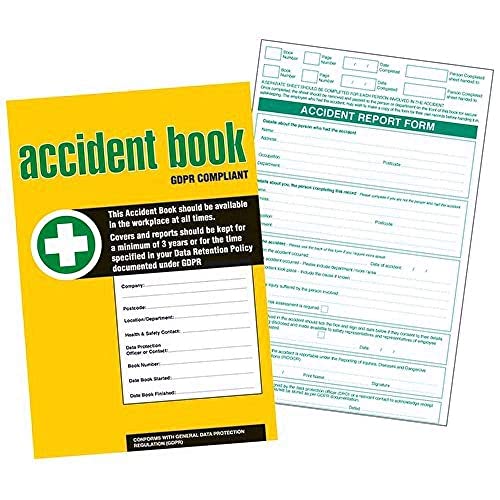
- Updated in May 2018 to reflect the new General Data Protection Regulation (GDPR), with revised text, guidance and additi…
- Each book contains 50 perforated sheets which can be easily removed and filed according to your organisations GDPR polic…
- Includes guidance & instructions for completion. Books should be kept for a minimum of 3 years or retained as documented…
Is AI Worth The GDPR Risk For SMEs?
In many cases, yes.
AI can genuinely help SMEs:
- Save time
- Reduce admin
- Improve customer response times
- Automate repetitive tasks
- Improve productivity
But businesses need realistic controls.
The safest approach is not:
“Avoid AI entirely.”
It is:
“Use AI deliberately and professionally.”
That is where most successful SMEs are heading now.
Final Thoughts
AI adoption in UK SMEs is accelerating quickly.
The businesses gaining the most value are usually not the ones using the most AI. They are the ones using it carefully, consistently, and with proper governance.
GDPR does not prevent AI adoption.
What GDPR does prevent is:
- Reckless data handling
- Uncontrolled processing
- Invisible profiling
- Poor transparency
- Weak security
For most SMEs, the real challenge is not understanding AI technology.
It is creating sensible operational discipline around it. Which, tragically, is less exciting than “AI will revolutionise everything”, but substantially more useful when the ICO starts asking questions.
Useful UK References And Guidance
- ICO AI and Data Protection Guidance
- UK GDPR Overview (ICO)
- NCSC Guidance On AI Security
- UK Government AI Regulation Information
- Cyber Essentials UK
AI Playbooks
We have created Professional High Quality Downloadable PDF’s at great prices specifically for Personal or Business use in the UK. Which include help and advice on understanding what Artificial Intelligence is all about and how it can improve your business. Find them here.