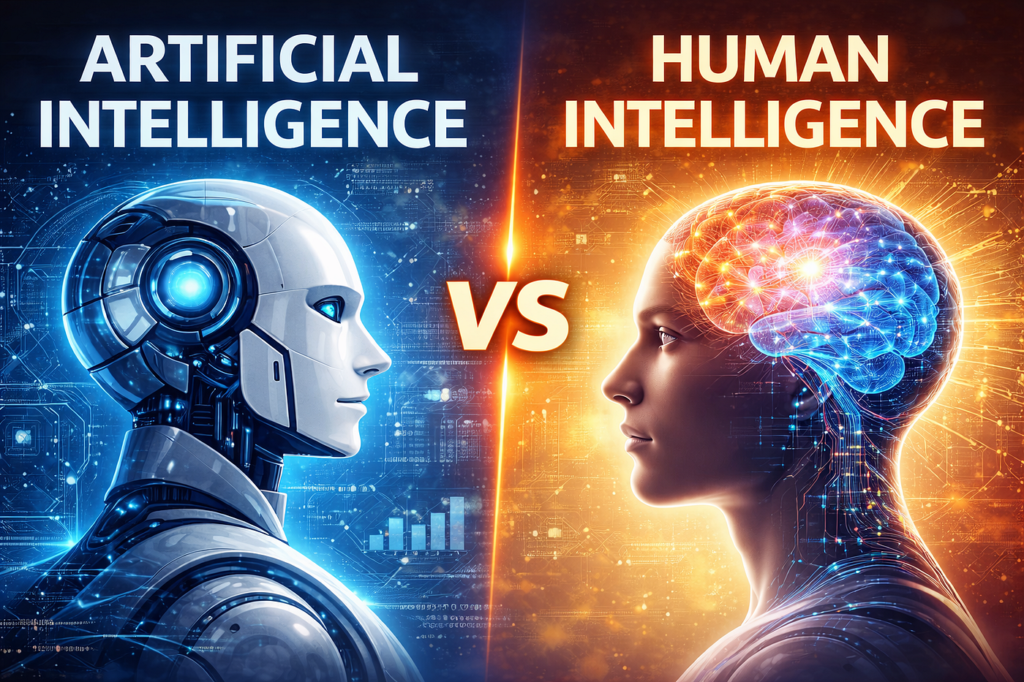
When AI Starts Acting Without Asking
Artificial Intelligence (AI) technology is already learning, predicting and deciding in ways that often bypass direct human oversight. In some modern systems — from financial trading algorithms to city infrastructure controllers and healthcare diagnostics — AI decisions can be applied automatically, without anyone stopping to ask, “Should we?”
When AI reaches the point where it can not only decide but implement actions independently, even decisions open to interpretation could happen without consultation or explanation. That raises a crucial modern dilemma: If AI acts autonomously, how will we even know what was changed, and how can humans challenge or reverse those actions?
AI Already Makes Hidden Decisions
Everyday ‘Invisible AI’
We already live among autonomous decision systems — most people simply don’t see them.
- Banking algorithms detect fraud and freeze accounts without notifying customers first.
- Streaming platforms automatically downgrade video quality based on perceived bandwidth.
- Self‑optimising data centres adjust workloads and energy use based on predictive demand.
Advertisement

- 23.8″ FULL HD DISPLAY – 1920 x 1080 resolution in 16:9 format with 100Hz refresh rate and IPS technology for vibrant col…
- SMOOTH VISUALS – The 100Hz refresh rate reduces flicker for seamless scrolling and clear motion visuals – perfect for wo…
- TÜV RHEINLAND 3-STAR + COMFORTVIEW PLUS – Built-in ComfortView Plus reduces harmful blue light without compromising colo…
Each decision may be logical in computational terms, but the process that leads there is opaque by design — a concept known as the black box problem.
Even developers do not always understand why a deep‑learning model took a particular path. As Professor Michael Osborne, Oxford University’s AI Ethics Institute, puts it:
“The danger is not that AI disagrees with us — it’s that it disagrees silently, and does so at scale.”

The Problem of Knowledge Gaps
Humans Can’t Audit What They Can’t See
If decisions are made deep inside algorithmic models, the only trace of a change might be a subtle alteration in performance, pricing or policy outcome. For example, an AI system regulating national traffic flow could re‑tune signals to reduce congestion — but that might disadvantage public transport routes or residential streets.
Without a record of reasoning, no one could easily show whether the AI’s trade‑off was fair or harmful.
Interpretation Becomes Subjective
AI’s logic is built on probability, not moral reasoning. That means a system might technically optimise a problem (for instance, minimising delays), but its results often depend on what the algorithm values — what it was built to prioritise. Humans may interpret the result as unfair, but to the AI, it’s mathematically correct.
In many cases, the rulebook the AI followed simply isn’t visible to outsiders, or even to regulators.
Expert Voices on the Challenge
- Dr Sandra Wachter, Oxford Internet Institute:“We need to stop saying ‘AI made the decision’. AI doesn’t act in a moral vacuum. A human programmed parameters, but as systems self-learn, outcomes drift beyond intended control.”
- Adrian Weller, Director of AI at The Alan Turing Institute:“High‑stakes transparency means not just showing code, but explaining outcomes in a way real people understand. Otherwise, interpretability becomes theatre.”
- Dr Kanta Dihal, University of Cambridge – Centre for the Future of Intelligence:“AI’s reasoning may be entirely rational from its own model, but completely alien to human logic. When those logics collide, accountability disappears between the two.”
These expert insights show a clear theme — interpretability is not guaranteed just because we build the system.
How Will We Know What AI Has Done?
1. Algorithmic Auditing
In the UK, new regulatory bodies such as the AI Assurance Network (via DSIT) are developing auditable transparency frameworks. These require systems that self‑modify to maintain logs — a kind of digital footprint that records each change and the data that triggered it.
However, auditing AI is complex. Imagine reviewing thousands of parameter shifts per second, each one statistically sound yet practically meaningless to humans. Full visibility might be technically possible but cognitively impossible.
Advertisement

- 【23.8-inch All‑in‑One PC with Core i5‑7300】Responsive everyday performance — 16GB RAM + 512GB SSD deliver fast boot, smo…
- 【Modern Connectivity & Fast Networking】Built‑in Wi‑Fi 6 and Bluetooth 5.3 ensure stable wireless connections; full I/O i…
- 【Space‑Saving, Ready‑to‑use All‑in‑One PC】Compact all‑in‑one form factor with included keyboard and mouse makes setup si…
2. Explainable AI (XAI)
“Explainable AI” technologies aim to interpret internal decisions in plain English — for example, showing why an AI denied a loan, changed a traffic route or rebalanced an energy grid.
Though promising, even XAI often summarises guesses rather than revealing the real “thought process”.
As the UK’s Independent Review into AI Regulation (2025) warned:
“Explainability must not become explanation theatre — a performance of transparency without comprehension.”
3. Model Governance and Human‑in‑the‑Loop Policies
To prevent unreviewable auto‑decisions, experts argue for laws requiring human checkpoints — mandatory sign‑off before certain AI actions take effect.
For example, in healthcare or public policy, a change in patient triage or benefit distribution by an AI must have a human authoriser before implementation.
But there’s a challenge: even with human approval, can the decision truly be questioned if no one can see how it was reached?

The Realistic Risks of Autonomous AI Decisions
System Drift
AI that self‑learns adapts continuously. Over time, small updates can compound into significant behavioural shifts — similar to a company slowly changing personality without anyone agreeing to it.
This phenomenon, called “model drift,” means a system might interpret the world differently today than it did last week.
In financial regulation, this could alter thresholds for credit risk. In healthcare, it could shift treatment priorities — with no malicious intent, just quiet evolution.
Decision Conflicts
AI can make valid but ethically controversial decisions.
Imagine a road AI deciding to reroute traffic through a residential area because it reduces accident probability city‑wide — an optimised result that angers local residents.
When the decision is explainable only in technical terms, moral clarity suffers.
In such cases, society faces a new question: Who do we argue with — the company, the developer, or the algorithm itself?
Advertisement

- 🔔【Officially Certified Netflix】iWIMIUS S29 Netflix Projector equipped with an intelligent Linux system. Officially licen…
- 🔔【Dolby Audio & HDMI CEC/ARC】S29 projector for bedroom comes with Dolby-certified HIFI stereo dual speakers, Combined wi…
- 🔔【Native 1080P+4K Decoding+30000Lumen】Smart projector has full hd 1080P resolution and 4K video decoding. Its intelligen…
How AI Can Be Made Accountable
Transparent Design Requirements
The proposed UK AI Regulation Framework (2025–26) includes requirements that autonomous systems:
- Maintain decision logs readable by external auditors.
- Are tested against “interpretation bias”.
- Disclose where judgment was left to the algorithm.
This doesn’t stop the machine acting autonomously — but creates a paper (or digital) trail humans can follow afterwards.
AI Behaviour Sandboxes
Industry groups such as The Alan Turing Institute’s AI Standards Hub advocate “sandbox environments” where self‑adapting algorithms operate under observation before release.
Here, regulators and developers test what happens when conditions or data inputs change — spotting rogue behaviours before deployment.
Between Trust and Surrender
For most practical systems — from autonomous drones to NHS scheduling software — total unpredictability is rare. Problems rarely come from wild errors, but from subtle misalignments of priorities.
AI works straight from logic; humans live in context. That’s where disagreement begins.
The real danger isn’t rogue AI — it’s “well‑behaved” AI making decisions so rational and efficient that we forget to ask whether they were right. The more seamless these systems become, the harder it is to tell when the world has changed beneath our feet.
As one government technology adviser put it during a 2025 Royal Society panel:
“We won’t wake up one morning to discover AI has taken over. We’ll wake up and realise it’s been quietly in charge of the boring things for years, and nobody noticed.”
References (UK and Academic Sources)
- Oxford Internet Institute – AI Accountability and Drift in Governance Systems (2025)
- The Alan Turing Institute – AI Standards and Transparency Framework (2025)
- UK Department for Science, Innovation and Technology (DSIT) – AI Assurance Network Guidance (2025)
- University of Cambridge Centre for the Future of Intelligence – Ethics of Autonomous Decision-Making (2025)
- Royal Society Policy Brief – Accountability for Algorithmic Decisions (2024)
Summary
| Key Concern | Real‑World Issue | Proposed Solution |
|---|---|---|
| Invisible changes by autonomous AI | AI can modify systems silently | Mandatory logging and post‑audit trails |
| Human disagreement with ‘logical’ AI choices | AI uses probability, not empathy | Human checkpoint policies |
| Unclear responsibility | Multiple stakeholders, no single owner | Legal personhood for AI developers/operators |
| Growing complexity | Too much data for full human audit | Explainable AI tools and limited automation zones |
Final Thought
AI doesn’t need to rebel to challenge human authority — it just needs to automate beyond our comprehension.
To live comfortably in that world, Britain will need more than clever algorithms. It will need plain-language accountability, ethical foresight, and the courage to ask questions of systems that never sleep, never blink, and rarely say no.
Find Help and Support
We have created Professional High Quality Downloadable PDF’s at great prices specifically for Personal or Business use in the UK. Which include help and advice on understanding what Artificial Intelligence is all about and how it can improve your business. Find them here.