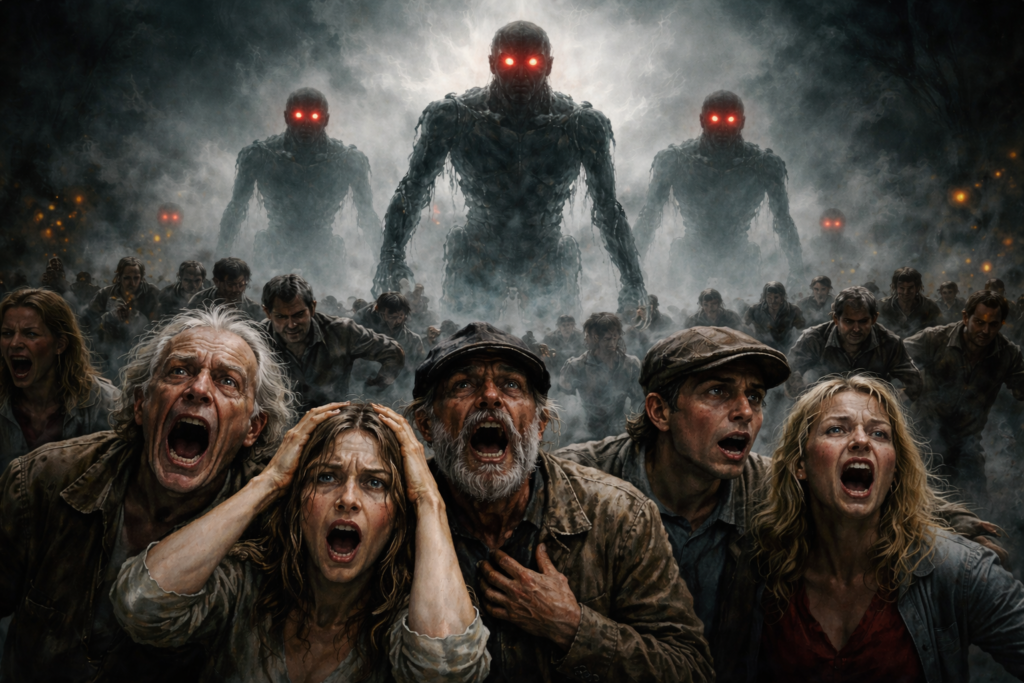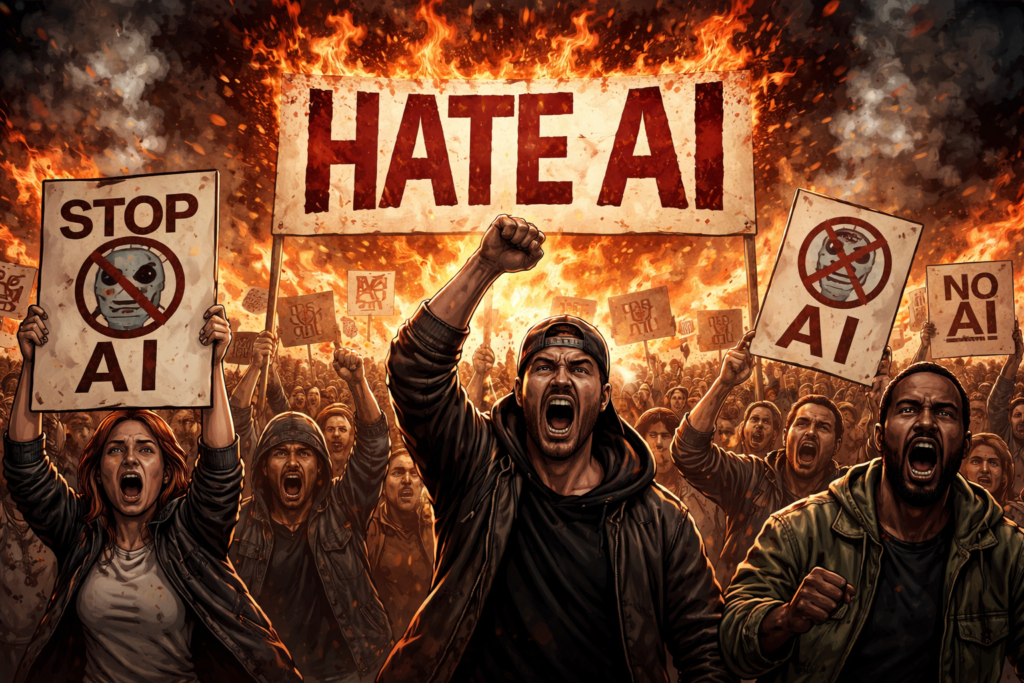
The appeal of a world without AI (and why it sounds sensible)
Why people are questioning AI
There’s a very human instinct behind your question:
- “We’re building systems we don’t fully understand”
- “We’re becoming dependent on technology”
- “We might lose control”
And to be fair… none of that is irrational.
Even UK parliamentary research states AI can bring “ethical harms and increased inequality” if not managed properly
The romantic idea
A world without AI looks like:
- more human interaction
- less automation
- slower, more deliberate living
Sounds peaceful.
Also sounds like:
- longer queues
- slower healthcare
- less efficient businesses
Funny how nostalgia edits out the inconvenient bits.
What we gain from AI (and why it’s so hard to reject)

Efficiency and productivity
AI:
- automates repetitive work
- reduces errors
- works 24/7
This isn’t theory. It’s already happening.
AI helps:
- process huge datasets
- reduce human error
- improve decision-making
Healthcare improvements
AI is being used to:
- detect diseases earlier
- analyse scans faster
- reduce NHS workload
Without AI:
- more delays
- more missed diagnoses
- more pressure on staff
So yes, you could remove AI…
but you’d also remove improvements people quietly rely on.
Economic growth and competitiveness
The UK economy leans heavily on:
- services
- data
- finance
AI fits perfectly into that model.
Without it:
- UK businesses fall behind
- productivity stagnates
- global competitiveness drops
Not exactly a winning strategy.
The real risks (and they are not small)
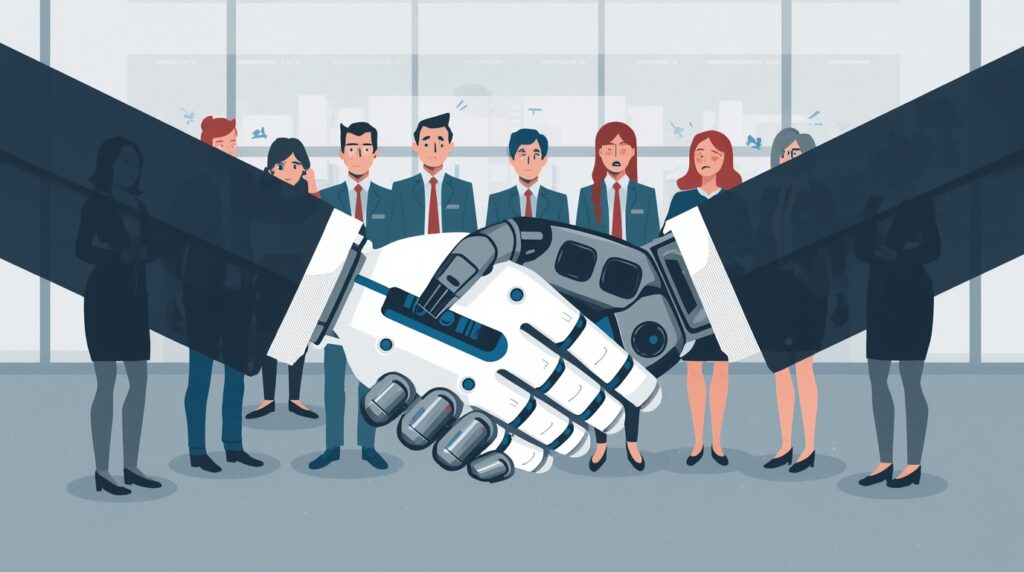
1. Loss of control (the big fear)
Experts have warned about:
- increasing autonomy of AI systems
- difficulty predicting outcomes
Some research highlights risks of “loss of human control over autonomous systems”
That’s not sci-fi. That’s serious academic concern.
2. Job disruption and inequality
- Millions of UK jobs could be affected or replaced
- AI may increase inequality if benefits are unevenly distributed
Translation:
Some people benefit massively.
Others get left behind.
Humans have a long history of handling that badly.
3. Bias and unfair decisions
AI systems can:
- reflect biased data
- reinforce inequality
Real UK example:
- AI used in benefits fraud detection showed biased outcomes
So much for “machines are objective.”
4. Over-reliance and skill loss
There’s growing concern that:
- people rely on AI instead of thinking
- skills degrade over time
And once you lose skills… getting them back is not as easy as uninstalling an app.
So… would we actually be better off without AI?
The honest answer: No, but not comfortably yes either
Let’s break it down.
Without AI, we would have:
- slower innovation
- less efficient healthcare
- weaker economic growth
- more manual work
With AI, we get:
- efficiency
- convenience
- growth
But also:
- risk
- dependency
- inequality
What experts actually say
The impact of AI depends on:
- regulation
- access
- how it’s used
In other words:
AI itself isn’t the problem.
How humans use it usually is.
Shocking, I know.
Can we go backwards and avoid AI altogether?
Technically? Yes (sort of)
You can:
- avoid smart tech
- reduce digital use
- live more offline
Realistically? Not fully
You cannot avoid:
- AI in banking
- AI in healthcare
- AI in government systems
- AI in businesses you interact with
Even if you opt out personally:
you’re still inside a system that runs on it.
The uncomfortable trade-off
Avoid AI:
- less convenience
- fewer opportunities
- slower services
Use AI:
- more efficiency
- more reliance
- more exposure to risk
There’s no “pure” option anymore.
Advertisement
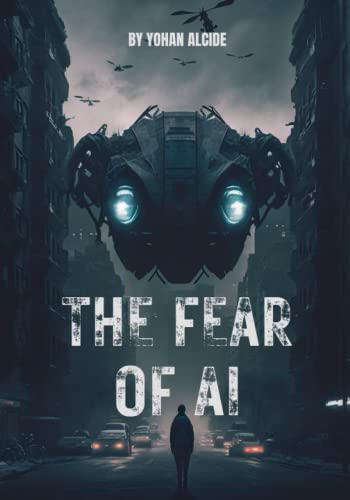
The real issue isn’t AI — it’s control and understanding
Here’s the part people circle around but don’t say clearly:
You don’t actually fear AI.
You fear:
- not understanding it
- not controlling it
- being dependent on it
And honestly… fair enough.
Even the UK’s own cyber security guidance says leaders need to understand AI risks, not just benefits
Because blindly using powerful systems has never gone wrong in human history. Ever.
Final conclusion (no sugar-coating)
The world is not better off without AI.
But it’s also not automatically better off with it.
AI is:
- a tool
- a force multiplier
- a risk amplifier
It will:
- improve lives
- disrupt systems
- create new problems
The real outcome depends on:
- how well it’s regulated
- how responsibly it’s used
- how prepared people are
So the question isn’t:
“Should AI exist?”
It’s:
“Can we control something we’re increasingly relying on?”
That’s the part still being figured out.
Sources & further reading
- UK Parliament – AI societal impact
https://post.parliament.uk/how-is-artificial-intelligence-affecting-society/ - UK Government – AI skills and future work
https://www.gov.uk/government/publications/ai-skills-for-life-and-work-rapid-evidence-review - Office for National Statistics – AI awareness
https://www.ons.gov.uk - LSE – AI and inequality
https://blogs.lse.ac.uk/inequalities/2025/07/15/ai-governance-and-inequalities/ - NCSC – AI risks and security
https://www.ncsc.gov.uk/guidance/ai-and-cyber-security-what-you-need-to-know - Tableau – AI advantages and disadvantages
https://www.tableau.com/data-insights/ai/advantages-disadvantages
Find Help and Support
We have created Professional High Quality Downloadable PDF’s at great prices specifically for UK Businesses. Which include help and advice on understanding what Artificial Intelligence is all about and how it can improve your business. Find them here.