The straight answer
AI itself is unlikely to be “replaced” in the same way DVDs replaced VHS. More likely, AI becomes the thinking layer inside a much wider technology stack: quantum computing, robotics, brain-inspired chips, synthetic biology, autonomous systems, personalised medicine, digital public services and always-on business automation.
So no, AI probably will not vanish. It will become boring infrastructure. Like electricity, cloud computing or contactless payments. Glamorous at first, invisible later. Humanity does love turning miracles into monthly subscriptions.
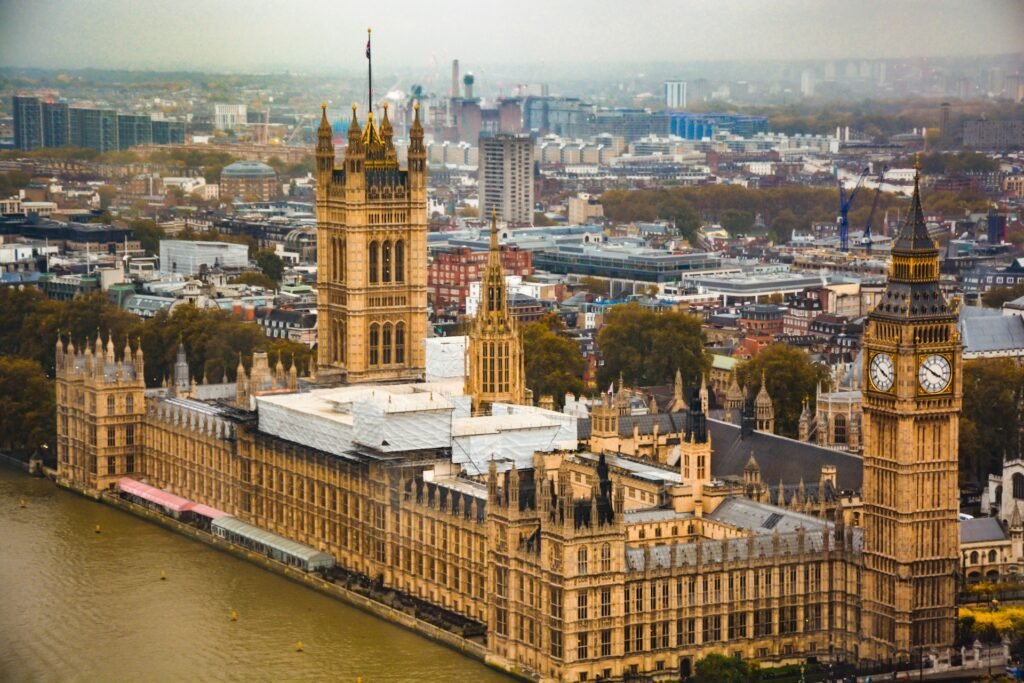
The UK Government’s own AI Opportunities Action Plan says AI is now being treated as a driver of economic growth, public service reform and national competitiveness, not just another software trend. Its 2026 update says the aim is to shape AI so it works “for all, not just a few at the top”. That tells you where the state thinks this is going: AI embedded into government, healthcare, education, policing, tax, transport, energy and work.
What Could Supersede AI?
1. Artificial General Intelligence, or AGI
The first thing likely to “supersede” today’s AI is simply better AI.
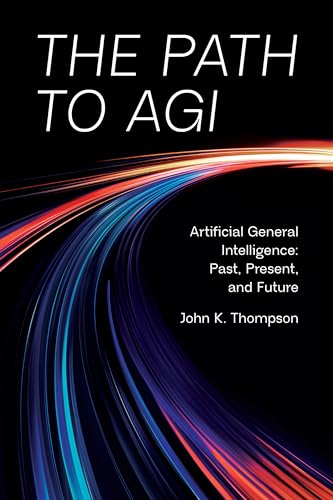
Current AI is powerful but narrow. It writes, summarises, codes, designs, analyses and automates tasks, but it still makes mistakes, needs supervision and lacks real-world understanding. AGI would mean systems that can reason, learn and adapt across many domains closer to human-level flexibility.
In plain English: today’s AI is a very fast specialist. AGI would be closer to a general-purpose digital worker.
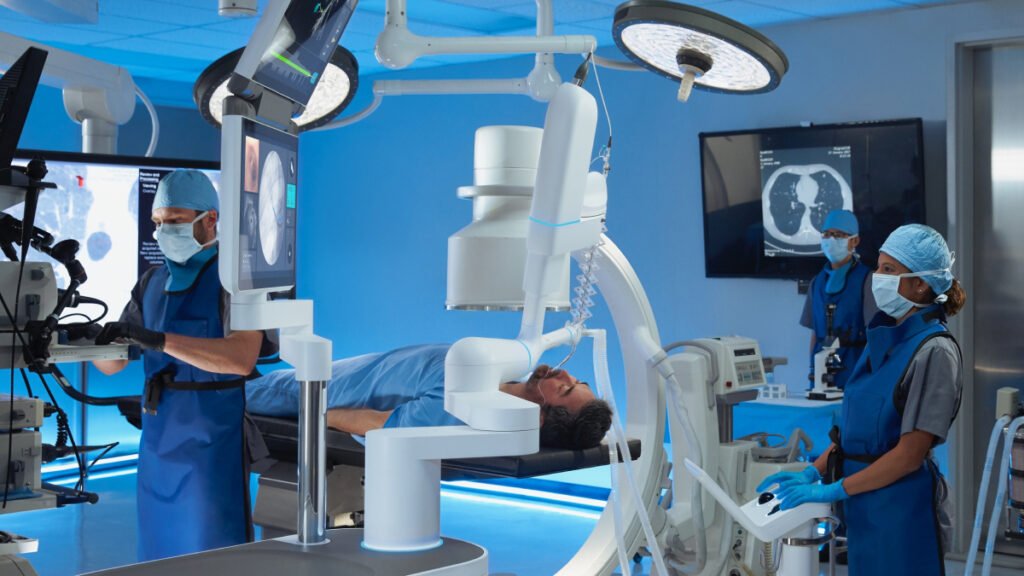
The consequence for the UK would be huge. Office work, legal support, accountancy, software development, customer service, marketing, admin and some management tasks would become far more automated. Not necessarily “everyone loses their job”, despite the internet’s addiction to doom, but many people would find their job rewritten around supervising, checking and directing AI systems.
See our instantly downloadable comprehensive playbook ‘What is AGI?‘ see our downloads section for this and more.
Advertisement
Everyday UK impact
Customers would speak to AI agents before human staff in banks, councils, insurers, energy firms and online retailers.
Small businesses would run with fewer admin staff.
Doctors, solicitors and accountants would use AI as a first-pass research and paperwork assistant.
Schools would face constant pressure over AI-written coursework.
Job interviews would start asking: “How do you work with AI?” rather than “Can you use Microsoft Office?”
The World Economic Forum’s Future of Jobs Report 2025 found that AI and information-processing technologies are expected by employers to be among the biggest forces transforming work by 2030.

2. Quantum Computing Plus AI
Why quantum matters
Quantum computing is not “faster laptops”, before someone starts imagining a glowing MacBook that opens Excel spiritually. It is a different form of computing that could eventually solve certain problems classical computers struggle with, especially in chemistry, materials, optimisation and cryptography.
Quantum on its own will not replace AI. But quantum plus AI could be explosive.
AI is good at recognising patterns and making predictions. Quantum computing could help model complex systems that are currently too difficult to simulate properly. Together, they could accelerate drug discovery, battery design, logistics, financial modelling, climate modelling and materials science.
The World Economic Forum’s Technology Convergence Report 2025 highlights the accelerating combination of AI, quantum computing and engineering biology as a major driver of future industrial and social change.
UK consequences
The NHS could benefit from faster drug research and better treatment modelling.
UK manufacturers could use better materials and production planning.
Energy companies could improve grid balancing and battery storage.
Banks and insurers could use more powerful risk modelling.
Cyber security would face major disruption, because quantum computing may eventually weaken some encryption methods used today.
This is not tomorrow morning. Quantum computing is still immature. But when it becomes useful at scale, it will not politely ask permission before rearranging entire industries.
Advertisement
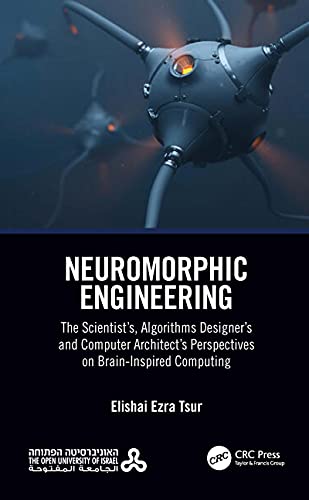
3. Neuromorphic Computing, or Brain-Inspired Chips
Why this may matter more than people think
One of the biggest problems with AI is energy use. Large AI models need huge data centres, expensive chips, cooling, power and water. That is not some abstract Silicon Valley issue. It affects UK grid demand, planning, energy costs and infrastructure investment.
Neuromorphic computing tries to mimic the way the brain processes information, combining memory and processing more efficiently. A recent University of Cambridge-linked breakthrough reported by ScienceDaily described a nanoelectronic device that could potentially cut AI energy use by up to 70% by processing and storing information in a more brain-like way.
UK consequences
AI assistants could run more locally on phones, laptops, cars, medical devices and smart home systems.
Businesses could use powerful AI without sending everything to giant cloud platforms.
Energy demand from AI could become less extreme.
Privacy could improve if more processing happens on-device.
Devices could become more autonomous, useful and frankly harder to switch off, because apparently your fridge needed ambitions.
This may not “replace” AI, but it could replace the current brute-force way of running it.
4. AI Plus Robotics
The real-world leap
AI currently lives mostly in screens: chatbots, search, image tools, spreadsheets, email, code and analytics. The next leap is AI inside machines that move through the world.
That means warehouse robots, delivery robots, care robots, agricultural robots, security drones, autonomous vehicles, robotic cleaners, construction machines and factory automation.
Robotics and automation are already highlighted by employers as major forces changing work, alongside AI and digital access.
Advertisement

- Perfect Home Power Station:The setup includes an MPPT hybrid inverter and two batteries. One inverter supports 120V and …
- 48V 100AH LiFePO4 Battery for Solar Systems:The ECO-WORTHY 48V (51.2V) 100AH LiFePO4 battery supports CAN/RS485 communic…
- Multi-Layer Safety Protection:Robust all-metal casing + 125A circuit breaker for physical safety.The inverter has protec…
UK consequences
Supermarkets and warehouses would automate more picking, packing and delivery.
Care homes may use robots for lifting, monitoring and routine support, although humans will still matter for dignity and emotional care.
Farms could use autonomous machines for harvesting, monitoring soil and reducing pesticide use.
Construction could use robotic surveying, bricklaying, inspection and site safety systems.
Delivery and logistics jobs would be reshaped, especially in cities.
The danger is not simply “robots take jobs”. The real danger is that productivity gains go to shareholders while workers get retraining leaflets and a cheerful PDF. Policy will matter.
5. Synthetic Biology and AI-Designed Medicine
The biological layer
Synthetic biology means designing or engineering biological systems. Combined with AI, it could change medicine, food production, agriculture, materials and environmental clean-up.
AI can help analyse genes, proteins, diseases and chemical interactions. Synthetic biology can turn those discoveries into new treatments, crops, enzymes, materials or industrial processes.
The Royal Society has examined AI’s role across science, technology, engineering and medicine, showing how AI is becoming part of scientific discovery itself.
UK consequences
The NHS could shift towards more personalised medicine.
Cancer screening and diagnosis could become faster and more accurate.
New vaccines and treatments could be developed more quickly.
Food production could become more resilient.
Biosecurity risks would rise, because powerful biology tools in careless or hostile hands are not exactly a cosy village fête.
This could be one of the biggest long-term successors to “AI as software”: AI becoming a discovery engine for controlling biology.
6. Ambient Intelligence
The invisible version of AI
Ambient intelligence means AI disappears into the environment. Instead of asking a chatbot, your home, car, workplace, phone, wearable, bank and public services quietly adapt around you.
This is where AI stops looking like a tool and starts looking like a layer of reality.
UK consequences
Your home could adjust heating based on energy prices, weather, occupancy and grid demand.
Your GP app could warn you before symptoms become serious.
Your car could book servicing before a breakdown.
Your bank could warn you about scams in real time.
Your council could automatically detect missed bins, potholes, housing repairs and benefit eligibility.
Your employer could track productivity, tone, workload and performance far more closely.
That last one is where the optimism hits a brick wall. Ambient intelligence could make life smoother, but it could also become ambient surveillance.
Will Anything Truly Supersede AI?
The honest answer
The most likely successor is not one single technology. It is convergence.
The next era will probably be:
AI plus quantum computing
AI plus robotics
AI plus synthetic biology
AI plus brain-inspired chips
AI plus autonomous agents
AI plus national data infrastructure
The World Economic Forum calls this kind of shift “technology convergence”, where multiple technologies combine to create new economic and social value.
So the thing that supersedes AI will probably be “AI everywhere, inside everything, connected to machines that act in the real world”. Catchy name? Not yet. Terrifying branding department? Inevitably.
Advertisement
Consequences For Everyday Life In The UK
Work and jobs
Some jobs will disappear. More jobs will be redesigned. The biggest impact will be on routine knowledge work: admin, reports, basic legal drafting, customer service, bookkeeping, marketing, recruitment screening and junior analysis.
The winners will be people who can use AI well, check its output, understand their industry and make decisions. The losers will be people doing repetitive digital work without adapting.
For UK SMEs, this could be a survival tool. A five-person company may suddenly do the work of ten. But larger competitors will also use it, so standing still becomes dangerous.
Public services
AI could help the NHS triage patients, spot disease earlier, reduce admin and manage waiting lists. Councils could use AI to process forms, detect fraud, plan repairs and answer residents faster.
But public trust will be fragile. If AI makes unfair decisions about benefits, housing, policing or immigration, the backlash will be severe. Britain is not short of forms already. Automating unfair forms would be a particularly British disaster.
Education
Students will use AI tutors. Teachers will use AI lesson planning. Schools will struggle to tell what pupils actually wrote. Exams may move back towards supervised work, oral assessments and practical demonstrations.
The bigger change is that memorising facts becomes less valuable. Asking better questions, checking sources and applying knowledge becomes more important.
Healthcare
The best-case scenario is earlier diagnosis, personalised care, faster appointments and less paperwork for clinicians.
The risk is two-tier care: wealthier people using advanced private AI health monitoring while overstretched NHS services adopt cheaper automated triage.
AI could improve access, but only if it is designed around patients rather than procurement theatre, which is where good intentions often go to be slowly laminated.
Energy bills and homes
AI could help manage energy use, optimise heating, forecast demand and support smart grids. Combined with better batteries and grid systems, it could reduce waste.
But AI data centres also increase power demand. The UK is already planning AI Growth Zones with better access to power and planning support.
So the impact on bills depends on whether AI saves more energy than it consumes. That is not guaranteed.
Privacy and surveillance
This is the ugly bit.
The more intelligent systems become, the more data they want. Voice, location, health, spending, energy use, workplace behaviour, driving habits, home devices and browsing patterns all become useful.
The UK will need stronger rules on transparency, consent, data sharing and automated decision-making. Otherwise, people will wake up inside a prediction machine and wonder why their insurance premium knows more about them than their family does.
Adveetisement

Crime and cyber security
Future AI will help criminals write scams, fake voices, clone identities, automate phishing and attack businesses faster.
It will also help defenders detect fraud, spot suspicious behaviour, block malware and monitor networks.
For ordinary UK households, scams will become more convincing. For SMEs, cyber security will become less optional and more like locking the front door. Revolutionary stuff, apparently.
Expert View
Geoffrey Hinton
AI pioneer Geoffrey Hinton has warned publicly that advanced AI could bring serious risks if systems become difficult to control. His wider concern is that highly capable AI may eventually behave in ways humans do not fully understand or manage. That is not a reason to panic, but it is a reason not to hand the steering wheel to software while clapping like seals.
Demis Hassabis
Demis Hassabis of Google DeepMind has often framed AI as a tool for scientific discovery, especially in medicine and biology. That view is important: the biggest future impact may not be chatbots writing emails, but AI accelerating discoveries humans could not reach quickly alone.
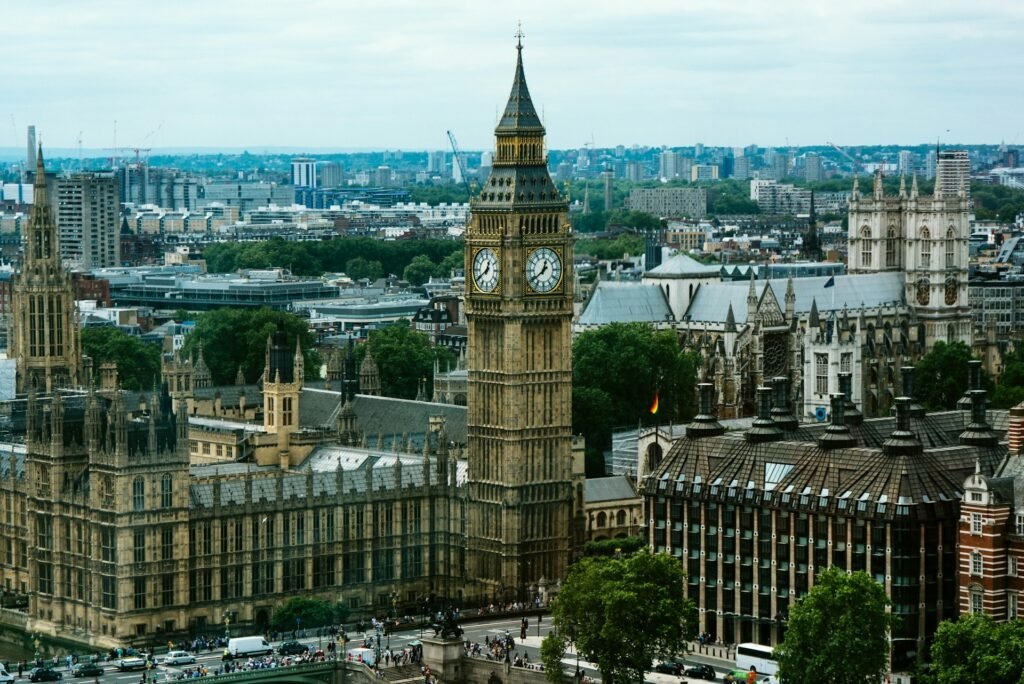
UK Government position
The UK Government is clearly betting that AI can improve public services, create jobs and grow the economy, while also acknowledging that people need support through the changes.
Final Verdict
What comes after AI?
Not a replacement. A merger.
The future is likely to be AI fused with quantum computing, robotics, synthetic biology, neuromorphic chips and autonomous systems.
For everyday life in the UK, that means smarter public services, more automated businesses, better healthcare tools, more personalised education, cheaper and more efficient services in some areas, and far more pressure on jobs, privacy, regulation and trust.
The real question is not whether AI gets superseded. It is whether Britain uses the next wave to improve ordinary life, or just builds a shinier machine for extracting money, data and patience from everyone.
Given human history, both outcomes are annoyingly plausible.
Help and Support
We have created Professional High Quality Downloadable PDF’s at great prices specifically for UK Businesses. Which include various helpful documents and real world scenarios your business might experience, showing what to do and how to protect your business. Find them here.