What Is a Cognitive City in Simple Terms?
A cognitive city is the next step beyond today’s smart city.
While smart cities collect and analyse data — things like traffic jams, pollution levels and energy use — cognitive cities interpret, learn and make autonomous decisions based on that data using Artificial Intelligence (AI).
In short:
A smart city observes what’s happening.
A cognitive city understands why it’s happening — and acts on it without waiting for humans to give instructions.
So rather than simply showing how many cars are on the road, a cognitive city might automatically reroute traffic, change bus timetables, or dim streetlights to save energy — all in real time.
How Cognitive Cities Work
AI as the “City Brain”
Cognitive cities are powered by Artificial Intelligence systems acting as a “brain” connecting various urban systems — transport, healthcare, housing, waste management, policing and energy.
They learn from sensor data, predict problems, and make local decisions automatically, often before humans even notice the issue.
For example:
- Detecting leaking water pipes before flooding occurs.
- Adjusting hospital staffing in response to predicted emergency-room surges.
- Redirecting electricity flow if renewable generation dips.
Advertisement

- 23.8″ FULL HD DISPLAY – 1920 x 1080 resolution in 16:9 format with 100Hz refresh rate and IPS technology for vibrant col…
- SMOOTH VISUALS – The 100Hz refresh rate reduces flicker for seamless scrolling and clear motion visuals – perfect for wo…
- TÜV RHEINLAND 3-STAR + COMFORTVIEW PLUS – Built-in ComfortView Plus reduces harmful blue light without compromising colo…
Digital Twins and Data Layers
These cities use digital twin technology – virtual replicas of real-world infrastructure – to run endless simulations.
The Alan Turing Institute describes a cognitive city as
“A continually learning digital organism, reacting to its environment and the citizens within it.” (Turing Institute Urban Systems Research Note, 2025)
This means that everything from waste routes to public events could be optimised through AI, not manual scheduling.
Smart Cities vs Cognitive Cities
| Aspect | Smart City | Cognitive City |
|---|---|---|
| Main Function | Uses sensors and data dashboards | Learns, interprets and acts autonomously |
| Human Role | Humans make final decisions | Humans supervise, but AI executes actions |
| Technology Used | Internet of Things (IoT), analytics | IoT + AI + Machine Learning + Predictive Modelling |
| Example Task | Reporting congestion | Predicting congestion and altering routes before it occurs |
The University of Cambridge Centre for the Study of the Digital Society (2025) emphasises that cognitive cities are “self-adjusting urban ecosystems, capable of altering their own structure and function without direct instruction.”
Examples Already Emerging
NEOM – Saudi Arabia
The world’s first large-scale example is NEOM, under construction in Saudi Arabia — planned as a fully AI-managed cognitive urban ecosystem integrating renewable power, autonomous vehicles and personalised people services.
The Financial Times (2024) reports that NEOM’s planners aim for
“a city that knows your preferences, builds services around you, and reacts to change faster than government ever could.”

Barcelona and Singapore
Both cities have introduced smaller “cognitive modules.”
Barcelona’s Superilla project uses AI to manage local air quality in real time, while Singapore’s Virtual City Brain system links energy, public transport and emergency response into a single adaptive hub — saving up to 25% in traffic congestion and energy waste (Singapore Smart Nation Office, 2025).
The UK Context
In Britain, projects such as the Greater Manchester Digital Twin Initiative and Cambridge Smart Infrastructure Lab are early steps toward cognitive city planning.
The Department for Science, Innovation and Technology (DSIT, 2026) describes the goal as
“AI-empowered local autonomy — where cities think, adapt and self-correct to save resources and improve life for people.”
How Cognitive Cities Will Evolve in Ten Years
1. Everyday Services Will Become Predictive
By the mid‑2030s, UK cities with advanced digital infrastructure could make public life far more seamless:
- Health services will predict outbreaks using environmental and hospital data.
- Transport networks will integrate AI directly with personal devices — suggesting departure times, ticket prices, or even rearranging routes on your behalf.
- Education systems may use adaptive scheduling based on traffic, weather or student performance patterns.
Advertisement

- 16 Million Colors: This gu10 smart bulb (bulb shape size: MR16) provides millions of vivid colors plus cool & warm ambie…
- Adjustable Brightness & Color Temp: Brightness (0-400lm) and color temperature (2700-6500K) can be tailored precisely to…
- Convenient Intelligent Controls: You can control the gu10 led bulb via Alexa and Google Home to free your hands, and wit…
2. Energy and Sustainability Gains
AI models will automatically balance renewable energy sources, cooling and heating systems, and street lighting — reducing carbon emissions and cutting costs.
The Carbon Trust (2025) predicts that cognitive urban energy systems could lower total emissions in major UK cities by 15–20% by 2035 through continual optimisation.
3. Governance and Public Trust Challenges
Decision-making will increasingly shift from councils to machines.
Questions of accountability — Who’s responsible if the AI makes a bad choice? — will dominate discussions.
The BBC Future Analysis (2025) warns that
“The future city will need oversight for its algorithms much like people once demanded oversight for local councils.”
Transparency and ethics will become just as important as energy savings.
4. Integration with Personal AI Assistants
Cognitive cities will connect seamlessly with peoples’ personal AI tools.
Imagine your household AI alerting public services directly: telling the council your bins are full, or delaying a delivery if sensors detect flooding nearby.
Convenience will increase — but privacy will remain the biggest trade-off.
How People Will Experience Life in a Cognitive City
| Daily Activity | Today | In 10 Years (Cognitive City) |
|---|---|---|
| Commute | You check apps for bus delays | The city sends personalised alerts and adjusts lights so your route flows faster |
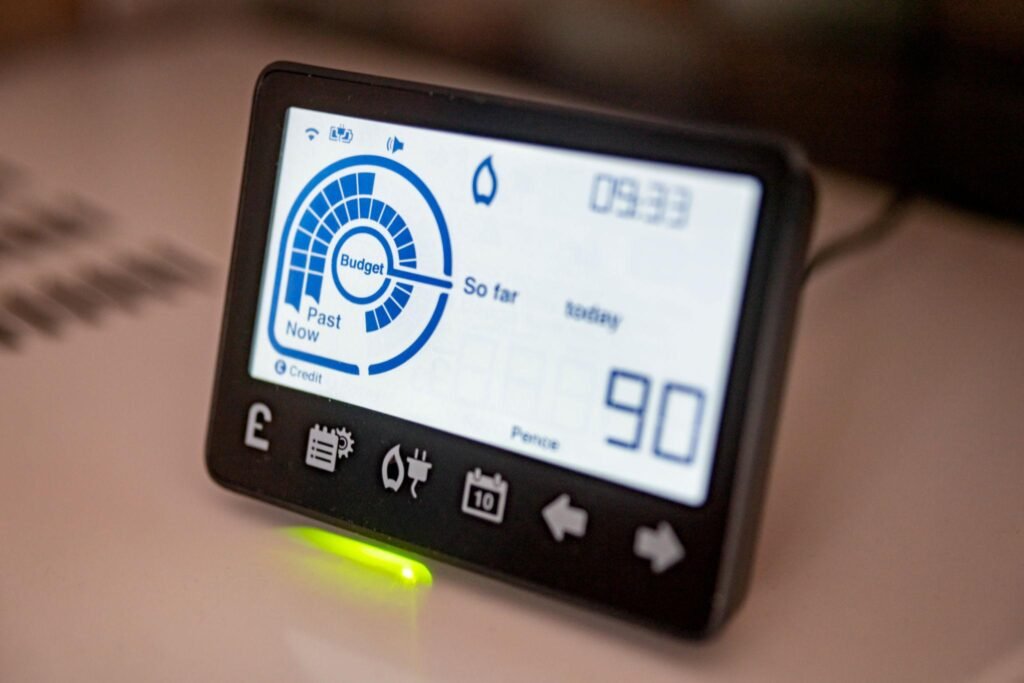
| Energy bills | Smart meter suggests savings | AI grid auto-adjusts tariffs based on your usage and renewable supply |
| Healthcare | You book GP appointments manually | Algorithms predict your appointment need or alert you to health risks |
| Waste management | Rubbish collected on schedule | Sensors trigger collection when bins reach set capacity |
The transition will be gradual but visible in subtle, time-saving ways rather than grand futuristic gestures.
Economic and Environmental Payback
Job Creation and AI Oversight
While automation will simplify tasks, human roles will shift from direct control to development, regulation and data auditing.
The London School of Economics (LSE Policy Unit, 2026) estimates that cognitive urban implementation could create 50,000–70,000 skilled AI management and sustainability jobs across the UK by the mid‑2030s.
Financial Efficiency
Cognitive systems save money through reduced fuel use, maintenance prevention and energy balancing.
If applied to Britain’s ten largest cities, Energy Systems Catapult (2025) projects annual savings of £2–3 billion in energy costs alone by 2035 — much of which can flow back into local housing, infrastructure, or health services.
A Real‑World View
Technological Promise vs Daily Reality
Cognitive cities sound futuristic, but their success will depend on people, not just algorithms.
Many of the sensors, connection speeds and ethical guardrails needed for them do not yet exist at the required scale in the UK.
There’s also risk of “digital overreach”, where councils spend on tech before residents actually demand or benefit from it — echoing the criticism levelled at early smart city projects.
Still, the march towards urban cognition seems inevitable. As one Cambridge technology sociologist, Dr Hannah Llewellyn, told The Guardian (2026):
“We’ll look back on 2020s cities as we now look at the dial-up internet era — clumsy, disconnected and too slow for what people expect.”
References (UK and Global Sources)
- Department for Science, Innovation and Technology (DSIT) – Urban Digital Strategy, 2026
- The Alan Turing Institute – Urban AI Research Note: Cognitive City Framework, 2025
- Carbon Trust – Smart Infrastructure and Energy Efficiency Study, 2025
- Financial Times – Inside the AI Brains of Future Cities, 2024
- BBC Future – Machine Minds: Who Governs the Cognitive City?, 2025
- University of Cambridge, Centre for Digital Society – Cognitive Urban Development Report, 2025
- Energy Systems Catapult – Urban Energy Optimisation Review, 2025
Summary
| Aspect | Present Smart Cities | Future Cognitive Cities (by 2035) |
|---|---|---|
| Function | Data collection and monitoring | Understanding and self‑optimisation |
| Decision‑making | Human-led | AI‑assisted or autonomous |
| Energy use | Reactive | Predictive and adaptive |
| People involvement | Passive | Interactive and customised |
| Major UK benefit | Incremental efficiency | £2–3 billion annual urban energy savings |
In conclusion:
A cognitive city is not just “smart” — it’s self‑thinking, using AI to understand cause and effect in urban systems and act on them autonomously.
Within ten years, British cities won’t look like science fiction landscapes, but they will function more intelligently, quietly adjusting to our behaviour to save time, energy and resources.
It’s the rise of the “thinking city” — efficient, connected, and, hopefully, just human enough to remember who it serves.
Find Help and Support
We have created Professional High Quality Downloadable PDF’s at great prices specifically for Personal or Business use in the UK. Which include help and advice on understanding what Artificial Intelligence is all about and how it can improve your business. Find them here.