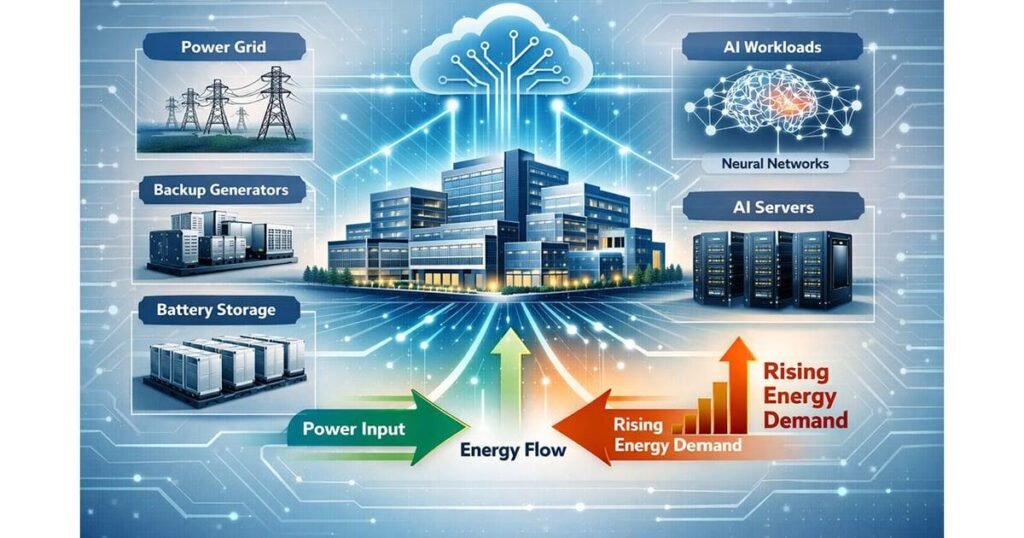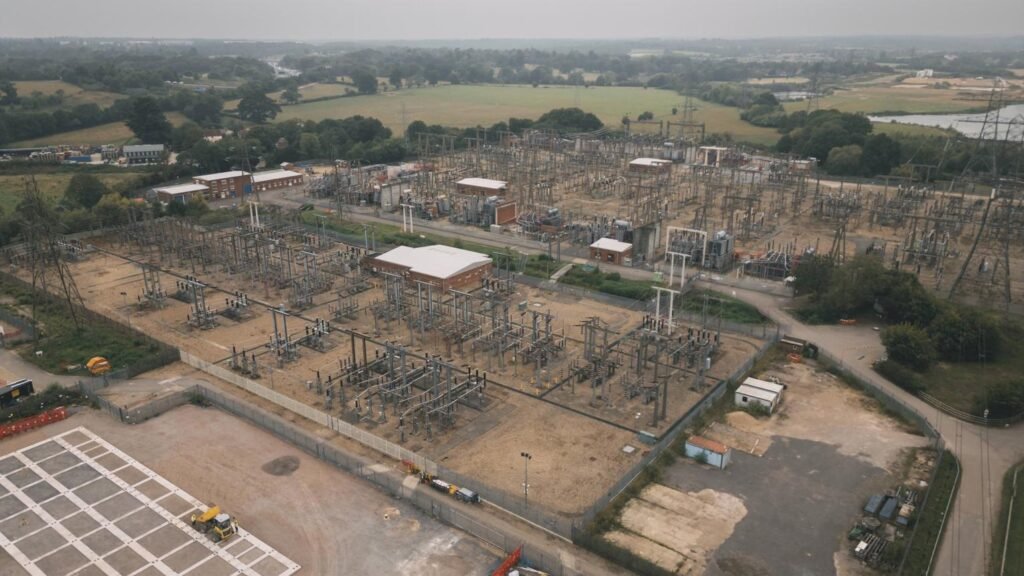
Artificial intelligence is rapidly becoming one of the largest new sources of electricity demand in Britain. Governments want AI investment. Technology firms want more data centres. Local authorities want economic growth. Electricity networks want new connections.
Then comes the awkward question nobody enjoys answering:
Should AI data centres receive cheaper electricity than everyone else?
It sounds like a simple policy debate. In reality, it sits at the centre of a growing conflict between economic growth, energy security, consumer fairness and industrial competitiveness.
Everybody wants cheap electricity until somebody else gets it first.

- Remote Control – Instantly turn connected devices on/off wherever you are through the Tapo app; Tapo P110 4-pack Alexa s…
- Schedule – Preset a schedule to automatically manage devices; P110 Alexa plug will facilitate your needs and you can sch…
- Timer – Create countdown timer lists for connected electronics with the Tapo smart plug
Why Some People Support Preferential Pricing
AI Is Becoming Critical National Infrastructure
Supporters argue that AI is no longer simply another business sector.
AI systems increasingly support:
- Healthcare analysis
- Cyber security
- Scientific research
- Financial services
- Government operations
- Industrial automation
If Britain wants to compete globally, advocates claim AI infrastructure should receive similar treatment to other strategically important industries.
Countries including the United States, China and parts of the Middle East are already offering incentives to attract major AI facilities.
The argument is simple.
If electricity costs are lower elsewhere, AI companies may simply build their facilities abroad instead.
Data Centres Create Wider Economic Activity
Large AI campuses require:
- Construction projects
- Electrical infrastructure upgrades
- Engineering services
- Telecommunications investment
- Local supply chains
Supporters believe cheaper energy could attract billions of pounds of investment into the UK economy.
The hope is that the wider economic benefits outweigh the cost of discounted electricity.
Why Critics Oppose Preferential Pricing
- Full control over your heating with the tado° app from anywhere, reduce your energy consumption and save money with the …
- Heating Boost: heat up all rooms for 30 minutes with one click in the app
- Smart Schedules for the perfect temperature individually in each room, at any time; only active when someone’s home; can…
Households Already Face High Energy Costs
The strongest criticism is straightforward.
Many UK households already struggle with energy bills.
Giving discounted electricity to multinational technology companies while consumers pay full price would be politically difficult to justify.
This criticism becomes stronger when AI data centres consume electricity on a scale that rivals small towns.
Someone Ultimately Pays
Electricity discounts rarely appear from nowhere.
The cost usually falls somewhere else:
- Taxpayers
- Other businesses
- Network operators
- Domestic consumers
Critics argue preferential pricing could effectively transfer costs from large corporations onto ordinary electricity users.
The uncomfortable reality is that electricity markets are not magical money-generating machines. Every discount has a funding source.
The Economic Argument For Discounts
UK Electricity Prices Are Relatively High
One reason the debate exists at all is Britain’s electricity pricing.
Many competing countries offer lower industrial electricity prices than the UK.
AI companies evaluating locations often compare:
- Land costs
- Planning regulations
- Grid access
- Water availability
- Electricity prices
Energy has become one of the largest operating expenses for AI facilities.
This is where the verified article AI Subscriptions vs Real UK Energy Costs fits naturally into the discussion, because it highlights how energy costs ultimately flow through to AI services, subscriptions and cloud computing charges.
The Fairness Argument Against Discounts
AI Is Not Producing Physical Goods
Traditional industrial discounts were often justified because manufacturers produced products, exported goods and employed large workforces.
AI data centres are different.
Many facilities employ relatively small permanent teams once construction finishes. Some large facilities may operate with only a few dozen full-time staff despite consuming enormous amounts of electricity.
Critics therefore ask:
Why should a data centre receive cheaper power than:
- Manufacturers?
- Small businesses?
- Hospitals?
- Households?
The question becomes harder to answer as electricity demand continues rising.

Could Time-Based Pricing Be A Compromise?
Reward Flexibility Rather Than AI
Some energy economists favour a different approach.
Instead of giving AI companies permanently cheaper electricity, data centres could receive lower prices only when they help stabilise the grid.
For example:
- Lower prices overnight
- Discounts during periods of excess renewable generation
- Reduced tariffs when demand is low
This would reward flexible consumption rather than simply rewarding AI companies for existing.
It could also reduce pressure on consumers during peak demand periods.
What Happens If Britain Refuses?
AI Investment May Move Elsewhere
The opposing risk is that Britain becomes less attractive for AI infrastructure investment.
Major AI operators can choose locations globally.
Regions offering:
- Lower electricity costs
- Faster grid connections
- More supportive planning policies
may attract investment that might otherwise have come to the UK.
This concern appears regularly in discussions about AI infrastructure costs and UK competitiveness.
What Does This Mean For Consumers?
Consumers Want Benefits, Not Just Costs
Most households are unlikely to oppose AI investment if they see clear advantages.
The challenge is ensuring benefits reach ordinary people through:
- Lower AI service costs
- Better public services
- Improved productivity
- Economic growth
- Grid improvements
This is where the verified article Does AI Increase Energy Bills in the UK? becomes particularly relevant because it explores whether rising AI demand ultimately affects household electricity costs.

- Back-UPS BX provides guaranteed power and surge protection for desktop computers, wireless networks, gaming consoles and…
- 700 VA/390 Watts – Automatic Voltage Regulation (AVR)
- PowerShute shutdown software – USB Connector
The Most Likely Outcome
Selective Support Rather Than Cheap Power For Everyone
The most probable outcome is neither extreme.
Britain is unlikely to provide blanket discounted electricity for all AI data centres.
However, governments may support projects through:
- Faster planning approval
- Grid connection priority
- Infrastructure investment
- Renewable energy partnerships
- Flexible tariff arrangements
In other words, policymakers may avoid calling it “preferential pricing” while creating conditions that effectively reduce costs anyway.
A classic government solution: avoid the controversial phrase while quietly implementing something that looks remarkably similar.
Conclusion
Whether AI data centres should receive preferential energy pricing depends largely on what society expects in return.
If discounted electricity produces:
- Jobs
- Investment
- Innovation
- Improved public services
many voters may accept it.
If it simply increases corporate profits while households face rising bills, opposition will grow quickly.
The real debate is not about electricity pricing alone.
It is about who benefits from Britain’s AI future and who ends up paying for the infrastructure that makes it possible.
Reference Material
UK Sources
- National Grid Future Energy Scenarios
- Ofgem Electricity Market Reports
- Energy Systems Catapult Energy System Modelling Research
- International Energy Agency Data Centre Energy Analysis
- Department for Science, Innovation and Technology AI Infrastructure Policy Publications