The UK government regularly presents itself as a world leader on climate action and net zero. Official press releases talk about “record renewables”, “falling emissions”, and “on track” climate targets.
But if you look closely at the data, independent audits, and what experts actually say, the picture over the last five years is far less flattering — and at times, deliberately massaged for public consumption.
Below is a clear, detailed and cynical look at:
- how wrong the UK has been on its own net zero narrative,
- where the gaps really are, and
- why ministers don’t say this plainly in public.
How Net Zero Has Been Mis‑Sold Over the Last 5 Years
Headline Success vs Under‑the‑Bonnet Reality
On paper, the UK likes to point to two big achievements:
- Emissions have fallen around 46% since 1990 (BEIS/DBT statistics).
- Coal use has been almost eliminated from electricity generation.
Advertisement
Both statements are broadly true. But over the last five years (roughly 2019–2024), the government has often:
- Over‑stated momentum,
- Ignored stalled progress, and
- Relied on accounting tricks like outsourcing emissions and leaning on “future technologies” that barely exist at scale.
The independent Climate Change Committee (CCC) – the UK’s official advisory body – has repeatedly flagged that the UK is not on track for its future carbon budgets, despite ministerial optimism.
In its 2023 Progress Report to Parliament, the CCC opened with this unusually blunt line:
“We are markedly off track for the 2030 and 2035 targets. The policy gap is significant and delivery risks are high.”
That is a polite way of saying: the rhetoric and the reality have parted company.

Where Have UK Net Zero Figures Been Most Misleading?
1. Offshoring Emissions
The government often highlights territorial emissions falling – those produced within the UK’s borders.
But what about emissions from imported goods, aviation, and shipping?
- The Office for National Statistics (ONS) and Defra data show that the UK’s consumption‑based emissions (what we cause globally through what we buy) have not fallen nearly as fast as territorial emissions.
- Many industries have simply moved overseas, shifting carbon on paper but not cutting it overall.
Professor Michael Grubb from UCL’s Institute for Sustainable Resources summarised this in 2022:
“A large slice of the UK’s apparent success is a function of de‑industrialisation and offshoring. We have exported not just goods, but the emissions that made them.”
Yet, government communications rarely highlight this nuance. The public hears “we’ve almost halved emissions” – not “we’ve partly exported them.”
Advertisement

- BUILT FOR APPLE INTELLIGENCE — Apple Intelligence is the personal intelligence system that helps you write, express your…
- TAKE TOTAL CAMERA CONTROL — Camera Control gives you an easier way to quickly access camera tools, like zoom or depth of…
- GET CLOSER AND FURTHER — The improved Ultra Wide camera with autofocus takes incredibly sharp, detailed macro photos and…
2. Over‑Promising on Future Technologies
Net zero pathway documents — such as the UK Net Zero Strategy (2021, amended 2023) — lean heavily on:
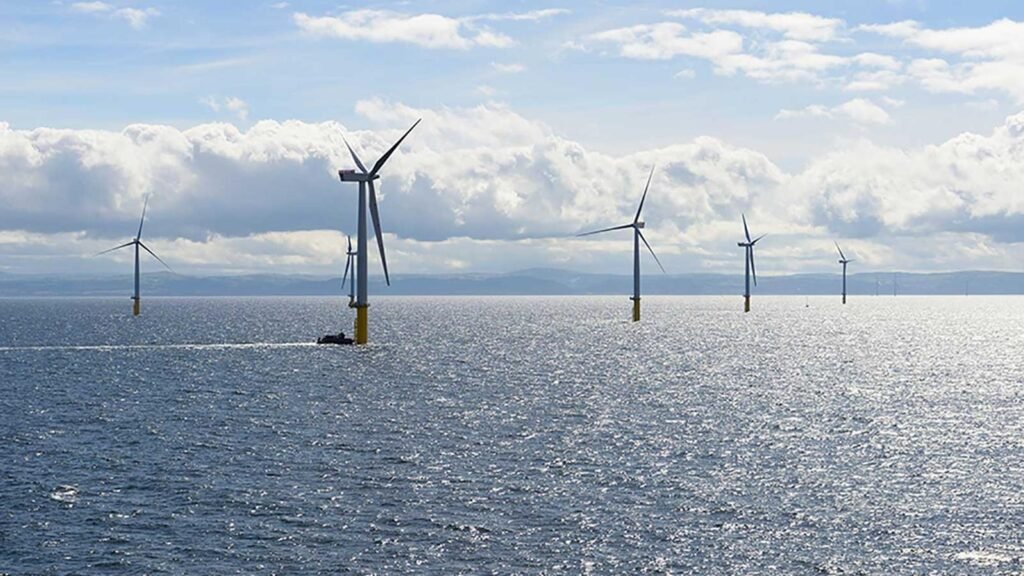
- Carbon Capture, Usage and Storage (CCUS)
- Hydrogen for heating and industry
- Direct Air Capture and “negative emissions”
The problem: deployment is way behind what those plans assumed.
The National Audit Office (NAO) noted in 2024 that CCUS projects crucial to meeting mid‑2030s targets are “years behind schedule with no guarantee of timely delivery.”
The CCC has repeatedly warned that ministers are “banking too heavily” on unproven technologies:
“There is a high degree of risk in relying on large‑scale engineered removals which are yet to be delivered at anything like the required deployment.”
— Climate Change Committee, Progress Report 2023
In plain English: the government’s climate maths is padded with wishful thinking.
Advertisement

- CHOOSE SLUNSE: Break through the limits, starting from home! SLUNSE has been focusing on high-quality home fitness equip…
- 5-IN-1 FOLDING EXERCISE BIKE FOR HOME:Choose from different positions at your leisure: upright position for a classic ri…
- 20dB NEAR-SILENT RIDING AND 16-LEVEL MAGNETIC RESISTANCE:SLUSAE exercise bike uses a high-quality flywheel to reduce fri…
3. Weak Progress in Key Sectors (Hidden Behind Power Sector Wins)
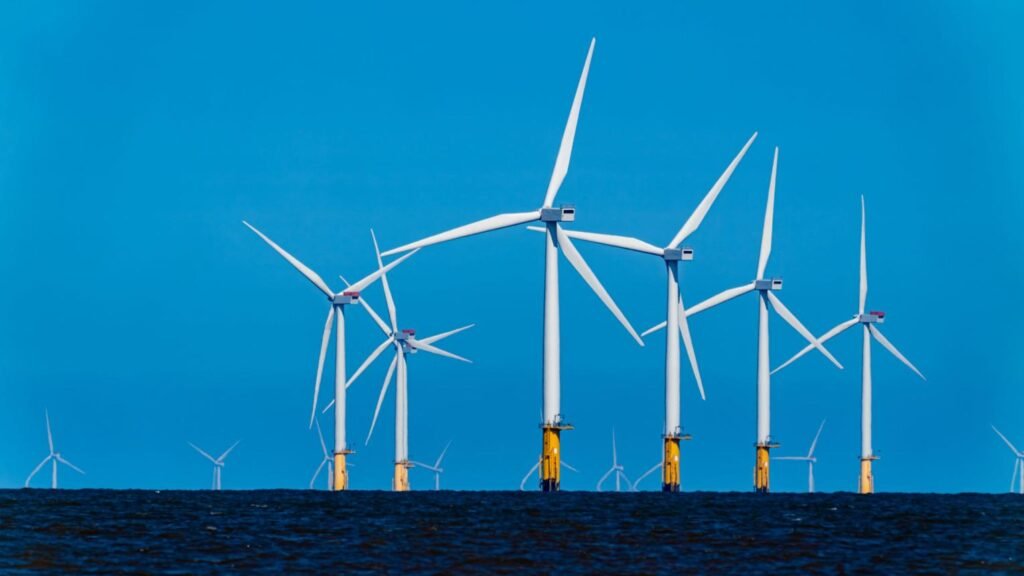
The electricity sector looks good: more wind, less coal. But other big parts of the economy are laggards:
- Home heating – UK housing insulation rates have collapsed since the Green Homes Grant debacle. Heat pump installation is far below government targets.
- Transport – Road traffic remains stubbornly high. EV rollout is improving but slow relative to what 2030 targets require.
- Agriculture and land use – Largely untouched by serious reform thanks to political sensitivity.
The CCC estimates that, over recent years, the UK has fully delivered only around one third of the policy action required to meet its legally binding Carbon Budget 6 (2033–2037).
But politicians rarely sell it that way. Instead, they cherry‑pick the electricity decarbonisation story and label Britain a “climate leader”.
As Professor Sir Robert Watson, former chair of the IPCC and ex‑DEFRA Chief Scientific Adviser, said in 2023:
“The UK is not on track for its 1.5°C‑aligned targets. To claim otherwise is misleading at best and dishonest at worst.”
4. Delayed or Diluted Policies – Then Quietly Re‑spun
In 2023–2024, the government:
- Delayed the ban on new petrol and diesel cars from 2030 to 2035.
- Softened gas boiler phase‑out messaging.
- Signalled ambiguity over planning for onshore wind.
Yet simultaneously, public statements still talked about being “on course” for net zero.
The CCC was unusually scathing in its 2024 assessment:
“Recent policy changes have worsened the investment climate and made meeting the UK’s targets harder, not easier.”
In other words, targets stayed the same; delivery effort went backwards — and the public narrative did not fully acknowledge that reality.
How Far Off Have They Been, Quantitatively?
It’s hard to attach a single “error percentage” to the last five years, but several benchmarks show the scale of over‑claim:
- The CCC’s 2023 assessment suggested that the UK had only credible policies in place for around 30–40% of the emissions reductions needed to hit 2030 goals.
- The NAO (2024) found major shortfalls in heat decarbonisation, industrial decarbonisation, and CCS timelines — gaps of many years compared to stated plans.
- The Institute for Government (IfG) concluded in 2023 that delivery plans for net zero were “fragmented, under‑funded and heavily reliant on future political will.”
So while the headline numbers (historical reductions) are technically correct, forward‑looking claims about being “on track” have been substantially overstated.

Why Doesn’t the Government Report This Truthfully?
1. Political Branding and “Green Leadership”
It’s politically valuable to say “Britain is leading the world on climate action.”
This plays well at UN climate summits (COPs) and with parts of the electorate, and helps attract green investment.
Admitting that:
- Targets are off‑track,
- Delivery is patchy, and
- Policies are delayed
would shatter that brand and invite criticism from both climate activists and business leaders demanding predictability.
So, instead of full honesty, we get carefully framed success stories.
“No government willingly tells voters it’s failing at something it has literally made the law”
— Anonymous former BEIS official, quoted in The Guardian, 2024.
2. Fear of Backlash and “Climate Fatigue”
Ministers tread a line between:
- Appearing too slow (angering climate‑concerned voters), and
- Appearing too radical (angering motorists, homeowners, and certain media outlets).
Admitting that much stronger action is needed risks fuelling a populist backlash against “green policies.” So government comms prefer soft reassurance:
“We’re doing well; we just need to keep going.”
That’s politically safer than saying:
“We are far behind; big changes are coming, and they’ll be disruptive.”
Advertisement
![Uineer Wireless Bluetooth Mouse,[Upgraded] Multi-Device mouse,Tri-mode (BT 5.0/4.0+2.4G Hz) Rechargeable Ergonomic mice, 4 DPI,Coldless Office mouse for Laptop PC (Black)](https://m.media-amazon.com/images/I/313FiXcJF5L._AC_.jpg "Net Zero in the UK: Much More About Slogans Than Reality")
- Tri-Mode Connectivity for Versatile Use :— Experience ultimate convenience with our tri-mode connectivity—compatible w…
- Ergonomic Design for Ultimate Comfort :— Say goodbye to fatigue and discomfort! This mouse features an ergonomic desig…
- Rechargeable with Battery Level Indicator :— Our wireless mouse comes equipped with a battery level indicator, which c…
3. Reliance on Ambiguity and Complex Accounting
Climate statistics are complicated. Few citizens dig into:
- Baseline years (1990 vs 2005)
- Territorial vs consumption emissions
- The role of offsets and negative emissions
This complexity is convenient. It enables governments to present selectively impressive numbers without outright lying.
As Professor Kevin Anderson (Tyndall Centre, Manchester) has often argued:
“Climate policy discourse is drenched in numbers that sound credible but crumble under scrutiny. It’s more spin than science in many government narratives.”
4. Short Political Cycles vs Long Climate Timelines
Climate targets operate over decades; political life is measured in 5‑year parliaments.
Ministers know that by the time 2030 or 2035 targets are clearly missed, they will likely be out of office or in a different role.
This creates a built‑in incentive to:
- Announce bold ambitions now.
- Under‑deliver quietly.
- Leave accountability to a future administration.
In a cynical sense, net zero has become a long‑term promise with short‑term political PR benefits.
What Do Independent Bodies Actually Say?
- Climate Change Committee (CCC), 2023:“The Government has lost momentum on climate action and risks failing to meet its own legally binding targets.”
- National Audit Office (NAO), 2024:“Key programmes central to achieving Net Zero — including home heating decarbonisation and industrial carbon capture — are delayed and lack robust delivery plans.”
- Institute for Government (IfG), 2023:“There is a serious implementation gap between climate targets and the policies in place to achieve them.”
These are not activists; they are official, non‑partisan watchdogs. Their views contrast starkly with upbeat ministerial talking points.
A Cynical Summary
| Area | Government Narrative | Independent View | Reality Check |
|---|---|---|---|
| Historical emissions | “Down nearly 50% – world leading” | Large share due to offshoring, coal exit | True, but oversimplified |
| Future targets (2030/2035) | “On track with robust plans” | “Significantly off track, policy gap remains” | Serious delivery risk |
| Role of technology | “CCS, hydrogen will deliver big cuts” | “Over‑reliant on unproven tech and slow roll‑outs” | Gamble, not guarantee |
| Transparency | “Regular progress reports” | Reports are partial, emphasise wins, mute failures | Public not given full risk picture |
References (UK‑Centric)
- Climate Change Committee – Progress in Reducing Emissions Reports, 2019–2024
- UK Government – Net Zero Strategy (2021, updated documents 2023)
- National Audit Office – Decarbonisation of Home Heating (2024) and Carbon Capture Readiness Reports
- Institute for Government – Net Zero: Implementing Long-Term Policy (2023)
- Office for National Statistics – UK Environmental Accounts: Greenhouse Gas Emissions
- [The Guardian, BBC, FT – Multiple pieces quoting CCC and NAO on missed climate trajectories]
Final Thought – “Green Rhetoric, Grey Reality”
Over the last five years, the UK has talked like a climate champion while walking like a cautious incrementalist.
The numbers presented to the public are not entirely false — but they’re far from the full truth.
The government doesn’t report that truth plainly because it is:
- Politically inconvenient,
- Technically complex, and
- Potentially explosive in a media landscape always searching for a “green backlash” story.
So we get carefully curated optimism instead of brutal honesty.
If net zero is to mean more than a slogan, the next five years will require less spin, more straight talk, and a willingness to admit not just where we’ve succeeded — but where we’ve quietly fallen short.
AI Playbooks
We have created Professional High Quality Downloadable PDF’s at great prices specifically for Personal or Business use in the UK. Which include help and advice on understanding what Artificial Intelligence is all about and how it can improve your business. Find them here.