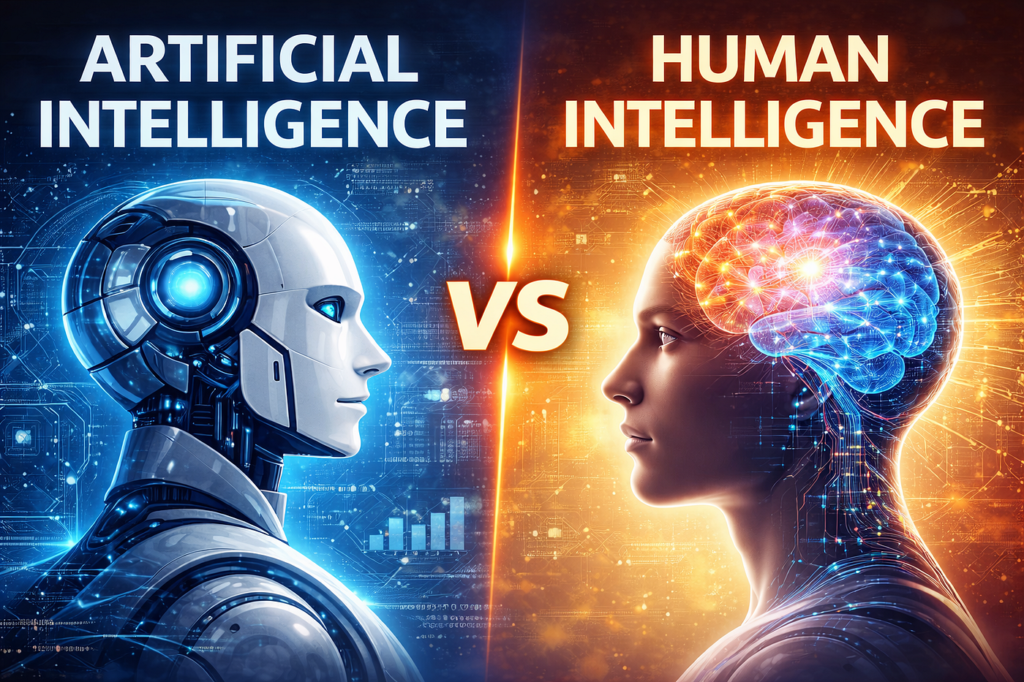
If one form of AI is destined to shape everyday British life in the late 2020s, it is “Generative AI” — systems capable of producing human‑like language, images, music, code and decision recommendations.
While robotics, healthcare AI, and predictive analytics will all matter, generative models such as ChatGPT, Google Gemini, and Anthropic’s Claude, along with speech‑ and image‑based companions built on similar technology, are set to drive the most visible social change.
These systems will likely become digital mediators in almost every aspect of living: work, healthcare, education, communication, and government services.
“Generative AI is not just another app; it’s the arrival of a new kind of interface between citizens and institutions,”
— Professor Sandra Wachter, University of Oxford, Oxford Internet Institute (2025).
Why Generative AI Will Drive the Next UK Revolution
Automation of Everyday Tasks
From writing job applications to managing household finances or student essays, AI assistants will blur the line between human and machine productivity. By 2030, the Office for National Statistics (ONS) estimates that nearly one‑third of UK jobs will incorporate some level of AI automation.
Advertisement

- 23.8″ FULL HD DISPLAY – 1920 x 1080 resolution in 16:9 format with 100Hz refresh rate and IPS technology for vibrant col…
- SMOOTH VISUALS – The 100Hz refresh rate reduces flicker for seamless scrolling and clear motion visuals – perfect for wo…
- TÜV RHEINLAND 3-STAR + COMFORTVIEW PLUS – Built-in ComfortView Plus reduces harmful blue light without compromising colo…
Healthcare and the NHS
The NHS is already trialling chatbot triage systems and AI diagnostic tools that can summarise patient histories and detect disease patterns.
When scaled nationally, these could provide faster access to GP services and lower waiting times — if implemented safely.
Education and Public Life
AI tutors will offer customised learning plans, potentially narrowing achievement gaps while raising questions about plagiarism, bias and over‑reliance on machine support.
Societal Mediation
Generative AI will likely mediate how Britons consume information: news summaries, electoral messaging, even customer service will increasingly be produced or parsed by autonomous systems.
“AI isn’t just reading the news anymore — it’s writing it, filtering it, and deciding which version of events you see first.”
— Dr Edina Harbinja, Aston University, expert in digital governance (2026).
Three Scenarios for the Next Five Years
Scenario 1: Best‑Case — “Collaborative Intelligence Britain”
What Happens
- The UK embeds strong regulation under the AI (Safety and Transparency) Act 2026, aligning innovation with accountability.
- Schools, small businesses and healthcare services integrate trustworthy AI assistants trained on high‑quality, locally verified data.
- AI reduces NHS administrative workloads by 20–30 %, freeing staff for patient care.
- Universal digital‑skills retraining ensures that manual workers, teachers and civil servants gain meaningful AI literacy.
See our highly informative guide on AI For UK Sales Growth
Outcome
A broad productivity lift supports steady wage growth and less clerical drudgery. People’s data stays within regulated national frameworks rather than leaking to multinational platforms.
Social media misinformation declines as verified AI moderation filters false accounts before they spread.
“If the UK treats AI like electricity — a public utility regulated for fairness and safety — it could power social equity rather than widen divides,”
— Sir Patrick Vallance, Government Chief Scientific Adviser, interview with BBC Science and Policy Forum, 2025.
Estimated Benefits
- GDP boost: +2 % annually by 2030.
- Energy savings: up to 10 % via predictive optimisation in homes and transport.
- Public approval: AI viewed as a helper, not a threat.

Scenario 2: Worst‑Case — “Fragmented & Automated Britain”
What Happens
- Regulatory capture by large tech firms allows unaccountable, opaque AI systems to dominate everything from employment screening to healthcare triage.
- Data breaches, misinformation and biased algorithms erode trust.
- The NHS becomes dependent on private AI suppliers, locking taxpayers into costly contracts.
- Rapid automation triggers job displacement for 2–3 million Britons, particularly in administrative sectors, call centres and logistics.
“Unregulated generative AI will do for knowledge work what outsourcing once did for manufacturing — make it cheap, quick and expendable,”
— Dr Dame Wendy Hall, University of Southampton and member of the UK AI Council (2026).
Outcome
Public anger grows as data scandals multiply.
Political parties weaponise AI‑generated propaganda during elections.
Cybercrime surges; smaller companies collapse under compliance and licensing costs.
Estimated Consequences
- Data‑breach cost: £8 billion in losses across finance and healthcare.
- Job displacement: up to 10 % of the UK workforce needing retraining.
- Social trust: steady decline in belief that AI acts in the public interest.
Advertisement

- SWITCH TO SMART LIGHTING – Start enjoying the benefits of smart lighting straight away: simply screw in your new LED lig…
- CREATE AMBIANCE WITH COLOR – Find the right ambient lighting for any mood with millions of colors and a packed library o…
- SMOOTH DIMMING – Easily dim your energy efficient bulb from full brightness all the way down to 2% using the Hue app to …
Scenario 3: Most Likely — “Hybrid Adaptation Britain”
What Happens
- The UK follows a pragmatic middle path — gradual regulation, moderate corporate influence, and ongoing public scepticism.
- AI becomes indispensable for paperwork, scheduling, medical image reading, and smart‑city planning, but governance struggles to keep pace.
- Public bodies use generative AI, yet transparency gaps remain. Occasionally, AI decisions lead to small‑scale scandals — a mis‑scoring of benefit claims, or biased police analytics — prompting reactive policy tinkering rather than holistic reform.
Outcome
Daily convenience improves — faster public‑service responses, smarter transport and energy systems — but privacy erosion and algorithmic bias persist.
The technology neither collapses nor liberates society: it simply becomes another part of life.
“Britain’s AI future will not be a revolution but a slow absorption: we’ll notice it most when it breaks,”
— Professor Alan Winfield, University of the West of England, robotics ethicist (2025).
Predicted Impact
- GDP growth: modest +0.5–1 % annually by 2030.
- Employment: roughly neutral, with 1 million jobs lost and 1 million created.
- Public sentiment: mildly distrustful but reliant — similar to how people currently view banking algorithms and social media.
Comparative Summary
| Scenario | Economic Outcome | Social Consequence | Public Trust Level | Environmental Impact |
|---|---|---|---|---|
| Collaborative Intelligence Britain | High productivity, equitable growth | Inclusion & skills reform | Strong trust, clear regulation | Carbon‑neutral data centres, greener AI |
| Fragmented & Automated Britain | Short‑term profit, long‑term instability | Inequality & political manipulation | Very low trust | High energy demand, unregulated waste |
| Hybrid Adaptation Britain (most likely) | Modest gains, manageable disruption | Uneven progress | Mixed trust, ongoing tension | Neutral to slight improvement |
A Real‑World, Cynical View
For all the optimistic forecasting, AI’s societal trajectory will depend less on what the technology can do and more on who controls it.
The UK sits between two powerful models: American corporate dominance and European regulatory caution.
If Westminster continues to side with investors over people, we may see AI’s profits flow upwards while ordinary households absorb the risks — through unstable work, privacy erosion and higher energy costs.
Generative AI will shape our lives not by spectacular breakthroughs but by quiet substitution: replacing small human decisions day after day until we hardly notice them missing.
“AI will not arrive with fanfare; it will seep into everything, and by the time we realise its power, we’ll already depend on it,”
— Dr Kanta Dihal, Leverhulme Centre for the Future of Intelligence, University of Cambridge (2026).
References (UK‑Focused)
- Office for National Statistics – UK AI Workforce Impact Survey, 2025
- UK Government – AI Safety Summit Outcome Report, 2025
- Oxford Internet Institute – AI and Public Trust in Britain, 2025
- BBC Science & Policy Forum – AI Ethics and Future Governance, 2025
- Energy Systems Catapult – Digital Infrastructure and AI Energy Use Study, 2026
In conclusion:
The next five years in the UK will be defined by the spread of generative and decision‑support AI systems — tools that write, advise, predict and automate.
If governed wisely, they could relieve work pressure, cut waste and improve public services.
If mishandled, they could entrench inequality and surveillance.
Most likely, they’ll change Britain quietly but relentlessly — convenient, costly, and impossible to live without.
Find Help and Support
We have created Professional High Quality Downloadable PDF’s at great prices specifically for Personal or Business use in the UK. Which include help and advice on understanding what Artificial Intelligence is all about and how it can improve your business. Find them here.