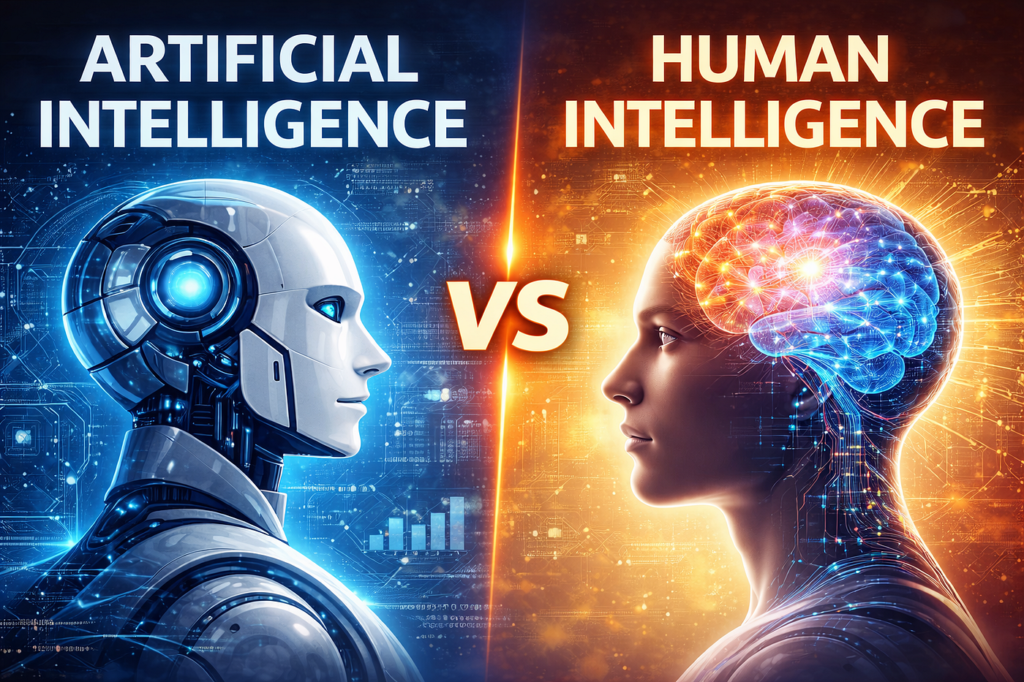
Artificial Intelligence (AI) has rapidly entered nearly every area of predictive analysis, from stock markets to sports betting. In recent years, several data analysts, technology start-ups, and individual punters have turned to AI models to forecast outcomes in English horse racing.
On the surface, AI seems perfect for the job: it can process thousands of variables — horse performance, jockey statistics, weather, track conditions, and past race data — far faster than any human could. However, the reality is far more complicated.
The Realities of Gambling on Horse Racing with AI
Data Helps, but Luck Still Rules
Horse racing remains inherently unpredictable. Even the most advanced AI can only deal with probabilities, not certainties. Factors such as a horse’s temperament, an unexpected stumble, or a last-minute change in tactics cannot be modelled accurately.
A 2023 study by the University of Southampton’s Data Science Institute highlighted that while AI systems could find patterns and improve consistency in betting selection, they did not achieve consistent long-term profit once real-world odds, bookmaker margins and unexpected events were considered.
See our PDF download: Make Money Fast with AI Technology in The UK
Bookmaker Margins Work Against You
UK bookmakers build in a margin (or house edge) to ensure they make a profit over time. Even if an AI model could theoretically predict correctly more often than average, that edge means it still needs to be exceptionally accurate just to break even.
Data scientists from Imperial College London have noted that “AI may assist in better identifying value bets, but systematic profit is limited by bookmaker models that evolve in real time.” Many betting firms now use their own AI tools to adjust odds dynamically, meaning the playing field is no longer biased in the punter’s favour.
Advertisement

- ECHO POP – This compact Bluetooth smart speaker with Alexa features a full sound that’s great for bedrooms and small spa…
- CONTROL MUSIC WITH YOUR VOICE – Ask Alexa to play music, audiobooks and podcasts from your favourite providers like Amaz…
- MAKE ANY SPACE A SMART SPACE – Use your voice or the Alexa app to easily control your compatible smart home devices like…
Chances of Failure
High Risk and Volatility
AI-powered betting systems perform well in simulations, but live betting introduces market variability, incomplete data and emotional decision-making by humans. Consistent long-term profit remains statistically unlikely for individual gamblers.
Experts estimate that even with advanced algorithms, failure rates above 70% are common when measured over six months or more. This is due to randomness and the fact that bookmakers constantly update odds to reflect public sentiment and new information.
Consequences of Failure
The consequences of failure can be severe, especially for those who stake significant sums of money under the illusion that AI removes risk.
Financial consequences include:
- Rapid losses if a model overfits past data and misreads current conditions.
- Chasing losses, as users believe AI will “correct itself” — often leading to worse outcomes.
- Potential addictive or compulsive behaviour, particularly when algorithmic models are misunderstood as guarantees rather than guides.
Organisations such as GamCare and the UK Gambling Commission warn that introducing technology into betting does not reduce the risk of addiction or financial harm; if anything, automation can encourage riskier patterns of play.
Advertisement

- The Really Nasty Horse Racing Game is a fun and competitive family game of bluffing, double-crossing and fun!
- Enjoy a day at the races in this fun family game. Each player is assigned a horse to race round the track, but players m…
- Players can choose to strategically either place bets on their own horse, or secretly back someone else. Keep an eye out…
Will AI Improve the Odds in the Future?
Smarter Prediction Models
AI is improving rapidly. Machine learning models can analyse video footage to assess a horse’s stride pattern, fatigue indicators and reaction to different surfaces. Several British sports-tech companies — including EquiRatings and Optima AI — already use computer vision and neural networks to support trainers and analysts.
Over time, these developments may edge closer to quantitative accuracy, helping punters make more data-informedchoices. However, incremental improvement does not equate to guaranteed success; racing will always contain random, unquantifiable elements.
Increasing Competition from the Industry
As technology advances, bookmakers themselves become even more sophisticated. Many deploy AI to model betting markets live, balancing exposure, adjusting lines instantly and detecting betting patterns. As a result, any advantage gained by individual AI users tends to narrow quickly.
In essence, while AI improves your understanding of racing, it’s unlikely to provide a permanent edge once every other player in the market — including bookmakers — is using similar tools.
Real-World View: The UK Gambling Landscape
AI can undeniably help with research, identifying value bets and avoiding emotional decisions. However, gambling is regulated in Britain precisely because profits cannot be guaranteed and risk cannot be eliminated.
The UK Gambling Commission (UKGC) repeatedly warns that tools promoting “guaranteed returns” via AI or data analytics are misleading and unlicensed financial products. Responsible gamblers are encouraged to view AI as informational, not predictive certainty.
Even professional tipsters and betting syndicates rely on large investments, sophisticated data access, and long-term statistical balancing rather than short-term prediction wins. For ordinary punters – especially those new to AI – losses are still far more likely than consistent profit.
Outlook for the Future
AI’s future role in horse racing will likely centre around supporting trainers, owners and analysts rather than replacing bookmakers. It may help track equine health, race pacing, and form prediction, enhancing the sport’s safety and competitiveness.
For gamblers, AI will make betting more analytical and less instinctive — but not less risky. The technology may help identify trends and avoid poor bets, but it will never remove the core uncertainty that defines both horse racing and gambling itself.
As one analyst from Loughborough University’s Centre for Research into Sports Betting put it:
“AI is a helpful assistant – not a crystal ball.”
Get A Grip!
If AI could predict all results accurately then the bookies would lose, what kind of crazy world would we live in when the bookies lose and the punter wins!
Find Help and Support
We have created Professional High Quality Downloadable PDF’s at great prices specifically for Personal or Business use in the UK. Which include help and advice on understanding what Artificial Intelligence is all about and how it can improve your business. Find them here.