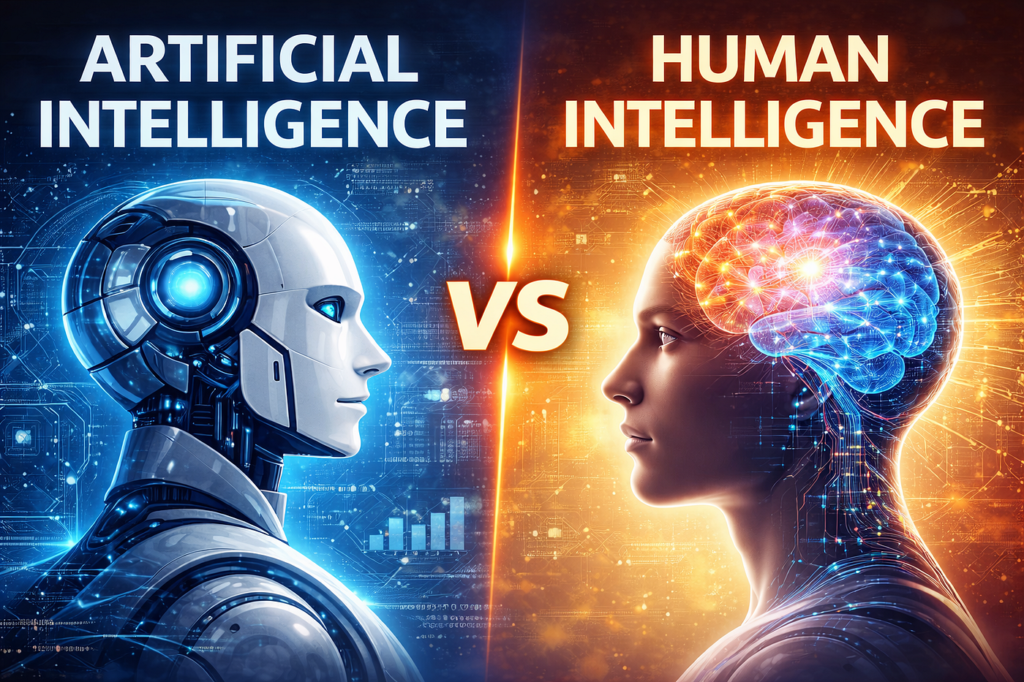
Artificial Intelligence (AI) is transforming daily life across the United Kingdom. From healthcare and retail to banking and government services, AI-powered systems are everywhere — often working quietly in the background.
For technophobes – people who are uncomfortable or fearful of technology – this rapid shift brings both anxiety and unavoidable change. The biggest impact on technophobes today is forced digital dependency: the growing difficulty of living, working, or accessing services without using AI-driven tools.
AI and Everyday Dependency
AI has become embedded in services that nearly everyone in the UK now relies upon.
Healthcare and Public Services
The NHS increasingly uses AI to assist doctors in scanning and diagnostics, patient triage and appointment systems. While these tools improve efficiency, many technophobes struggle with digital interfaces such as AI-assisted booking systems or virtual consultations. For people who dislike technology, even checking medical results online can feel alienating.
See our PDF download: Your Complete AI Learning Journey
Banking and Retail
Most major banks — including Barclays, NatWest and Lloyds — now employ AI chatbots to handle customer inquiries. Branch closures driven by digital banking have made AI systems the primary way many people interact with their finances. For technophobes, particularly older people, this shift can feel like exclusion.
According to Age UK, around 4 million people over 65 do not regularly use the internet. As banks and utility firms prioritise AI-driven automation, these individuals find it harder to access human assistance, deepening digital inequality.
Advertisement

- ECHO POP – This compact Bluetooth smart speaker with Alexa features a full sound that’s great for bedrooms and small spa…
- CONTROL MUSIC WITH YOUR VOICE – Ask Alexa to play music, audiobooks and podcasts from your favourite providers like Amaz…
- MAKE ANY SPACE A SMART SPACE – Use your voice or the Alexa app to easily control your compatible smart home devices like…
Public Transportation and Customer Service
AI is also behind ticketing, route optimisation and automated service responses. For technophobes accustomed to human ticket offices or call centres, the increasing reliance on self-service AI systems can be overwhelming and impersonal.
Why AI Feels Threatening to Technophobes
Loss of Control and Human Contact
One major factor is the erosion of human interaction. As AI handles tasks once performed by people, technophobes feel they are losing personal contact and control. For instance, replacing a friendly customer service representative with a chatbot can feel dehumanising.
Rapid Change and Lack of Digital Confidence
Many technophobes struggle to keep up with the speed of technological advancement. As Tony Blair Institute for Global Change research found in 2025, public comfort with AI varies sharply by digital confidence: only 40% of UK adults felt comfortable using AI for personalised learning or professional support systems. Those unfamiliar with these tools often perceive them as unreliable or invasive.
Advertisement
- Higher Brightness: With over 1000 lumens (220V), these smart led bulbs can brighten large space for your home. Get high …
- Millions of Colour Options: Select from 16 million colours and 1-100% dimmable brightness to make your space feel more v…
- Light It Your Way: With Govee Home App, you can access up to 54 scene modes for your Wi-Fi led light bulbs. Music Mode l…
Privacy and Surveillance Anxiety
AI-driven surveillance, such as facial recognition in city centres and retail stores, has fuelled concerns among technophobic people who already distrust digital systems. Fears over how AI uses personal data amplify feelings of vulnerability and mistrust.
How This Will Influence Technophobes in the Future
Increased Digital Inclusion Efforts
The UK Government recognises that digital exclusion is a serious social risk. Programmes like Good Things Foundation’s Digital Skills Programme and local library-based training are expanding. In future, governments and employers will need to ensure that technophobes are digitally supported, not left behind, as AI becomes integral to public and private life.
AI Becoming “Invisible”
Future AI will likely become more intuitive, context-aware and background-based. Systems will adapt to human behaviour rather than requiring users to adapt to the systems. This could make AI less intimidating for technophobes, as technology quietly powers daily life without demanding complicated interactions. Examples include voice assistants that understand natural speech or AI-driven accessibility tools for those unfamiliar with computers.
Automation of Routine Services
AI will continue to automate processes – from tax filing to medical referrals – which may further alienate technophobes initially. However, as usability improves, even reluctant users will benefit indirectly from faster, more reliable public services, cleaner data handling and predictive problem-solving.
Cultural Acceptance Over Time
Historically, resistance to technology fades as it integrates smoothly into routine life. Just as many technophobes that once avoided smartphones now use them daily, future AI adoption will likely follow the same pattern. Education, trust-building, and visible benefits will encourage hesitant users to engage.
Opinion
Suck it up buttercup, there is no gradual transition you will need to go with the flow. It may be difficult to adapt but adapt you will, there is no choice. Times have changed and so must you. That’s the reality of tech today and resistance is futile, or is it? You still have your own mind and your own choices.
Find Help and Support
We have created Professional High Quality Downloadable PDF’s at great prices specifically for Personal or Business use in the UK. Which include help and advice on understanding what Artificial Intelligence is all about and how it can improve your business. Find them here.