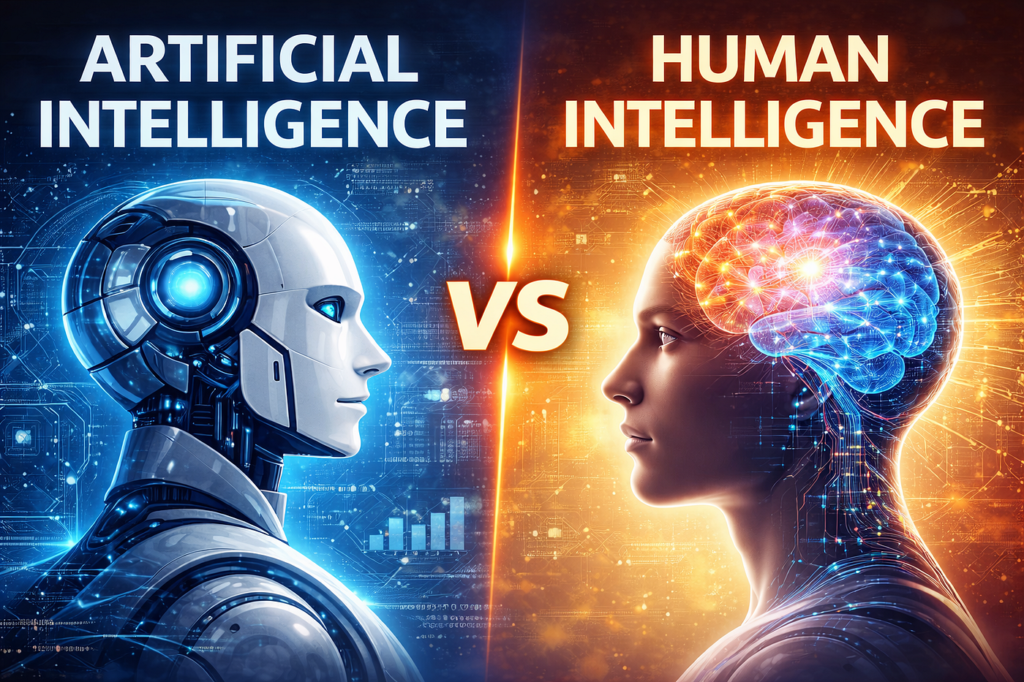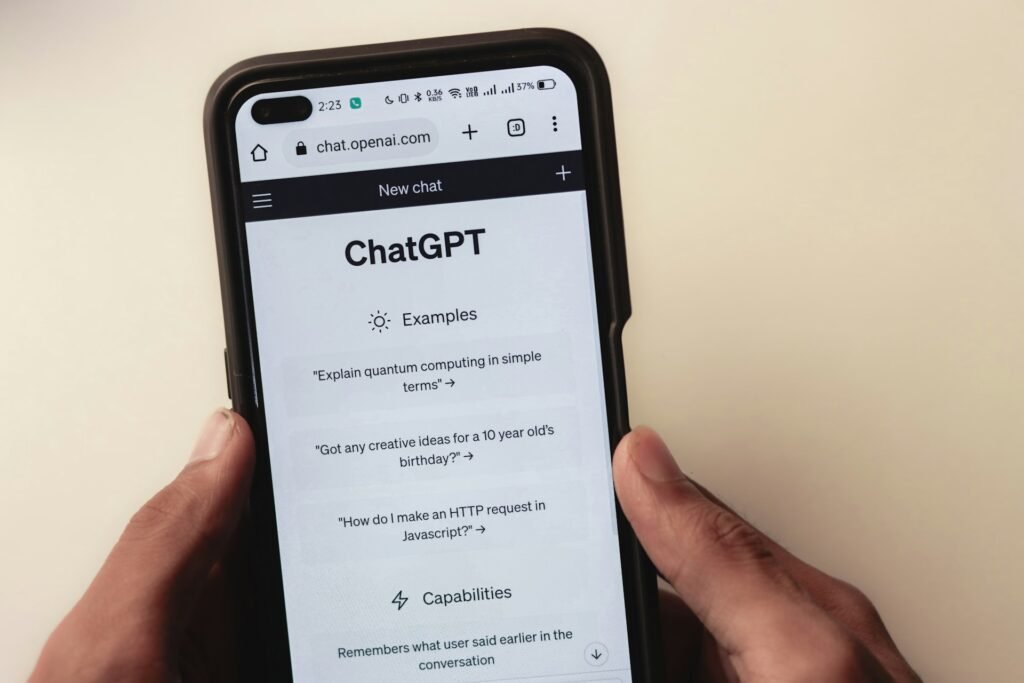
Artificial Intelligence (AI) platforms have become the backbone of modern industry — enabling organisations to deploy models, automate workflows, and scale intelligent applications efficiently. As of 2026, the most respected platforms combine powerful models, flexible integrations, and enterprise-grade infrastructure, but they also vary in specialisation and accessibility.
Below is an unbiased, real-world comparison of the leading AI platforms, focusing on purpose, strengths, weaknesses, and ideal use cases.
1. OpenAI — ChatGPT & GPT-5 Platform
Overview
OpenAI’s ecosystem, centred on the ChatGPT and GPT-5 model families, is widely regarded as the leading conversational and productivity-oriented AI platform. Its technology powers chat assistance, content creation, coding, data analysis, and multimodal tasks (e.g. text, image, and voice processing).
Strengths
- High intelligence and versatility: According to artificialanalysis.ai, GPT‑5.2 currently ranks highest for intelligence and reasoning capability among large language models (LLMs).
- Integrated ecosystem: The ChatGPT platform offers text, image, and code capabilities, workflow automation through the GPTs feature, and API access for custom integrations.
- Strong reliability: Supported by Microsoft’s Azure cloud infrastructure, ensuring enterprise-grade performance and compliance.
- Ease of use: User-friendly interface suitable for individuals, educators, and businesses.
Advertisement

- ECHO POP – This compact Bluetooth smart speaker with Alexa features a full sound that’s great for bedrooms and small spa…
- CONTROL MUSIC WITH YOUR VOICE – Ask Alexa to play music, audiobooks and podcasts from your favourite providers like Amaz…
- MAKE ANY SPACE A SMART SPACE – Use your voice or the Alexa app to easily control your compatible smart home devices like…
Weaknesses
- Pricing and closed access: Commercial licensing can be expensive compared with open‑source alternatives.
- Limited model transparency: Unlike open‑weights platforms, full model details aren’t publicly available.
See our PDF download: Your Complete AI Learning Journey
Ideal Tasks
- Content generation and summarisation
- Research assistance and ideation
- Programming and debugging
- Conversation automation and customer support
- Data exploration and document analysis

2. Google DeepMind — Gemini Platform
Overview
Google’s Gemini 2.5 and upcoming Gemini 3 models integrate text, image, and video reasoning within a single multimodal system. This platform is designed for speed, contextual awareness, and integration with Google’s ecosystem (Docs, Drive, YouTube, Search, and Cloud).
Strengths
- Fast performance: The Gemini 2.5 Flash variant is one of the fastest large-scale models, generating up to 512 tokens per second, making it ideal for real‑time applications.
- Large context window: Gemini supports extended memory for long documents and conversations, useful for legal, academic, and research contexts.
- Native integration: Seamless embedding into Google Workspace and Cloud AI APIs.
- Strong multimodal abilities: Can process and reason using text, images, and video simultaneously.
Is AI Prompting Actually a Promising Career Path? Download our comprehensive PDF download and find out
Weaknesses
- Limited enterprise control: Less customisable than open frameworks such as AWS SageMaker or Vellum.
- Restricted fine-tuning: Fine‑tuning options are currently reserved for select enterprise users.
Ideal Tasks
- Content generation with visual reasoning
- Video and image captioning or analysis
- Research summarisation and document handling
- Integration into Google Cloud workflows
3. Anthropic — Claude Platform
Overview
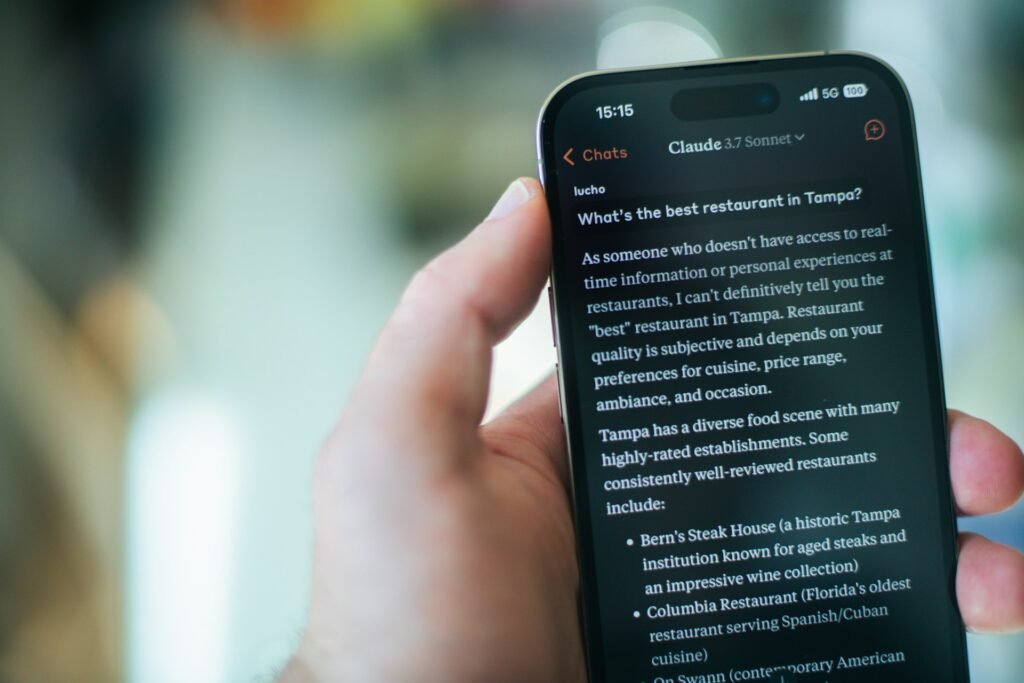
Claude 3.5 Opus and Sonnet, developed by Anthropic, focus on safe, aligned AI reasoning and long-context comprehension. Claude is considered exceptional for analytical writing, coding, and legal‑ or policy‑related work.
Strengths
- Long context handling: Up to 200,000 tokens, allowing deep document analysis in one session.
- Ethical structure: Based on “Constitutional AI”, prioritising transparent and responsible outputs.
- High reasoning accuracy: Excels in logic, language fluency, and analytical coherence.
- User‑friendly interface: Simplified for corporate knowledge management and writing workflows.
Weaknesses
- Less multimodal functionality: Compared with Gemini or ChatGPT, Claude is mostly text‑based.
- Limited plugin ecosystem: Fewer automation and integration options at present.
Ideal Tasks
- Technical or research writing
- Legal and policy analysis
- Education and academic projects
- Code review and documentation drafting
4. Microsoft Azure AI & Copilot Platform
Overview
Microsoft Azure AI provides a full‑stack enterprise environment for developing, deploying, and managing AI models. Through Azure OpenAI, Microsoft offers direct access to GPT models, plus Copilot integration across Microsoft 365 and development tools.
Strengths
- Enterprise scalability: End‑to‑end cloud solution for deploying AI securely at scale.
- Integration with productivity tools: Word, Excel, Teams, and Dynamics 365 now include AI “Copilot” features.
- Data governance: Strong compliance with GDPR and ISO standards — crucial for public sector and regulated industries.
- Model flexibility: Supports multiple frameworks (OpenAI, Hugging Face, NVIDIA, and custom models).
Weaknesses
- Complex setup and pricing: Requires technical configuration and can incur higher operational costs for smaller firms.
- Less intuitive interface for non‑technical users compared with ChatGPT or Gemini.
Ideal Tasks
- Large‑scale automation and data processing
- Business intelligence and predictive analytics
- AI application deployment and monitoring
- Integration of custom AI models into enterprise systems
5. Amazon Web Services (AWS) SageMaker
Overview
AWS SageMaker is an industry‑grade machine learning platform designed to develop, train, and deploy AI models. It supports a fully customisable environment and accommodates open‑source frameworks such as TensorFlow, PyTorch, and Hugging Face.
Strengths
- Deep configurability: Suited for teams building bespoke AI products.
- Comprehensive toolset: Includes data labelling, model evaluation, bias detection, and deployment pipelines.
- Scalable and cost‑flexible: Pay‑as‑you‑go model fits varying workloads.
- Integration: Works seamlessly with AWS data storage, analytics, and security.
Weaknesses
- Requires technical proficiency: Aimed more at developers than general users.
- No built‑in conversational interface — must integrate external models.
Ideal Tasks
- AI product development
- Predictive analytics at scale
- Machine learning research and deployment
- Integration with enterprise data pipelines
6. Vellum AI Platform
Overview
Vellum is an emerging leader for teams building and evaluating custom LLM workflows and AI agents. It’s favoured for rapid prototyping and evaluation consistency in enterprise environments.
Strengths
- Visual agent builder: Enables business and technical teams to collaborate directly.
- Robust evaluation framework: Allows continuous testing and quality assurance for AI applications.
- Integrations: Connects easily with OpenAI, Anthropic, and Hugging Face models.
- Legal and enterprise-grade design: Used for document automation and auditability.
Weaknesses
- Not a model provider itself: Depends on external LLM APIs for generation.
- Less suited for casual users: Targeted mainly at engineering and product teams.
Ideal Tasks
- AI product development pipelines
- Legal document automation and contract workflows
- Evaluation and monitoring of multi‑model systems
- Collaborative AI engineering environments
(Insights from vellum.ai)
7. Meta — Llama Platform
Overview
Meta’s Llama 3 and 3.1 models are open‑source large language models designed for flexibility, affordability, and research accessibility. These are widely used by developers who prefer full control over their AI stack without dependence on closed ecosystems.
Strengths
- Open‑source and customisable: Ideal for academic and enterprise experimentation.
- Cost‑effective: Free for non‑commercial research; relatively inexpensive for enterprise licensing.
- Strong developer community: Rapid innovation and contributions from global users.
Weaknesses
- Limited out‑of‑the‑box usability: Requires technical setup.
- Lower reasoning accuracy than GPT‑5 or Claude Opus in complex tasks (Artificial Analysis, 2025).
Ideal Tasks
- Research and experimentation
- Education and training in AI
- Lightweight business chatbots
- Integration into proprietary tools and systems
Platform Comparison — Key Insights
| Platform | Best For | Core Strength | Limitation | Distinct Advantage |
|---|---|---|---|---|
| OpenAI (ChatGPT, GPT‑5) | General users & enterprises | Most intelligent, versatile reasoning | Closed ecosystem | Broadest task coverage |
| Google Gemini | Multimodal and research users | Best for images & video understanding | Limited customisation | Fastest real‑time response |
| Anthropic Claude | Professionals, writers, analysts | Best long‑context writing and accuracy | Lacks multimodal tools | Safest and most ethical reasoning |
| Microsoft Azure AI | Enterprise automation | Full deployment control | High technical complexity | Integration across Microsoft software |
| AWS SageMaker | Developers & data scientists | Model building and training flexibility | Steep learning curve | Deep AI infrastructure |
| Vellum | Product teams & legal sectors | Workflow and evaluation precision | Not a model producer | Ideal for building reliable AI agents |
| Meta Llama | Researchers & developers | Open‑source flexibility | Lower reasoning power | Free and fully customisable |
Conclusion
No single AI platform is universally superior — each excels in different contexts:
- ChatGPT (OpenAI) remains the most versatile and intelligent platform for individuals and general-purpose business use.
- Gemini leads in speed and multimodal creativity (text‑video‑image).
- Claude shines in precision, analytical reasoning, and ethical output.
- Azure AI and AWS SageMaker dominate enterprise application development and deployment.
- Vellum is ideal for evaluation-driven AI product teams, while Meta’s Llama provides open access for research.
The right choice depends on organisational goals — whether that’s scalability, accessibility, transparency, or innovation speed. In the world of AI platforms there is always a chance of a new player in the game, but these options will remain strong for some time yet.