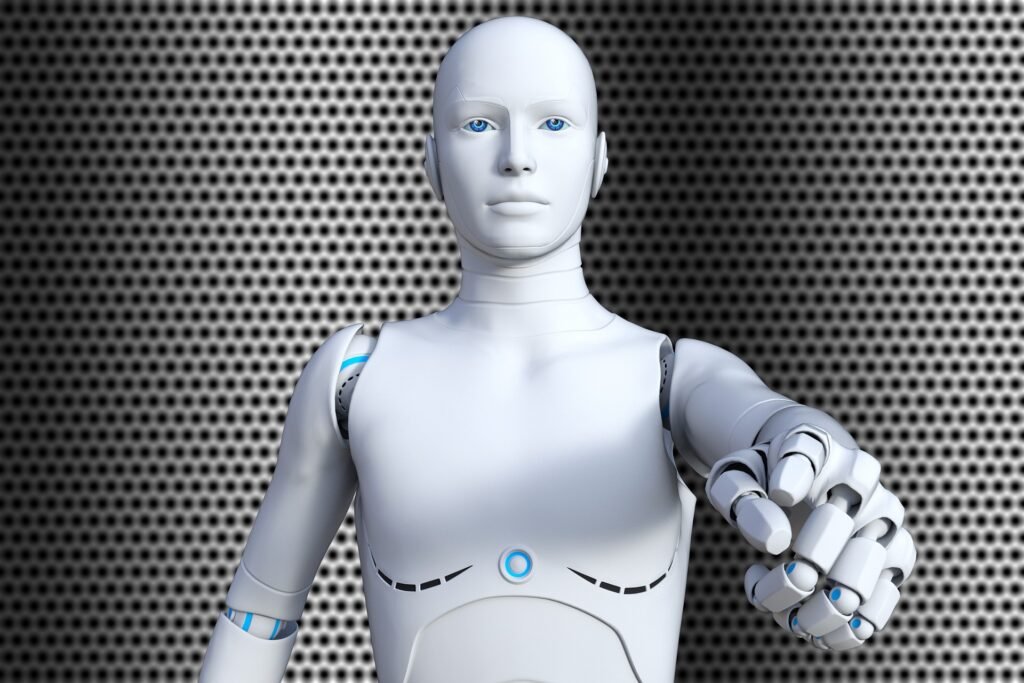
Yes, for some people it almost certainly will. Not because AI is magic, or because robots are sharpening staplers in the cupboard, but because many people will be expected to use AI before they properly understand it.
The real issue is not AI itself. The stress will come from speed, pressure, poor training, job insecurity, confusing tools, bad management and fear of being left behind. Delightful, really. Humanity built a productivity tool and immediately turned it into another reason to feel inadequate.
PwC’s 2025 UK Workforce Hopes and Fears Survey found UK workers are still more excited about AI than anxious, with 34% excited and 20% anxious. But the gap between people who use AI confidently and those who do not is already becoming obvious. PwC says regular AI users report better productivity, quality and creativity, while those who can use AI in daily work feel more in control.
Suggested picture placement
Use an image of a worried office worker looking at a laptop here.
Suggested source: Unsplash, Pexels, iStock or Adobe Stock.
Alt text: “UK office worker feeling stressed while learning AI tools.”
Advertisement

- 23.8″ FULL HD DISPLAY – 1920 x 1080 resolution in 16:9 format with 100Hz refresh rate and IPS technology for vibrant col…
- SMOOTH VISUALS – The 100Hz refresh rate reduces flicker for seamless scrolling and clear motion visuals – perfect for wo…
- TÜV RHEINLAND 3-STAR + COMFORTVIEW PLUS – Built-in ComfortView Plus reduces harmful blue light without compromising colo…
The blunt answer
AI will not stress everyone equally. It will divide people into three broad groups:
1. People who learn AI gradually
These people will probably feel more confident. They will use AI for emails, admin, research, customer service, marketing, spreadsheets, planning and repetitive tasks. They will still have stress, obviously, because work remains work, but AI may reduce some workload.
2. People who are forced to use AI without support
This group is most at risk of stress. If an employer suddenly says “use AI to be more productive” but gives no training, no rules, no examples and no protection from mistakes, workers may feel exposed. The Institute for the Future of Work reported that new technologies can bring flexibility and efficiency, but can also increase stress, job insecurity and social isolation when adoption is poorly handled.
3. People who avoid AI completely
Avoiding AI may feel comfortable now, but in many jobs it will become harder. Not everyone needs to become a programmer, but many UK workers will need basic AI literacy: how to ask good questions, check answers, protect data and know when not to trust the machine. A tiny detail, apparently.

Why AI could increase stress in the UK
Fear of job loss
This is the biggest emotional driver. People worry AI will replace them, reduce their hours, lower wages or make their skills look outdated.
Some of that fear is rational. AI can already perform parts of jobs in customer service, marketing, design, coding, administration, legal support, accounting and HR. It does not always replace the whole job, but it can reduce the number of people needed for certain tasks.
The more realistic future is not “AI replaces everyone”. It is “people using AI replace some people who do not”. That is a more uncomfortable sentence, which is exactly why businesses pretend not to say it out loud.
Lack of confidence
A major stress factor will be the confidence gap. TechRadar recently reported that a growing UK small-business “AI confidence gap” is holding back adoption, with many SMEs uncertain because of unclear uses, cost worries and lack of skills.
This matters because many UK workers are employed by small businesses. Unlike big firms, SMEs often do not have dedicated training departments, AI policies or internal IT support. So staff may be told to “try ChatGPT” with about as much preparation as being handed a chainsaw and asked to trim a hedge.
Daily pressure to be more productive
AI is often sold as a time-saver. But in workplaces, time-saving tools often become expectation-raising tools.
If AI helps someone write a report twice as fast, a bad manager may not say, “Excellent, finish early.” They may say, “Lovely, now do two reports.” That is where AI becomes stress amplification rather than stress reduction.
Confusing and unreliable outputs
AI can make mistakes, invent facts, misread instructions and sound confident while being wrong. This creates a new kind of stress: checking the AI’s work.
For office workers, that means AI may speed up drafting but slow down verification. In sectors like finance, law, healthcare, education, cyber security and public services, that checking burden can be serious.
Advertisement

- Multipurpose with 3 densities and sizes – Mind Panda provides you the most versatility with our 3-pack stress ball bundl…
- Sensory stimulating and stress relieving – Reduce your physical discomfort and diminish mental tension. Our soft, squish…
- Enhance your grip and rehabilitation aiding – Each squeeze of our stress ball will condition and strengthen your grip, h…
Digital exclusion
Some people already struggle with online forms, passwords, apps, portals and digital admin. Adding AI to that stack may deepen exclusion.
The UK Government’s Digital Inclusion Action Plan defines digital inclusion as giving people access, skills, support and confidence to participate in modern digital society. That wording matters because confidence is not a fluffy extra. It is the difference between “I can try this” and “I am avoiding this because I feel stupid.”
Who is most likely to feel AI stress?
Older workers
Not because older workers cannot learn AI, that lazy assumption can get in the bin, but because they may have had less exposure to AI tools in education or recent training.
UK Technology Secretary Peter Kyle has said workers need to embrace AI or risk being left behind, with a government-industry initiative aiming to train millions of UK workers in AI skills by 2030.
Lower-paid workers
People in lower-paid roles may have less paid training time, less control over workplace technology and more fear that automation will be used to cut costs.
Small business owners
Many small business owners are already juggling tax, cash flow, staffing, suppliers, energy bills, cyber risks and customers who think “urgent” means “I forgot”. AI adds another decision: which tools to buy, what they cost, whether they are safe and whether they actually help.
Workers in admin-heavy roles
AI is especially strong at summarising, drafting, classifying and processing information. That means admin, support, marketing, customer service and back-office staff may feel more exposed.
People with low digital confidence
The stress will not only come from AI. It will come from feeling that everyone else understands something you do not. That is a very human kind of misery, tragically on-brand.

Will AI stress be worse than previous technology changes?
In some ways, yes
AI is different because it affects thinking tasks, not just manual or repetitive tasks. Previous software changed how people worked. AI can appear to challenge what people believe they are good at: writing, analysing, designing, advising, coding, planning and problem-solving.
That can feel personal. A spreadsheet does not make people wonder whether their brain has become obsolete. AI sometimes does.
In other ways, no
The UK has already been through stressful technology shifts: computers, email, smartphones, online banking, cloud software, remote working and cyber security rules. Most people adapted eventually.
The difference is speed. AI is spreading faster than many workplace training systems can cope with.
The positive side: AI could also reduce stress
It can remove boring work
AI can help with meeting notes, first drafts, customer replies, document summaries, social media ideas, translation, research planning and simple data analysis. Used properly, it can reduce mental clutter.
It can support people with disabilities
AI tools can help with speech-to-text, text simplification, reading support, reminders, visual assistance and communication. For some people, AI will reduce stress rather than increase it.
It can make training easier
AI tutors and assistants can explain topics patiently, reword information and give examples. Unlike some managers, AI does not sigh audibly when you ask the same question twice. Small mercy.
Expert view
PwC
PwC’s UK workforce research suggests that people who actually use AI regularly tend to report better outcomes, including higher productivity, better quality work and more creativity. The important point is that confidence comes from use, not from vague motivational posters about innovation.
Institute for the Future of Work
The Institute for the Future of Work warns that technology adoption can improve efficiency but also worsen stress, insecurity and isolation when people are not properly involved in the change.
UK Government
The Government’s digital inclusion work recognises that people need access, skills, support and confidence to benefit from digital society. That is directly relevant to AI, because AI literacy will become part of everyday digital confidence.
Advertisement

What employers should do to reduce AI stress
Train people properly
Do not just give staff an AI tool and hope natural selection handles the rest. Training should cover:
Basic prompting
Checking AI answers
Data privacy
When not to use AI
How AI affects the job
What the company expects
Who is responsible if AI gets it wrong
Be honest about job impact
Workers are not stupid. If a company pretends AI will change everything but affect nobody’s job, people will assume the worst. Clear communication reduces rumour-driven stress.
Give people time to practise
AI confidence grows through practical use. A one-hour webinar followed by “good luck peasants” is not a training strategy.
Create an AI policy
A basic AI policy should explain which tools are allowed, what data must not be entered, what work needs human review and who signs off final outputs.
Avoid AI surveillance creep
AI that helps workers is one thing. AI that monitors keystrokes, predicts “productivity” and treats humans like slightly damp barcode scanners is another. That kind of workplace AI will increase stress quickly.
What individuals can do
Learn the basics now
People do not need to become AI engineers. They need practical AI literacy. Learn how to use tools like ChatGPT, Claude, Gemini or Microsoft Copilot for safe, everyday tasks.
Start with low-risk tasks
Use AI for:
Summarising public information
Drafting emails
Creating checklists
Planning social posts
Explaining unfamiliar terms
Rewording documents
Brainstorming ideas
Do not start by pasting confidential client data into a chatbot, because apparently civilisation still needs this sentence written down.
Advertisement
- What are Kalms Day? Kalms Day are a traditional remedy, which are used to relieve irritability, anxiety and the stresses…
- Kalms Day contain extracts of two herbs VALERIAN ROOT. Valerian is used to relieve restlessness and sleep disturbances. …
- Who can use it? For adults and the elderly. Not recommended for children or adolescents under 18 years old.
Treat AI like a junior assistant
AI can help, but it needs checking. It is useful, fast and sometimes completely wrong with magnificent confidence.
Keep human skills sharp
The safest workers will combine AI use with human judgement, communication, trust, experience, creativity and subject knowledge.
Real-world UK prediction
2026 to 2028
AI stress will rise in workplaces where tools are introduced quickly and badly. More employees will feel pressure to learn AI, especially in admin, marketing, finance, HR, legal support, customer service and management roles.
2028 to 2030
Basic AI skills will become normal in many office jobs. Not advanced coding. More like “can use AI safely and check its work”. People without these skills may feel more excluded from promotions and better-paid roles.
Beyond 2030
AI will become less visible as it gets built into normal software. The stress may reduce for confident users, but people with poor digital skills may face a bigger gap unless training improves.
Final verdict
Yes, AI is likely to cause more stress for some people in the UK, especially those who do not understand it, do not trust it, or are forced to use it without training.
But AI itself is not the whole problem. The real stress comes from poor leadership, weak training, job insecurity and the feeling that the world is changing faster than people can keep up.
The sensible answer is not “everyone must become an AI expert”. It is this:
People need basic AI confidence, employers need proper training plans, and the UK needs to treat AI literacy like a normal workplace skill, not a mysterious gift handed down from Silicon Valley wizards in expensive trainers.
Sources and further reading
PwC UK Workforce Hopes and Fears Survey 2025:
UK Government Digital Inclusion Action Plan:
Institute for the Future of Work report on technology and work:
UK AI Labour Market Survey 2025:
UK workers and AI skills reporting:
Help and Support
We have created Professional High Quality Downloadable PDF’s at great prices specifically for UK Businesses. Which include various helpful documents and real world scenarios your business might experience, showing what to do and how to protect your business. Find them here.