Is Artificial Intelligence Actually Saving Businesses Money?
Most UK small businesses do not fail with AI because the technology is bad. They fail because they buy six subscriptions, automate nothing meaningful, annoy staff, then proudly announce they are now “AI-powered”. Humanity invented industrial automation and somehow still uses ChatGPT to rewrite LinkedIn posts about coffee. Remarkable species.
Still, when AI is implemented properly, the return on investment can be significant for UK SMEs. The important part is understanding where the savings actually come from, how long they take to appear, and which costs quietly multiply in the background.
This guide explains how UK businesses can realistically calculate AI ROI, using real-world examples, typical UK costs, operational impacts, and a practical framework small companies can actually understand without needing a data science department wearing matching black turtlenecks.
What Does AI ROI Actually Mean?
The Simple Definition
AI ROI means:
“How much money, time, or operational improvement do we gain compared to what we spend?”
The classic formula is:
ROI=Cost of InvestmentGain from Investment−Cost of Investment×100
For SMEs, though, ROI is rarely just direct profit.
It often includes:
- Staff time saved
- Faster customer responses
- Fewer mistakes
- Reduced outsourcing costs
- Increased sales conversion
- Better customer retention
- Reduced admin workload
- Lower recruitment pressure
- Improved scalability without hiring
Why UK SMEs Are Suddenly Obsessed With AI ROI
Rising Labour Costs Are Driving AI Adoption
UK businesses are facing pressure from:
- Rising National Insurance costs
- Wage inflation
- Energy costs
- Recruitment shortages
- Customer support expectations
- Increased competition
Many SMEs are discovering that AI can delay hiring additional staff.
That does not mean replacing everyone with robots wearing fake smiles. It means one employee can often handle the workload previously requiring two or three people.
According to the UK Government’s AI sector reports and data from the Department for Science, Innovation and Technology, UK SMEs increasingly view AI as an operational efficiency tool rather than a futuristic experiment.

- Fashionable Metallic Covers: The Pukka Pad Metallic Notebooks come in sets of three with fashionable metallic colours so…
- A4+ Page Perforation: Each book features A4+ sized pages that tear out easily along the perforated lines, great for shop…
- 4-Hole Punch Margins: Even once you tear out your pages, you can keep them stored and sorted in your binder with the pre…
The Areas Where SMEs Usually See The Highest ROI
Customer Service Automation
One of the biggest AI wins is customer support.
Typical improvements include:
- Instant replies
- Reduced response times
- Fewer repetitive emails
- Automated FAQs
- AI-assisted ticket handling
- 24/7 support coverage
Real Example
A small UK ecommerce business receiving 60 support emails daily might spend:
- 3 staff hours/day replying
- Average support wage cost: £28,000/year
- Rough hourly employment cost: £18–£22/hour
If AI reduces support workload by 50%:
- Time saved: ~1.5 hours/day
- Annual saving: roughly £7,000–£9,000
AI tool cost:
- £30–£200/month
That is often a very strong ROI.
Marketing Content Production
AI Is Dramatically Reducing Content Costs
Businesses using AI for:
- Blog drafts
- SEO outlines
- Product descriptions
- Social media captions
- Email campaigns
- Ad copy
…can massively reduce agency or freelancer costs.
Realistic UK Example
A local trades company paying:
- £600/month for social media
- £400/month for blog content
…might reduce external costs by 30–60% using AI-assisted workflows.
But here is the important nuance humans love forgetting:
Bad AI content damages trust.
Thin, robotic content can:
- Reduce Google rankings
- Lower engagement
- Hurt conversions
- Make the business look cheap
The highest ROI comes from:
- AI-assisted humans
- Not fully AI-replaced humans
AI ROI In Admin And Operations

Administrative Work Is Full Of Repetition
This is where AI often delivers surprisingly strong ROI.
Examples:
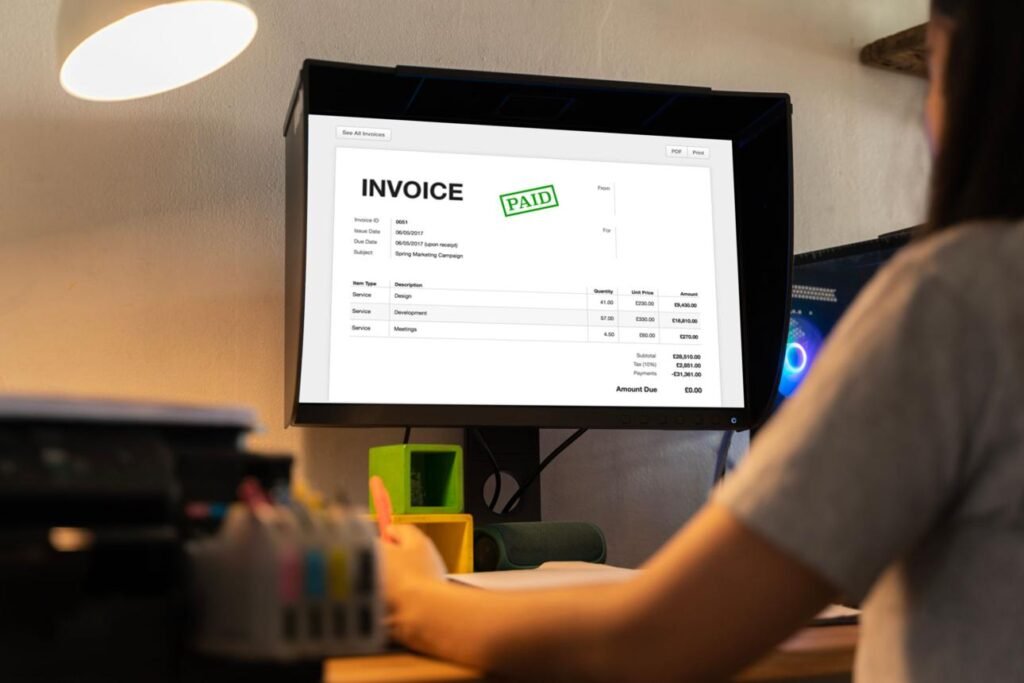
- Invoice processing
- Data entry
- Meeting summaries
- Email drafting
- CRM updates
- Document categorisation
- Proposal generation
Real Example
A five-person consultancy spending:
- 10 hours/week on admin
If AI reduces admin workload by 40%:
- 4 hours/week saved
- Around 208 hours/year
At £25/hour effective staff cost:
- Approximate annual value: £5,200
AI subscriptions might cost:
- £50–£300/month
Still positive ROI.
The Hidden AI Costs UK SMEs Forget About
AI Is Not “Just £20 Per Month”
This is where businesses get caught out.
The real costs often include:
| Hidden Cost | Typical SME Impact |
|---|---|
| Staff training | Lost productivity during adoption |
| Workflow redesign | Time-consuming implementation |
| Security concerns | Additional compliance work |
| Poor outputs | Human review still required |
| Subscription sprawl | Multiple overlapping AI tools |
| Data governance | GDPR risks |
| Integration costs | APIs, consultants, automation tools |
| Staff resistance | Reduced adoption |
Many SMEs underestimate how much human supervision AI still requires.
You are not buying a digital employee.
You are buying:
- a very fast assistant,
- that occasionally hallucinates,
- invents sources,
- misunderstands context,
- and confidently produces nonsense with executive-level confidence.
Which, admittedly, mirrors certain managers surprisingly well.
A Practical AI ROI Calculator For SMEs
Step 1: Identify Time-Saving Tasks
List repetitive activities such as:
- Customer emails
- Quoting
- Scheduling
- Reporting
- Social media
- Internal documentation
- Data entry
Estimate:
- hours spent weekly
- hourly staff cost
Step 2: Estimate Automation Percentage
Not all tasks can be automated.
Realistic expectations:
| Task Type | Realistic Automation |
|---|---|
| Basic admin | 50–80% |
| Customer FAQs | 40–70% |
| Marketing drafts | 40–60% |
| Technical work | 10–40% |
| Strategic decision-making | Low |
Businesses promising “100% automation” are usually selling webinars beside rented Lamborghinis.
Step 3: Calculate Annual Savings
Example:
- 8 hours saved weekly
- £22/hour staff cost
Annual saving estimate:
8×22×52
Estimated annual operational saving:
- ~£9,152
Step 4: Subtract AI Costs
Include:
- Subscriptions
- Staff training
- Consultants
- Setup time
- Integrations
Example:
| Cost Item | Annual Cost |
|---|---|
| ChatGPT Team | £300–£1,200 |
| Automation software | £500–£2,000 |
| Staff training | £1,000 |
| Consultancy/setup | £2,000 |
Total:
- ~£4,000–£6,000 annually
Step 5: Calculate ROI
If:
- Annual savings = £9,152
- Annual AI costs = £5,000
Then:
50009152−5000×100
Approximate ROI:
- ~83%
That is a solid operational investment for many SMEs.
Industries Seeing Strong AI ROI In The UK

Accounting Firms
Strong ROI areas:
- Document processing
- Email drafting
- Meeting notes
- Tax prep assistance
Estate Agents
Strong ROI areas:
- Property descriptions
- Enquiry handling
- Lead qualification
- Social media marketing
Ecommerce Businesses
Strong ROI areas:
- Product descriptions
- Customer support
- Ad creation
- Inventory insights
Marketing Agencies
Strong ROI areas:
- Content drafts
- SEO research
- Reporting
- Campaign analysis
Where AI ROI Often Fails
Businesses Buying AI Without A Workflow Plan
This is extremely common.
The typical pattern:
- Buy AI tools
- Staff barely use them
- No process redesign
- No measurable KPIs
- Subscription renews forever
- Nobody knows why they are paying for it
AI ROI fails when:
- there is no operational strategy,
- no staff training,
- no measurement,
- and no realistic use case.
The Biggest ROI Driver Is Usually Staff Adoption
Human Resistance Can Destroy ROI
Employees often fear:
- replacement
- increased monitoring
- unrealistic expectations
The best-performing businesses usually:
- train staff properly
- explain benefits clearly
- use AI as augmentation
- remove repetitive work first
AI works best when staff feel helped rather than threatened.
AI ROI And GDPR Concerns In The UK

7
Compliance Problems Can Destroy Financial Gains
If staff paste sensitive customer data into public AI systems:
Potential consequences include:
- GDPR breaches
- ICO investigations
- reputational damage
- legal costs
The UK’s Information Commissioner’s Office (ICO) has already warned businesses about irresponsible AI data handling.
Strong AI ROI requires:
- policies
- governance
- approved tools
- staff training
Otherwise the “cost-saving tool” becomes an expensive incident report.
Realistic ROI Expectations For UK SMEs
What Most SMEs Should Actually Expect
| AI Maturity | Likely ROI |
|---|---|
| Poor implementation | Negative ROI |
| Basic adoption | Moderate ROI |
| Structured workflows | Strong ROI |
| Fully integrated operations | Very high ROI |
Most SMEs see:
- noticeable efficiency gains within 3–6 months
- stronger financial returns after 6–18 months
Immediate “overnight transformation” stories are usually:
- exaggerated,
- cherry-picked,
- or written by someone selling an AI course filmed beside a rented supercar and a motivational neon sign.

- Large Screen: The large LCD screen that clearly displays the large numbers makes it easy to read from a distance, and it…
- Sensitive and Big Buttons: Your calculation process will be faster and smoother with the responsive buttons on this calc…
- Dual Power Design – This calculator uses both solar energy and battery (battery included). The solar panel, as long as y…
The Smartest AI Investments For Small Businesses
Focus On Operational Pain Points First
The best ROI usually comes from solving:
- repetitive admin
- slow response times
- documentation overload
- inefficient workflows
Not from:
- generating 400 AI motivational quotes for LinkedIn.
A business that saves staff two hours daily gains far more than one producing endless AI-generated thought leadership nobody reads willingly.
Final Thoughts
AI can absolutely deliver strong ROI for UK SMEs.
But the businesses succeeding with AI are not treating it like magic.
They:
- redesign workflows,
- train staff,
- monitor results,
- measure savings,
- and focus on operational efficiency.
The companies failing usually:
- buy too many tools,
- automate nonsense,
- skip governance,
- and expect software to fix broken processes.
AI is not a replacement for good business management.
It is a force multiplier.
If your operations are already efficient, AI can accelerate growth dramatically.
If your operations are chaotic, AI simply helps the chaos happen faster. Humanity somehow needed several trillion dollars of computing infrastructure to rediscover this ancient truth.
References And Further Reading
- UK Government AI Guidance
- Information Commissioner’s Office (ICO) AI Guidance
- Federation of Small Businesses UK
- British Chambers of Commerce Digital Adoption Research
- NCSC Guidance For SMEs Using AI Tools
Find Help and Support
We have created Professional High Quality Downloadable PDF’s at great prices specifically for Personal or Business use in the UK. Which include help and advice on understanding what Artificial Intelligence is all about and how it can improve your business. Find them here.