Artificial intelligence is marketed like a miracle employee that never sleeps, never complains, and apparently writes marketing copy while simultaneously restructuring your supply chain. Then the invoices arrive. Then the compliance questions start. Then somebody in accounts realises the business is paying for twelve different AI subscriptions nobody approved. Modern civilisation, distilled into a spreadsheet full of “Pro Plan” charges.
For many UK businesses, the problem is not whether AI works. It often does. The real issue is that the visible subscription cost is usually the smallest part of the bill.
This is where businesses get caught out.
The AI Cost Illusion
Most firms start with a simple assumption:
- £20 per month for ChatGPT
- Maybe another £30 for image generation
- A few automation tools
- Job done
In reality, AI creates layers of hidden operational, legal, staffing, infrastructure, and management costs that grow quietly in the background.
A small business can begin with £100 per month in AI tools and accidentally create several thousand pounds per year in indirect costs without noticing immediately.

- Premium Image Quality: Capture every detail with an impressive 1/2″ sensor, balanced, true-to-life 4K visuals with HDR a…
- Professional Audio: Experience best-in-class audio with advanced AI noise-canceling algorithms. Filter out unwanted back…
- True Focus: Keep your audience engaged with faster, more accurate Phase Detection Auto Focus (PDAF). No more blurry shot…
AI Does Not Replace Work Nearly as Much as People Think
Many business owners expect AI to remove jobs instantly.
Realistically, most UK businesses experience this pattern instead:
- Staff still need supervising
- AI output needs checking
- Mistakes require fixing
- Data needs cleaning
- Processes need redesigning
- Compliance needs documenting
- Security risks need managing
AI often shifts work rather than removes it entirely.
A marketing agency using AI may produce content three times faster, but staff then spend additional hours:
- fact-checking outputs
- rewriting awkward text
- correcting hallucinations
- ensuring legal compliance
- matching brand tone
- checking SEO quality
The output is faster. The oversight workload grows too.

Subscription Creep Is One of the Biggest Hidden Costs
Businesses Rarely Use One AI Tool
AI adoption usually spreads uncontrollably inside businesses.
A typical SME may begin with:
- OpenAI ChatGPT
- Canva AI design tools
- Microsoft Copilot
- Google Gemini
- AI transcription software
- AI SEO tools
- AI meeting assistants
- AI customer service chatbots
- AI automation platforms
- AI image generators
- AI coding assistants
Individually, many seem inexpensive.
Collectively, they become substantial.
A 15-person UK business can easily spend:
| AI Service Type | Typical Monthly Cost |
|---|---|
| AI writing tools | £200-£500 |
| AI image generation | £50-£300 |
| AI meeting software | £100-£250 |
| AI automation tools | £200-£800 |
| AI CRM add-ons | £100-£600 |
| AI coding assistants | £100-£400 |
| AI APIs | Highly variable |
The real danger is decentralised spending.
Departments often buy tools independently without central approval.
Finance teams discover duplicated subscriptions months later.

- Centralized Data Storage – Consolidate all your data for complete data ownership and multi-platform access
- Sharing and Syncing Across Systems – Access, share, and sync data across different systems and devices using intuitive c…
- Powerful Backup and Restoration – Back up and restore critical devices and data using a host of intuitive backup tools
AI “Free Trials” Become Permanent Costs
Many AI services use aggressive pricing models:
- low entry pricing
- usage-based billing
- premium feature locking
- escalating API costs
Businesses integrate these systems into workflows and then become dependent on them.
Leaving later becomes difficult.
This is known as AI vendor lock-in.
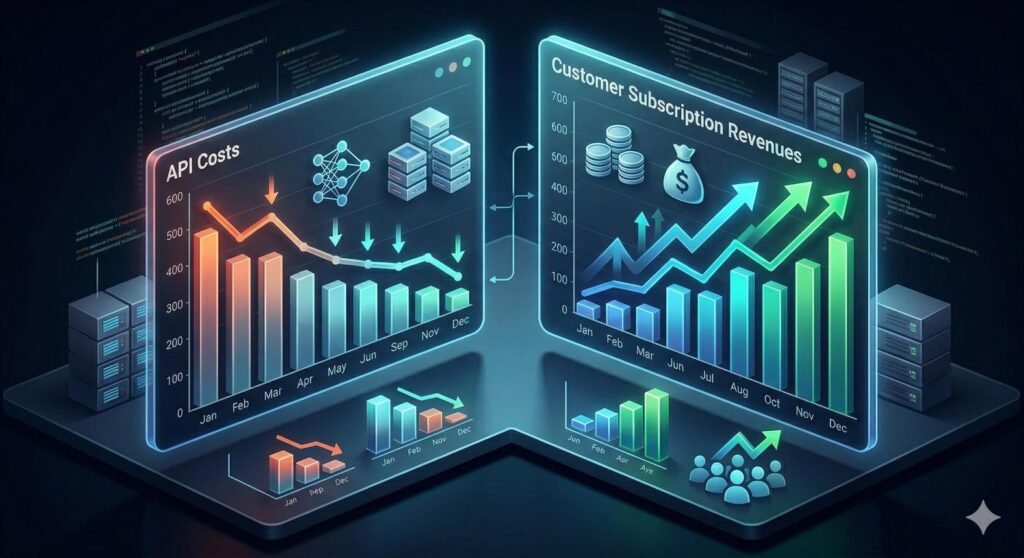
API Costs Can Escalate Rapidly
Usage-Based AI Billing Is Frequently Misunderstood
Many firms believe AI APIs work like standard software subscriptions.
They do not.
API costs are often based on:
- token usage
- requests
- image generations
- data processing
- automation frequency
- model size
A chatbot handling thousands of customer queries can become expensive very quickly.
For example:
A UK ecommerce business may deploy an AI support chatbot expecting modest costs.
Then:
- traffic grows
- queries become longer
- customers upload images
- AI memory features expand
- integrations increase
Monthly API bills can jump from £50 to several thousand pounds.
This catches many SMEs completely off guard.

AI Infrastructure Costs Are Often Ignored
AI Requires More Computing Power Than Expected
Even cloud-based AI systems create infrastructure pressures.
Businesses may need:
- upgraded laptops
- faster internet
- increased cloud storage
- stronger cybersecurity
- larger backup systems
- improved servers
- additional Microsoft licensing
AI-generated files also consume large amounts of storage.
Image generation, video AI, transcription systems, and AI analytics platforms create significant data growth.
Cloud storage costs slowly rise month after month.
Nobody notices until renewal season arrives. Humanity’s favourite accounting strategy.
Check UK Energy Costs Before Scaling AI Tools
AI subscriptions are only part of the problem. Rising electricity costs from extended device usage, servers and office equipment are becoming a growing issue for SMEs. PowerguardianUK
Staff Training Is a Major Hidden Expense
Employees Need Ongoing AI Education
AI tools change constantly.
Staff require training in:
- prompt writing
- AI risk awareness
- GDPR compliance
- fact-checking
- copyright concerns
- safe data handling
- workflow integration
Many UK firms underestimate how much time this takes.
A business may save five hours per week through AI while losing three hours per week teaching staff how to use it properly.

- Ultra-Portable 18.5-inch Display: Cocopar portable travel monitor is with an 18.5-inch 1080p FHD IPS screen, this displa…
- Plug-and-Play Connectivity: Cocopar external monitor for laptop featuring two USB-C ports and one HDMI port, this monito…
- Gaming-Ready Display: Elevate your gaming and image processing with our high-performance monitor. Enjoy a smooth 100Hz r…
AI Skill Gaps Create Internal Problems
You often see these workplace issues:
- younger staff adopt AI rapidly
- older staff avoid it
- departments use different systems
- nobody creates standards
- inconsistent outputs appear
This creates operational chaos.
Without governance, AI becomes fragmented across the organisation.
AI Hallucinations Have Real Financial Costs
Incorrect AI Output Can Damage Businesses
AI systems sometimes confidently generate false information.
This is known as hallucination.
Examples include:
- fake legal references
- inaccurate pricing
- incorrect statistics
- invented sources
- false compliance advice
- broken code
- misleading financial summaries
For UK businesses, this can create:
- reputational damage
- customer complaints
- compliance breaches
- financial losses
- legal disputes
A small accounting error generated by AI can cost far more than the software subscription itself.

GDPR and Data Protection Risks Can Become Expensive
Staff Often Paste Sensitive Information Into AI Tools
This is one of the biggest hidden dangers.
Employees may paste into AI systems:
- customer records
- contracts
- financial information
- HR issues
- medical details
- confidential emails
Without proper safeguards, this creates data protection risks.
In the UK, businesses must consider:
- UK GDPR
- Data Protection Act 2018
- ICO guidance
- contractual confidentiality obligations
Potential consequences include:
- ICO investigations
- legal claims
- customer trust damage
- cyber insurance complications
Many businesses only realise these risks after AI adoption has already spread internally.
Shadow AI Is Becoming Common
Shadow AI happens when staff use unauthorised AI tools without company approval.
This is growing rapidly across UK workplaces.
Employees often use personal AI accounts because:
- approved systems are slower
- corporate tools are restrictive
- they want faster results
This creates huge visibility problems for management.
You cannot protect systems you do not know employees are using.
Cybersecurity Costs Increase With AI Usage
AI Expands Attack Surfaces
More AI systems usually mean:
- more integrations
- more plugins
- more APIs
- more cloud services
- more external platforms
Every integration becomes another potential vulnerability.
Cyber criminals are also using AI themselves.
Businesses now face:
- AI-assisted phishing
- deepfake scams
- automated social engineering
- realistic fake invoices
- AI-generated malware
Security costs therefore rise alongside AI adoption.
AI Can Increase Legal Liability
Copyright Problems Are Still Developing
AI-generated material creates legal uncertainty.
Businesses may accidentally publish:
- copyrighted text
- trademark conflicts
- copied imagery
- misleading information
UK legal frameworks are still evolving.
Many organisations wrongly assume AI-generated content is automatically safe to use commercially.
It is not that simple.
Employment Issues Are Growing
AI can also create HR complications involving:
- staff monitoring
- automated decision-making
- redundancy concerns
- recruitment filtering
- discrimination risks
Poorly implemented AI hiring systems may accidentally create bias issues.
This becomes particularly risky under equality legislation.

AI Often Creates Hidden Management Costs
Businesses Need AI Policies
As AI adoption grows, firms require:
- AI acceptable use policies
- governance procedures
- risk assessments
- approval systems
- auditing processes
- documentation standards
These all take management time.
Someone inside the business eventually becomes responsible for AI oversight.
That role itself becomes a hidden operational cost.
Productivity Gains Can Be Misleading
Faster Output Does Not Always Mean Better Business Results
Many firms confuse activity with productivity.
AI may allow staff to generate:
- more reports
- more emails
- more marketing copy
- more meetings summaries
But more output does not automatically create:
- more revenue
- better decisions
- happier customers
- improved profitability
Some businesses become overwhelmed by AI-generated noise.
The real challenge becomes filtering useful information from endless automated content.
The Psychological Costs Are Rarely Discussed
Staff Anxiety Around AI Is Real
Employees may fear:
- job losses
- skill redundancy
- constant monitoring
- unrealistic productivity expectations
This can reduce morale.
In some workplaces, AI adoption creates tension between management and staff.
Businesses that ignore the human side of AI often create cultural problems internally.
Real World Example: A Small UK Marketing Agency
A 12-person agency introduces AI tools expecting major savings.
Initial spending:
- ChatGPT Teams
- AI image generators
- AI SEO software
- AI transcription tools
Estimated cost:
£350 per month
Actual yearly impact:
| Cost Area | Approximate Annual Cost |
|---|---|
| AI subscriptions | £4,200 |
| Staff training time | £6,000 |
| Additional compliance work | £3,500 |
| Content correction time | £5,000 |
| Security upgrades | £2,000 |
| Increased cloud storage | £1,200 |
| Workflow restructuring | £4,000 |
Total:
Over £25,000 annually.
AI still improved efficiency.
But the true cost was far higher than expected.
AI Is Still Valuable, But Businesses Must Be Realistic
AI can absolutely benefit UK businesses.
Used properly, it can improve:
- efficiency
- customer support
- research
- marketing
- automation
- administration
- analytics
But businesses need realistic expectations.
The companies succeeding with AI usually:
- implement governance early
- monitor costs closely
- train staff properly
- control subscriptions
- protect sensitive data
- use AI selectively
- focus on measurable business outcomes
The firms struggling are often the ones treating AI like magic rather than infrastructure.
AI is not just software.
It becomes part of operational strategy, compliance management, staffing structure, cybersecurity planning, and financial forecasting.
Which is considerably less exciting than the marketing adverts showing smiling people typing prompts into futuristic laptops while productivity graphs float in the air like enchanted spreadsheets.
English References and Further Reading
- UK Information Commissioner’s Office (ICO) AI Guidance
- National Cyber Security Centre (NCSC) Guidance
- UK Government AI Regulation Information
- British Chambers of Commerce Digital Adoption Research
- Federation of Small Businesses (FSB) Technology Advice
AI Playbooks
We have created Professional High Quality Downloadable PDF’s at great prices specifically for Personal or Business use in the UK. Which include help and advice on understanding what Artificial Intelligence is all about and how it can improve your business. Find them here.