What Does It Mean When the UK Calls Itself an “AI Superpower”?
Where the Phrase Comes From
The language of the UK as an “AI superpower” comes mainly from government strategy documents and ministerial speeches, especially around the National AI Strategy and subsequent policy updates.
- The National AI Strategy (2021) talks about making the UK “a global AI superpower in the next ten years”.
https://www.gov.uk/government/publications/national-ai-strategy
In practical terms, “AI superpower” usually means three things:
- High concentration of talent and research – strong universities (Oxford, Cambridge, Imperial, Edinburgh, UCL), the Alan Turing Institute, and labs like DeepMind in London.
- Significant private and public investment – billions each year into AI start‑ups, infrastructure and research hubs.
- Influence over AI policy and standards – trying to shape global rules and ethics, e.g. by hosting the AI Safety Summits at Bletchley Park and Seoul.
It does not mean the UK is on the same scale as the US or China in raw AI capacity – it means that, for its size, the UK punches above its weight in research, start‑ups and regulation.
See our informative guide on AI For UK Sales Growth
How Strong Is the UK Really in AI?
Research & Innovation
- The Alan Turing Institute is one of the world’s leading centres for AI and data science.
https://www.turing.ac.uk - London is consistently ranked the top AI hub in Europe for start‑up formation and venture capital.
(See Tech Nation / Founders Forum AI reports.)
https://technation.io
The UK has a genuine edge in:
- Foundational AI research (DeepMind, major university labs).
- Applied AI in finance and health (NHS AI Lab, fintech in London).
- Ethics and governance (Oxford Internet Institute, Ada Lovelace Institute).
See our PDF download: Your Complete AI Learning Journey
Investment
A 2024 DSIT briefing and follow‑on commentary show:
- The UK attracted more private AI investment than any other European country, and is typically third globally behind the US and China.
- Government has committed £900m+ to AI compute (the “AI Research Resource” and national compute clusters) and frontier AI safety work.
So there is real money and real infrastructure behind the claim – it’s not purely a gimmick.
Is “AI Superpower” a Financial Advantage?
Direct Economic Gains
AI is expected to boost UK productivity and GDP:
- PwC UK estimates AI could add up to £232 billion to the UK economy by 2030.
https://www.pwc.co.uk - The Bank of England has repeatedly suggested that AI could raise trend productivity growth, particularly in services and financial markets.
https://www.bankofengland.co.uk
Advertisement
![Uineer Wireless Bluetooth Mouse,[Upgraded] Multi-Device mouse,Tri-mode (BT 5.0/4.0+2.4G Hz) Rechargeable Ergonomic mice, 4 DPI,Coldless Office mouse for Laptop PC (Black)](https://m.media-amazon.com/images/I/313FiXcJF5L._AC_.jpg "“AI Superpower Britain: Substance, Status Symbol – or Sales Pitch?”")
- Tri-Mode Connectivity for Versatile Use :— Experience ultimate convenience with our tri-mode connectivity—compatible w…
- Ergonomic Design for Ultimate Comfort :— Say goodbye to fatigue and discomfort! This mouse features an ergonomic desig…
- Rechargeable with Battery Level Indicator :— Our wireless mouse comes equipped with a battery level indicator, which c…
Sectors where the UK stands to benefit most financially from its AI lead:
- Financial services and fintech – automated trading, credit scoring, fraud detection.
- Life sciences and health‑tech – drug discovery, diagnostics for the NHS that can be exported.
- Defence and cyber security – dual‑use technologies with high strategic value.
- Creative industries – film, gaming, advertising and design enhanced by generative AI.
If exploited properly, “AI superpower” status does offer a structural economic advantage:
- Better tools → higher productivity.
- Stronger AI firms → more high‑value exports.
- Attractive ecosystem → inward investment and skilled migration.
The Catch
Much of the economic gain depends on:
- Whether British‑based AI firms stay British or are bought by US tech giants.
- Whether productivity gains feed through into wages and tax revenues, or remain mostly in corporate profits.
Cynically: the macro‑numbers can rise nicely while a lot of ordinary people feel very little benefit.

Does It Raise Our Global AI Presence – Or Is It Branding?
Soft Power and Rule‑Making
The UK has deliberately used the “AI superpower” label to increase its diplomatic and regulatory clout:
- Hosting the AI Safety Summit at Bletchley Park (2023) and co‑hosting in Seoul (2024) allowed the UK to frame global debate on “frontier AI safety”.
https://www.gov.uk/government/topical-events/ai-safety-summit-2023 - The UK’s pro‑innovation, light‑touch regulatory stance is presented as an alternative to the EU’s heavier AI Act approach – aimed at attracting companies worried about over‑regulation on the continent.
This gives Britain genuine influence in:
- How AI is governed.
- Where companies choose to base themselves in Europe.
- Which ethical frameworks get adopted.
Reputation vs Reality
However, several expert groups caution that “AI superpower” is also political marketing:
- The Institute for Government notes that while the UK is strong in research, its digital infrastructure, skills base and compute capacity lag behind the US and China.
https://www.instituteforgovernment.org.uk - The Tony Blair Institute for Global Change has argued that if the UK doesn’t massively scale AI infrastructure and public‑sector deployment, the “superpower” language will “age into irony”.
So: yes, the phrase raises our profile, but it sometimes over‑states our real depth of capability, especially in national compute, skills and AI in public services.
Who Benefits – and Who Pays – for “AI Superpower” Status?
Winners
- Big tech firms & large corporates – best positioned to use AI at scale.
- Highly skilled tech workers – data scientists, ML engineers, product leaders.
- Government and elites – can showcase innovation on the world stage.
Advertisement

Losers or At‑Risk Groups
- Routine and mid‑skill workers – roles in admin, call‑centres, junior finance, transport and retail likely to be automated first.
- Regions outside the main tech clusters – especially parts of the North and Midlands with fewer alternative high‑skill jobs.
- Small and medium‑sized enterprises (SMEs) – may not be able to afford or integrate advanced AI, yet must compete in AI‑shaped markets.
A 2025 report by the Institute for the Future of Work (IFOW) highlights a likely “double exposure” effect: the UK leads adoption of AI and at the same time lacks adequate social protections to manage disruption.
https://www.ifow.org
Cynical reading: “AI superpower” mostly means supercharged returns for capital, with labour absorbing the volatility.
Will Jobs Be Lost Faster – and Will the Pain Be Sharper – Because We’re “Leading”?
Acceleration of Displacement
The TUC’s “AI at Work” report (2025) warns that the UK’s enthusiasm for rapid deployment risks:
- Earlier and steeper waves of job displacement, especially in sectors where digital tools are easy to plug in.
- Surveillance‑heavy work environments, as AI tools monitor performance, keystrokes and even tone of voice.
“Without new rights and regulation, AI will be used to intensify work, not liberate workers from drudgery.”
– TUC, AI at Work 2025
https://www.tuc.org.uk
In other words, leading on AI doesn’t just mean leading on innovation – it also means leading on disruption.
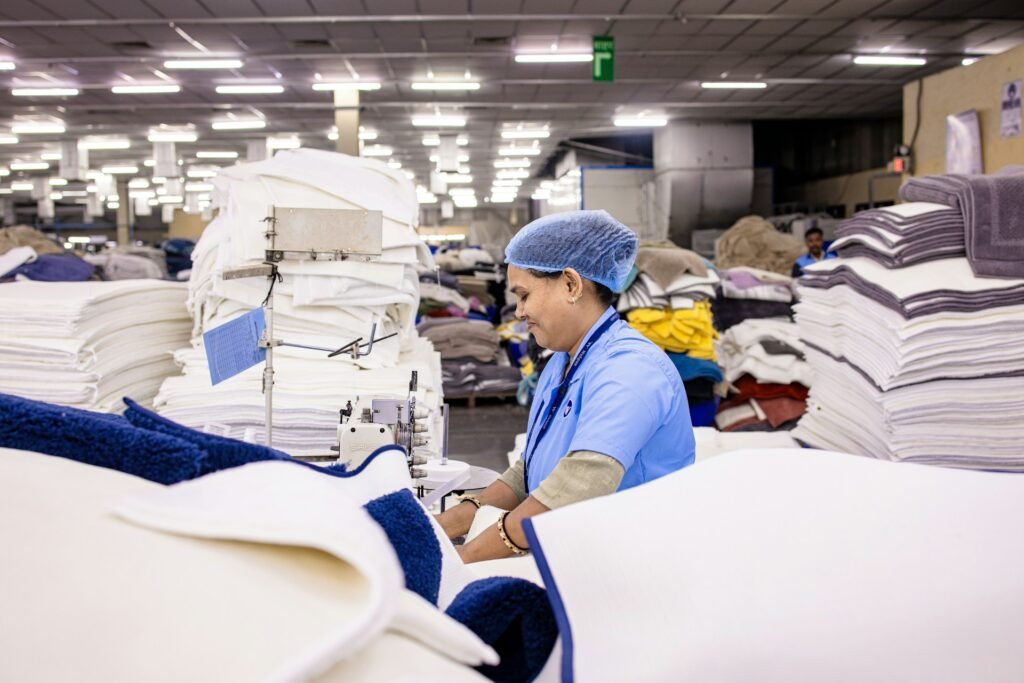
More Acute Job Market Effects
- Faster adoption → faster restructuring → sharper short‑term unemployment in certain roles.
- The UK’s flexible labour market – often praised for being dynamic – also means it’s easier to shed jobs quickly when automation arrives.
Without large‑scale, properly funded retraining, upskilling and regional support, the pain will be:
- More visible,
- More geographically uneven, and
- More likely to translate into political backlash.
Is “AI Superpower” Mostly a Gimmick?
Not Just a Gimmick – But Not Purely Substance Either
There is real substance:
- World‑class research labs.
- Deep start‑up ecosystem.
- Strong role in AI governance debate.
But there is also a hefty dose of political gloss:
- The label “superpower” is useful for speeches, summit communiqués, and party manifestos.
- It creates a sense of inevitability around AI adoption – implying that any resistance is “anti‑progress”.
It is, in practice, both:
- A partially accurate description of Britain’s strong relative position and
- A branding strategy to attract investment and position the UK favourably post‑Brexit.
Cynically: “AI superpower” is 50% policy, 50% PR.
Advertisement

- 16 Million Colors: This gu10 smart bulb (bulb shape size: MR16) provides millions of vivid colors plus cool & warm ambie…
- Adjustable Brightness & Color Temp: Brightness (0-400lm) and color temperature (2700-6500K) can be tailored precisely to…
- Convenient Intelligent Controls: You can control the gu10 led bulb via Alexa and Google Home to free your hands, and wit…
Expert Voices – Between Pride and Caution
- Dame Wendy Hall, University of Southampton: “The UK has genuine strengths in AI, and we should celebrate them. But if ‘superpower’ means anything, it must include responsibility to workers, citizens and global standards – not just investors.”
- Lord Tim Clement‑Jones, Chair of the All‑Party Parliamentary Group on AI: “We cannot afford AI exceptionalism. Calling ourselves a superpower is meaningless if regulation, ethics and inclusion don’t keep up.”
https://appgai.co.uk - Dr Maeve Cohen, employment researcher, University of Leeds: “AI is not a miracle machine; it is a political choice. If benefits pool at the top, ‘superpower’ will sound more like a punchline than a policy.”
Bottom Line – What “AI Superpower” Really Means for the UK
| Dimension | Reality | Cynical Interpretation |
|---|---|---|
| Research & innovation | Genuinely strong; top tier globally. | Great universities, but results may be monetised abroad. |
| Economy | Big potential boost to GDP and productivity. | Gains likely to be captured by big firms without strong redistribution. |
| Global presence | UK is visible in AI diplomacy & ethics debates. | “AI summits” double as reputation management exercises. |
| Jobs & society | Faster tech adoption → faster change. | UK becomes first to feel the social cracks of large‑scale AI. |
Final Verdict
- Is the UK an AI “superpower”?
In research, start‑ups and regulation influence – yes, for its size. In sheer scale like the US or China – no. - Is it a financial advantage?
Potentially a big one – but only if the UK stops that advantage from being privatised at the top. - Does it raise our AI presence globally?
Absolutely – summits, strategy papers, and regulatory leadership give the UK a louder voice than its population size would suggest. - Is it also a gimmick?
Partly. “AI superpower” is as much about branding and political messaging as it is about technological reality.
In short: Britain really does sit near the front of the AI table – but unless policy catches up with the slogan, most citizens will see “AI superpower” as something that happens in Westminster speeches and Canary Wharf boardrooms, not in their pay packets or job security.
Find Help and Support
We have created Professional High Quality Downloadable PDF’s at great prices specifically for Personal or Business use in the UK. Which include help and advice on understanding what Artificial Intelligence is all about and how it can improve your business. Find them here.