A Smarter Grid, Not a Self‑Driving One
AI is certainly in the control room of Britain’s National Grid — but it is not in control of it.
The UK’s electricity network, owned and operated by National Grid ESO (Electricity System Operator), has incorporated artificial intelligence and machine learning into day‑to‑day decision‑making, particularly around balancing demand, forecasting supply, and integrating wind and solar energy.
However, human engineers, analysts and controllers still make the critical operational calls. As one industry specialist put it, “AI assists; it doesn’t rule.”
How AI Is Used by National Grid ESO
Predicting Demand and Renewables Output
The UK’s energy system must keep supply and demand balanced to the second. AI is used to forecast energy requirements and renewable output more accurately than older mathematical models.
Advertisement
![Uineer Wireless Bluetooth Mouse,[Upgraded] Multi-Device mouse,Tri-mode (BT 5.0/4.0+2.4G Hz) Rechargeable Ergonomic mice, 4 DPI,Coldless Office mouse for Laptop PC (Black)](https://m.media-amazon.com/images/I/313FiXcJF5L._AC_.jpg "Is The National Grid Controlled by AI?")
- Tri-Mode Connectivity for Versatile Use :— Experience ultimate convenience with our tri-mode connectivity—compatible w…
- Ergonomic Design for Ultimate Comfort :— Say goodbye to fatigue and discomfort! This mouse features an ergonomic desig…
- Rechargeable with Battery Level Indicator :— Our wireless mouse comes equipped with a battery level indicator, which c…
National Grid ESO’s “Control Room of the Future” programme, launched in 2024, combines machine learning, satellite weather analysis, and IoT data from across the country to predict:
- When solar and wind generation will peak or drop.
- How consumer demand will fluctuate during cold snaps or football finals.
- Where local grid pressures will arise.
A National Grid ESO report (2025) stated that AI tools now enable the control room to “respond five times faster to unexpected changes in generation than a decade ago.”
Optimising Energy Markets
AI also manages and analyses millions of trading bids from power companies, ensuring that electricity is bought and sold efficiently every half hour.
These automated systems allow the grid to choose which generators to call on, reducing costs and emissions in real time.
Maintenance and Fault Prevention
The National Grid uses predictive AI models to analyse data from thousands of sensors monitoring cables, substations and transformers. This anticipates failures before they occur.
As Craig Dyke, Head of National Control at ESO, explained to the BBC (2025):
“AI analytics have enabled us to spot component stresses and environmental patterns long before human teams physically detect them. It means fewer outages and smarter repairs.”
How Much Control Is Automated?
Despite significant automation, Britain’s grid is still ultimately steered by humans.
AI suggests actions — such as instructing reserve power plants to start generating — but human system managers have final approval.
A 2025 University of Warwick Energy Institute paper described the system as “augmented intelligence rather than autonomous intelligence”, arguing that full automation is neither desirable nor safe due to cyber‑security risks and unpredictable weather events.
ESO officials themselves clarify that AI is “an assistant,” not “a substitute” for operator judgement.
If a storm, solar flare or large data error occurred, human teams could instantly override machine recommendations and manually stabilise power flow.
Real‑World Examples of AI in the British Grid
1. Wind Forecasting Breakthrough
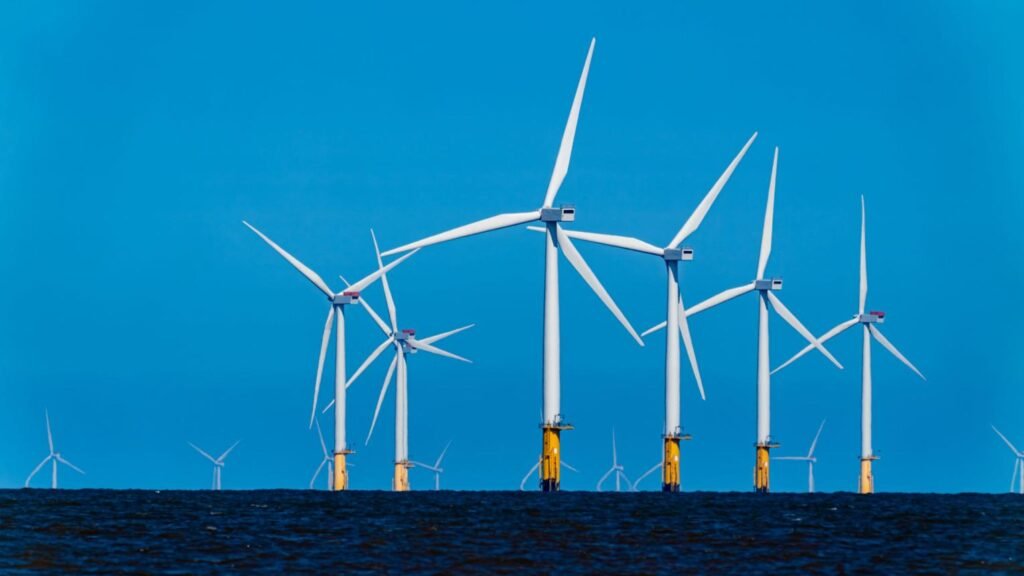
AI improved wind generation forecasting errors by up to 30% between 2022 and 2024.
This matters because even small errors in wind prediction can cost the grid millions in emergency power purchases.
2. Demand Flexibility Service
AI enables the “Demand Flexibility” pilot scheme, where households and companies are paid to shift electricity use away from peak times. Machine learning identifies the most effective participants and patterns.
In 2025, the scheme saved around £10 million in balancing costs and cut 200,000 tonnes of CO₂, according to Ofgem’s Balancing Services Review.
Download the AI Data Centres & the UK Electricity Grid Report for a structured briefing on how artificial intelligence infrastructure is reshaping Britain’s power network.
3. Predictive Maintenance
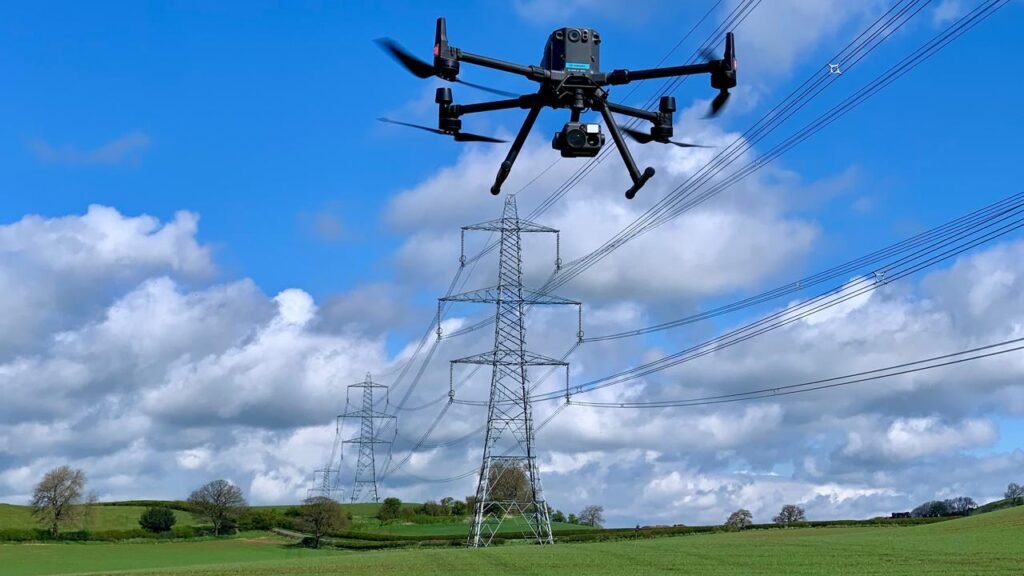
Using drone footage and image‑recognition AI, engineers can inspect part of the grid network previously reachable only by helicopter or foot patrol.
This reduces inspection costs by up to 40% and helps protect the environment by minimising diesel use and disruption to wildlife.
Expert Views
Dr Rob Gross, Director of the UK Energy Research Centre (UKERC), told The Guardian in mid‑2025:
“AI has already made our system cleaner and cheaper, but the National Grid still operates as a human‑led institution. What’s clever about AI here is its subtlety — it amplifies decision‑making rather than replacing it.”
Sian Baldwin, Non‑Executive Director of National Grid ESO, added in an Ofgem panel:
“The future of our control room lies in human‑machine partnership. The AI gives us confidence in the data; the humans bring judgement and accountability.”
Could the Grid Ever Be Fully AI‑Controlled?
Technical Barriers
A fully autonomous National Grid would require 100% reliable real‑time data, unhackable communications, and perfect weather forecasting — all of which are technically impossible.
Most experts believe Britain will retain human oversight indefinitely, using AI solely as a predictive and advisory system.
Advertisement

Cyber‑Security Risks
In a world of rising cyber threats, handing critical infrastructure to an autonomous AI is unthinkable.
In 2024, the National Cyber Security Centre (NCSC) warned that “AI‑driven control systems must remain auditable and interruptible by trained operators.”
What the UK Gains from AI Control
Despite limited autonomy, the implementation of AI delivers tangible benefits:
| Benefit | Real‑World Impact | Source |
|---|---|---|
| Reduced balancing costs | ~20% drop by mid‑2025 | National Grid ESO Annual Report |
| Lower CO₂ emissions | ~200,000 tonnes saved (2025 pilot) | Ofgem |
| Improved reliability | 15% fewer unplanned outages | Energy Systems Catapult |
| Increased renewable integration | Supports 70% renewable share by 2030 | DESNZ Net Zero Strategy |
These results show that while AI isn’t “in charge,” it significantly enhances human control in one of the world’s most complex real‑time machines.
Checkout powerguardian.co.uk to save on your personal energy bills and much more https://powerguardian.co.uk
A Real‑World and Pragmatic View
The UK’s National Grid is not run by robots or autonomous AI — it is run by human experts with AI at their fingertips.
This partnership reflects the UK’s cautious approach: embracing innovation without surrendering responsibility.
The financial savings are already visible — hundreds of millions of pounds per year — and public reliability has improved.
However, as the grid becomes more data‑dependent, so too will its vulnerability to outages, privacy risks and cyber interference. The balance between efficiency and resilience will remain central.
References (UK‑Centric Sources)
- National Grid ESO – Control Room of the Future Programme, 2025
- Ofgem – Balancing Services Reform Report, 2025
- BBC News – AI and the Future of Energy Control Rooms, 2025
- University of Warwick Energy Institute – Artificial Intelligence in Power Systems Study, 2025
- UKERC – Energy Decision‑Making and AI in the UK Power Sector, 2025
- National Cyber Security Centre – Critical Infrastructure and AI Guidance, 2024
Summary – “The Grid Learns, But It Still Listens to Humans”
| Question | Answer |
|---|---|
| Is the UK’s National Grid fully controlled by AI? | No – it still relies on human operators. |
| Is AI essential to its operation? | Yes – it powers forecasting, balancing and maintenance. |
| Efficiency Gains | 15–30% improvements across forecasting and system balancing. |
| Risks | Cybersecurity, overreliance on automation, and system complexity. |
| Future Outlook | Increasing automation, but permanent human oversight. |
In conclusion:
AI is not the master of Britain’s National Grid — it’s the co‑pilot.
And while that co‑pilot already saves money, carbon and time, the real skill lies in keeping humans firmly in the captain’s seat.
AI Playbooks
We have created Professional High Quality Downloadable PDF’s at great prices specifically for Personal or Business use in the UK. Which include help and advice on understanding what Artificial Intelligence is all about and how it can improve your business. Find them here.