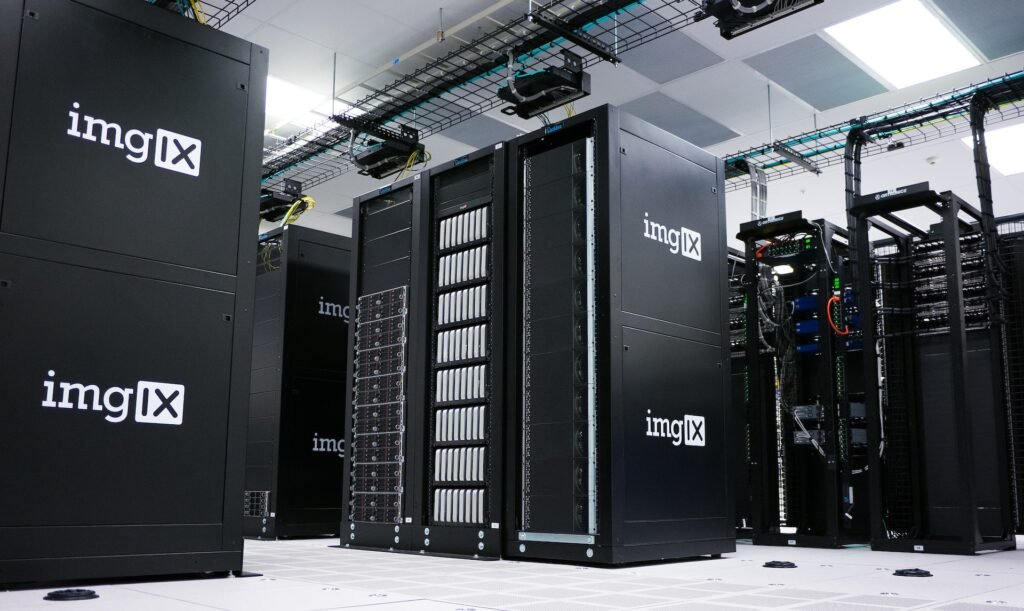
The UK’s artificial intelligence revolution is being powered by a rapidly expanding network of data centres. These facilities have become the factories of the digital age, housing thousands of servers that process AI workloads, cloud computing services, online banking, video streaming, government systems and business applications.
While AI promises enormous economic benefits, it also raises a significant question: how many data centres are there in the UK, and how much electricity are they consuming?
The answer reveals one of the most important energy stories of the next decade.
In the context of Will AI Fundamentally Change How Electricity Is Generated and Consumed in the UK?, data centres sit at the heart of the debate.

How Many Data Centres Are There in the UK?
Current Numbers
Industry estimates suggest the UK has between 500 and 600 operational data centres.
The UK hosts one of Europe’s largest digital infrastructure markets, second only to a handful of major global locations.
The majority are concentrated around:
- London
- Slough
- Berkshire
- Manchester
- Birmingham
- Leeds
- Cardiff
- Edinburgh
London remains Europe’s largest data centre hub and one of the world’s most connected internet exchange locations.
Research from industry organisations such as the Data Centre Alliance and TechUK consistently identifies the UK as a leading European data centre market.
Not All Data Centres Are Equal
A local business server room may consume only a few kilowatts.
Modern AI-focused hyperscale facilities can consume:
- 50 MW
- 100 MW
- 200 MW
- More than 500 MW in future developments
For comparison:
- A 100 MW data centre can use as much electricity as around 100,000 homes.
- A 500 MW AI campus could rival the demand of a medium-sized city.

- Coverage up to 4,000 sq. ft. and for up to 100 devices. Extend coverage up to 2,000 sq. ft. with each additional satelli…
- Ultrafast AX6000 gigabit speed with WiFi 6 technology for uninterrupted streaming, HD video gaming, and web conferencing
- Compatible with any internet service provider up to 2.5Gbps including cable, satellite, fiber and DSL. Connects to your …
Why AI Is Driving A New Data Centre Boom
Traditional Computing Versus AI Computing
Traditional cloud workloads primarily store and move data.
AI workloads perform vast numbers of calculations continuously.
Training large language models requires:
- Thousands of advanced processors
- Massive networking infrastructure
- Continuous cooling systems
- Constant electricity supply
This is why AI-focused facilities consume dramatically more energy than older data centres.
Hyperscale Expansion
Major technology companies are investing billions globally in AI infrastructure, including:
The UK hopes to attract a significant share of this investment due to its strong connectivity, skilled workforce and stable regulatory environment.

How Much Electricity Do UK Data Centres Consume?
Current Consumption
According to estimates from the International Energy Agency and industry studies, data centres currently account for approximately 2% to 3% of UK electricity demand.
This equates to roughly:
- 7 to 10 TWh annually
- Electricity consumption comparable to hundreds of thousands of households
While significant, current consumption remains manageable within the overall UK electricity system.
Future Growth
The challenge lies in future demand.
Many forecasts suggest UK data centre electricity consumption could:
- Double by 2030
- Triple by 2040
- Become one of the fastest-growing sources of electricity demand
AI is the primary driver behind these projections.
This links directly to What Will AI Electricity Demand Look Like in 2040?
Why London Has Become Ground Zero
Connectivity Matters
Data centres need access to:
- Fibre networks
- Internet exchanges
- Financial markets
- Major businesses
London offers all four.
The presence of the London Internet Exchange has helped make the capital one of Europe’s most important digital hubs.
The Energy Challenge
The downside is electricity availability.
Parts of London and the South East already face grid constraints.
Some proposed developments have experienced delays because local electricity infrastructure requires upgrading before connections can be approved.
Will Data Centres Become The UK’s Largest New Electricity Users?
Potential Scale
Several industry forecasts suggest data centres could become one of the largest contributors to future electricity demand growth.
Other major sources of demand growth include:
- Electric vehicles
- Heat pumps
- Industrial electrification
However, AI data centres have one crucial difference.
They operate continuously.
Unlike household demand, AI facilities typically run:
- 24 hours a day
- 7 days a week
- 365 days a year
That creates constant pressure on generation and network infrastructure.
Download the AI Data Centres & the UK Electricity Grid Report for a structured briefing on how artificial intelligence infrastructure is reshaping Britain’s power network.
Grid Investment Requirements
Meeting this demand may require:
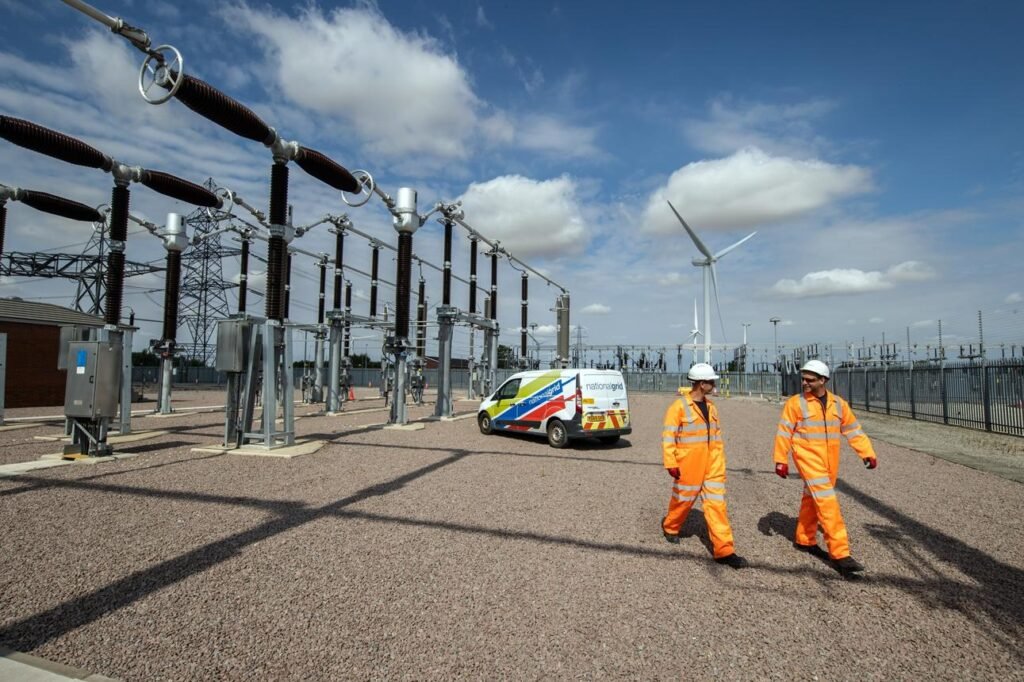
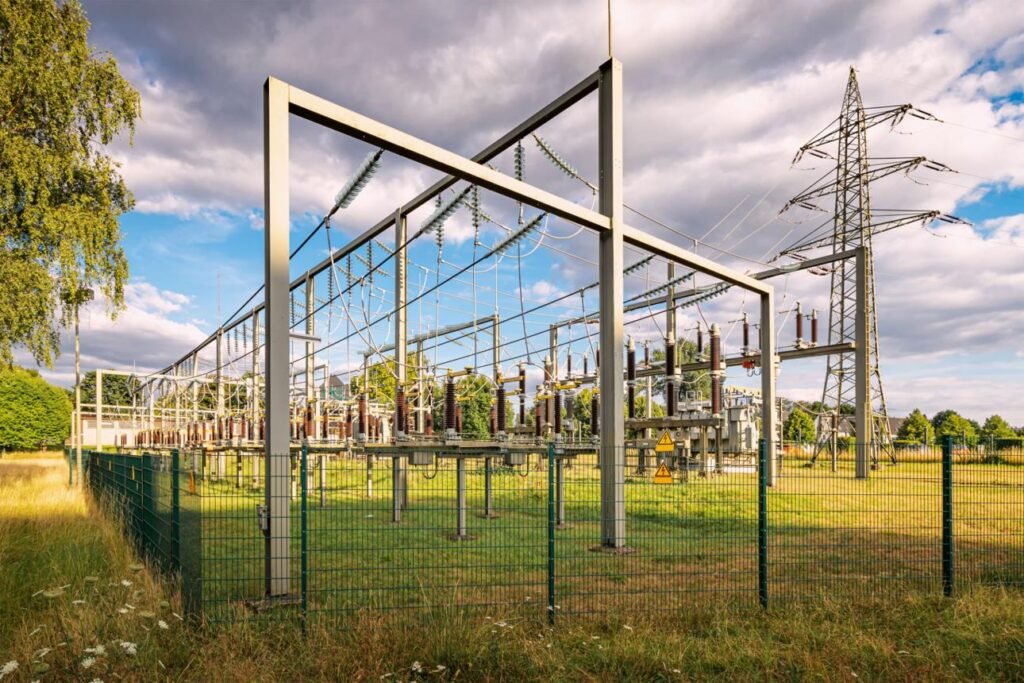
- New substations
- Reinforced transmission lines
- Battery storage
- Flexible demand systems
- New power generation
This directly relates to How Much Grid Investment Will AI Require? and Will More Substations Be Needed for AI?

Can Renewable Energy Keep Up?
The Industry’s Preferred Solution
Most major operators have pledged to increase renewable energy usage.
Common approaches include:
- Solar power contracts
- Wind power contracts
- Battery storage
- Flexible demand management
Many operators are also investigating direct connections to renewable generation assets.
Nuclear Interest Is Growing
As AI electricity demand rises, interest in nuclear generation is increasing.
Small Modular Reactors (SMRs) are frequently discussed as a long-term solution for providing reliable low-carbon power to energy-intensive facilities.
Are Data Centres Good Or Bad For The UK?
Economic Benefits
Data centres provide:
- High-value investment
- Skilled jobs
- Digital infrastructure
- AI development capability
- Tax revenues
The UK government increasingly views them as critical national infrastructure.

- Back-UPS BX provides guaranteed power and surge protection for desktop computers, wireless networks, gaming consoles and…
- 700 VA/390 Watts – Automatic Voltage Regulation (AVR)
- PowerShute shutdown software – USB Connector
The Costs
Challenges include:
- Increased electricity demand
- Grid congestion
- Water consumption for cooling
- Local planning concerns
- Infrastructure costs
Balancing these benefits and costs will become an increasingly important policy issue.
The Bigger Picture
The UK currently has around 500 to 600 data centres, but the real story is not the number of facilities.
It is the scale of their energy consumption.
A handful of large AI-focused campuses can consume more electricity than dozens of traditional data centres combined.
As artificial intelligence adoption accelerates, these facilities will become major drivers of electricity demand, grid investment and energy policy decisions.
The future of AI in Britain is therefore inseparable from the future of energy infrastructure. Data centres may look like anonymous warehouses from the outside, but inside they are rapidly becoming some of the country’s most power-hungry industrial assets.
Reference Material
- International Energy Agency Data Centres and AI Energy Reports
- National Grid Future Energy Scenarios
- TechUK UK Data Centre Research
- Data Centre Alliance Industry Infrastructure Reports
- London Internet Exchange Connectivity Statistics
- UK Government AI Opportunities Action Plan
- UK Department for Energy Security and Net Zero publications
- UK National Infrastructure Commission reports on digital infrastructure and electricity networks