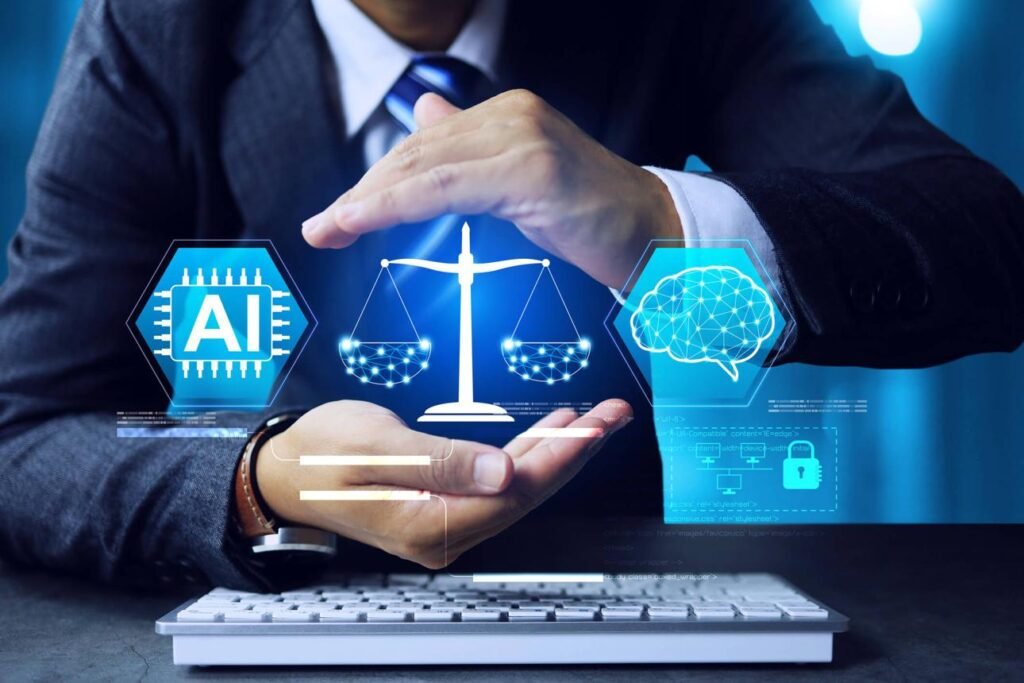
Artificial Intelligence Automation (AIA) is the next stage in combining two powerful technologies:
- Artificial Intelligence (AI) – systems capable of learning, predicting, and making decisions.
- Automation – machinery or software able to perform tasks without direct human involvement.
Together, they form AIA – systems that not only follow instructions but also decide which instructions to follow, when, and how. Essentially, it gives automation a brain.
Dr Hannah Fry, mathematician and AI specialist at University College London, summarises it simply:
“Automation without intelligence is just repetition. AIA adds reasoning – it learns from what it’s done and becomes better next time.”
AIA is now driving everything from self-checkouts and digital banking to logistics, healthcare scheduling, and smart manufacturing.

How Does AIA Work?
1. Machine Learning and Data
At AIA’s core is machine learning — computer systems trained on gigantic datasets to identify patterns and make predictions.
For example:
- AIA in a hospital might learn from thousands of patient records to triage appointments more accurately.
- In logistics, AIA analyses weather and traffic data to plan fuel‑efficient delivery routes.
The more data AIA processes, the smarter and faster these systems become.
2. Decision Loops and Feedback
Traditional automation repeats programmed actions; AIA, by contrast, improves over time.
It monitors performance, measures success (e.g. speed, cost, outcome), and automatically adjusts processes without waiting for human input.
This “feedback learning” turns automation into self‑optimising systems.
See our PDF download: Your Complete AI Learning Journey
3. Integration Across Platforms
AIA links multiple systems – supply chains, communications, sensors and digital customer services – through shared “AI hubs”.
In practical terms, that’s a single platform making instant cross‑department decisions that would take humans hours.
Professor Mark Girolami, Chief Scientist at The Alan Turing Institute, describes it like this:
“Artificial Intelligence Automation connects the dots in real time. It’s not just another tool; it’s the nervous system of a modern organisation.”
What Does AIA Actually Do?
In Business
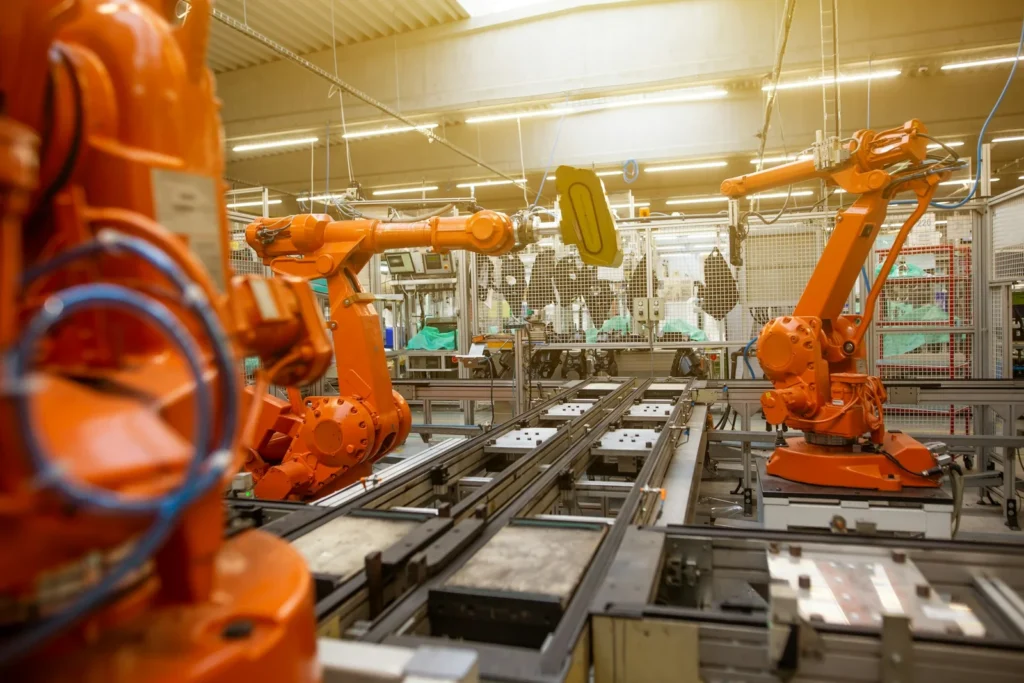
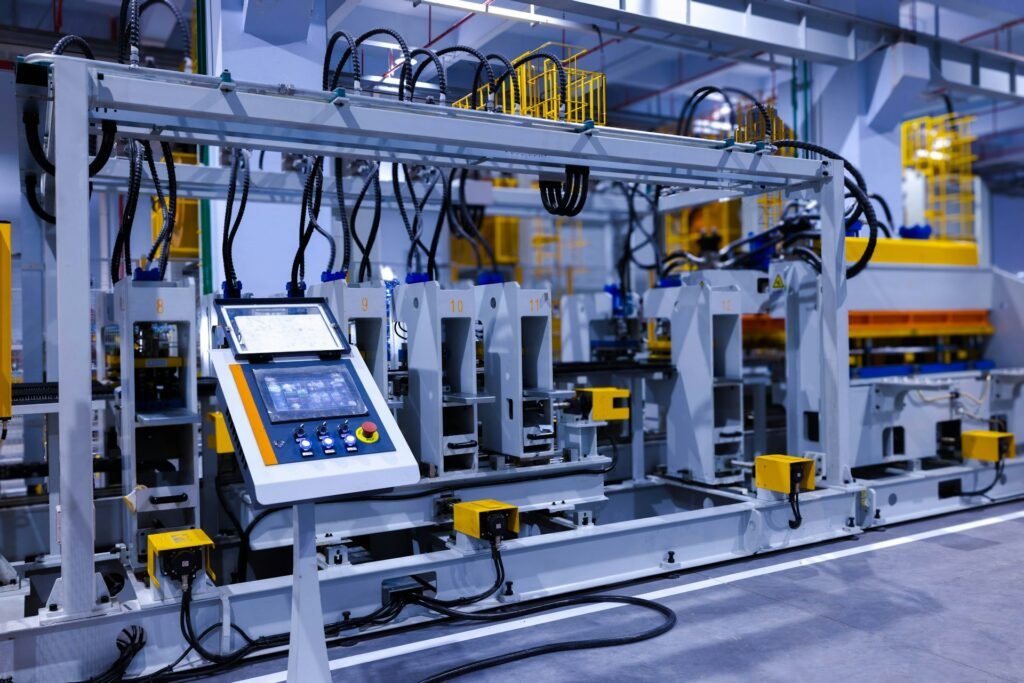
- Manufacturing: AIA predicts when machines will fail, orders replacement parts, and schedules maintenance before breakdowns happen.
- Retail: AI automation manages inventory, pricing, and personalised recommendations automatically.
- Finance: Automated fraud detection learns constantly from new transactions – catching patterns invisible to humans.
Advertisement

- 23.8″ FULL HD DISPLAY – 1920 x 1080 resolution in 16:9 format with 100Hz refresh rate and IPS technology for vibrant col…
- SMOOTH VISUALS – The 100Hz refresh rate reduces flicker for seamless scrolling and clear motion visuals – perfect for wo…
- TÜV RHEINLAND 3-STAR + COMFORTVIEW PLUS – Built-in ComfortView Plus reduces harmful blue light without compromising colo…
In Healthcare
AIA systems already support diagnostics (for cancer scans, blood analyses, and mental‑health prediction models). They schedule appointments more efficiently and predict patient flow, preventing bottlenecks in NHS hospitals.
In Transport
Intelligent automation runs smart traffic systems, electric vehicle charging schedules, and predictive maintenance for rail and bus networks.
Over time, this will mean fewer delays and more reliable public services.
In Households
Domestic AI – such as smart speakers, thermostats and energy monitors – forms the “micro‑AIA” of UK homes.
These systems adjust heating, lighting and appliances automatically to reduce energy waste, saving an average of 8–12% on electricity bills, according to Energy Systems Catapult (2025).
What Will AIA Become?
From Reactive to Predictive
At present, AIA responds to existing data. Within a decade, it will become predictive and anticipatory, able to foresee issues and act before they occur.
Imagine:
- Cars that schedule their own servicing after detecting a pattern of driving stress.
- Smart homes that pre‑heat rooms based on your diary and the weather forecast.
- NHS systems that flag early warning signs of illness weeks before symptoms appear.
From Industry to Society
As AIA matures, it will integrate public infrastructure – roads, energy, waste and utilities – creating what urban planners call Cognitive Cities.
London and Manchester are already testing “AI orchestration” for regional traffic and energy systems.
At that point, AIA becomes an invisible co‑pilot of daily British life.
How It Will Change Everyday Life in the UK
Work and Employment
AIA will streamline repetitive roles — administration, data entry, call‑centre support and logistics tracking.
The Office for National Statistics (ONS) predicts that by 2035, AIA could automate up to 25% of UK jobs but also create new tech and data roles requiring oversight, ethics, and creative problem‑solving.
In small firms, AIA can handle accounting, scheduling and marketing, allowing owners to focus on strategy and relationships.
For employees, it’s a double‑edged sword: a boost in productivity, but also a demand for constant reskilling.
Public Services
AI automation can vastly improve government efficiency — from benefits processing to council applications.
The Institute for Government (2025) found that introducing AIA into local government workflows could save £1.8 billion annually, mainly by reducing administrative delays.
However, people may also face more “faceless” systems where human discretion disappears. Mistakes made by automated decisions (e.g., benefits misclassification) could prove harder to challenge.
Healthcare and Well‑being
For patients, AIA could shorten NHS waiting times by automating referrals and diagnostics.
Digital triage assistants already cut GP workload by around 15%, according to NHS Digital, freeing doctors for cases requiring actual judgment.
Professor Irene Ng of the University of Warwick comments:
“AIA gives the NHS a way to do more without more funding – but it risks treating people as data flows, not individuals.”

Energy and Environment
AI automation in smart grids manages when to draw energy from renewables and when to store it.
By 2035, the National Grid ESO expects AIA integration across networks could yield a 15% system‑wide energy saving, aligning with the UK’s climate targets while reducing average household bills by £100–£150 per year.
In practical terms, that’s the difference between energy efficiency being policy rhetoric and daily reality.
Transport and Mobility
Public transport and private travel in cities will become increasingly self‑coordinating:
- Buses, delivery trucks and trains will communicate directly with the grid for timing, charging and congestion reduction.
- Predictive automation will smooth journeys, reducing energy used idling in traffic by up to 10%.
The real‑world benefit: less waiting, lower fares, and cleaner air in urban UK environments.
What Are the Risks of AIA?
Job Displacement and Skills Gaps
AIA brings more efficiency — but also creates large skill gaps. Workers displaced by automation often lack the training for new AI‑related roles.
Without proper retraining, the UK could see inequality widen further between high‑tech and low‑skill workers.
Advertisement

Ethical and Transparency Issues
As more systems become automated, decision‑making becomes opaque.
If an algorithm denies a loan, changes a medical appointment, or flags someone for fraud, who is accountable?
The UK’s AI Regulation White Paper (2025) highlights the urgent need for explainable AI — AIA systems that can justify their choices in plain language.
Over‑Reliance and Security
The more the UK relies on interconnected AIA networks, the more vulnerable they are to failures or cyber‑attacks.
A large‑scale system outage could affect everything from payment networks to patient monitoring overnight.
As GCHQ’s National Cyber Security Centre (NCSC) warns, “Automated intelligence can make systems smarter, but also more brittle.”
The Real‑World, Everyday Impact for The UK’s People
| Everyday Area | AIA Example | Real Effect |
|---|---|---|
| Home life | Smart thermostats and appliances | Lower bills, more comfort, less manual management |
| Commuting | AI traffic‑control systems | Fewer jams, lower emissions, reduced travel fatigue |
| Healthcare | Predictive triage and scheduling | Shorter waiting times, faster diagnosis |
| Shopping & Banking | Automated recommendations and fraud filters | More convenience, but fewer human interactions |
| Workplace | Workflow and HR automation | Efficiency gains, job role restructuring |
Expert Summary
| Expert | Institution | Comment |
|---|---|---|
| Dr Hannah Fry | UCL | “AIA will be what makes AI useful in real life – the thinking doer, not just the talking one.” |
| Prof. Mark Girolami | The Alan Turing Institute | “It will underpin infrastructure, services and economics, much like electricity once did.” |
| Prof. Irene Ng | University of Warwick | “Efficiency is valuable, but AIA must serve people, not simply replace them.” |
References (UK‑Focused)
- Department for Science, Innovation and Technology – AI Regulation White Paper, 2025
- The Alan Turing Institute – The Role of Automation in National Infrastructure, 2025
- Institute for Government – Automation and Efficiency in UK Public Services, 2025
- Energy Systems Catapult – Smart Home and Grid Efficiency Report, 2025
- National Grid ESO – AI and Energy Balance Forecast, 2026
- NHS Digital – Digital Triage Trial Outcomes, 2025
Summary
| Aspect | Current Stage | Future Direction | UK Impact |
|---|---|---|---|
| Definition | Combination of AI reasoning and automated systems | Expanding across all sectors | Increased efficiency, reduced manual work |
| Technology Focus | Self‑optimising data‑driven systems | Predictive automation and integration | Smarter homes, transport, healthcare |
| Economic Outlook | Costly implementation phase | Long‑term savings & new skilled jobs | Mixed – growth and disruption |
| Social Risk | Job and privacy concerns | Managed through regulation & retraining | Widening digital divide if mismanaged |
In conclusion:
Artificial Intelligence Automation is not just another digital upgrade — it is the fusion of decision‑making and doing, a technology likely to become as fundamental to modern Britain as the Internet itself.
Handled wisely, AIA will streamline UK life: cleaner cities, faster services, cheaper energy.
Handled poorly, it risks creating a society that’s efficient but impersonal — a place where the systems run perfectly, but people no longer understand who’s really in charge.
Find Help and Support
We have created Professional High Quality Downloadable PDF’s at great prices specifically for Personal or Business use in the UK. Which include help and advice on understanding what Artificial Intelligence is all about and how it can improve your business. Find them here.