Artificial Intelligence, in its current form, is not the end of technological evolution. It’s a step — a major one — towards systems that are self‑aware, bio‑synthetic, and fully autonomous.
While today’s AI is advanced in pattern recognition and reasoning, it is still dependent on human design. The next generation of technology may not be artificial at all, but something closer to artificial consciousness — systems capable of self‑directed thought and emotional simulation.
In short, AI is irreversible, but it’s also transitional. What will follow is likely to merge human and machine intelligence, blurring the line between creator and creation.
What Could Supersede Modern AI
Artificial General Intelligence (AGI)
The next threshold is often referred to as AGI — Artificial General Intelligence.
Unlike current AI (which is narrow, task‑specific and dependent on human inputs), AGI would:
- Think abstractly across multiple domains.
- Learn continuously without programmed limits.
- Set its own goals based on experience or logic.
If achieved, AGI wouldn’t just process data — it would reason, innovate and adapt autonomously.
Experts at The Alan Turing Institute predict early forms of AGI could emerge before 2040, though true “self‑awareness” remains speculative.
Neuro‑Synthetic Interfaces
In parallel, British and global research is moving toward human‑computer neural integration.
Companies like Neuralink abroad, and Cambridge Neurotech in the UK, are developing implants enabling direct communication between the brain and digital systems. Once mature, the technology could replace traditional AI interfaces entirely — humans might think commands instead of typing them.
This would create a new hybrid ecosystem: extended intelligence, in which humans and machines share cognition.
Quantum Cognitive Systems
Further ahead, quantum computing could underpin “quantum cognitive systems” — machines running billions of simultaneous thought processes based on probability rather than binary logic.
Such systems wouldn’t merely outperform AI on speed and calculation but could begin to model the uncertainty, creativity and emotion that define human thought.
In principle, this would produce something beyond both biology and code: technological intuition.
Consequences for Everyday Life in the UK
Work and the Economy
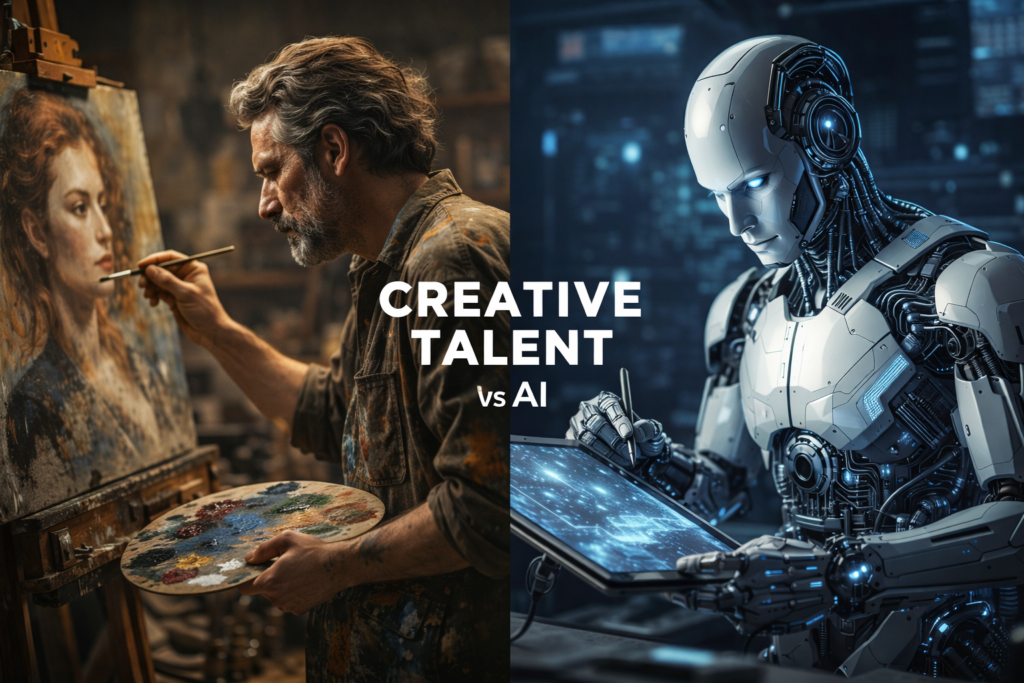
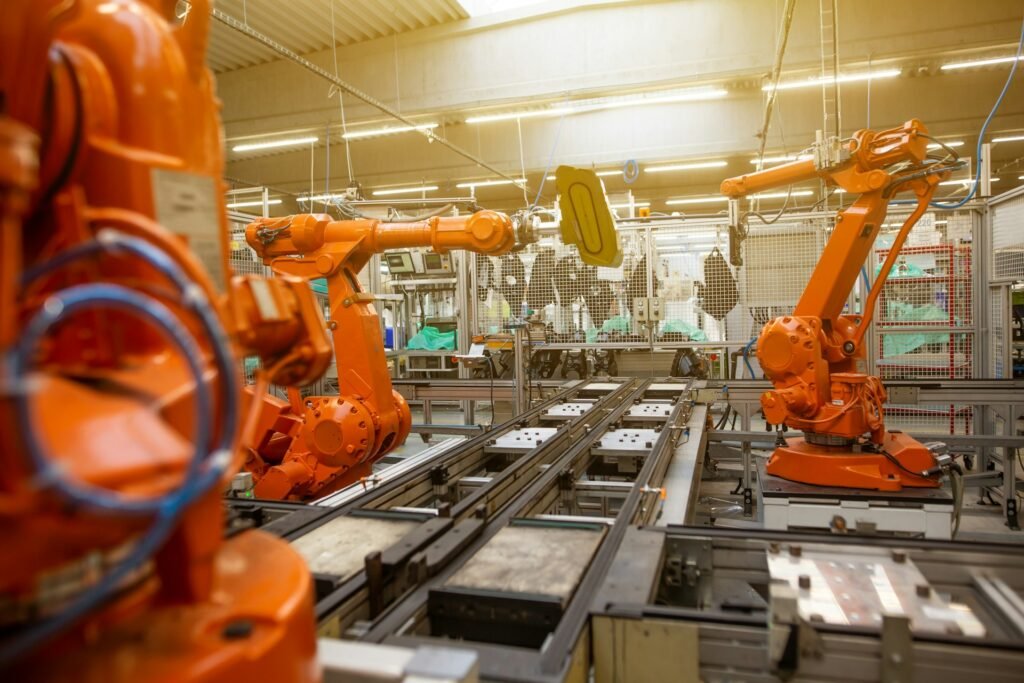
If AI has already replaced repetitive labour, AGI could begin to replace strategic and creative labour. Accountants, lawyers, journalists and even medical specialists may compete against reasoning systems that never tire, never err, and require no salary.
For the British workforce, this would accelerate a divide between:
- Tech‑integrated elites (people who use AI‑linked tools or implants effectively).
- Technological outsiders (those shut out by cost or digital illiteracy).
The government’s Department for Science, Innovation and Technology (DSIT) already warns of a widening “innovation inequality gap” — an entire class of people unable to participate fully in a post‑AI economy.
Privacy and Autonomy
With AI already tracking online behaviour, future systems will expand monitoring into real‑world data. Neuro‑integrated and spatial computing devices could interpret emotions, stress levels and even subconscious responses.
That means everything from workplace decisions to shopping experiences could adapt in real time to physiological reactions.
In a country like the UK — where data protection is strong in law but patchy in enforcement — the result could be constant consensual surveillance, traded for convenience.
Health and Longevity
A positive but complex outcome may emerge in healthcare. Bio‑synthetic AI systems could predict illnesses years in advance, create personalised treatment simulations and even edit faulty genetic code.
But this may also fragment the NHS model of fairness, creating tiers where private clients access custom genetic enhancements while the public relies on slower traditional care.
Community and Human Interaction
AI already mediates social relationships; an AGI future could erode them further. Relationships might form with digital confidants — adaptive AI partners who perfectly align with a user’s personality.
Sociologists at LSE’s Media Futures Programme warn that Britain may face “empathetic erosion,” where individuals interact more with responsive algorithms than with one another.
Loneliness could paradoxically increase even in a hyper‑connected world.
Why This Is Allowed to Develop
Economic Momentum
AI has become the backbone of the UK’s planned industrial growth. The government’s AI Strategy (2024) identifies the sector as worth over £60 billion by 2030. Once a technology becomes economically foundational, halting or limiting it is politically unthinkable.
Innovation is treated as destiny — not policy choice.
Global Competition
Britain cannot afford to fall behind global power blocs such as the US, China and the EU in AI and robotics research. That means even if ethical risks are known, they are accepted as collateral progress.
In a cynical assessment, the UK is “racing with caution but not restraint.”
Is There Anything Beyond AI?
Theoretically, yes — the phase beyond AGI has been termed Artificial Consciousness or Synthetic Sentience.
This would involve machines not just imitating thought but experiencing being. No nation, including the UK, is close to that yet, but groundwork in computational neuroscience and bio‑digital hybridisation is moving rapidly.
If such systems emerge, they could transform existence more profoundly than AI ever did:
- Labour, creativity and even politics might be shared between humans and self‑aware machines.
- The definition of “life” could expand to include synthetic cognition.
- Ethical law in Britain would need complete rewriting around machine rights and responsibilities.
The Outlook: The Cost of “Progress”
AI’s successors will likely entrench the same asymmetries that AI has already exposed — only deeper.
If power and data ownership remain concentrated among a handful of global corporations, then AGI and neuro‑linked systems could widen inequality, amplify surveillance, and quietly dissolve what remains of individual privacy.
For everyday Britons, the most visible change may not be apocalyptic — it will feel incremental:
- Fewer traditional jobs,
- More algorithmic monitoring,
- And a slow but steady delegation of human agency to the technology that claims to serve it.
The cynical truth?
Whatever supersedes AI won’t “liberate” humanity; it will organise it — efficiently, impersonally, and profitably.
References (UK and European Sources)
- UK Government – National AI Strategy, 2024
- Department for Science, Innovation and Technology – AI Skills and the Digital Divide Report, 2025
- The Alan Turing Institute – AGI and the Future of human–machine intelligence, 2026
- LSE Media Futures Programme – Human Connection in the Age of Algorithmic Companions, 2025
- King’s College London – Quantum Cognition and the Evolution of AI (2024)
- BBC Future – What Comes After Artificial Intelligence?, 2025
Summary
| Stage | Type of Technology | Effect on UK Life | Key Risk |
|---|---|---|---|
| Now – Narrow AI | Focused algorithms for media, retail, work | Convenience, job disruption | Privacy loss |
| Next – AGI | Autonomous reasoning systems | Job displacement across high‑skill sectors | Economic inequality |
| Later – Neuro/Quantum Integration | Human–machine cognitive merging | Enhanced healthcare & performance | Total data exposure |
| Far Future – Artificial Consciousness | Self‑aware systems | Redefining humanity and rights | Ethical collapse |
In conclusion:
AI is irreversible, but it is not the final chapter.
Something will eventually supersede it — likely AGI or integrated human‑machine cognition — bringing breathtaking capability and subtle peril.
For everyday life in Britain, that future will mean unprecedented convenience wrapped in invisible control: a society run ever more effectively, but by systems less and less human.