If things continue as they are, by the early to mid‑2030s, it will be virtually impossible to live a “normal” British life — pay bills, see a doctor, get a job, travel easily — without using some form of AI, even if you don’t realise it.
⚙️ Everyday Life Is Already Run by Algorithms
Money and Banking
Try living without online banking or contactless payments today. Already, 95% of UK adults use digital payment systems often powered by hidden AI (UK Finance, 2025). Fraud detection, loan approvals, and credit scoring are all algorithmic processes. The cynical take: your finances are already negotiated between machines — you’re just the signature at the end.

Healthcare
The NHS currently runs diagnostic, triage, and administrative AI tools in over 70 hospital trusts (NHS England, 2026). Within five years, if you book an appointment, request a repeat prescription, or even chat with 111 online, that’s AI. A non‑digital patient risks becoming “unreachable” to the system — not out of cruelty, but convenience.
Transport and Travel
Ticket barriers, traffic lights, car insurance, even petrol pricing involve predictive AI. Trains are scheduled by machine learning; airlines use AI for flight operations. A human‑planned commute is already a relic — invisible software is deciding your route before you’ve even woken up.
🧾 Bureaucracy Without the Bureaucrats
Government and Council Services
Over 60% of UK local authorities use AI in some way — from bin‑collection routing to benefit eligibility checks (Local Government Association, 2025). Central government is testing AI in tax compliance and welfare assessment under HMRC and DWP respectively.
Cynical translation: in ten years, paper forms and human caseworkers will be rare. If you can’t navigate digital identity systems or AI‑based portals, you’ll effectively be locked out of public life. The phrase “computer says no” will shift from comedy sketch to everyday nightmare.
The Job Market
By the early 2030s, HR software and AI interview filters will screen most job applications. Already, three‑quarters of large UK employers use algorithmic CV scanning or pre‑interview bots (Chartered Institute of Personnel and Development, 2025).
It won’t matter how you perform in person — first, you’ve got to pass the AI at the gate. Manual labour will also be tied to smart scheduling and machine oversight. Opting out will mean struggling to work, not just struggling with tech.
🏠 The “Smart” Prison of Convenience
The Home Will Be AI by Default
Smart meters are already mandatory for most new energy contracts. Heating, lighting, and appliances increasingly “optimise themselves”. While this saves money, it also means manufacturers and utility firms watch our habits round the clock.
By 2030, smart home integration will be standard in most new-builds, not a luxury. The cynical view: you won’t choosean AI‑free home any more than you can now choose a house without electricity.
Retail and Groceries
AI stock management and checkout‑free shops (like Amazon Fresh and Tesco GetGo) are expanding rapidly. Pay with cash? In some city branches, you simply can’t. Retail “efficiency” will eventually mean “no human staff”. So yes — even buying milk will involve machine vision.
🖥️ Cultural and Social Life
Social Media and Information
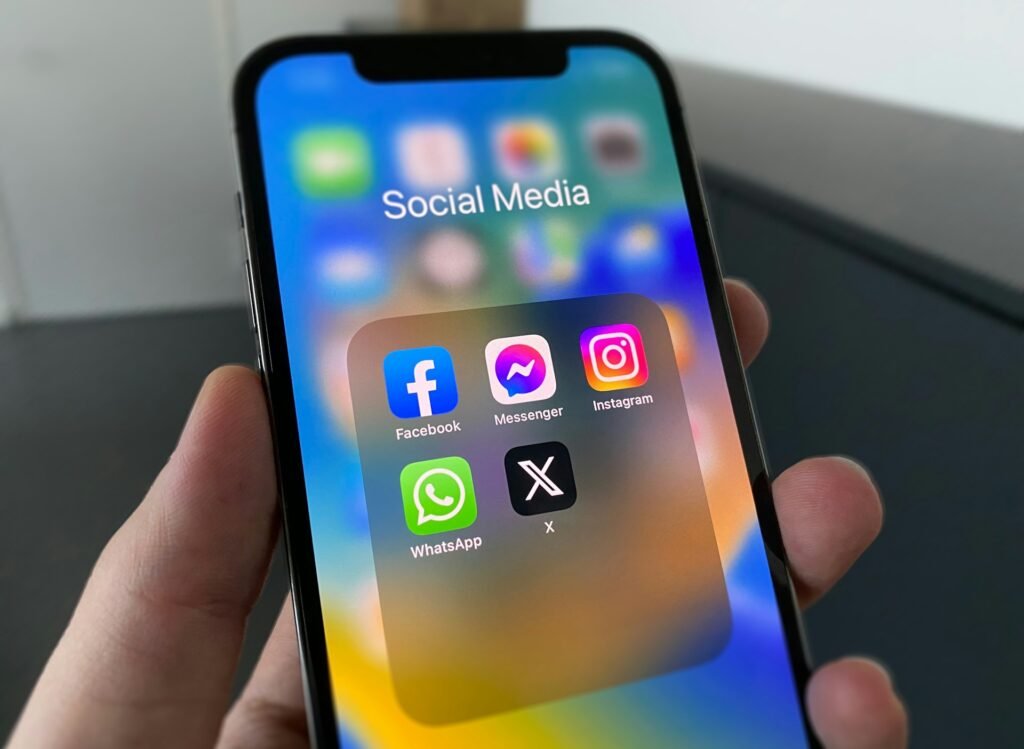
AI already decides what you see, read, and share. The average Briton encounters AI‑filtered content for six hours a day(Ofcom, 2025). By 2030, nearly all public conversation will flow through algorithmic moderation — AI will be the invisible editor of reality.
You’ll no longer get “your” news — you’ll get the version of events the model thinks will keep you scrolling. An AI‑free social life? That’ll mean going off‑grid completely.
Education and Learning
AI tutoring systems are being embedded in schools and universities nationwide. Students will grow up expecting machine help for research, writing, revision. Within a generation, “learning without AI” will sound about as odd as “learning without the internet.”
📉 The Tipping Point Timeline
| Year | What’s Happening | Why “Normal” Becomes Hard to Maintain |
|---|---|---|
| 2026–2028 | AI embedded across banking, retail, and NHS services | Opting out means slower service, higher costs |
| 2028–2030 | Smart ID, automated job screening, AI-driven benefits systems | Non‑users increasingly excluded from employment and public services |
| 2030–2033 | AI woven into energy, travel, data taxes, and surveillance | Living “offline” becomes nearly impossible; digital ID required for most transactions |
| Beyond 2033 | Fully predictive governance: automated tax, energy, welfare, insurance | Non‑AI users treated as statistical anomalies — society assumes compliance |
By the mid‑2030s, refusing to use AI won’t be a lifestyle choice; it’ll be a logistical impossibility. You can live without Instagram — but not without electricity, medicine, or a bank account. All of which will be AI‑dependent.
💂 “We’ll Keep the Human Touch,” They Say
The Polite Performance of Choice
Politicians and tech firms insist human oversight will always exist. Yet “oversight” typically means checking what an algorithm has already decided. It’s governance through confirmation bias — people rubber‑stamping machine opinion.
Techno‑Dependency Disguised as Progress
Each upgrade is sold as convenience: faster appointments, cheaper insurance, smoother travel. Cynically, that’s bait. Each time we accept automation, we lose a sliver of independence. No one signs away control in one go; it happens app by app, update by update.
Sector by Sector
| Sector | “Normal” Without AI | Likely Deadline (Cynical Estimate) |
|---|---|---|
| Banking & Payments | Already gone | Gone by 2025 |
| Healthcare Access | Mostly digital now | Impossible by 2030 |
| Retail & Shopping | Self‑service dominates | Widespread by 2028 |
| Transport & Travel | Fully algorithmic booking | 2030–2032 |
| Jobs & Recruitment | Algorithmic screening by default | 2030 |
| Public Administration | AI triage for welfare, tax, council | 2032 |
🧠 Opinion
By around 2030–2032, living what we think of as a “normal life” in England — going to work, paying bills, seeing a GP, travelling, shopping — without touching AI or data‑driven systems will be practically impossible.
- Life will still feel ordinary, but everything ordinary will depend on algorithms.
- Opting out will be socially isolating and economically costly.
- “Digital literacy” will quietly become a requirement for people, in all but name.
AI won’t arrive one night like Skynet — it’ll just seep in until not using it looks out of place. The truth is that soon, “normal life” won’t mean life without AI; it’ll mean learning to live within it — just another part of Britain’s invisible infrastructure, right alongside electricity, broadband, and taxes.