Anxiety and Financial Trauma
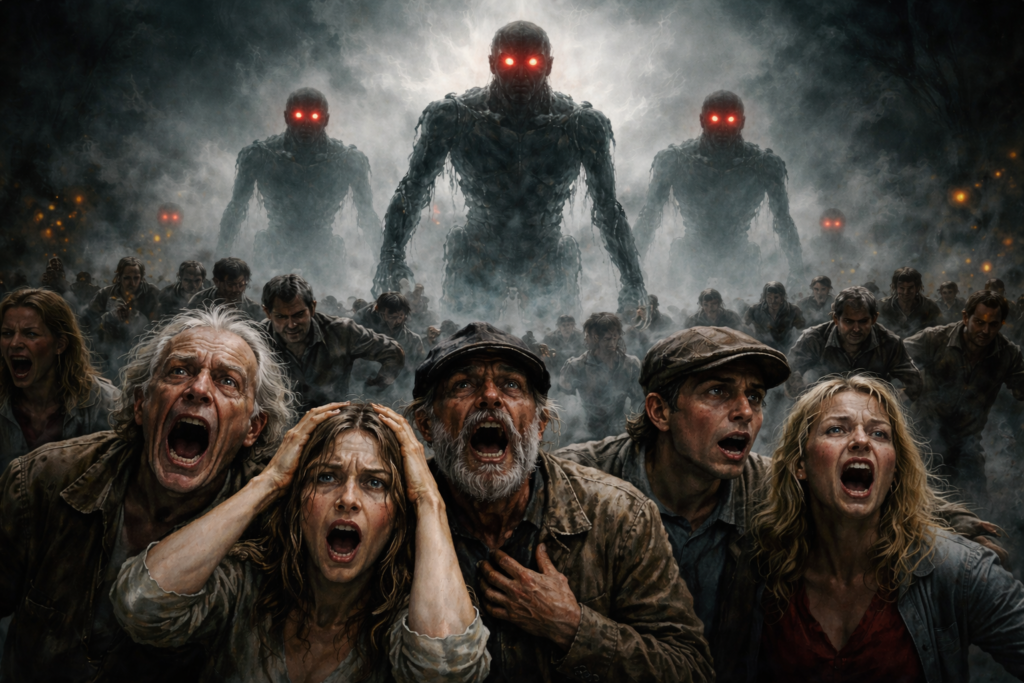
Losing a job already ranks among the top causes of stress; losing it to a machine compounds the humiliation. People describe feeling “obsolete”, “tricked”, or “betrayed by technology”.
According to research from the Mental Health Foundation (2024), job insecurity tied to automation contributes significantly to generalised anxiety disorder and feelings of hopelessness. Communities once thriving around warehouses, customer services, and logistics hubs have reported increased prescription rates for anti-anxiety and sleep medication.
Erosion of Value and Social Stigma
Those replaced by AI often find themselves dismissed not just by employers but by society itself. “Adapt” becomes the new moral test — as if the capacity to learn coding or AI literacy in your 50s were the only proof of worth.
A cynical truth: the new workplace morality punishes those who cannot keep up with relentless digital change. Failure to “reskill” is seen not as misfortune, but laziness. Mental health professionals describe this as “the digital inferiority complex”, where self-worth declines because self-worth is now benchmarked against algorithmic productivity.
Inside the Workplace: Stress Under Surveillance
AI Monitoring and Worker Anxiety
Even for those still employed, AI has changed the atmosphere. Modern workplaces now feature AI productivity tracking, analysing emails, keystrokes, meetings and speech tone to “optimise performance.”
Employees know they’re constantly being evaluated by invisible systems, creating chronic stress and hypervigilance.
The TUC (Trades Union Congress) reported in 2025 that 60% of workers using AI-driven monitoring systems said it caused anxiety, tension or paranoia about being “flagged” for underperformance. In effect, a silent, digital supervisor lives inside the office software — incapable of empathy, yet capable of judgment.
Perpetual Competition
These systems normalise constant pressure: humans training themselves to outperform machines — an impossible task. Britain’s work culture already struggles with burnout and presenteeism, and AI merely turbocharges both.
In the cynical view, AI doesn’t just extract labour — it extracts peace of mind.
Long-Term Societal Impacts
Communities in Decline
When automation closes factories or downsizes offices, towns lose more than wages. They lose purpose, connection and pride. A job gives identity; its absence breeds disconnection.
Industrial areas across the North of England are especially vulnerable. As AI hits logistics and manufacturing, the social fallout mirrors earlier waves of deindustrialisation — with mental health problems rising alongside lost economic identity.
Sociologists from King’s College London warn that the effect could mirror the 1980s northern unemployment crisis, but with a cultural difference: “This time it’s not globalisation taking their work — it’s their own employers, promising innovation.”

A Generation of Distrust
Children growing up watching parents or relatives replaced by machines may grow cynical about education alone being a route to stability. The message they absorb is that effort doesn’t equal security — only adaptation to algorithmic systems does. This generational pessimism is a long-term mental health threat in itself.
Why Employers Ignore the Damage
Numbers Over Nerves
Corporate AI policy focuses on profit margins, not psychological metrics. A line on a spreadsheet counts; a sleepless former employee doesn’t. Shareholders see “cost efficiency,” not clinical depression.
This institutional indifference is wrapped in language about innovation and progress. The cynic would say British management culture has finally found the perfect scapegoat: they no longer fire people — AI realities do.
Mental Health Programmes as PR
Most big employers now promote their “mental health awareness campaigns.” But such initiatives are often optical window dressing — driven by HR strategy rather than moral concern. Talking therapies can’t undo the despair of being automated out of existence.
The truth is simpler: companies would rather offer “mindfulness sessions” than keep jobs.
A Look Ahead
In the next decade, Britain’s workplaces will become quieter, more efficient, and emotionally colder. Unemployment caused by automation won’t lead to public outrage — it’ll lead to private despair.
AI will not only measure performance; it will increasingly define human worth through efficiency scores and output metrics. For those excluded by this logic, depression and cynicism will be the new national afflictions.
As one mental health researcher from The University of Manchester observed in 2025:
“We are not witnessing mass redundancy; we are witnessing mass redundancy of meaning.”
Opinion
It is hard to know how all these changes will affect people in the future, but unless people are grounded in the real world you may end up living in a fake world that simply doesn’t exist, you are lost.