Artificial Intelligence (AI) is no longer an abstract idea discussed in boardrooms — it is now fundamentally embedded across the UK’s business landscape. From financial services to logistics and marketing, nearly every commercial sector is being redefined by automation and machine learning. While the benefits include improved productivity and innovation, the real-world effects are far more complex and uneven.
In practice, AI is creating a two-speed economy — one led by companies that adopt AI aggressively and another lagging behind due to cost, skills shortages, or ethical constraints.
The Broad Picture: Widespread Adoption, Uneven Outcomes
According to government data cited by franklinfitch.com, the number of businesses using AI in the UK has doubled in the past two years, with over 52% of firms now implementing AI tools in some capacity. The sector is now worth £23.9 billion, making the UK the third-largest AI market in the world, behind the US and China.
However, while adoption rates are high, tangible improvements in productivity and profit are not uniform. Reports from McKinsey UK (2025) highlight that although 80% of large companies use AI in at least one business function, only around 20% have seen a clear financial return. Many AI projects remain in testing stages, and the broader economic boost predicted by policymakers has yet to materialise.

Key Real-World Effects on UK Businesses
Productivity Improvements
AI is, in theory, a productivity enhancer. In reality, the gains are sector-dependent.
Accelerated Decision-Making
AI’s ability to analyse datasets quickly has transformed business intelligence. For instance, the finance and healthcare sectors are using predictive algorithms to identify fraud, detect investment opportunities, and improve patient outcomes. Financial firms like Barclays and HSBC now use AI risk models that have made real-world savings in the tens of millions annually.
Operational Automation
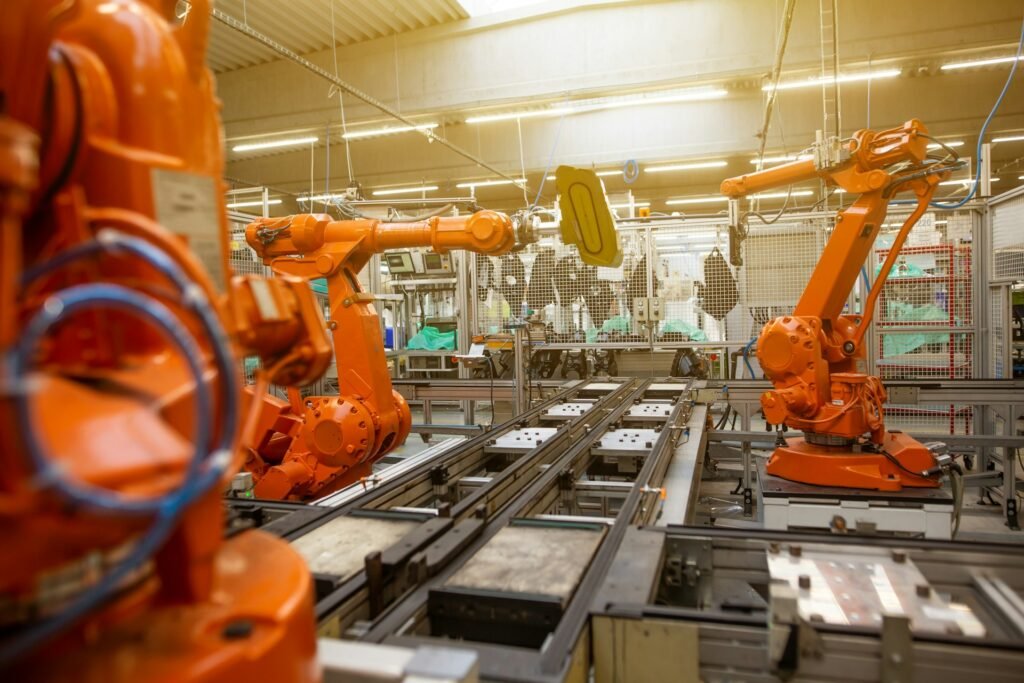
Manufacturing and logistics companies have incorporated robotics and predictive scheduling to reduce errors and downtime. Rolls‑Royce uses AI systems to predict maintenance requirements in jet engines, improving efficiency and cutting operational costs. Yet, as The Guardian (2026) reports, many employers are using AI not to empower staff but to replace them — particularly in repetitive or low-skill roles.
The Employment Disruption
Job Creation in Tech, Job Loss in Routine Roles
There is an expanding demand for data scientists, AI engineers, machine learning specialists, and ethics officers. However, these are not direct replacements for the roles disappearing.
According to Morgan Stanley’s 2026 analysis, UK firms experienced an 8% net job loss during the last year specifically linked to automation — particularly affecting early-career roles across administration, customer service, and retail.
Analysts predict that by 2030, up to 30% of UK jobs could undergo significant change or partial automation (PwC, The Economic Impact of AI on the UK Economy).
The Skills Gap
The most pressing real-world constraint facing British business is the shortage of AI talent. The Confederation of British Industry (CBI) reports that 65% of UK employers cannot find workers with adequate digital or data-related skills.
This shortage limits innovation and creates reliance on imported expertise. Without aggressive reskilling initiatives, SMEs — which make up 99% of UK businesses — risk being left behind.
Economic Polarisation Between Large and Small Businesses
Big Firms Driving Adoption
Larger corporations lead the AI revolution because they can afford research partnerships, data infrastructure, and compliance tools. Examples include:
- BT Group, which uses AI to manage national network reliability and reduce downtime.
- Tesco and Unilever, leveraging AI for supply chain optimisation and consumer analytics.
These companies often work with institutions such as The Alan Turing Institute and UKRI (UK Research and Innovation) to refine AI models.
Small and Medium-Sized Enterprises (SMEs)
Smaller businesses face different realities. Many lack the capital and expertise to use AI meaningfully. Though affordable AI tools like ChatGPT, Microsoft Copilot, and Google Gemini are accessible, effective implementation still requires strategic planning.
A 2025 survey by Lloyds Bank Commercial Banking found that just one in four SMEs using AI saw measurable performance benefits — often because they lacked internal knowledge to train or adjust the tools effectively.
Surveillance and Workplace Management
Algorithmic Oversight
AI is quietly reshaping workplace dynamics. Many firms now employ “smart management” software to track staff output, attendance, and even keystroke patterns. The rationale is “efficiency monitoring”, but labour unions such as the TUC argue it amounts to digital surveillance.
In warehouses and call centres, AI algorithms set the pace of work, often punishing slower employees. This creates a culture of constant evaluation and low morale.
Ethical and Regulatory Risks
In 2024, the Information Commissioner’s Office (ICO) issued warnings to UK firms using AI for worker ranking and performance scoring, noting these systems could violate privacy and labour rights. Several legal challenges are now testing how the Equality Act 2010 applies to automated decision-making in hiring and dismissals.

Consumer Relations
Personalisation and Manipulation
AI has transformed how businesses reach consumers. Retailers and online platforms use machine learning to personalise advertising, tailor prices, and predict purchasing behaviour.
While this has led to record conversion rates and rising profits, it also raises ethical concerns. As The Centre for Data Ethics and Innovation (CDEI) notes, personalisation can easily cross the line into manipulation, particularly when companies adjust prices based on perceived wealth, postcode, or browsing history.
Reputation and Trust
Due to scepticism over data handling, public trust in AI‑driven companies remains fragile. The Edelman Trust Barometer (2025) found that 61% of UK respondents worry AI will reduce job opportunities and make decisions that prioritise profits over fairness.
For businesses, reputational risk is now a tangible operational issue, forcing firms to develop explicit “AI ethics” policies and transparency reports.
Regional and Socioeconomic Disparities
The London-Led Divide
AI development and investment are concentrated around London, Cambridge, Oxford, and Manchester. These hubs benefit from advanced research institutions and higher digital literacy.
However, regions with traditional industries — such as the North East, Wales, and Northern Ireland — face slower AI adoption. Without targeted regional funding, there is a growing risk that AI will widen the economic divide between Britain’s metropolitan and industrial regions.
Public Sector Influence
The government’s push to use AI in public procurement — including NHS analytics, tax monitoring, and policing systems — has normalised algorithmic management across industries. Yet public trust remains tentative, especially following controversies over biased data and algorithmic decision errors in welfare distribution.
Data Visualisation Summary: How AI Is Impacting UK Businesses
1️⃣ AI ADOPTION LEVELS BY SECTOR (2025)
Source: UK Department for Science, Innovation & Technology (DSIT), PwC, McKinsey UK
| Sector | % of Businesses Using AI Regularly | Common Applications | Real-World Impact |
|---|---|---|---|
| Finance & Banking | 79% | Risk modelling, fraud detection, automated trading | Strong efficiency gains (10–15%), moderate job losses |
| Retail & E‑Commerce | 68% | Demand forecasting, chatbots, dynamic pricing | Higher margins, reduced front-line staff |
| Manufacturing | 61% | Predictive maintenance, robotics, quality control | High productivity, major retraining needs |
| Healthcare & Pharmaceuticals | 51% | Diagnostics, patient triage, drug development | Improved accuracy but regulatory concerns |
| Professional Services (Legal, Accounting) | 48% | Document review, reporting automation | Entry-level role reduction, higher billing efficiency |
| Transport & Logistics | 45% | Route optimisation, warehouse robots | Better delivery efficiency, fewer human jobs |
| SMEs (across all sectors) | 24% | Marketing analytics, office automation | Patchy results, limited expertise |
2️⃣ AI’S EXPECTED JOB IMPACT BY 2030
(Based on projections from PwC UK and Morgan Stanley)
| Job Type | Estimated Net Change | Typical Trend |
|---|---|---|
| High-skill AI & Data Roles | +250,000 | Rapid growth due to demand for AI engineers, analysts |
| Customer Service & Admin Roles | −300,000 | Routine work automated by chatbots and scheduling systems |
| Retail & Cash-handling Staff | −170,000 | Rising self-service and AI store management |
| Professional (Finance, Legal, HR) | −120,000 | Mid-level analytical positions automated |
| AI Policy, Ethics & Cybersecurity | +50,000 | Strong growth in governance and safety roles |
📈 Net result: around 290,000 fewer low-to-mid level jobs but 300,000+ new digital positions if reskilling succeeds.
3️⃣ AI IMPACT ON BUSINESS PERFORMANCE METRICS
| Metric | Pre‑AI (2018–20 Avg.) | Current (2025) | AI-Attributed Change | Real‑World Observation |
|---|---|---|---|---|
| Productivity Growth (GDP per hour) | +0.7% | +1.2% | +0.5% improvement | Most gains concentrated in large enterprises |
| Operating Costs | 100% (baseline) | ~88% | −12% reduction | Driven by automation and predictive analytics |
| Average Wages (non‑tech sectors) | £32,000 | £31,200 | −2.5% real decline | Lower job security and wage stagnation |
| Corporate AI Investment | £6.5bn | £23.9bn | +267% rise | Fastest-growing UK digital sub-sector |
| Public Trust in AI in Business | 58% | 43% (CDEI, 2025) | −15% drop | Concerns over data privacy and job impacts |
4️⃣ REGIONAL DISTRIBUTION OF AI ECONOMIC VALUE
(Estimate of AI contribution to regional business growth by 2030 – PwC UK Regional Outlook)
| Region | Estimated AI Contribution to GVA* | Key Sectors Affected | Observation |
|---|---|---|---|
| London & South East | £18–£20 bn | Finance, Media, AI Startups | High skill and investment concentration |
| North of England | £6–£8 bn | Manufacturing, Retail, Logistics | Growth uneven; skills retraining needed |
| Midlands | £5 bn | Automotive, Engineering, Supply Chains | Industrial automation rising |
| Scotland | £3.5 bn | Renewables, Tech R&D | Focus on green AI and energy analytics |
| Wales & N. Ireland | £1.5 bn | Manufacturing, Public Sector | Lagging infrastructure and upskilling programmes |
*Gross Value Added contribution estimated by PwC and ONS projections.
The Real-World Conclusion
AI is deeply altering how UK businesses compete, employ, and interact. The government promotes it as essential for keeping Britain globally competitive — and indeed, AI could add up to £47 billion annually to GDP if integrated successfully (UK Government’s National AI Strategy).
But the reality on the ground tells a more uneven story:
- Productivity gains are real but modest, mainly captured by large corporations.
- Job displacement is rising, particularly in mid-level management and routine roles.
- The skills gap threatens to entrench inequality between high-tech and low-tech sectors.
- Data surveillance and ethical concerns risk damaging public trust in AI-led business models.
In short, while AI is reshaping the UK business sector for the 21st century, it is doing so with winners and losers clearly defined. The country’s next challenge will not be adopting AI — it will be ensuring the transformation creates value for society, not just shareholders.