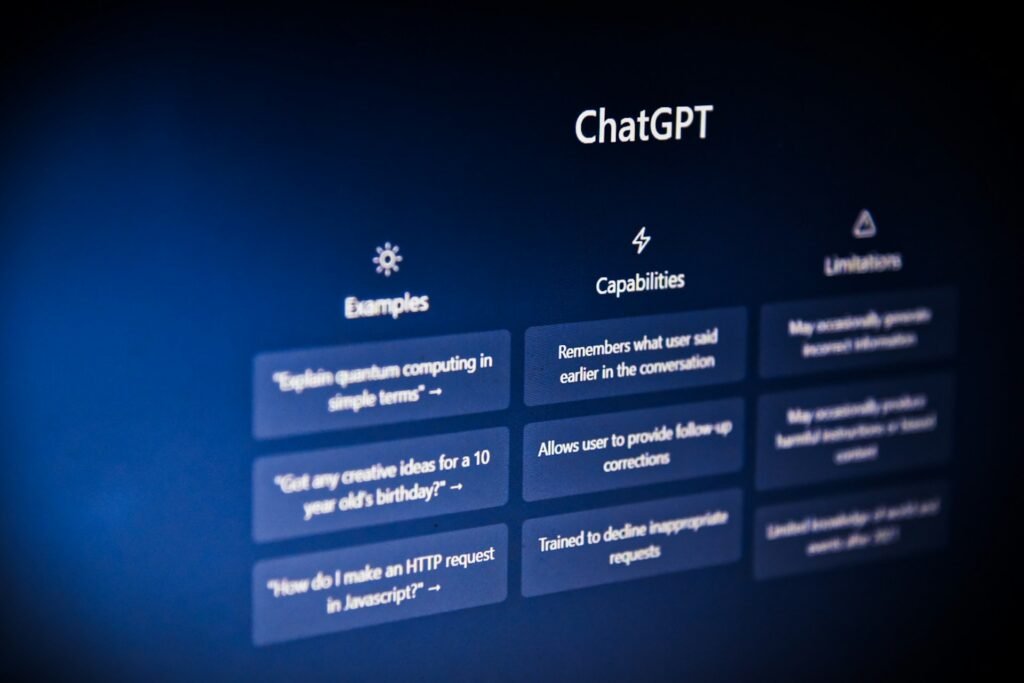
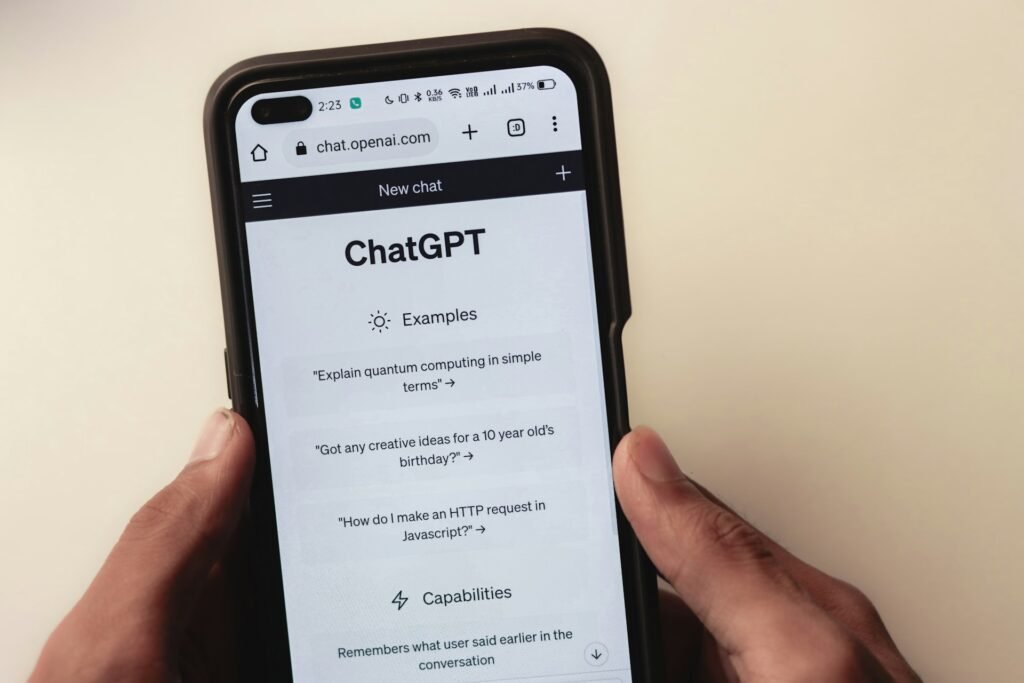
ChatGPT was first designed as a language‑based assistant — translating, writing, tutoring and supporting research through conversation. But its purpose is evolving quickly.
Future versions will function less as chatbots and more as adaptive digital infrastructures — integrated into everyday systems like education, banking, healthcare and local services.
In simple terms: ChatGPT, or systems like it, will become a second interface for daily life in the UK — connecting people to information, commerce, and even government services through plain English rather than forms or log‑ins.
A Transition from Tool to Platform
AI experts at The Alan Turing Institute describe this shift as “a movement from model to medium.”
Future chatbots will act as gateways between humans and the digital world, managing everything from smart homes and business logistics to personal wellbeing records.
“By 2030, conversational AI will stop being an app and start being the language layer of society’s technology,”
says Professor Ellen Broad, researcher in responsible AI design at King’s College London.
That means the average Briton may never notice they’re “using AI” — it will simply be the background software connecting everyday services.
Will ChatGPT Become Bigger and More Popular?
Rapid Integration and Dependence
Yes, it probably will.
The UK Government’s 2026 Digital Services Forecast suggests that conversational AI tools could underpin 40% of all online interactions by early 2030. From tax queries to NHS triage chat, many processes will rely on natural‑language interfaces.
Businesses too are adopting these systems to automate repetitive tasks, while universities are experimenting with AI tutors and writing support.
Non‑Human Customer Service
Nearly every banking, retail and telecoms provider in Britain is expected to deploy language‑model‑based virtual assistants by 2027.
This makes day‑to‑day communication faster but impersonally uniform — the same tone, same efficiency, and the same lack of genuine human warmth.
AI analyst Dr Hannah Fry of UCL describes this as
“a future of convenience where everything works — yet feels ever so slightly soulless.”
Potential Benefits for British Life
Personal Efficiency and Inclusion
Used well, ChatGPT‑type systems can simplify bureaucracy and make services more accessible.
- The elderly or disabled could communicate with government departments and healthcare services more easily.
- Students could benefit from tailored learning support.
- Workers might save hours through AI‑automated administrative tasks.
This could restore productivity in sectors burdened by labour shortages — particularly education, healthcare and customer service, all struggling across the UK economy.
Economic and Environmental Gains
AI may help British businesses use fewer resources and energy by optimising operations.
The Confederation of British Industry (CBI) notes that generative AI could add £30–40 billion to UK GDP by 2030 through automation and creative‑content support, while cutting operational waste.
So, yes — AI and platforms like ChatGPT will become bigger, busier and potentially more useful.
The Hidden Costs and Real‑World Risks
Loss of Human Work and Creative Identity
As AI handles writing, marketing, and decision‑making, tens of thousands of jobs could shift or vanish.
- Routine office roles: replaced by text‑generation bots.
- Hobbyist writing, journalism or design: overshadowed by automated creativity.
British newspaper columnists such as Marina Hyde (The Guardian) argue this represents
“the flattening of human flavour — where everything sounds clever, nothing feels alive.”
In workplaces, an over‑reliance on AI could homogenise communication and suppress the distinct tone and humour that characterises British culture.
Privacy and Data Use
Every conversation with a system like ChatGPT generates data — tone, intent, preferences, even frustration levels.
If such data is collected or analysed without clear limits, it risks turning daily speech into surveillance material.
The Information Commissioner’s Office (ICO) has already investigated AI firms over ambiguous data policies. A 2025 report warned that
“the blending of assistance and analytics may blur consent, exposing users to profiling,”
particularly in health and employment applications.
Cultural Erosion
British identity lives in sarcasm, understatement, and humour — qualities easily flattened by algorithmic politeness. As younger generations grow up interacting with emotionally neutral AI voices, subtle communication could decline.
Dr Vicki Nash from the Oxford Internet Institute observed:
“AI doesn’t offend, contradict or tease — all the ingredients of British conversation. Over time, that absent friction could dull cultural agility.”
So while efficiency improves, national character may quietly dilute — replaced by corporate blandness.

Intrusion into British Daily Life
The Quiet Infiltration
AI will not take over life dramatically; it will weave quietly into the background — scheduling bins in local councils, predicting supermarket stock levels, guiding NHS call centres and policing fraud.
Eventually, Britons won’t talk to AI as much as they live through it.
Think of Alexa managing your shopping, your smart boiler talking to the energy grid, your GP portal offering AI triage — all interconnected through cloud platforms few people understand.
Loss of Privacy and Choice
This interconnection brings risk. As more daily decisions are filtered through AI intermediaries, choice narrows to what algorithms recommend.
For instance:
- You might get news chosen by engagement algorithms.
- Price comparisons might hide better bargains because AI providers partner with specific brands.
The British consumer becomes guided subtly — not coerced, but nudged. And while each “nudge” seems harmless, together they can reshape behaviour and cultural independence.
Digital Inequality
Rural Britain, already behind on full‑fibre and 5G connectivity, will struggle to enjoy equal access to large‑scale AI systems.
That reinforces the existing digital divide — urban centres gaining technical convenience, villages stuck with outdated service models.
Advertisement

How Harmful Could It Be?
Short‑Term Harm: Data Misuse and Misinformation
Misinformation, already a challenge online, will worsen as ChatGPT‑type tools generate persuasive but inaccurate content.
Deepfake voices, cloned articles, and algorithmically targeted propaganda will blur truth and opinion.
Regulators such as Ofcom and the DCMS (Department for Culture, Media and Sport) are drafting new media integrity frameworks to force clearer labelling of synthetic content. Yet enforcement remains difficult.
Long‑Term Harm: Dependence and Cognitive Decline
As AI becomes habit‑forming — planning routes, writing emails, even managing emotions — people may surrender small problem‑solving tasks that once trained memory and patience.
Psychologist Professor Sophie Scott warns this dependency could
“create skilled incompetence — societies that appear more capable on paper but grow ever less self‑reliant.”
AI’s harm, therefore, lies less in rebellion and more in erosion — of skill, autonomy and human confidence.
A Real‑World, Balanced Outlook
AI itself is neither saviour nor villain. Tools like ChatGPT will likely become larger and embedded in every British service, just as mobile phones did in the 2000s.
But the impact depends on who controls access and accountability.
Benefits:
- Less bureaucracy.
- Greater convenience.
- Personalised support for vulnerable groups.
Risks:
- Monopolised data ownership.
- Decline in genuine social contact.
- Digital homogeneity replacing local nuance.
For all the fears, Britain’s tradition of regulation, privacy law and dark humour will act as informal checks. As Dr Hannah Fry quipped:
“If AI ever did start running the country, the average Brit would just queue up to take the mickey out of it.”
References (UK‑Focused)
- The Alan Turing Institute – Future of Language Models and AI Integration in Society, 2025
- UK Government Digital Services Forecast – Conversational AI in Public Administration, 2026
- Information Commissioner’s Office – AI, Data and Public Trust Report, 2025
- Oxford Internet Institute – Cultural Impacts of AI Communication, 2025
- CBI – Economic Growth from Generative AI Projection, 2025
- Energy Systems Catapult – Digital Inequality and National Infrastructure Study, 2025
Summary
| Issue | Potential Benefit | Likely Risk | Long‑Term Outlook |
|---|---|---|---|
| Popularity of ChatGPT‑type AI | High; integration into business and government | Over‑reliance, loss of personal agency | Mainstream by 2030 |
| Cultural impact | Efficiency, inclusion | Dilution of British humour and nuance | Subtle erosion of individuality |
| Economic value | +£30–40 billion GDP by 2030 | High public and regulatory costs | Positive overall if transparency improves |
| Privacy | Easier people‑service interfaces | Data profiling, targeted control | Constant regulation required |
In conclusion:
ChatGPT’s future in Britain is almost certain — it will grow larger, smarter and more embedded in everyday life.
Its benefits are practical but impersonal: smoother conversation, higher efficiency, lower friction.
The harm, though quieter, could be more cultural than catastrophic — a slow standardisation of thought and behaviour in a nation known for irony, individuality and conversational artistry.
So, yes — AI may help us run our lives better, but only if we remember, as any Brit might say: “Keep your wits about you – and don’t let the bots do all the thinking.”