When most people in the UK hear the word computer, they think of something familiar: a desktop, a laptop, or maybe a smartphone. It’s a tool — a device for writing, browsing, calculating, or working.
But as Artificial Intelligence becomes integral to everyday systems, the meaning of computer is shifting.
In the future, a “computer” will not just be a machine you operate – it will be something that operates alongside or even for you.
This change will reflect a fundamental shift from computing tasks to computing judgement.
From Calculation to Collaboration
Early Meaning: The Human Computer
Before machines, a computer was a person. In the late 19th and early 20th centuries, “computers” were individuals — often women — hired to perform mathematical calculations for science, finance or engineering.
Machines later took over that role with the advent of mechanical and digital computing.
AI is moving the word full circle: computing now implies thinking, interpreting and deciding. Once again, intelligence — artificial or otherwise — defines the role, not just speed or accuracy.
Today’s Definition
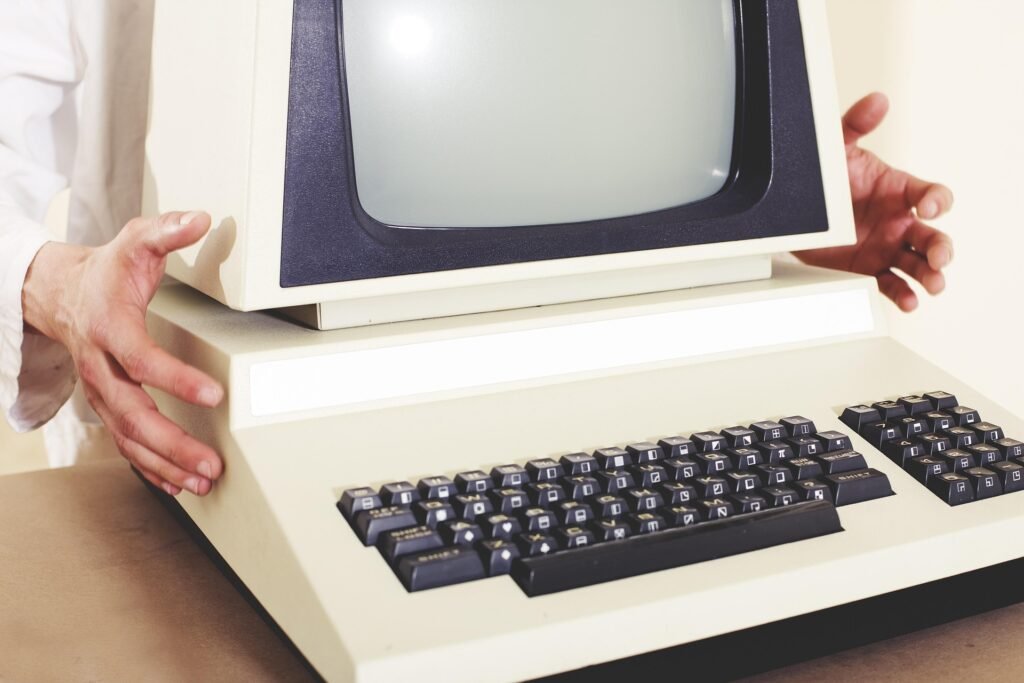
The Oxford English Dictionary (OED) currently defines a computer as “an electronic device for storing and processing data, typically in binary form, according to instructions given to it in a variable program.”
This definition already feels narrow. AI systems like ChatGPT, DeepMind’s AlphaFold, or Google Gemini do more than just process instructions — they engage in reasoning, self‑optimisation and pattern recognition.
They’re not simply following code; they’re modifying how they process code itself.
How AI Is Redefining the Concept of Computation
From Determinism to Adaptation
Traditional computing follows fixed logic.
AI computing introduces adaptation — systems that update their behaviour through data exposure.
This doesn’t just change what a computer does; it changes what a computer is.
Future computers — small, embedded systems inside the home, factory, or even the human body — won’t simply respond to instructions. They’ll make contextual decisions based on learning.
As Professor Dame Wendy Hall, Executive Director at the Web Science Institute, University of Southampton, noted in 2025:
“The notion of ‘a computer’ as a static device is dissolving.
Computing is becoming ubiquitous, adaptive and diffused — a living network, not an object on your desk.”
Advertisement

- 【23.8-inch All‑in‑One PC with Core i5‑7300】Responsive everyday performance — 16GB RAM + 512GB SSD deliver fast boot, smo…
- 【Modern Connectivity & Fast Networking】Built‑in Wi‑Fi 6 and Bluetooth 5.3 ensure stable wireless connections; full I/O i…
- 【Space‑Saving, Ready‑to‑use All‑in‑One PC】Compact all‑in‑one form factor with included keyboard and mouse makes setup si…
AI’s Role: Making Computers Invisible and Autonomous
Everyday Integration
With AI embedded into almost everything — cars, fridges, medical sensors, and city infrastructure — the physical idea of a “computer” will fade.
Instead, computing will become an ambient layer of intelligence woven into daily life.
- The thermostat analysing your habits.
- The car optimising your route using real‑time weather AI.
- The wearable medical monitor predicting stress or illness.
Each of these will be a computer, even if none looks like one.
That’s what Futurist Rohit Talwar (Fast Future Publishing) calls:
“The era of invisible computing – where the machine ceases to be an artefact and becomes an ecosystem.”
From Tool to Partner
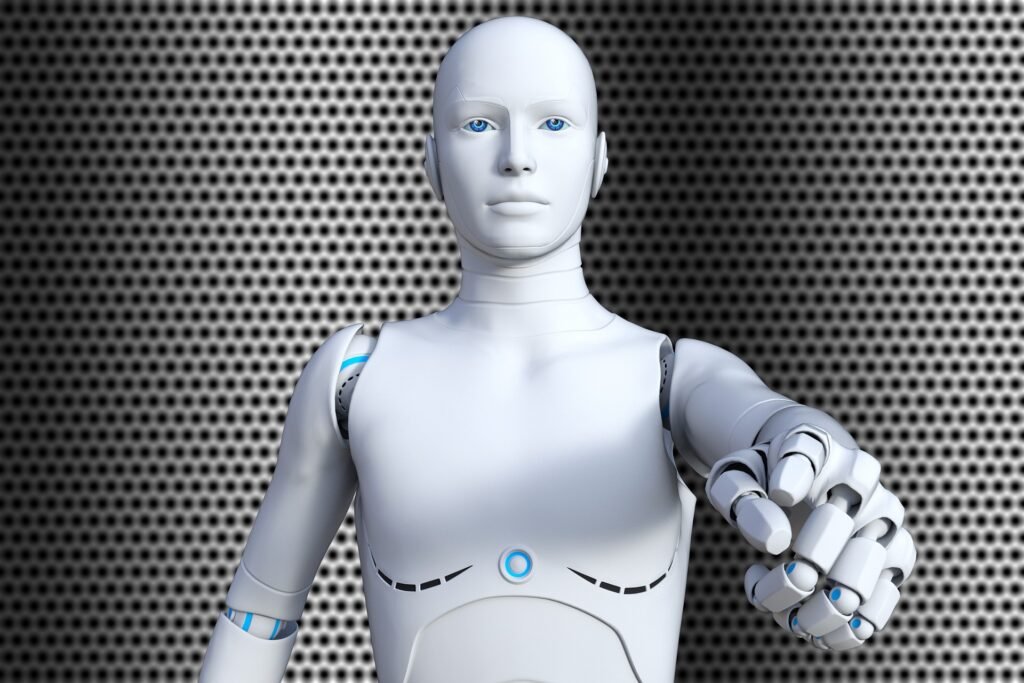
AI systems interpret tone, behaviour and emotional cues. Over time, your “computer” will not just process information — it will converse, intuit needs and collaborate.
For instance, office-based AI agents will autonomously read documents, attend virtual meetings, summarise outcomes and update project schedules.
In that sense, the word computer will merge with “colleague,” “assistant,” or “analyst.”
Consequences for Everyday UK Life
Home and Consumer Tech
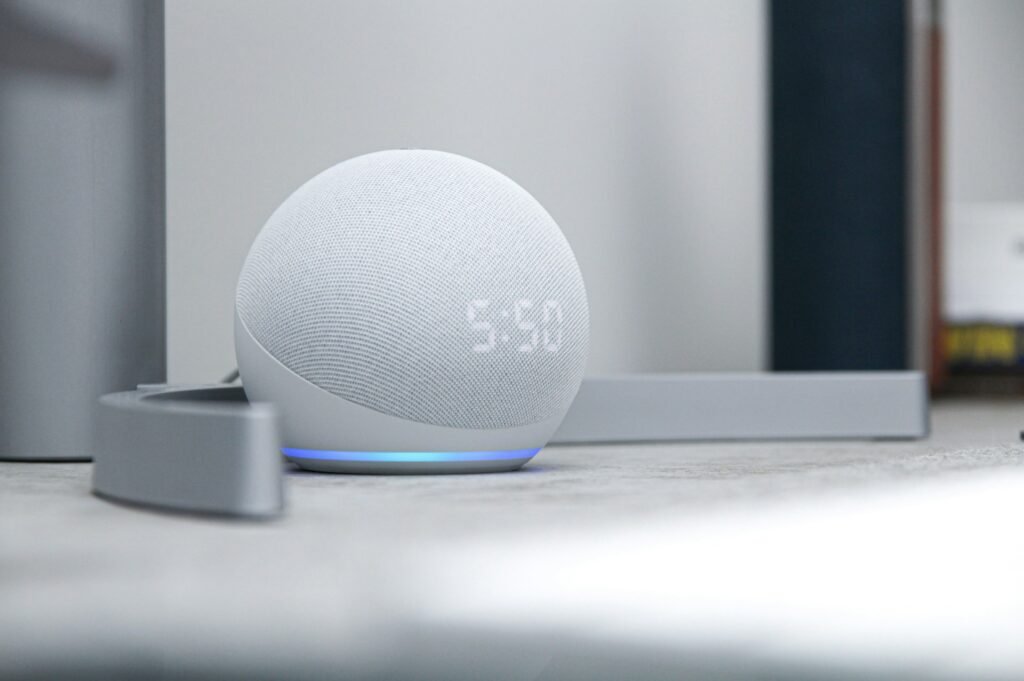
Smart speakers like Amazon’s Alexa and Google Nest are early examples of “computers” that communicate by voice, not screen. Future models powered by advanced AI will handle more personal or domestic management tasks — predicting grocery needs, monitoring home energy patterns, or learning family routines.
By 2035, the household “computer” may effectively be a distributed set of invisible intelligences — sensors, microphones and data processors working in unison throughout the home.

At Work
The line between a computer and an employee will blur in the workplace.
Many UK businesses are already using conversational AI and robotic process automation to replace basic administrative work.
By 2030, the Chartered Institute of Personnel and Development (CIPD) predicts that AI-based “digital staff” could handle up to 40% of clerical work.
Thus, computer will come to mean a hybrid human–machine entity within professional teams.
In National Infrastructure
AI systems used to run energy networks, traffic control, and health analytics will become computers of national importance. These won’t be single machines, but distributed learning systems spanning multiple data centres, satellites, and local sensors.
The word computer will shift again — from recognising a device to describing a cyber-physical intelligence underpinning the country’s systems.
How Much Better Will AI Be at “Computing”?
Computational Speed and Efficiency
AI already processes and prioritises data more intelligently than conventional computer programs. According to Alan Turing Institute research (2025),
AI-optimised cloud computing platforms can cut processing time for large-scale analytics by about 30–40% while using 15% less energy, compared with static coded algorithms.
Decision Accuracy
AI systems outperform traditional logic-based computing in dealing with probabilities, ambiguity and incomplete information — areas where deterministic computing struggles.
This capability makes AI-equipped computers far “better thinkers,” capable of acting like analysts or problem-solvers rather than calculators.
How the Definition Will Evolve
| Period | Meaning of “Computer” | Description |
|---|---|---|
| 20th Century | A programmable electronic device | Machine that executes explicit instructions |
| 2020s–2030s | A connected, AI-powered network | System that learns and adapts in real time |
| Mid‑21st Century | An intelligent collaborator | Hybrid entity that interprets and reasons |
| Beyond 2050 | Possibly extinct as a term | Computing becomes diffuse — everywhere but invisible |
By then, the lexicon will shift. Terms like intelligence node, synthetic cognition, or embedded mind may replace “computer” altogether.
A Real‑World and Cultural View
Language Always Mirrors Function
Language evolves with technology. Just as words like dial, tape, and camera roll persist long after their mechanisms changed, computer may survive as a nostalgic label — though its practical reference will vanish.
You might still “open your computer,” but in truth you’ll be speaking to a diffuse cloud of AI agents coordinated across multiple platforms.
Advertisement
![Uineer Bluetooth Mouse,[Upgraded] Multi-Device Wireless mouse,Visible Battery Level,Tri-mode (BT 5.0/4.0+2.4G Hz) Rechargeable Ergonomic mouse, 4 Adjustable DPI,Coldless mouse for Laptop and PC,black](https://m.media-amazon.com/images/I/313FiXcJF5L._AC_.jpg)
- Tri-mode Wireless Connectivity: Experience seamless connectivity with our Tri-mode wireless mouse, supporting 2.4G and B…
- Ergonomic Design for Comfort: eliminating fatigue and discomfort. It offers a comfortable grip, reducing strain and dist…
- Rechargeable and energy saving : this rechargeable mouse equipped with an intuitive battery indicator light, say goodbye…
Cynical Outlook
There’s a risk that as computers become more autonomous, users could lose control over how computation happens — or what it means.
In a 2026 report, The Royal Society warned:
“As systems decide for us rather than with us, the idea of computing as a human-controlled process erodes. We risk living in a world computed for convenience, not for comprehension.”
That concern captures the climax of this linguistic and cultural evolution: when computing becomes too seamless to notice, humans risk forgetting they ever did it themselves.
References (UK‑Focused)
- Oxford English Dictionary – Definition of ‘Computer’
- The Alan Turing Institute – Adaptive Computing and AI Efficiency Report (2025)
- National Grid ESO – AI’s Role in Predictive Infrastructure Modelling (2025)
- Chartered Institute of Personnel and Development – AI and the Future Workforce Study (2025)
- The Royal Society – The Human Meaning of Machine Intelligence (2026)
- Web Science Institute, University of Southampton – AI, Society and Semantic Change (2025)
Summary
| Aspect | Current View | Future Evolution | Impact |
|---|---|---|---|
| Core meaning | Device that follows instructions | Adaptive learning intelligence | Becomes “collaborator” not tool |
| Physical presence | Desktop or server | Invisible network of AI systems | Ubiquitous but intangible |
| Human relationship | Operator and machine | Co‑decision‑maker or assistant | Redefined authority and trust |
| Cultural use | Technical term | Obsolete descriptor | Nostalgic metaphor |
Final Thought
In future Britain, the word computer will evoke something far more human‑like than mechanical.
It will signify not a box or screen, but a companion intelligence — predictive, conversational, and integrated into every aspect of daily life.
And at some point, people may stop using the word altogether — because when technology is everywhere, you stop needing a name for it.