No one can predict the future with certainty — but current evidence from UK research, government strategy, and real-world deployment trends suggests that several key AI technologies are poised to profoundly shape everyday life in Britain over the next five years.
These are not speculative “sci‑fi” breakthroughs; they are already here in early form, scaling rapidly across public services, workplaces, and homes.
1️⃣ Generative AI — Everyday Productivity and Creative Work
(Examples: OpenAI’s GPT‑5, Anthropic Claude, Google Gemini, Microsoft Copilot)
Transforming Knowledge Work
Generative AI systems that create text, images, video, and code are already changing how people work.
By 2030, the Department for Science, Innovation and Technology (DSIT) predicts that “text‑ and code‑generating AI will underpin 70% of digital work across marketing, finance, and public services.”
In practical terms:
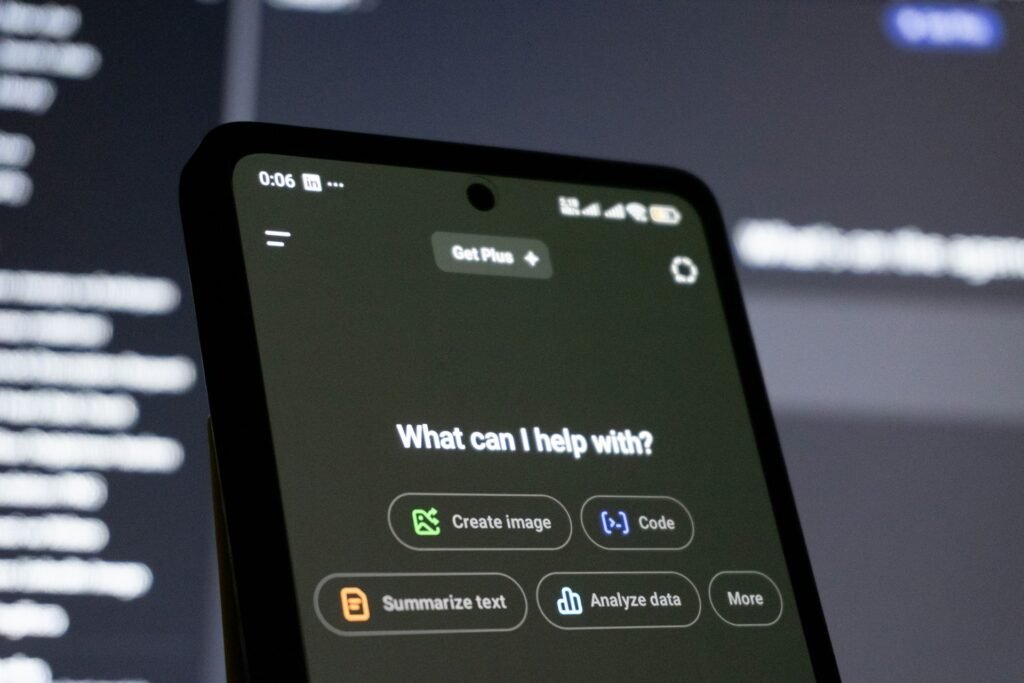
- Office workers are using AI assistants like Copilot and ChatGPT to draft emails, analyse data, and summarise meetings.
- Teachers and academics use generative AI to plan lessons or research materials.
- Healthcare staff leverage it for medical documentation and patient communication.
Everyday Consequences
- Productivity Up, Jobs Downstream Shift: Repetitive writing and admin roles may decline; creative oversight and AI management jobs increase.
- Accuracy vs. Dependability: The risk of “hallucinated” or false information will remain a key social challenge, especially in education and journalism.
- Digital Inequality: Those with digital access will gain disproportionately, widening skill and income gaps between AI‑literate and AI‑excluded populations.
(Reference: UK Government, AI Opportunities Action Plan: One Year On, 2026)

2️⃣ Personalised Healthcare AI
(Examples: NHS AI Diagnostic Fund, DeepMind’s AlphaFold, Babylon Health, digital triage bots)
How It’s Taking Hold
AI tools that interpret scans, detect early disease signs, and personalise treatment are advancing rapidly within the NHS. The government’s AI Diagnostic Fund, launched in 2024, is funding over 80 projects for cancer imaging, stroke diagnosis, and cardiology.
Hospitals in Manchester, Cambridge, and Glasgow are using AI to analyse imaging 10–15 times faster than human teams, with equal or higher accuracy (NHS England, 2025).
Daily Life Changes
- Faster Diagnoses: GP and hospital AI systems will automatically screen X‑rays and blood results, meaning patients may get results in hours rather than weeks.
- Remote Health Monitoring: Wearables connected to AI hubs will track blood pressure, oxygen, or glucose levels, alerting clinicians automatically.
- Ethical Questions: Concerns persist over private‑sector access to NHS data. The Guardian (Oct 2025) reported public unease about patient data being used to train commercial AI models.
(Reference: NHS England, AI Diagnostic Fund, 2025)
3️⃣ Autonomous and “Smart” Transport Systems
(Examples: AI‑assisted cars, delivery drones, network‑responsive rail systems)
Gradual but Visible Transformation
While fully driverless cars remain some years away, AI is already embedded in UK transport:
- Advanced Driver Assistance Systems (ADAS) are standard in new vehicles, supporting braking, parking, and lane‑keeping.
- Autonomous delivery trials by companies such as Starship Technologies (Milton Keynes) and Ocado are expanding.
- National Highways is testing AI traffic‑flow sensors to reduce congestion and emissions.
Societal Impacts
- Safety Improvements: AI‑assisted safety could reduce road accidents by up to 20%, according to the Department for Transport’s 2024 review.
- Job Disruption: Professional drivers, courier workers, and taxi operators face long‑term uncertainty as automation progresses.
- Environmental Potential: Optimised route scheduling and electric vehicle integration could cut national road emissions by 5–7%, but require infrastructure investment.
4️⃣ AI in Public Services and Government
(Examples: Local council chatbots, welfare automation, data‑driven policing)
Administrative AI
Councils across the UK — including Leeds, Edinburgh, and Bristol — are implementing AI systems for call‑centre management, benefits processing, and housing queries.
HM Revenue & Customs (HMRC) and the Department for Work and Pensions (DWP) are experimenting with AI fraud detection and case triage.
Real-World Effects
- Efficiency Gains: Faster responses for people; streamlined case handling.
- Risks of Bias: Automated decision systems could reinforce inequality if not properly audited — as warned by the Information Commissioner’s Office (ICO) in 2025.
- Transparency Pressure: Expect stronger calls for algorithmic accountability laws similar to those in the EU’s AI Act.
(Reference: ICO, AI Auditing Framework, 2025)

5️⃣ AI‑Enhanced Education and Upskilling
(Examples: AI tutoring platforms, adaptive curriculum software, AI Skills Bootcamps)
Changing Classrooms and Training
Generative and adaptive AI platforms are being rolled out in state and higher education across Britain.
Systems such as Century Tech, Google Classroom AI, and Microsoft Education Copilot personalise learning material based on a student’s performance.
Meanwhile, government‑funded AI Skills Bootcamps aim to train 10 million workers in digital literacy by 2030 (DSIT, AI Opportunities Action Plan, 2026).
Potential Benefits and Problems
- Learning Access: AI teachers can deliver 24/7 tutoring at low cost, addressing teacher shortages.
- Quality Concerns: Over‑reliance could weaken independent thinking or increase plagiarism.
- Widening Gaps: Schools with stronger funding and infrastructure will benefit most, deepening educational inequality between regions.
6️⃣ Energy, Climate, and Infrastructure AI
(Examples: Smart grids, wind‑farm optimisation, infrastructure monitoring)
Real Applications Already Underway
AI models are deployed by National Grid ESO to balance supply and demand dynamically across the UK’s energy network.
Predictive AI pinpoints when wind or solar output dips, enabling responsive use of battery storage.
AI drones inspect bridges and rail lines, reducing downtime and maintenance costs.
Societal Impact
- Cheaper Energy Bills (Potentially): Smarter grid management could lower costs, though savings depend on corporate behaviour and regulation.
- Green Transitions Accelerated: AI aids in forecasting renewables output, vital to the UK’s net‑zero target for 2050.
- Data Ownership Debate: Energy suppliers using home‑meter data for predictive analytics face similar privacy scrutiny to tech firms.
Key Cross‑Sector Forces
Automation and the Workforce
AI’s biggest real‑world consequence will be the reshaping of employment, not wholesale job extinction.
McKinsey (UK, 2025) estimates that 25% of tasks performed by British workers could be automated by 2030, yet entirely new roles in AI oversight, ethics, and digital policy will emerge.
Ethics, Regulation, and Trust
The AI Safety Institute (AISI) — launched by the UK Government in 2025 — will play a central role in ensuring models are “safe, transparent, and accountable.” Public confidence will determine how deeply AI systems become integrated into daily life.
Everyday Integration
From bank fraud alerts to predictive text and shopping recommendations, most Britons already interact with AI dozens of times a day — often without noticing. Over the next five years, this invisible integration will deepen further.
Summary: The UK’s Near-Future AI Landscape
| AI Technology | Likely Widespread Use by 2031 | Key Real‑World Impact | Risks & Concerns |
|---|---|---|---|
| Generative AI (Chatbots, Assistants) | Office work, education, creative sectors | Boosts productivity, alters jobs | Misinformation, dependency |
| Healthcare Diagnostics AI | NHS imaging & triage | Quicker, more accurate detection | Data privacy, bias |
| Smart Transport & Logistics AI | Cities, delivery networks | Greater safety, fewer human drivers | Employment loss, liability issues |
| Public Sector AI | Councils, tax, policing | Faster services | Fairness & accountability |
| Education & Skills AI | Schools, adult training | Customised learning | Quality control, inequality |
| Energy & Climate AI | Grids & renewables | Stability and carbon reduction | Data use & regulation |
Final Thought
Over the next five years, AI in the UK will not feel like a single “revolution” but a quiet reshaping of everyday systems — the way people work, travel, learn, heal, and pay bills.
Its promise is massive productivity and personal convenience. Its peril lies in who controls it, who benefits from it, and who gets left behind.
If the UK can pair innovation with strong governance — as efforts like the AI Safety Summit and AISIintend — AI could genuinely improve daily life. If not, it risks becoming another tool of efficiency that benefits corporations before communities.