Artificial Intelligence (AI) isn’t just transforming business — it’s already a familiar part of daily life at home in the UK. Over the next few years, personal and domestic AI technologies will become almost as common as smartphones, powering everything from heating and security to shopping and entertainment.
This isn’t speculative; it’s visible right now. According to Ofcom’s 2025 Technology Habits Survey, nearly two-thirds of UK households already use at least one AI-powered device or service — from a voice assistant to a “smart” home system. Those numbers are climbing every month.
Below is a detailed, real‑world look at the AI technologies that will dominate UK homes, why Britons are adopting them so quickly, and what drives their popularity.
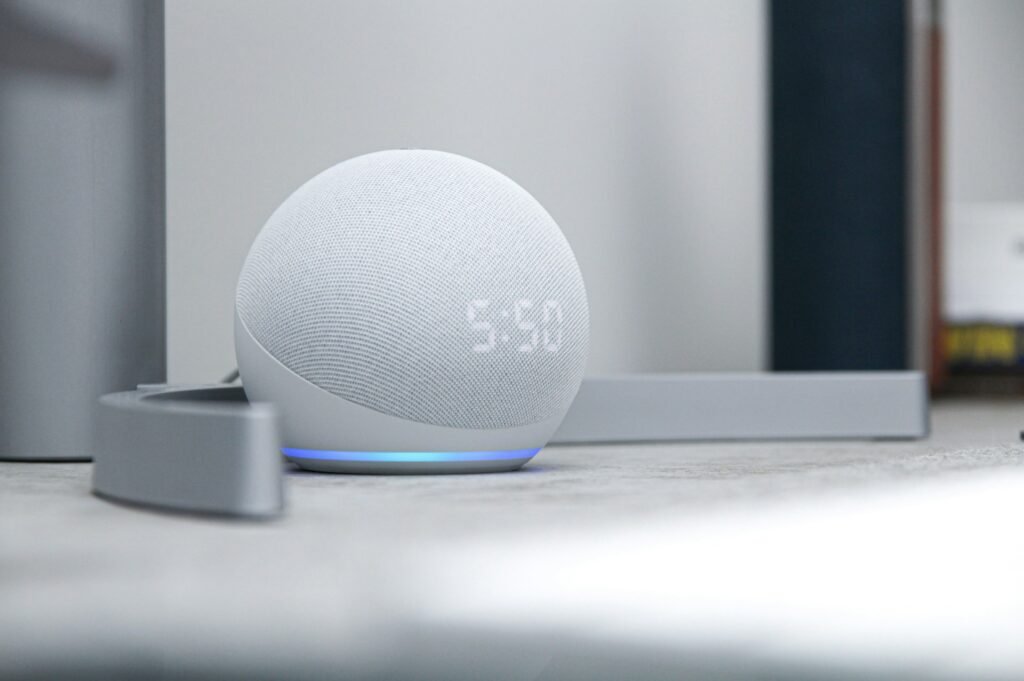
1️⃣ Smart Home Assistants
(Examples: Amazon Alexa, Google Nest, Apple HomePod, Samsung SmartThings)
Why They’re Popular
- Convenience is the number one driver: voice control for timers, news, music, weather, shopping lists, and household management has gone from novelty to habit.
- Integration: modern assistants link to almost everything — heating, lighting, TV, doorbells, and even online grocery shopping.
- Affordability: smart speakers now cost less than a good kettle; the entry price for AI‑driven home ecosystems has fallen below £40.
Real‑World Impact
- Energy efficiency: Systems like Hive or Google Nest use AI to learn your heating patterns and lower bills.
- Accessibility: For the elderly and disabled, voice AI reduces dependence on touchscreens and apps.
- Privacy compromises: However, the convenience comes at a cost — household data is shared with tech giants. The Information Commissioner’s Office (ICO) warned in 2025 that “always‑listening” devices present genuine privacy risks for UK consumers.
📊 Fact: Over 42% of UK households now own a smart speaker (Ofcom, 2025).
2️⃣ AI‑Driven Home Security
(Examples: Ring, Arlo, Google Nest Cam, Eufy)
Why It’s Gaining Ground
Security anxiety is a universal driver — and AI’s ability to detect movement, faces, and suspicious behaviour makes it appealing.
AI home cameras can now send alerts to smartphones, identify familiar faces, and even distinguish people from pets (reducing false alarms).
Real‑World Use Across the UK
- London Home Insurance data (2025): claims from burglaries in AI‑monitored households fell by over 20% in two years.
- Police partnerships: Some local forces, including Thames Valley Police, have piloted voluntary integration programmes where homeowners can share AI‑filtered footage to assist investigations.
Why It’ll Stay Popular
- Reassures homeowners in high‑crime areas.
- Easy subscription models with cloud storage.
- Combines with doorbell and lighting systems for full‑house automation.
⚠️ Cynical note: these same systems create a quiet surveillance culture, with data routed through American servers — invisible, but hardly private.

3️⃣ AI in Home Entertainment
(Examples: Netflix, Spotify, Sky Glass, Amazon Prime Video, and gaming consoles)
Why It Matters
AI recommendation systems have become so accurate that they now dictate much of what British households watch, read, and listen to.
The technology analyses viewing behaviour, time of day, and even pause habits to build personal media profiles.
Real‑World Use
- Netflix’s algorithm accounts for around 80% of what UK users watch, according to company figures cited by BBC Technology (2025).
- Spotify’s “Discover Weekly” playlist and Sky’s personal viewing suggestions use AI to predict listener or viewer mood.
Why It’ll Remain Dominant
- Effortless entertainment — no browsing, just curated feeds.
- Expands to AI‑generated content, such as synthetic podcasts or adaptive music.
- It feeds consumer expectations of instant gratification — whether that’s a three‑minute clip or an entire series.
🎬 Effect: Our cultural diet is now algorithmically filtered — a subtle but powerful shift in who decides what we “enjoy.”
4️⃣ AI‑Enabled Home Appliances
(Examples: Dyson 360 Vis Nav, Samsung Bespoke AI oven, LG ThinQ washing machines)
Why They’re Spreading Fast
The new wave of household appliances contains embedded machine learning that adapts to patterns of use:
- Vacuum cleaners map room layouts and adjust suction for different surfaces.
- Washing machines detect fabric type and detergent load.
- Fridges track expiry dates and suggest recipes.
Real‑World Effect
- Dyson and LG are marketing AI efficiency as sustainability. Consumers under cost‑of‑living pressure view “smart appliances” as ways to save electricity and water — an economic incentive that goes beyond novelty.
- Which? Magazine (2025) found a 27% jump in AI appliance ownership among UK households earning under £50,000 — affordability plus energy savings drive uptake.
⚙️ Caveat: Devices often demand perpetual software updates — when manufacturers withdraw support, “smart” products rapidly become dumb clutter.
5️⃣ AI Personal Finance and Budgeting Tools
(Examples: Monzo, Revolut, Cleo, Plum, Chip)
Why They’re Taking Off
In an age of financial squeeze, Brits are increasingly turning to AI-powered budgeting apps that track spending, automate savings, and predict bills.
- Monzo’s “Trends” feature uses AI to identify spending categories.
- Cleo provides AI chat-based budgeting and sarcastic feedback (popular among under‑35s).
- Plum automates saving and investment decisions based on predicted cash flow.
Real Impact
- AI identifies patterns that humans overlook — e.g., recurring subscriptions or bill changes.
- Users gain control without complex spreadsheets.
- But such apps often rely on open banking data; the Financial Conduct Authority (FCA) continues to monitor these firms for compliance and data protection.
💰 Reality check: these apps make it easier to manage finances — but they also normalise continuous data sharing between consumers, banks, and algorithms.
6️⃣ AI in Health and Wellbeing at Home
(Examples: Fitbit, Apple Watch, Withings ScanWatch, NHS-approved health apps)
Why It’s Growing
Following the NHS Digital Health rollout, AI‑connected wearables have exploded in popularity.
- Smart watches and trackers use AI to predict stress, detect irregular heartbeats, and suggest lifestyle changes.
- Health apps increasingly integrate with NHS records (through APIs), giving automated advice on appointments and prescriptions.
UK Usage Trends
- NHS England (2025) reports more than 15 million UK users linking a wearable device to its digital health platform — nearly one in four adults.
- AI-powered mental wellbeing apps (e.g., Wysa, Woebot) are seeing rapid growth among younger demographics seeking out‑of‑hours emotional support.
🌡️ Observation: For many Britons, their Fitbit or Apple Watch now acts as a “personal GP companion,” signalling symptoms before they’re even perceived.
7️⃣ Domestic Robotics
(Examples: Eufy X10 Hybrid, Roborock S8 Pro Ultra, and emerging personal assistant robots)
Why This Area Will Expand
- Automation of housework remains a strong aspiration.
- Domestic robots are improving: they can navigate rooms, recognise obstacles, and communicate with heating or lighting systems.
- Samsung and Amazon are investing heavily in “home robotics hubs” that integrate cleaning, security, and appliance management.
While the UK remains behind Japan and Korea in home robot adoption, Barclays Tech Outlook 2026 forecasts that over 1.5 million households will own a multifunctional robot within five years.
🤖 Why It’ll Stay Popular: as older adults seek independence and younger workers chase time efficiency, “mechanical butlers” are becoming socially acceptable — even charming — replacements for domestic effort.
Why These Technologies Are Popular — The Underlying Trends
1. Convenience Over Control
Britons value convenience, even if it costs data privacy. The idea of “AI managing it for me” — heating, bills, shopping, alarms — has become attractive in an overworked, digitally saturated culture.
2. Cost-of-Living Efficiency
Energy and food prices have kept automation in demand. Smart thermostats and fridges now justify themselves economically rather than through novelty.
3. Digital Familiarity
The shift from “using technology” to “being assisted by technology” feels natural to generations raised on smartphones.
4. Invisible Integration
Most users don’t think of these systems as “AI.”
They’re just how things work now — the predictive suggestion in Spotify, the doorbell alert, the heating that turns off when you leave.
As SQ Magazine’s “AI in Everyday Life 2026” observed, “AI isn’t a gadget anymore; it’s the quiet layer under everything modern.”
Potential Risks and Challenges
| Issue | Description / Concern |
|---|---|
| Data Privacy | Devices constantly collect information on behaviour, consumption, and even voices. |
| Cybersecurity | Household AI adds vulnerability — insecure Wi‑Fi or outdated firmware can expose entire networks. |
| Dependence | Loss of manual skills (memory, organisation, budgeting). |
| Digital Inequality | Older and lower‑income households risk exclusion as services become “AI-by-default.” |
(References: ICO 2025; The King’s Fund Digital Inclusion Report 2026.)
The Next Five Years — Outlook
By around 2030, most UK homes are expected to contain five or more AI-enabled devices, many running autonomously.
“Using AI” will no longer feel like a conscious act — it will just be part of how lights switch on, TVs recommend shows, and bank accounts balance themselves.
Prominent Personal AI Ecosystems:
- Amazon ecosystem (Alexa + Ring + Fire TV) – comprehensive home management.
- Google ecosystem (Nest + Pixel + Gemini) – unified data-driven home intelligence.
- Apple ecosystem (HomePod + HealthKit) – premium privacy-focused integration.
These platforms will likely compete to become your “home operating system”, managing not only comfort, but also consumption and health — quietly shaping how Britons live.
⚠️ RISKS & REALITIES (Side Panel)
Top 3 Concerns for Home Users:
- Privacy erosion – Devices “always listening”. (ICO, 2025)
- Security vulnerabilities – Poorly protected Wi‑Fi and cloud systems.
- Digital inequality – Older or low-income homes excluded from smart benefits.
⏳ 2030 OUTLOOK
By the Numbers:
- Average UK home = 5+ AI‑enabled devices
- 80% of daily actions at home touched by AI
- £1 billion domestic AI device market annually (DSIT, 2026 projection)
Visual Cue: Futuristic London flat with data streams linking heating, security, and wearable monitors
Conclusion
AI at home in the UK is moving from gadget to guardian: something that watches, anticipates, and assists.
It’s popular because it:
- Saves time and energy.
- Feeds the craving for seamless convenience.
- Feels affordable, familiar, and indispensable once adopted.
The truth is that we’re outsourcing household thinking — not just manual effort — to machines that never sleep, forget, or question.
By the end of the decade, living even a simple life in the UK may inevitably mean living with AI — whether it’s the assistant in your living room or the thermostat that already knows when you’ve left the house. Living a normal life without AI will become a thing of the past sooner than you think.