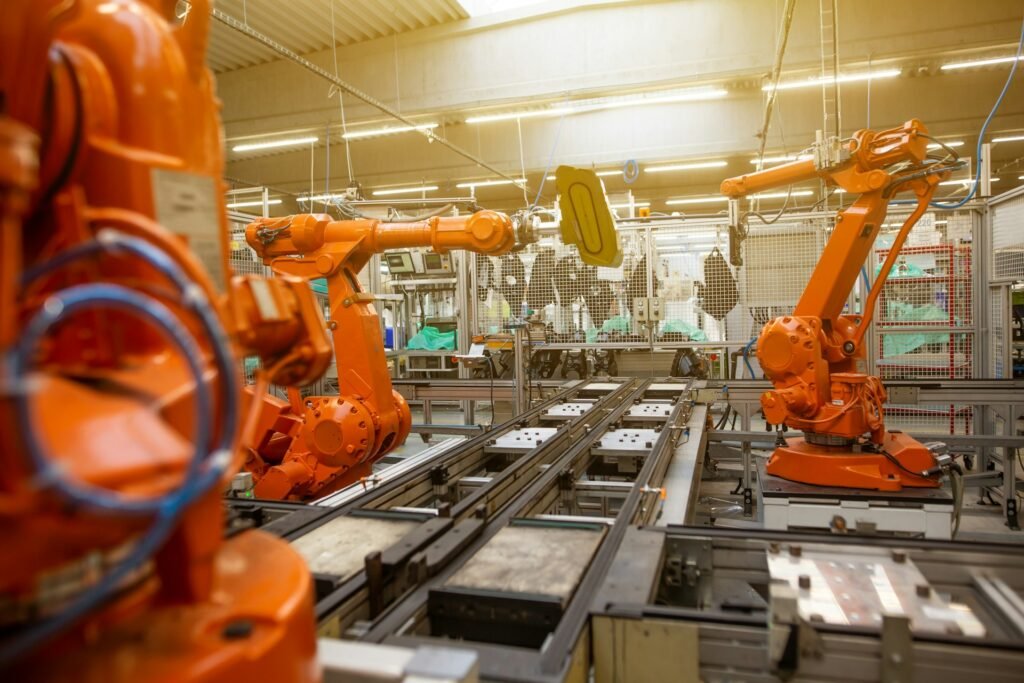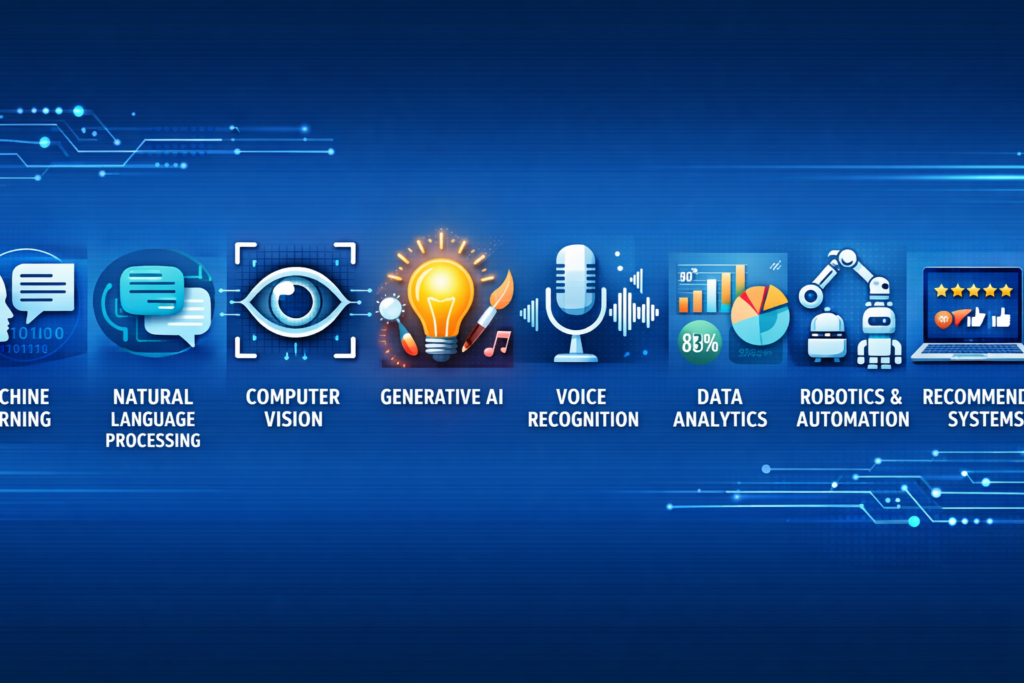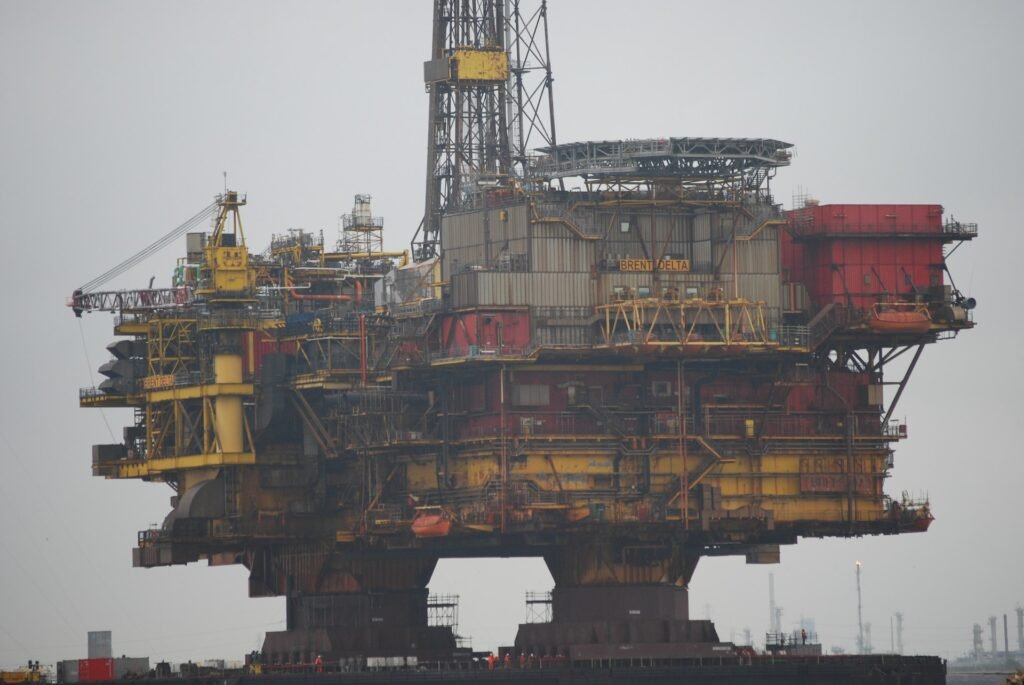
Artificial Intelligence is already creeping into almost every corner of the UK energy sector, and the oil and gas industry on the UK Continental Shelf (UKCS) is no exception.
From seismic analysis in the North Sea to predictive maintenance on ageing platforms, AI is set to change how the industry operates, who it employs, and how long it remains viable in a net‑zero world.
Below is a detailed, real‑world look at the benefits and drawbacks of AI in the UK oil industry, with expert views and UK‑focused references.
Where AI Will Be Used in the UK Oil Industry
Exploration and Reservoir Modelling
Oil companies operating out of Aberdeen, Teesside and the North Sea already use AI for:
- Seismic data interpretation – machine‑learning models scan huge geophysical datasets to identify potential hydrocarbon reservoirs faster than traditional methods.
- Reservoir simulation – AI predicts how oil and gas will flow through rock formations, improving recovery strategies.
According to The Oil & Gas Technology Centre (OGTC, now Net Zero Technology Centre), AI‑assisted subsurface modelling can reduce interpretation time by up to 80%, turning months of manual work into days.
Production Optimisation and Predictive Maintenance
On platforms and in pipelines, AI is used to:
- Monitor temperature, vibration, pressure and flow.
- Predict equipment failures before they occur.
- Optimise production rates while minimising risk of leaks.
BP’s North Sea operations have trialled AI‑based predictive maintenance, claiming up to 20% reduction in unplanned downtime (BP digital operations brief, 2024).
Health, Safety and Environmental Monitoring
AI‑enabled cameras and sensors can detect:
- Gas leaks and flare anomalies.
- Unsafe worker behaviour (e.g. missing PPE).
- Early signs of structural fatigue on offshore platforms.
The Health and Safety Executive (HSE) has highlighted AI‑driven inspection drones as a way to “reduce human exposure to hazardous environments while increasing inspection frequency” (HSE Energy Division update, 2025).
Logistics and Supply Chain
AI will optimise:
- Vessel schedules from Aberdeen and other ports.
- Helicopter crew transfers.
- Inventory management for spare parts and chemicals.
This is attractive in a sector where logistics costs remain stubbornly high, particularly on ageing, marginal fields.
The Benefits of AI for the UK Oil Industry
1. Lower Operating Costs and Longer Asset Life
AI allows operators to squeeze more efficiency out of mature fields in the North Sea:
- Predictive maintenance reduces emergency repair costs.
- Production optimisation models maximise flow without over‑stressing equipment.
The North Sea Transition Authority (NSTA) estimates that digitalisation, including AI, could save £1–3 billion in operating costs across the UKCS by 2030.
“If every North Sea asset were run with best‑in‑class digital and AI support, we could extend economic life significantly without new major discoveries.”
— Stuart Payne, Chief Executive, NSTA (Energy Voice, 2024)
2. Improved Safety
By taking humans out of hazardous inspection work and identifying risks earlier, AI can:
- Reduce accidents on ageing installations.
- Cut helicopter trips through better logistics planning.
- Spot unsafe patterns, such as near‑miss incidents, before they turn serious.
The Energy Institute’s 2025 Safety Barometer highlights AI‑based analytics as “one of the most promising tools to reduce risk in late‑life offshore infrastructure”.
3. Higher Recovery, Lower Waste
AI reservoir models can enhance recovery factors – getting more oil and gas out of existing wells rather than drilling new ones:
- That means fewer wells, fewer platforms and less environmental footprint per barrel.
- It also aligns (on paper at least) with transition plans by reducing the need for new greenfield developments.
4. Better Integration with the Energy Transition
Some of the same AI tools used for reservoir modelling and pipeline management are being repurposed for:
- Carbon Capture and Storage (CCS) – modelling CO₂ injection into depleted fields.
- Hydrogen transport – ensuring pipeline integrity when converting from gas to hydrogen.
This helps the UK pivot North Sea expertise towards its net‑zero plans.
The Disadvantages and Risks of AI in the UK Oil Industry
1. Job Losses and Skills Displacement
AI will automate many tasks traditionally carried out by geoscientists, offshore engineers and back‑office staff:
- Fewer people needed for data interpretation.
- Fewer trips offshore for routine inspection and maintenance.
- Streamlined logistics teams in Aberdeen, Great Yarmouth and other hubs.
Offshore Energies UK (OEUK) has already warned that digitalisation and automation could displace up to 20,000 traditional roles by the early 2030s unless reskilling is prioritised.
“We’re not just automating tasks, we’re automating careers. Without a serious transition plan, communities around Aberdeen will feel like collateral damage in the digital shift.”
— Professor Alex Kemp, University of Aberdeen, Petroleum Economics, 2025
2. Increased Dependence on Foreign Tech Vendors
Much of the AI stack – cloud services, chips, core algorithms – is currently controlled by US or global tech giants:
- Microsoft, Amazon and Google run cloud infrastructure.
- US and Asian firms provide many of the core AI tools.
This raises concerns about digital sovereignty. The UK may retain physical control of offshore assets but become dependent on foreign platforms to run them.
The UK Parliament’s Science, Innovation and Technology Committee flagged this risk in a 2025 report, warning that “critical reliance on overseas digital providers could represent a new strategic vulnerability for the UK’s energy system”.
Advertisement

3. Cyber Security Risks
As AI systems are integrated into control networks, the “attack surface” grows:
- A compromised AI monitoring platform could feed false data, triggering wrong operational decisions.
- Adversarial AI attacks could target reservoir models or leak detection systems.
The National Cyber Security Centre (NCSC) has specifically highlighted operational technology (OT) in energy as a “priority area for AI‑aware defence”, following attacks on pipelines in other regions (e.g. Colonial Pipeline in the US).
4. Risk of Short-Termism
AI might encourage operators and policymakers to believe “efficiency solves everything”:
- Making North Sea production cheaper and safer may slow political will for a full transition away from oil and gas.
- AI can prolong the economic life of carbon‑intensive assets under the banner of “optimisation”.
From a climate perspective, that’s a double‑edged sword: fewer rigs, yes, but potentially more years of fossil extraction.
Environmental groups, including Friends of the Earth Scotland and Greenpeace UK, argue that AI in oil is being used “to extract the last profitable drop rather than accelerate genuinely green alternatives”.
Why AI Will Change the Industry Culturally as Well as Technically
From Roughneck to Data Scientist
The archetype of the oil worker – hands‑on, offshore, helmet and boiler suit – will be replaced increasingly by:
- Coders and data scientists in offices in Aberdeen, London or even overseas.
- Remote operations centres managing multiple fields through dashboards.
This may improve safety but risks eroding the connection between decision‑makers and the physical risks at sea.
Decision-Making Moves to the Algorithm
Where once an experienced reservoir engineer or offshore installation manager called the shots, AI optimisation may become:
- The default authority for choke settings, lift gas volumes, maintenance schedules.
Humans will still sign off, but the psychological bias will shift:
“If the model says it’s optimal, who’s going to argue – especially under cost pressure?”
— Anonymous senior engineer, quoted in Upstream Online, 2025
That can be efficient – but dangerous when unusual conditions arise that the model has never seen.
Is AI Ultimately Good or Bad for the UK Oil Sector?
Economically, in the short to medium term, AI is mostly good for operators:
- It extracts more value from existing assets.
- It reduces cost per barrel in a mature, high‑cost basin like the North Sea.
- It helps companies pivot into CCS and hydrogen using existing infrastructure.
Socially and environmentally, the picture is mixed:
- Fewer physical jobs in traditional roles.
- Skills gap for local workers not trained in digital disciplines.
- Risk of entrenching fossil infrastructure just as climate deadlines bite.
Strategically, AI is a necessity – not a luxury:
“Any operator not using AI will simply be out‑competed by those who do. The question is not whether we adopt it, but how fairly and transparently we manage its impacts.”
— Dr Valentina Colombo, Energy Systems Catapult, 2025
UK-Focused References
- North Sea Transition Authority (NSTA) – Digital and Data Strategy for the UKCS, 2024–25
- Net Zero Technology Centre (formerly OGTC) – AI and Advanced Analytics in the North Sea, 2024
- Offshore Energies UK (OEUK) – Workforce Insight 2025
- Health and Safety Executive (HSE) – AI and Digital Technologies in Offshore Safety, 2025
- NCSC – Operational Technology and Cyber Security in UK Energy Systems, 2024
- UK Parliament Science, Innovation and Technology Committee – Strategic Technology Dependence in Critical Sectors, 2025
Summary: Benefits vs Disadvantages
| Aspect | Benefits of AI | Disadvantages / Risks |
|---|---|---|
| Costs & Efficiency | Lower OPEX, higher recovery factors | Encourages life‑extension of fossil assets |
| Safety | Fewer offshore personnel at risk, better leak detection | Over‑reliance on automated systems |
| Jobs | New roles in data, AI, CCS engineering | Loss of traditional offshore & technical jobs |
| Sovereignty | Smarter use of UK resources | Dependence on foreign cloud/AI providers |
| Climate & Transition | Supports CCS and hydrogen repurposing | May delay politically difficult phase‑out decisions |
In short: AI will make the UK oil industry leaner, safer and more data‑driven, but also smaller, less labour‑intensive and more entangled with global tech companies.
Whether that’s progress or just a high‑tech way of postponing the inevitable end of oil depends less on the algorithms – and more on the political choices the UK makes about what to do with the time AI buys.
We have created Professional High Quality Downloadable PDF’s at great prices specifically for Small and Medium UK Businesses. Which include help and advice on understanding what Artificial Intelligence is all about and how it can improve your business. Find them here.