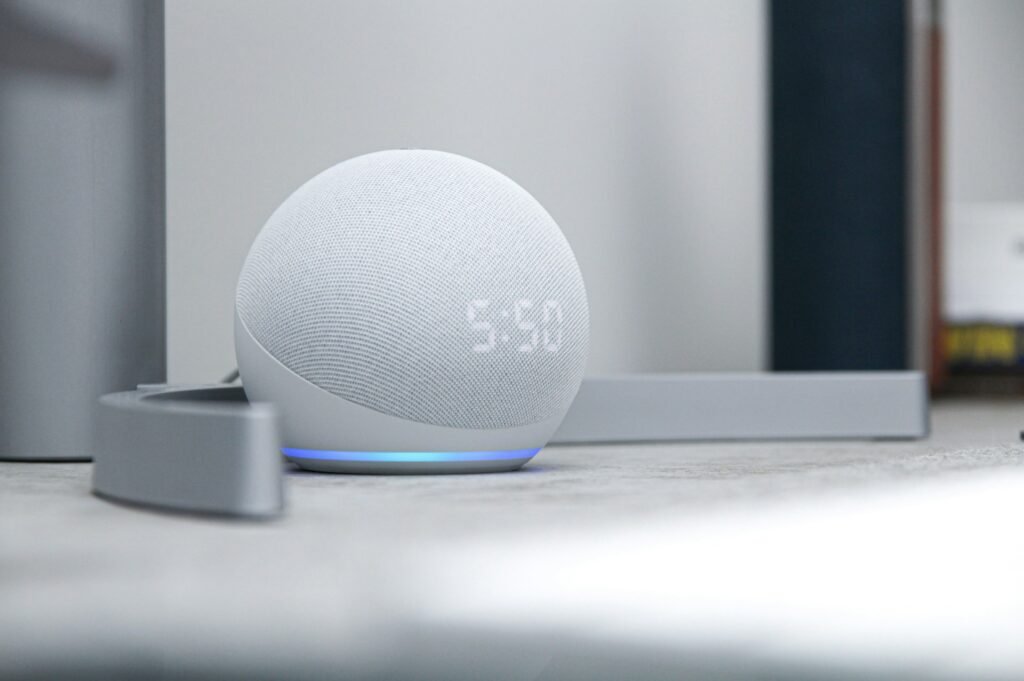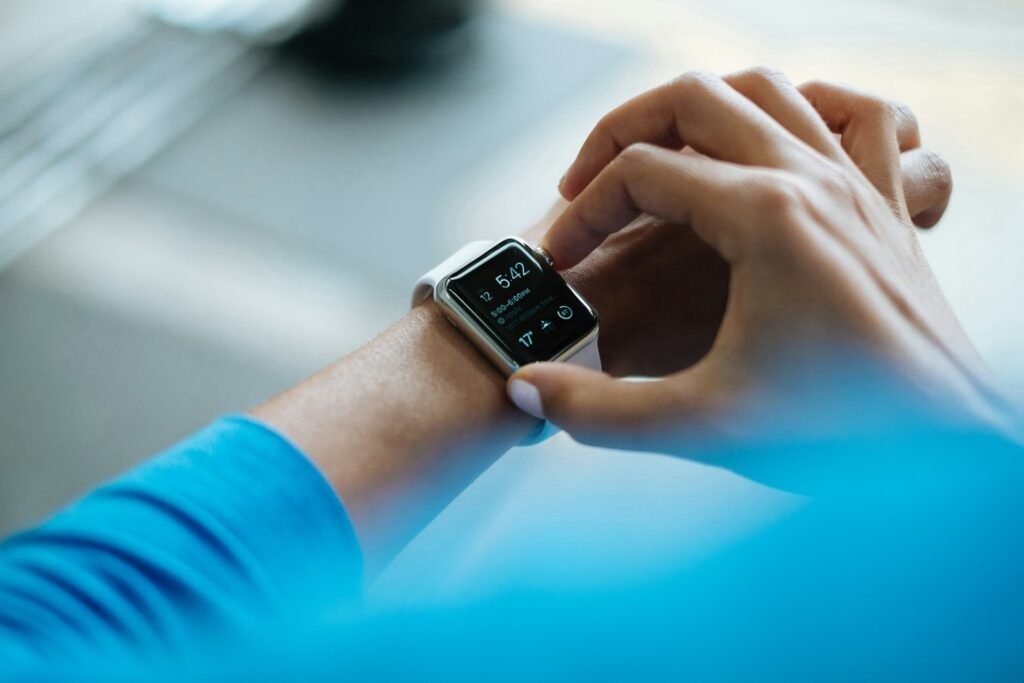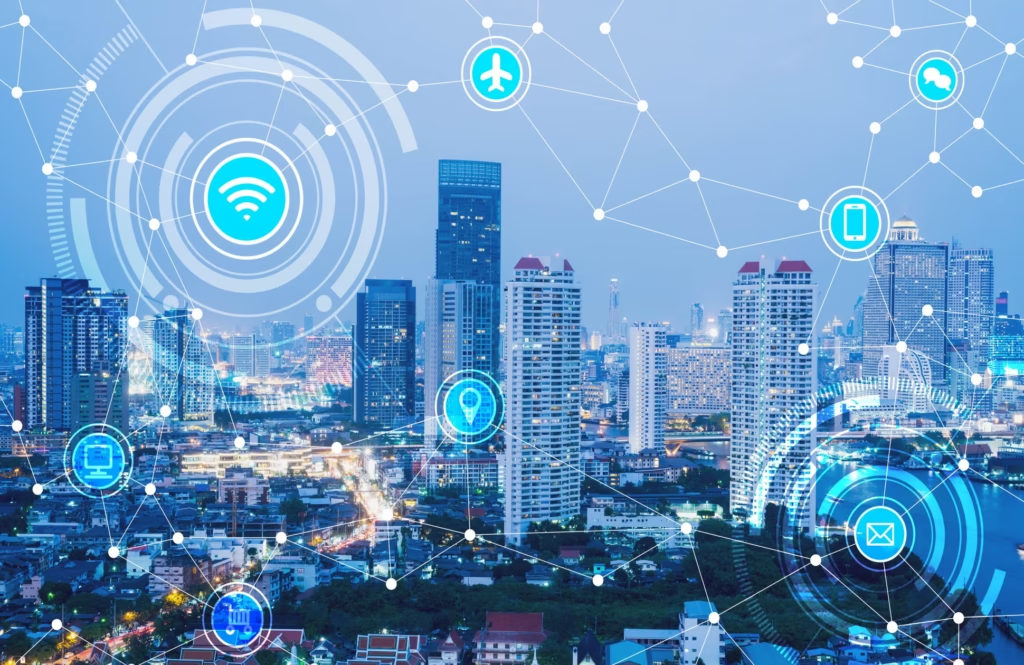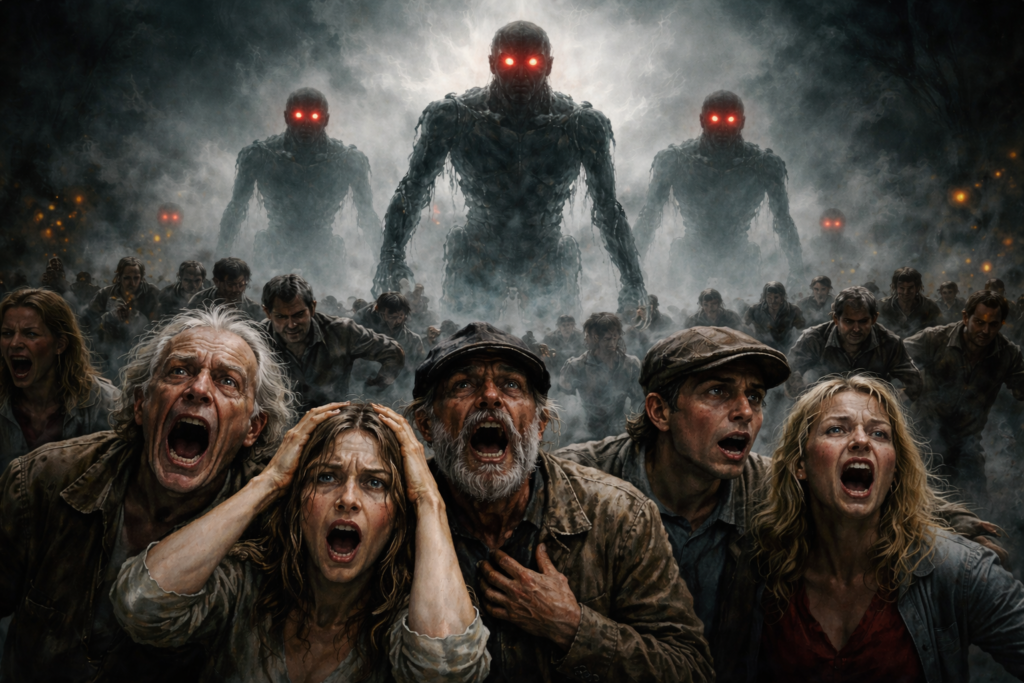
Walk into any UK office, college, council or GP waiting room and you’ll find people using “AI” already — spell-checkers, recommendation feeds, fraud detection, customer-service chat, sat-nav. Yet ask the same people whether they trust AI, and the mood shifts from curiosity to clenched jaw.
That contradiction is the story: the UK isn’t uniformly anti-AI — it’s wary of what AI is being used for, who benefits, and what happens when it goes wrong. Surveys consistently show a public that’s open to convenience, but uneasy about control, fairness, privacy and jobs.
So what scares people most?
1) “Will it cost me my job — and will anyone be honest about it?”
For most people, the fear isn’t a sci-fi android. It’s a manager quietly swapping headcount for software.
Acas (using YouGov polling) found UK workers’ biggest AI concern was job losses (26%), followed by AI making errors (17%) and lack of regulation (15%).
Ipsos finds the same “yes, but carefully” instinct in public services: 60% of Britons prefer government to take a cautiousapproach to AI, prioritising job protection and time to adapt.
Real-world view: people don’t mind automation when it removes drudgery; they mind it when it removes bargaining power — and when the promised retraining never appears.
Picture link: Office work and automation anxiety (photo)
Advertisement

- BUILT FOR APPLE INTELLIGENCE — Apple Intelligence is the personal intelligence system that helps you write, express your…
- TAKE TOTAL CAMERA CONTROL — Camera Control gives you an easier way to quickly access camera tools, like zoom or depth of…
- GET CLOSER AND FURTHER — The improved Ultra Wide camera with autofocus takes incredibly sharp, detailed macro photos and…
2) “Will I be judged by a machine — with no right of reply?”
The public’s anxiety spikes when AI shifts from “helping” to deciding: who gets a loan, who gets welfare support, who gets flagged as suspicious, who gets fast-tracked in healthcare.
UK Parliament’s POST summarises the core social risks in plain terms: bias and discrimination, workplace rights and transparency, and surveillance and civil liberties.
The Equality and Human Rights Commission has warned AI can create risks under the Equality Act and Human Rights Act if it drives unfair outcomes.
Ada Lovelace Institute research is especially clear on what the public is actually doing: people weigh benefits and risks by context (they’re more relaxed about some uses, far more concerned about others). In its Wave 2 findings, concern is notably higher for sensitive or high-stakes applications (including areas like welfare eligibility and mental-health chatbots), and overall concern rose versus earlier waves.
Real-world view: the fear is less “the computer is evil” and more “the computer is in charge, and nobody can explain the decision”.
3) “Am I being watched — and can I stop it?”
Britain already has a cultural baseline of CCTV normality. Add AI, and the fear becomes: monitoring at scale — face recognition, behaviour tracking, and invisible profiling.
The UK’s data protection regulator, the ICO, repeatedly emphasises the need for transparency, fairness and safeguards in AI systems processing personal data.
And when AI is used with biometrics (faces, voices), public unease isn’t hypothetical. The ICO’s February 2026 investigation into Grok, triggered by reports of non-consensual sexualised deepfake imagery, bluntly describes what frightens people most: losing control of personal data in ways that cause immediate harm.
Expert quote (ICO): William Malcolm said the reports raised “deeply troubling questions” about personal data being used to generate sexualised images “without… knowledge or consent”.
Picture link: CCTV in Parliament Square, London (photo)
4) “If AI can fake reality, what happens to trust?”
Deepfakes aren’t just celebrity nonsense. They’re a fast-moving UK headache: harassment, fraud, misinformation — and a general corrosion of “seeing is believing”.
Ofcom explicitly frames deepfakes as part of “serious online harms” and says it’s implementing and enforcing the Online Safety Act with “safety by design” expectations on platforms, including assessing risks from service changes.
Ofcom has also published practical work on deepfake attribution and defences.
Government communications increasingly describe deepfakes as a threat used to trick people into handing over money and to generate abusive content, particularly targeting women and girls.
Real-world view: once people feel they can’t trust audio, video, screenshots — they stop trusting each other, not just the tech.
5) “Is this being rushed out before it’s safe?”
This is the “they’re moving fast and breaking things — and we’re the things” fear.
The UK’s own public polling captures that preference for a brake pedal in public services. Ipsos reports half of Britons prefer human-led triage in the NHS (and highlights the public’s desire for personal interaction and trust in human judgement).
Ada Lovelace’s work reinforces the point: trust isn’t fixed; it changes sharply depending on the use case and the stakes.
6) “It’s not ‘AI’ — it’s Big Tech… again.”
There’s a specific British flavour to this: suspicion that ordinary people will get the risks, while large firms get the rewards.
YouGov’s UK data shows plenty of adoption, but trust lagging behind use — a neat summary of the national mood: we’ll try it, but we don’t believe you.
Real-world view: when “AI” arrives via opaque apps, surprise policy changes, and scandal-driven regulation, public scepticism isn’t irrational — it’s learned behaviour.
What this means for you
If you’re a worker
You’re not paranoid for asking: Is this tool assisting me, or replacing me? Acas’s findings show you’re in good company.
Practical move: push for written workplace policies on AI use, transparency on monitoring, and clear accountability when AI outputs are used in decisions.
If you’re a citizen using public services
Expect “human in the loop” to become a political promise — because the public keeps asking for it, especially in health and welfare contexts.
Practical move: look for routes to challenge decisions, ask what data was used, and who is responsible.
Advertisement

- 23.8″ FULL HD DISPLAY – 1920 x 1080 resolution in 16:9 format with 100Hz refresh rate and IPS technology for vibrant col…
- SMOOTH VISUALS – The 100Hz refresh rate reduces flicker for seamless scrolling and clear motion visuals – perfect for wo…
- TÜV RHEINLAND 3-STAR + COMFORTVIEW PLUS – Built-in ComfortView Plus reduces harmful blue light without compromising colo…
If you’re a parent
The centre of gravity is shifting towards harms like deepfake abuse and safety-by-design obligations for platforms.
Practical move: treat “image sharing” like personal data sharing — because it is.
The UK’s fear is rational, not technophobic
People aren’t scared of AI because they don’t understand it. They’re scared because they understand the pattern:
- powerful systems deployed fast,
- limited transparency,
- weak routes to appeal,
- incentives that favour scale over care,
- and harms that land on individuals first.
Or, put more bluntly: Britain isn’t afraid of clever software. It’s afraid of being treated as collateral damage.
Sources and further reading (UK-focused)
- YouGov: Brits are happy to use AI but still don’t trust it
- Ipsos AI Tracker (UK): Public prefers cautious AI integration in public services
- Acas: 1 in 4 workers worry that AI will lead to job losses
- UK Parliament POST: How is AI affecting society?
- Ada Lovelace Institute: How do people feel about AI? (Wave 2)
- ICO: Guidance on AI and data protection
- ICO: Investigation into Grok (statement, Feb 2026)
- Ofcom: Strategic approach to AI
- Ofcom: Deepfake Defences 2 – Attribution Toolkit
- UK Government: Crackdown on explicit deepfakes
- UK Government case study: Science-led collaboration against deepfakes
We have created Professional High Quality Downloadable PDF’s at great prices specifically for Small and Medium UK Businesses. Which include help and advice on understanding what Artificial Intelligence is all about and how it can improve your business. Find them here.