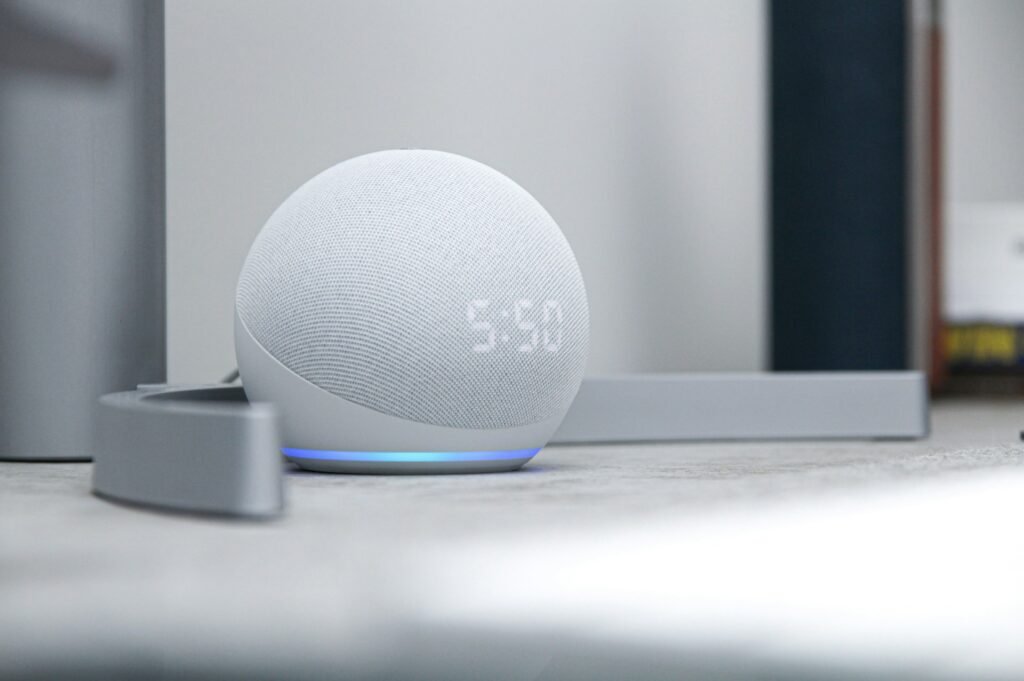
In the UK, most households now own at least one digital voice assistant — Alexa, Siri, Google Assistant, or a smart speaker from Amazon or Apple.
On the surface, they provide convenience: reminders, recipes, and music on demand.
Yet beneath the smooth voice interface lies an awkward truth: these devices listen much more than most owners realise, and much of that listening exists not to serve users — but to serve data collection and behavioural profiling.
As Professor Carissa Véliz, an AI ethicist at the University of Oxford, told BBC Radio 4’s The Moral Maze (April 2025):
“Voice assistants are less about assisting and more about observing. They are built to learn from you, not just to help you.”
So yes — in the cynical but realistic sense, AI voice assistants are far better at spying than they are at listening.

Why AI Voice Assistants “Spy”
Always-On Microphones
Most AI voice assistants use “wake word” detection, meaning they are always listening for a trigger such as “Hey Siri” or “Alexa”.
While companies insist devices only record once activated, multiple independent studies have found unintentional activation is common.
Researchers at Imperial College London, in collaboration with Northeastern University, recorded over 1,000 accidental activations per device per month across Amazon Echo and Google Home units in 2024. These snippets — often private household conversations — were sent to the companies’ servers for transcription or machine learning “refinement.”
The companies call it “data training.” Privacy advocates call it domestic surveillance by default.
How the Data Is Used and Why It Benefits the Providers
Profiling and Behavioural Data
Voice data isn’t just about speech recognition — it paints a detailed portrait of the user:
- Tone and emotion analysis: infers mood and stress levels.
- Keyword detection: predicts interests or purchasing intent.
- Background sounds: identify TV shows, other speakers, or even appliances running.
According to a University College London (UCL) digital economy study in 2025, “voice ecosystems” are worth £4.2 billion per year in the UK alone, based largely on data monetisation and personalised advertising.
Amazon, Google and Apple claim this data improves performance, but the business model depends on linking what you say to what you buy — the perfect capitalist loop.
Targeted Marketing
By aggregating voice and usage data, providers can detect lifestyle patterns — for example, families discussing baby products or travel.
The next time you shop online, these platforms already know what to advertise.
As privacy lawyer Ivana Bartoletti, co‑author of An Artificial Revolution (2020), described it to The Guardian(June 2025):
“The so‑called listening devices do not listen for your benefit. They listen for the benefit of those who profit from what you say.”

Is It Legal in the UK?
Within the Law — Barely
Under the UK General Data Protection Regulation (UK GDPR) and the Data Protection Act 2018, companies must obtain “clear and informed consent” before processing personal data — including audio recordings.
However, these consents are often buried in lengthy terms of service that most users never read.
The Information Commissioner’s Office (ICO) has fined companies for unclear or excessive data retention but has not banned the technology itself, as long as:
- Users are informed that data collection takes place.
- There are options to review or delete recordings.
- Data is used proportionately to deliver service.
Amazon admitted in 2024 that “a small percentage of recordings” were manually reviewed by human analysts “to improve accuracy,” after a BBC Panorama investigation revealed workers listened to private conversations including children at home.
The ICO demanded “privacy by design” changes, but no prosecution followed, since users had technically accepted the policy.
In legal terms, therefore: it is monitored consent, not illegal surveillance.
Advertisement

- ECHO POP – This compact Bluetooth smart speaker with Alexa features a full sound that’s great for bedrooms and small spa…
- CONTROL MUSIC WITH YOUR VOICE – Ask Alexa to play music, audiobooks and podcasts from your favourite providers like Amaz…
- MAKE ANY SPACE A SMART SPACE – Use your voice or the Alexa app to easily control your compatible smart home devices like…

- BIG VIBRANT SOUND: Experience improved audio – clearer vocals, richer bass – for an immersive Echo Dot experience.
- MUSIC AND PODCASTS: Enjoy music, audiobooks, and podcasts from Amazon Music, Audible, Apple Music, Spotify and more, via…
- HAPPY TO HELP: Ask Alexa for weather updates, timers, answers, and playful interactions.
Expert Opinions
Academia
Dr Jeni Tennison, founder of Connected by Data and former head of the Open Data Institute, told The Daily Telegraph(August 2025):
“Voice assistants challenge the boundary between convenience and autonomy. Every interaction teaches your device to predict you — and prediction is the first step towards manipulation.”
Cyber Security Field
The National Cyber Security Centre (NCSC) warned in its 2025 Smart Home Security Guidance that many voice assistants store “more data than necessary” and transmit it through cloud architectures vulnerable to intrusion or corporate misuse.
Tech Industry Response
Google’s UK privacy director, Andy Parsons, countered in an interview with BBC Newsnight (March 2025):
“We collect voice snippets precisely to reduce false activations. We don’t sell them; we use them to train our systems responsibly.”
However, Google’s own transparency report that year confirmed commercial sharing of aggregated audio metadata with advertising partners — demonstrating just how fluid the meaning of “responsibly” can be.
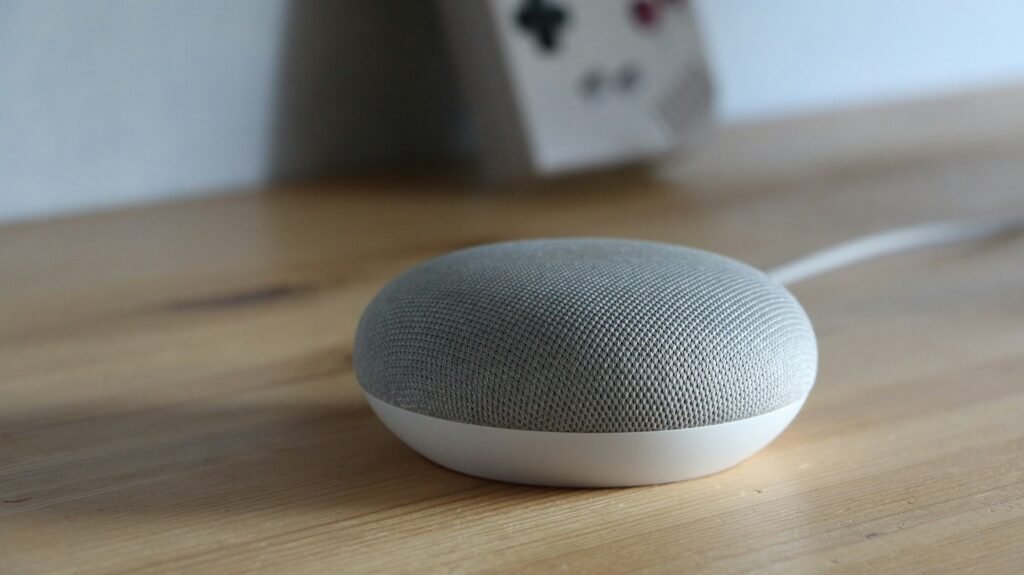
How Much “Better” Are AI Devices at Listening Than Humans?
Technically Accurate, Contextually Clueless
AI voice assistants understand words but not intent.
A parent’s shout of “Stop that!” during a domestic argument can be logged as an unrelated voice command, stored alongside shopping lists and music requests.
The 2025 Cambridge Computer Speech Lab study found that AI assistants misinterpret 24% of unsolicited speech as interactive input — but still transmit it to cloud servers. Humans, by contrast, know instinctively what to ignore.
Data Doesn’t Forget
Humans forget; AI archives.
Even deleted clips may persist in anonymised datasets used to “train” future models. As privacy campaigner Silkie Carlo, director of Big Brother Watch, wrote in 2024:
“Your voice assistant doesn’t forget — it only learns how to remember you better next time.”
In this sense, AI devices are superior at surveillance precisely because they lack discretion. Everything becomes data, not conversation.
Advertisement
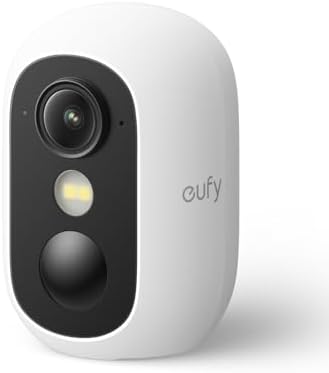
- Effortless security anywhere: Install in seconds – magnetic, hanging, screwed or on a flat surface. Compact, wireless an…
- Always bright colours, even at night: Experience vivid images, even in low light. PureColor Vision gives clear night vis…
- Quick setup with centralized management: Connect and control your devices instantly with HomeBase Mini, your smart secur…
Outlook: Convenience as Camouflage
AI voice systems are sold as aides for modern life, freeing us from screens and schedules. But cynically, that convenience also normalises corporate eavesdropping.
We invite microphones into our kitchens, bedrooms and children’s playrooms — under the illusion of control, when in truth, authority over the collected data lies elsewhere.
The UK Parliament’s Science, Innovation and Technology Committee (2025 report “AI and Accountability”) summarised it bluntly:
“The public exchange for AI convenience is unequal: peoples trade private moments for personalised service, unaware of how permanently this insight is retained.”
Until regulation catches up – or users begin switching off their devices – the line between “AI assistance” and commercial surveillance will remain intentionally blurred.
References (UK‑Focused and Credible)
- BBC Panorama – Amazon Workers Listening to Alexa Recordings (2024)
- UK Information Commissioner’s Office – AI and Data Protection Guidance (2025)
- Ofcom – Smart Home and Connected Devices Market Report (2025)
- University College London – Voice Ecosystems and the Value of Audio Data (2025)
- Imperial College London & Northeastern University – Wake Word Activation Study (2024)
- National Cyber Security Centre – Smart Home Security Guidance (2025)
- Parliamentary Science, Innovation and Technology Committee – AI and Accountability Report (2025)
- The Guardian – ‘Listening Devices’ and Consumer Consent Debate (June 2025)
Summary
| Issue | What Happens | Who Benefits | Legal Status |
|---|---|---|---|
| Always-on microphones | Devices constantly listen for triggers, sometimes recording unintentionally | AI providers gain training data | Grey area under UK GDPR |
| Behavioural profiling | AI analyses tone, topics, background noise | Targeted advertising and product placement | Legal if anonymised |
| User consent | Buried in T&Cs; often uninformed | Protects companies against penalties | Marginal compliance |
| Consumer perception | Mistake convenience for privacy | Tech firms collect massive behavioural insights | Public largely unaware |
| Expert verdict | “Assistance is cover for data accumulation” – Oxford & UCL researchers | Corporates monetise trust | Law lags behind ethics |
In conclusion:
AI voice assistants are indeed better at spying than listening — not because they are malicious, but because their commercial logic demands constant attention, not understanding. Every “Hey Alexa” masks an industry built on knowing your voice, your emotions, and your routines.
They work perfectly — just not necessarily for you.
We have created Professional High Quality Downloadable PDF’s at great prices specifically for Small and Medium UK Businesses. Which include help and advice on understanding what Artificial Intelligence is all about and how it can improve your business. Find them here.