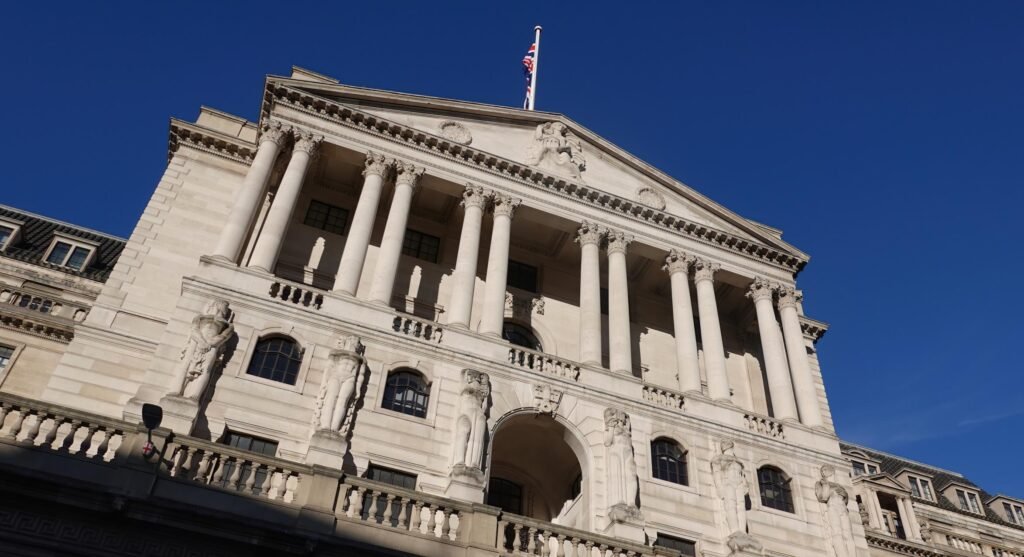
Artificial intelligence is reshaping Britain’s financial sector at speed. From fraud detection to algorithmic trading, AI systems are now embedded across banking, insurance and fintech. But regulators are stepping in just as quickly — wary that efficiency gains could come with systemic risk.
Here’s where the UK financial AI story stands right now.
🏦 1) The Bank of England Scrutinises AI Risk
The Bank of England has hosted industry roundtables examining how AI and machine learning are being deployed across financial services.
Key concerns raised in official summaries include:
- Operational resilience
- Model risk and explainability
- Concentration risk if firms rely on the same AI providers
- Cyber vulnerabilities
🔗 Bank of England summary:
https://www.bankofengland.co.uk/minutes/2026/february/summary-of-ai-roundtables-feb-2026
The Bank has made clear that while AI can improve productivity and fraud detection, systemic financial stability remains paramount.
Real-world impact
Banks using AI for credit scoring or trading will face increasing expectations around:
- Audit trails
- Bias testing
- Governance frameworks
- Human oversight
AI is no longer “experimental” in finance — it is becoming regulated infrastructure.
🛡️ 2) FCA Focus: Governance and Consumer Protection
The Financial Conduct Authority (FCA) has emphasised responsible AI deployment under its Consumer Duty framework.
The regulator has warned firms that AI-driven decisions must:
- Be explainable to customers
- Avoid discriminatory outcomes
- Maintain accountability
🔗 FCA AI discussion paper:
https://www.fca.org.uk/publications/discussion-papers/dp23-4-artificial-intelligence-and-machine-learning
Why this matters
AI in lending could unintentionally embed bias if training data reflects historical inequalities. Under UK law, firms remain liable for outcomes — even when decisions are automated.
💳 3) AI and Fraud Detection: The Quiet Success Story
AI-powered fraud detection systems are now standard across major UK banks. Machine learning models scan millions of transactions in real time, flagging suspicious behaviour within milliseconds.
UK Finance reports that while fraud losses remain high, advanced analytics have prevented billions in potential losses.
🔗 UK Finance fraud report:
https://www.ukfinance.org.uk/policy-and-guidance/reports-publications/fraud-the-facts
Practical benefit
Customers may notice:
- Instant fraud alerts
- Automatic card freezes
- Faster resolution of suspicious transactions
In this domain, AI is widely viewed as a net positive.
📈 4) Algorithmic Trading and Market Volatility

AI-driven algorithmic trading now dominates global markets, including at the London Stock Exchange.
While algorithmic trading is not new, more advanced AI systems are:
- Identifying micro-patterns in market data
- Reacting faster than human traders
- Increasing liquidity
However, regulators remain cautious after past “flash crash” events linked to automated trading systems.
🔗 Reuters coverage on LSE innovation:
https://www.reuters.com/world/uk/london-stock-exchange-launches-first-transaction-under-new-private-share-2026-02-20/
The concern
If many firms rely on similar AI models, market behaviour could become synchronised — increasing systemic fragility during stress events.
🚀 5) UK Fintech and AI Investment

The UK remains Europe’s leading fintech hub. AI-first startups are attracting strong investment despite broader market caution.
Survey data reported by industry outlets suggests that a majority of UK founders expect most new fintech ventures to be AI-driven within five years.
London’s fintech ecosystem continues to combine:
- AI-based lending platforms
- Personal finance automation
- RegTech compliance tools
The economic reality
The UK government sees fintech AI as a competitiveness advantage — but it must balance that ambition against regulatory credibility.
⚖️ The Big Financial AI Trade-Off
| Opportunity | Risk |
|---|---|
| Faster fraud prevention | Algorithmic bias |
| Lower operational costs | Opaque decision-making |
| Improved credit assessment | Data security exposure |
| Market efficiency | Systemic instability |
Finance is different from other sectors: mistakes can cascade rapidly across the system.
🧾 Final Analysis
AI in UK finance is not a futuristic experiment — it is embedded in everyday banking, trading and fraud prevention.
The approach in Britain is measured but firm:
- Encourage innovation
- Maintain global competitiveness
- Protect consumers
- Guard systemic stability
If regulators strike the right balance, AI could strengthen the UK’s position as a global financial centre. Get it wrong, and the consequences could extend far beyond Canary Wharf.
Find Help and Support
We have created Professional High Quality Downloadable PDF’s at great prices specifically for Personal or Business use in the UK. Which include help and advice on understanding what Artificial Intelligence is all about and how it can improve your business. Find them here.