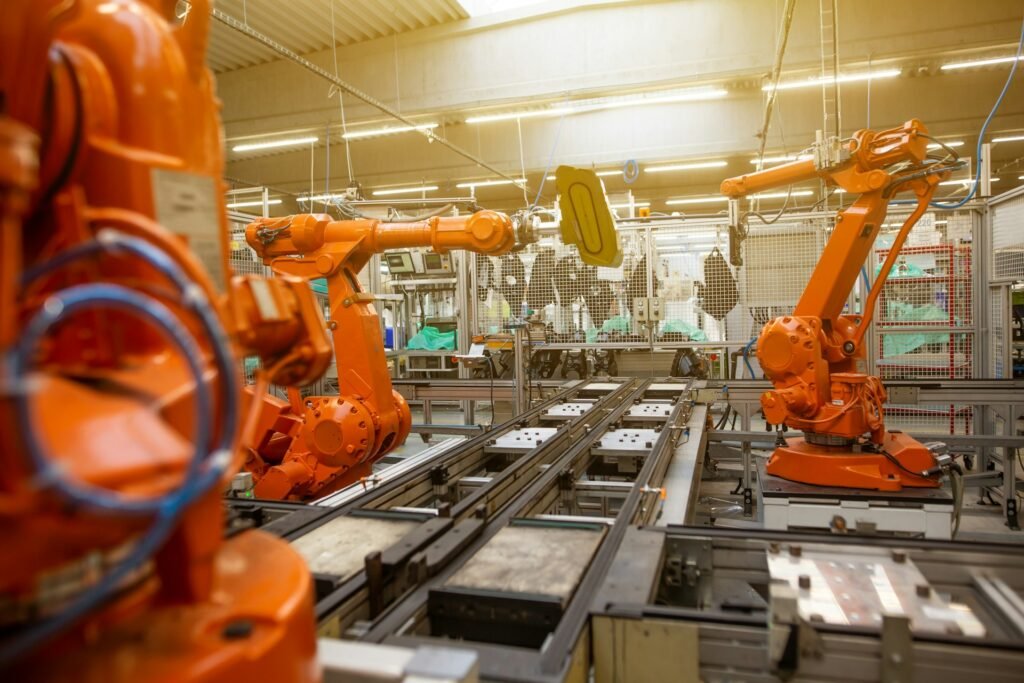
Artificial Intelligence (AI) is transforming not only office-based work but also manual and labour-intensive jobs across the UK. While robots, automation, and “smart systems” have been common in manufacturing for decades, the rapid advancement of AI-powered machinery, logistics software, and service automation is reshaping employment faster than during any previous industrial shift.
Over the next five years, the effects are expected to widen: AI will make some manual work redundant or heavily digitised, while creating new technical and maintenance roles that demand reskilling.
This analysis combines insights from the UK Government’s “AI Skills for Life and Work” (2025)report, the National Foundation for Educational Research (NFER), PwC’s UK Jobs Outlook, and recent data from The Guardian (2026) and McKinsey UK.
The Current Situation
AI and robotics are now common in supply chains, factories, and warehouses.
According to PwC UK’s Future of Work Report, up to 30% of existing UK roles could be significantly automated by the mid‑2030s. Most will be manual, routine, repetitive, or low‑skill occupations.
At the same time, new technical, robotics, data, and maintenance positions are emerging, although not at the same regional scale or accessibility for those losing traditional jobs.
Manufacturing and Engineering
Automation and Machine Learning in Production
Manufacturing remains the most heavily impacted manual sector in the UK. AI combines with robotics and predictive maintenance systems to handle repetitive manufacturing work — welding, assembly, sorting, and quality control.
Real‑World Examples
- Nissan Sunderland Plant: Introduced AI quality-assurance systems in 2025, which cut inspection time by half and replaced certain manual inspection roles.
- Rolls‑Royce: Uses predictive AI to monitor jet engine production lines, requiring fewer human overseers.
Projected Impact
| Metric | 2023–2026 | 2027–2030 (forecast) |
|---|---|---|
| Job reduction | Approx. 30,000 roles (mainly assembly & QA) | Up to 80,000 more jobs replaced or redefined |
| Main reason | Automated robotic arms and vision‑based quality control | Self‑learning systems and real‑time line optimisation |
Why It’s Happening
- Rising energy and labour costs push factories toward automation.
- AI-enabled machines require fewer humans for supervision.
- Government incentives for “Industry 4.0” adoption encourage digital production lines.
Transport, Warehousing, and Logistics
AI Driving Autonomous Operations
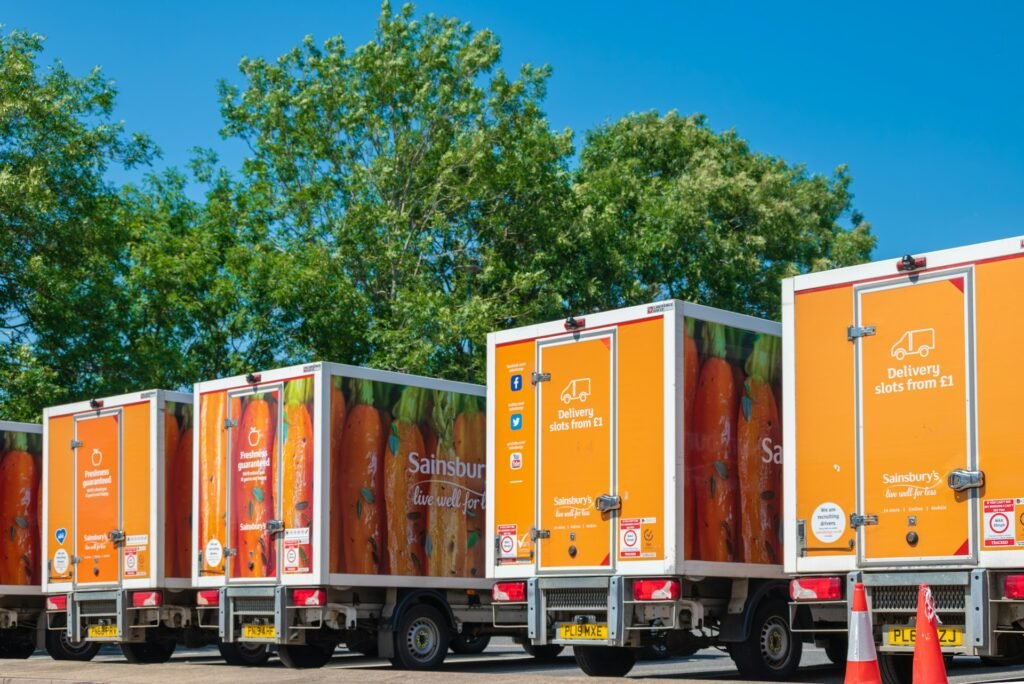
AI scheduling, routing, and robotic systems are rapidly changing how goods move across Britain.
The UK logistics sector currently employs around 1.8 million workers, but automation threatens a large proportion of low‑skill driving and packing jobs.
Real‑World Examples
- Ocado’s Smart Warehouses: Fully automated fulfilment centres in Hatfield and Erith use AI-coordinated robots to pick and pack orders.
- Royal Mail Automation: AI mail-sorting hubs have reduced manual sorting by 70% since 2022.
- DPD and Amazon testing AI-delivery route optimisation and autonomous drones.
Projected Impact
| Role | Estimated Job Loss by 2030 | Main Mechanism |
|---|---|---|
| Warehouse Operatives | 60,000–90,000 | Robotics & machine learning coordination systems |
| Delivery Drivers & Couriers | 40,000–60,000 | Route AI, semi‑autonomous vehicles |
| Transport Administrators | 15,000+ | Predictive logistics software replacing manual planning |
Why It’s Happening
- Cost Efficiency: Robots work 24/7 without fatigue.
- Accuracy: AI reduces error and fuel inefficiency.
- Consumer Demand: The rise of next‑day delivery incentivises full automation networks.
(Source: UK Logistics Association, “Automation and Employment” report, 2025.)
Retail and Hospitality
Self‑Service and Customer‑Facing Automation
Front‑line retail and service jobs are among the most visible casualties of AI deployment.
By 2026, over 68% of large UK retailers use some form of AI, according to The Guardian’s theguardian.com.
Real‑World Shifts
- Tesco GetGo and Sainsbury’s SmartShop stores have eliminated traditional cashiers, replacing them with vision‑recognition checkout systems.
- McDonald’s UK now relies on AI order systems and self‑service kiosks in two‑thirds of outlets.
Predicted Job Loss
| Role | Current UK Jobs (Approx.) | At‑Risk by 2030 | Reason |
|---|---|---|---|
| Cashiers / Checkout Staff | 900,000 | 250,000–300,000 | AI payment and computer vision checkout technology |
| Stock Replenishers | 350,000 | 80,000–100,000 | Smart inventory and shelf-monitoring robots |
| Fast Food & Hospitality Servers | 1.2 million | 250,000 | Automated ordering and kitchen robotics |
Why It’s Happening
- Labour cost pressures and high turnover in retail roles.
- Consumer comfort with self‑service and mobile payment tech.
- AI’s ability to upsell and personalise without extra staff.

Construction and Skilled Trades
Slow but Growing AI Integration
Construction is less affected so far, given the complex, physical, and outdoor nature of much of the work — but integration is increasing.
AI supports safety monitoring, predictive site management, and 3D modelling (BIM) rather than replacing manual labour directly.
Real‑World Usage
- Balfour Beatty uses predictive AI tools for site efficiency and safety.
- AI drones and site monitors assess progress and hazards, reducing labour for surveying roles.
Projected Impact
| Job Type | Predicted Loss | Reason / Replacement |
|---|---|---|
| Site Surveyors, Planning Roles | 10,000 | Drone and image-analysis applications |
| Manual Labourers | Minimal (under 5%) | Real‑world tasks difficult to automate entirely |
| Equipment Operators | 5,000–10,000 | Autonomous machinery in pilot projects |
Why It’s Limited (for now)
- Construction sites are variable and unpredictable.
- AI machinery is costly and requires specialist supervision.
- Skilled manual workers remain essential for physical tasks and problem-solving.
(Source: CITB – AI and Automation in the UK Construction Workforce, 2025)
Agriculture and Food Production
Smart Farming and Automated Harvesting
AI and robotics are quietly transforming agriculture — especially large‑scale farms.
Technologies such as autonomous tractors, drone crop surveys, and yield prediction systems reduce the need for seasonal manual labour, particularly post‑Brexit where shortages have already pressured wages.
Examples
- Harper Adams University “Hands-Free Farm” in Shropshire runs tractors and drones entirely autonomously.
- Food-packaging plants increasingly use AI camera systems for quality grading of produce.
Predicted Impact
| Category | Estimated Job Reduction | Timeframe |
|---|---|---|
| Agricultural Labourers & Pickers | 35,000–50,000 | By 2030 |
| Food Processing Line Staff | 25,000 | By 2030 |
| New AI Technician / Data Analyst Roles | +8,000–10,000 | Creation of monitoring positions |
Key Drivers
- Labour shortages (especially post-EU migration reduction).
- Pressure to cut costs in global food supply chains.
- Advances in robotics that can now handle delicate picking tasks.

Public Sector and Local Services
Cleaning, Waste, and Maintenance Automation
Public-sector manual jobs are increasingly influenced by private-sector automation contracts.
- Street cleaning robots, AI waste sorting, and automated maintenance scheduling are in pilot programmes in London, Bristol, and Leeds.
- Local councils are trialling predictive AI to plan bin collection schedules based on weather and fill sensors.
Projected Impact
| Role | Current Workforce | Predicted Loss by 2030 | Key Cause |
|---|---|---|---|
| Refuse and Recycling Workers | 100,000 | 10,000–15,000 | Sensor‑based bin systems, sorting robotics |
| Cleaners and Janitors | 430,000 | 40,000–65,000 | Cleaning robots for transport hubs and office complexes |
| Maintenance Operatives | 180,000 | 15,000 | Predictive maintenance software |
(Sources: Local Government Association & DSIT, Smart Cities Report, 2025)
Healthcare Support and Care Work
Semi‑Automation and AI Assistance
While hands‑on care cannot be replaced, routine support roles are being augmented by AI.
- AI scheduling in hospitals optimises cleaning and support staff shifts.
- Social care robots, though still niche, are being tested for repetitive physical tasks.
Job Impact Estimate
| Role | Estimated Job Change by 2030 | Context |
|---|---|---|
| Hospital Porters & Clerical Aides | −15,000 to −20,000 | Automation and delivery drones in large hospitals |
| Care Assistants | Limited automation (<5%) | Human empathy and emotional care remain irreplaceable |
| Cleaning & ancillary NHS staff | −10,000 | Smart cleaning systems and AI monitoring |
Total Estimated Manual Job Losses by 2030
| Sector | Baseline Manual Jobs | Projected Net Job Loss | Key Driver |
|---|---|---|---|
| Manufacturing | 2.7 million | −110,000 | Robotics & AI production lines |
| Transport & Logistics | 1.8 million | −120,000 | Automated routing, warehousing |
| Retail & Hospitality | 3.5 million | −300,000 | Self‑service, digital ordering |
| Construction | 2.3 million | −15,000 | Autonomous machinery |
| Agriculture & Food | 430,000 | −75,000 | Smart robotics & seasonal automation |
| Public Services & Cleaning | 710,000 | −60,000 | AI cleaning & predictive maintenance |
| Healthcare Support | 910,000 | −30,000 | Automated scheduling systems |
Total Net Manual Job Losses by 2030: ≈700,000–750,000
(PwC, NFER & DSIT synthesis; adjusted for 2025 economic conditions.)
Why These Jobs Are Vulnerable
- Repetitive Physical Routines: AI and robotics manage predictable tasks efficiently.
- Cost Pressures: Employers adopt automation to handle wage rises, taxation, and labour shortages.
- Post-Brexit Workforce Shortfalls: AI fills manual gaps where recruitment has become difficult.
- Predictive Maintenance: Machines can optimise themselves using sensors, reducing human monitoring.
- 24/7 Operation: AI systems can work continuously without sickness or fatigue.
Balancing the Picture — New Opportunities
While large-scale displacement will occur, new technical jobs are also emerging:
- Robot maintenance engineers and AI fleet supervisors in manufacturing and logistics.
- Data specialists in agriculture and transport analytics.
- AI safety technicians across energy, healthcare, and retail infrastructure.
The Government’s AI Skills for Life and Work report (2025) projects 2.5 million new “AI‑complementary” roles across professional and technical categories by 2035, though many require entirely different skill sets from those being displaced.
Conclusion
AI is not destroying manual work altogether — it is changing its character.
Britain’s manual workforce faces:
- Significant job losses in retail, logistics, and manufacturing, where repetition dominates.
- Slower change in construction and healthcare, where physical or human-centred skills remain essential.
- Growing need for technical reskilling programmes, especially for workers without digital backgrounds.
By 2030, the typical British manual job will likely require more technology interaction — maintaining, programming, or collaborating with machines rather than being replaced outright.
The greatest challenge will not be automation itself, but whether government, employers, and unions reskill workers fast enough to prevent permanent labour displacement.