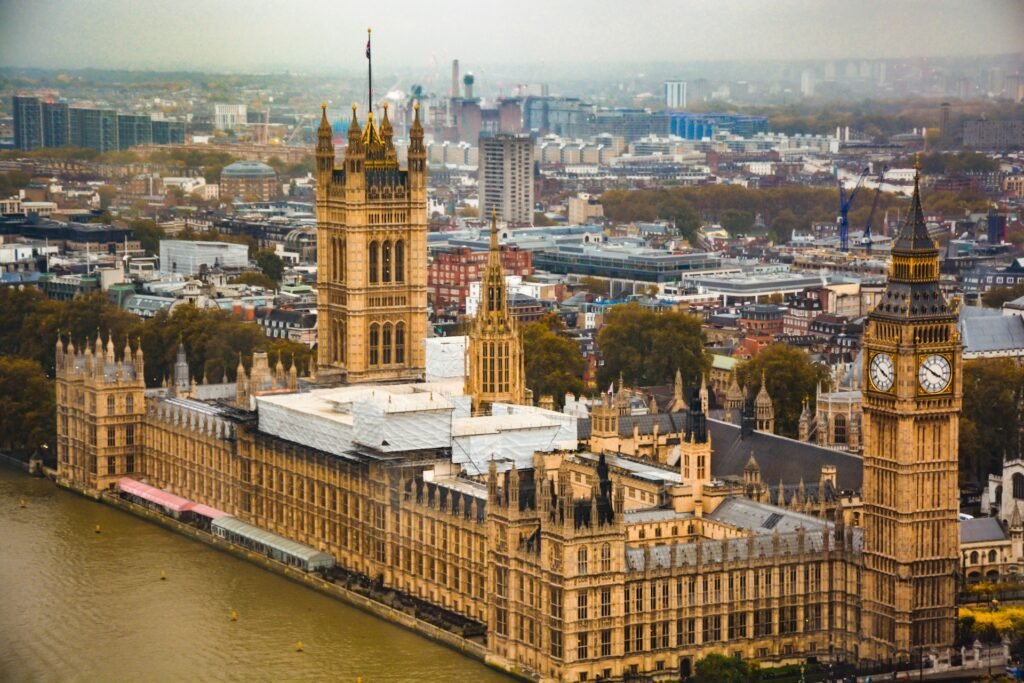
Artificial intelligence developments across England and the wider United Kingdom continue to accelerate, with fresh government investment in foundational research, new funding for autonomous vehicle technologies and growing public debate about the environmental impact of AI infrastructure. Here are the key developments shaping the UK’s AI landscape this morning.
🇬🇧 Top AI Stories from England
🧪 OpenAI Expands London Presence as Global AI Research Hub

Artificial intelligence company OpenAI has confirmed that London will become its largest research hub outside the United States, reinforcing the capital’s growing status as a global AI centre.
The move reflects the UK’s strong academic ecosystem, deep talent pool and access to leading universities such as University College London, University of Oxford and University of Cambridge.
OpenAI researchers in London will focus on improving the safety, reliability and performance of advanced AI models, as well as exploring new real‑world applications.
OpenAI said Britain’s technology ecosystem makes it “an ideal place to invest in and develop cutting‑edge artificial intelligence systems.”
The expansion further strengthens London’s position as one of Europe’s most important AI research and start‑up hubs.
Source:
https://www.reuters.com/world/uk/openai-make-london-its-biggest-research-hub-outside-us-2026-02-26/
⚡ Protests Across England Target AI Data‑Centre Expansion

Environmental groups have staged demonstrations across England over the rapid construction of large‑scale AI data centres, warning that the infrastructure could strain energy grids and local water supplies.
The protests, coordinated by environmental charity Global Action Plan, are part of a growing global backlash against the energy‑intensive computing facilities needed to power modern AI systems.
Campaigners argue that hyperscale data centres could transform local landscapes and increase electricity demand dramatically.
Activists say the expansion of AI infrastructure risks “serious environmental and community impacts” if projects proceed without stronger planning oversight.
The debate highlights the tension between Britain’s ambition to lead in AI innovation and the environmental footprint of large‑scale computing.
🏴 Wider UK AI Developments
🎭 House of Lords Warns AI Copyright Plans Could Harm Creative Industries

A House of Lords committee has warned the UK government not to weaken copyright protections for artists in pursuit of AI innovation.
In a report examining AI and intellectual property, peers argued that proposals allowing AI companies to train models on copyrighted material without permission could damage Britain’s creative economy.
The creative industries currently contribute around £146 billion annually to the UK economy, and lawmakers say the sector must not be undermined by poorly designed AI policy.
Committee chair Baroness Barbara Keeley warned that the UK should not sacrifice established creative industries “for speculative gains from artificial intelligence.”
The committee recommended a licensing framework requiring AI companies to compensate creators whose work is used for training datasets.
🧠 AI Employment Debate Intensifies as Economists Reassess Job Impact

Economists continue to debate the impact of artificial intelligence on employment, with recent analysis suggesting AI adoption may currently be creating new roles rather than eliminating them.
Research cited by economists indicates that companies integrating AI often require new technical staff, data specialists and oversight roles, offsetting some fears of widespread job losses.
Analysts say the technology is “reshaping tasks within jobs rather than removing entire occupations.”
However, experts warn that the longer‑term effects remain uncertain as AI systems become more capable.
Across England and the wider UK, artificial intelligence continues to expand rapidly — from major research investment in London to growing infrastructure demands and emerging regulatory debates. The coming months will likely see increasing focus on balancing technological leadership with environmental sustainability, economic opportunity and the protection of creative industries.