You’ve finally found a technology that might make the NHS faster, cheaper, and slightly less buried under paperwork… and naturally the next question is whether it will spiral into chaos. Sensible.
AI Is Already Inside the NHS (Whether Anyone Feels Ready or Not)
This isn’t hypothetical anymore.
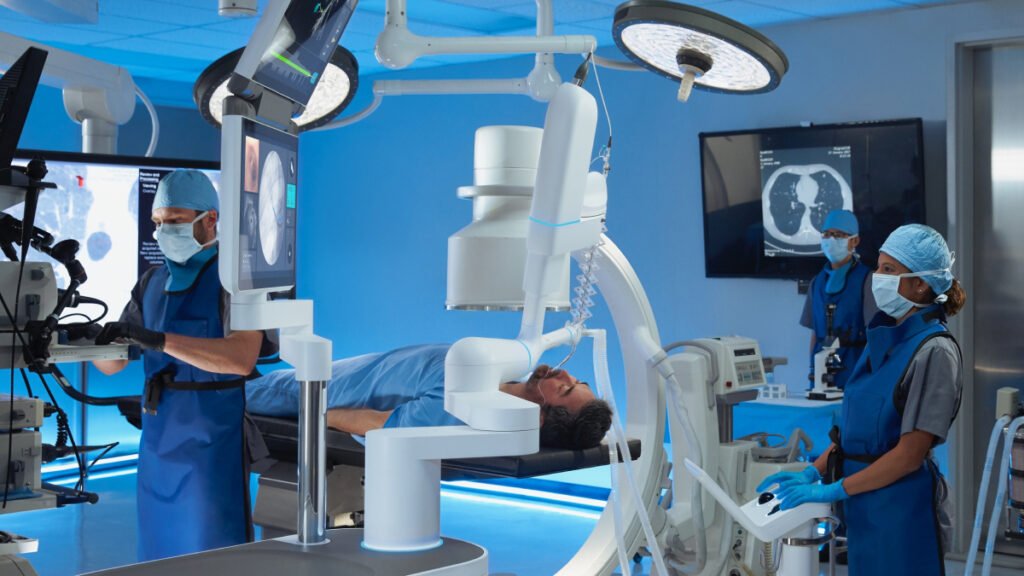
- AI is now used in 100% of stroke units in England to analyse brain scans
- Around 50% of NHS trusts are deploying AI for diagnostics like cancer detection
- Studies suggest diagnostic errors can drop by ~42% with AI support
So yes, the machine is already in the building, quietly doing work that used to take humans longer and sometimes miss things.
Faster Diagnoses: Where AI Actually Delivers
Medical Imaging and Pattern Recognition
AI excels at spotting patterns humans miss when tired, rushed, or overwhelmed.
It’s being used for:
- Stroke detection
- Lung cancer screening
- Breast cancer analysis
These systems act like a second pair of eyes, often catching subtle anomalies across thousands of images.
Triage and Patient Flow
AI triage systems are quietly fixing one of the NHS’s biggest frustrations: waiting.
- GP waiting times reduced by up to 73% in some deployments
- Up to 80–90% of inbound demand can be automated
Meaning fewer people sitting on hold at 8am contemplating life choices.
The Admin Black Hole: AI Is Eating It

Healthcare isn’t just medicine. It’s forms. Endless forms.
AI Scribes and Documentation
Tools now:
- Transcribe consultations
- Draft referral letters
- Summarise patient histories
The NHS is actively rolling out AI “ambient scribes” to reduce documentation burden
Real Impact on Workforce
- AI could save time equivalent to 2,000+ full-time GP roles by 2027
- Clinicians can spend more time with patients instead of keyboards
In theory, anyway. In practice, someone still has to check the AI didn’t hallucinate a diagnosis.
So Why Isn’t Everyone Celebrating?

Because reality has entered the chat.
The NHS Control Problem: Infrastructure vs Ambition
“We Want AI” vs “We Can Actually Run AI”
A survey by the Royal College of Physicians found:
- 70% of doctors support AI adoption
- 68% say the NHS lacks the infrastructure to deploy it properly
That’s not a minor gap. That’s a canyon.
Fragmented Systems
The NHS still struggles with:
- Legacy IT systems
- Poor interoperability
- Data silos across trusts
AI thrives on clean, connected data. The NHS often offers… the opposite.
The Risks No One Can Ignore
Clinical Risk and Accountability
AI can:
- Make errors
- Miss context
- Produce confident but incorrect outputs
Which raises a deeply uncomfortable question:
Who is responsible when AI gets it wrong?
Doctors? Developers? The NHS? A slightly smug algorithm?
Data Privacy and Trust
Patient data is:
- Highly sensitive
- Widely distributed
- Increasingly digitised
The Information Commissioner’s Office (ICO) will have strong opinions if this goes badly.
Public trust matters. And currently:
- Patients are open to AI
- But want human oversight retained
Which is reasonable. Most people don’t want ChatGPT diagnosing their chest pain solo.
Digital Exclusion
Not everyone:
- Has access to digital tools
- Understands AI systems
- Trusts automated healthcare
The NHS risks improving efficiency for some while quietly excluding others.
The Governance Challenge: Keeping Control

The UK government has made its ambition very clear:
The NHS aims to become “the most AI-enabled healthcare system in the world”
Ambitious. Slightly terrifying. Potentially brilliant.
What Control Actually Requires
Strong Regulation
The UK is actively reviewing frameworks for:
- AI medical devices
- Ongoing safety monitoring
- Liability structures
Clinical Oversight (Non-Negotiable)
AI must:
- Support decisions, not replace them
- Be reviewed by qualified clinicians
Even the NHS itself admits human judgement remains essential
Continuous Monitoring
AI systems evolve.
That means:
- Ongoing audits
- Performance tracking
- Bias detection
Otherwise you end up trusting a system that quietly drifted into nonsense months ago.
What Patients Actually Think
People are pragmatic.
- Many already use AI tools for health advice when NHS access is slow
- There’s optimism about faster care
- But concern about accuracy and safety
Translation:
“Helpful, but don’t mess it up.”
Expert Insight
“AI tools can reduce pressures… freeing up staff time.”
— NHS Confederation
“AI will not solve everything… human judgment remains essential.”
— NHS innovation leadership
The Real Question: Can the NHS Keep Control?
Short answer: yes.
Long answer: only if it fixes the boring stuff.
What Must Happen Next
- Upgrade core digital infrastructure
- Standardise data across systems
- Invest in staff training
- Enforce strict governance and safety frameworks
None of this is glamorous. None of it trends on LinkedIn. All of it determines whether AI helps or harms.
Final Thought
AI in UK healthcare is not the problem.
The real risk is trying to bolt cutting-edge intelligence onto a system still arguing with itself about login credentials.
Get the foundations right, and AI becomes transformative.
Get them wrong, and you’ve just automated chaos at scale.
And the NHS has had enough of that already.
Find Help and Support
We have created Professional High Quality Downloadable PDF’s at great prices specifically for Personal or Business use in the UK. Which include help and advice on understanding what Artificial Intelligence is all about and how it can improve your business. Find them here.