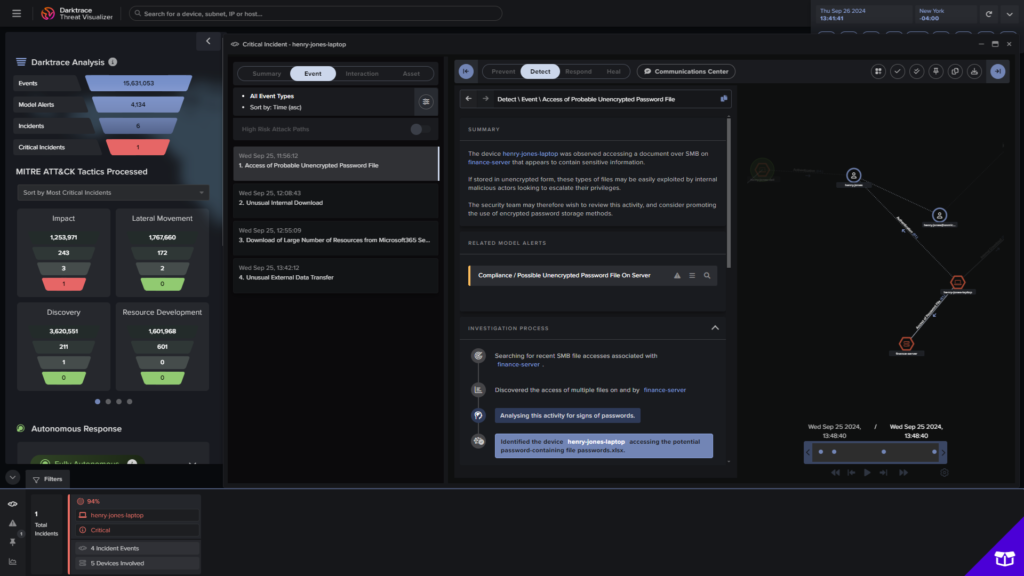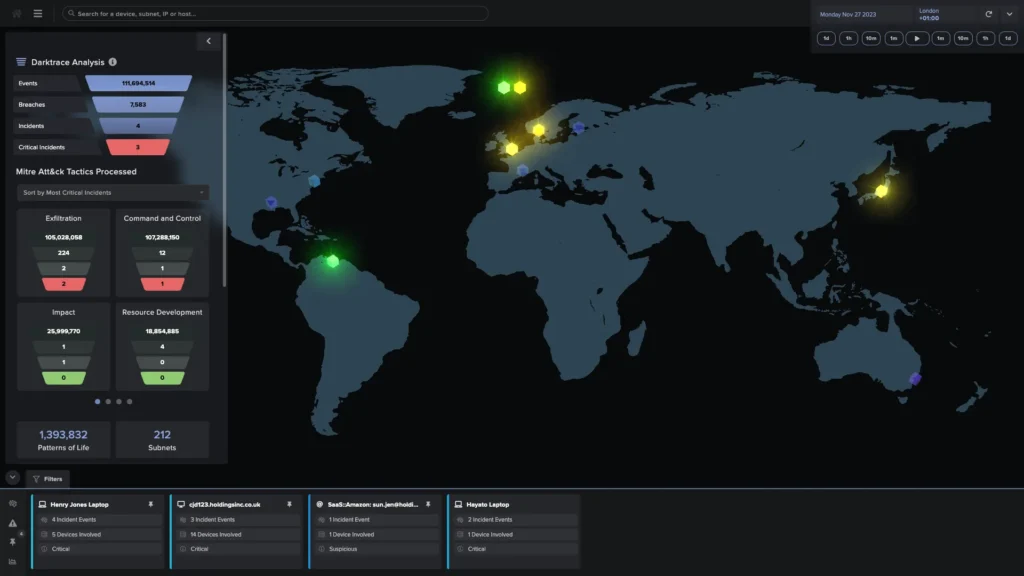
If 2023–24 was the era of MLOps and “getting models into production”, 2025–26 is increasingly about getting AI agents to behave in production — safely, repeatably, and at a cost your finance director won’t hate. That operational discipline is now being branded (sometimes loosely) as AgenticOps.
The short version: AgenticOps is the operating model and toolchain for deploying, monitoring, governing and improving AI agents that can take actions (not just generate text). Think: an agent that can open tickets, query systems, change configs, trigger workflows, message customers, or draft and file internal documents — with guardrails and audit trails.
Cisco, one of the loudest proponents, defines AgenticOps as “a new operating model for IT—one that is agent-first, purpose-built for autonomous action with oversight.”
What is AgenticOps (in plain English)?
It’s DevOps + AIOps + LLMOps, but with “agency”
Traditional ops disciplines assume software does what it’s told. AI agents don’t always. They plan, choose tools, take steps, change their minds, and sometimes confidently do the wrong thing. So AgenticOps adds practices that are less critical (or simpler) in conventional systems.
In the Cisco framing, AgenticOps is about AI agents turning telemetry and automation into “intelligent, end-to-end actions” — not just alerts and recommendations.
Advertisement

- 【23.8-inch All‑in‑One PC with Core i5‑7300】Responsive everyday performance — 16GB RAM + 512GB SSD deliver fast boot, smo…
- 【Modern Connectivity & Fast Networking】Built‑in Wi‑Fi 6 and Bluetooth 5.3 ensure stable wireless connections; full I/O i…
- 【Space‑Saving, Ready‑to‑use All‑in‑One PC】Compact all‑in‑one form factor with included keyboard and mouse makes setup si…
The AgenticOps checklist (what teams actually do)
In real-world programmes, “AgenticOps” typically means putting these building blocks in place:
- Agent lifecycle management: versioning agent prompts/policies/tools; controlled rollouts; rollback plans.
- Observability beyond uptime: logs, traces, metrics — plus why the agent acted, which tools it called, and what it changed.
- Continuous evaluation: testing the agent’s steps, not only its final answer.
- Guardrails & permissions: least-privilege tool access; approval gates for high-risk actions; policy enforcement.
- Cost & performance control: latency budgets, rate limits, token/call spend, and “agent thrash” detection (looping, tool-spam).
- Governance & auditability: “who/what approved this?”, records of agent inputs/outputs, and post-incident reviews.
A key point from the research literature: evaluation for agents “goes beyond… the final output” and should include tracking execution steps and intermediate outputs.
See our informative guide on AI For UK Sales Growth
Why UK organisations are paying attention now
Because governance is shifting from paperwork to runtime controls
UK policy guidance has been steadily pushing organisations toward repeatable governance and risk managementrather than one-off checklists. The UK government’s AI Playbook emphasises using AI “safely, effectively, and responsibly” across the public sector, with expanded coverage of governance structures and managing risk.
DSIT’s recent response on its AI Management Essentials (AIME) work also underlines a practical reality: SMEs and large enterprises need foundational governance measures that can be applied in day-to-day operations, not just in theory.
And in regulated contexts, the UK Information Commissioner’s Office (ICO) internal AI policy is explicit about operational disciplines that look a lot like AgenticOps: logging/inventory, verification & validation, and ongoing performance monitoring (including compliance, fairness, usage and cost-effectiveness).
Because financial services is formalising “gen-AI risk mitigation” as an ops problem
A UK finance-sector resilience group (CMORG), with participation noted from organisations including UK Finance and the City of London Corporation, produced baseline guidance focused on risk mitigation and capability building for GenAI. Even though it’s GenAI-focused, the direction of travel is clear: operational resilience expectations are rising.
So… how effective is AgenticOps?
Where it’s already effective (when teams do it properly)
AgenticOps is most effective when it’s treated as engineering + controls, not a rebrand.
1) Faster incident diagnosis and resolution (in IT ops / SRE contexts)
This is the core promise of vendor-led AgenticOps: reducing tool sprawl and compressing “alert → action” time by letting agents correlate telemetry and execute bounded workflows. Cisco positions this as a move from siloed dashboards to unified workspaces and faster prevention/resolution.
2) Better reliability through step-level evaluation
Agent failures often happen mid-trajectory (wrong tool choice, looping, partial completion). Agent-focused evaluation methods — step-by-step and trajectory evaluation — directly address those failure modes.
3) Stronger auditability and compliance readiness
Observability platforms are increasingly selling “prompt-to-response” lineage and long retention as a compliance asset. Dynatrace, for example, highlights audit trails and compliance support for “agentic workflows”, and features customer testimony about optimising ops workflows.
Advertisement

- BUILT FOR APPLE INTELLIGENCE — Apple Intelligence is the personal intelligence system that helps you write, express your…
- TAKE TOTAL CAMERA CONTROL — Camera Control gives you an easier way to quickly access camera tools, like zoom or depth of…
- GET CLOSER AND FURTHER — The improved Ultra Wide camera with autofocus takes incredibly sharp, detailed macro photos and…
The uncomfortable truth: it’s not a magic fix
AgenticOps improves outcomes only if the underlying agent programme is disciplined. Without that, it can become an expensive dashboard for unpredictable automation.
The biggest limits in 2026 look like this:
- Reliability and control debt: agents can hallucinate, misunderstand intent, or act on stale context; guardrails and evals reduce risk but don’t eliminate it.
- Security and permissions complexity: every tool an agent can call is a potential escalation path — so least privilege, approvals, and strong logging stop being “nice-to-have”.
- Unclear value / pilot purgatory: Thoughtworks cites a Gartner prediction that up to 40% of agentic AI projects may be cancelled by 2027 due to unclear value or poor controls.
- Governance moving to “living compliance”: the trend is toward continuous monitoring expectations, which raises the bar on instrumentation, reporting, and evidence.
A practical verdict
AgenticOps is effective when it delivers three measurable things:
- Fewer production incidents caused by agent behaviour (loops, unsafe actions, tool misuse)
- Faster recovery when agents go wrong (traceable steps, reproducible runs, clear rollback)
- Audit-ready records by default (who approved what, what data was used, what actions were taken)
If your programme can’t measure those, you probably don’t have AgenticOps — you have agents.
What “good AgenticOps” looks like in a UK organisation
Start with the UK-flavoured realities: regulation, procurement, and SMEs
- Risk-by-design: build DPIAs / data protection thinking into the workflow, not as an afterthought.
- Governance that fits the organisation: DSIT’s AIME work highlights that AI management approaches vary by size and role; design controls that SMEs can actually run.
- Operational resilience mindset: for finance and critical services, treat agent failures like any other resilience risk — test, monitor, document, rehearse.
The simplest operating model that works
- Tier 1 agents (low risk): internal drafting, retrieval, summarisation, ticket triage → heavy automation allowed
- Tier 2 agents (medium risk): customer comms drafts, workflow triggers, data updates → approvals and sampling checks
- Tier 3 agents (high risk): financial actions, security changes, sensitive personal data workflows → strict gates, dual control, full audit trails
Advertisement

- Voice Command & APP Control: Experience the future of play with our Robot Dog that responds to voice commands and can be…
- Rechargeable Fun: This Robot Dog Toy is equipped with a rechargeable battery, ensuring endless hours of fun without the …
- Interactive Programming: The Robot Dog Toy allows children to program various actions and behaviors, enhancing creativit…
Expert voices (what practitioners are saying)
- Cisco calls AgenticOps “a fundamentally better way to operate IT at enterprise scale.”
- Thoughtworks CTO Rachel Laycock argues: “Every function has workflows… potential use cases for AI agents in every corner of the c-suite.”
- The ICO’s internal policy is blunt that AI systems should not go live without documented verification/validation and should be monitored for compliance, fairness, usage and cost-effectiveness.
Sources and further reading (top links)
- Cisco: What is agentic operations (AgenticOps)?
- Cisco blog: AgenticOps — Network Operations for the AI Age
- UK Government: Artificial Intelligence Playbook for the UK Government
- UK Government (DSIT): AI Management Essentials (AIME) guidance response
- ICO: Internal AI Use Policy (PDF)
- CMORG: AI Baseline Guidance Review (PDF)
- arXiv: AgentOps — Enabling Observability of LLM Agents
- LSE Business Review: “living” compliance and continuous monitoring
- Thoughtworks UK: The Agentic AI Advantage (report)
Help and Support
We have created Professional High Quality Downloadable PDF’s at great prices specifically for UK Businesses. Which include various helpful documents and real world scenarios your business might experience, showing what to do and how to protect your business. Find them here.