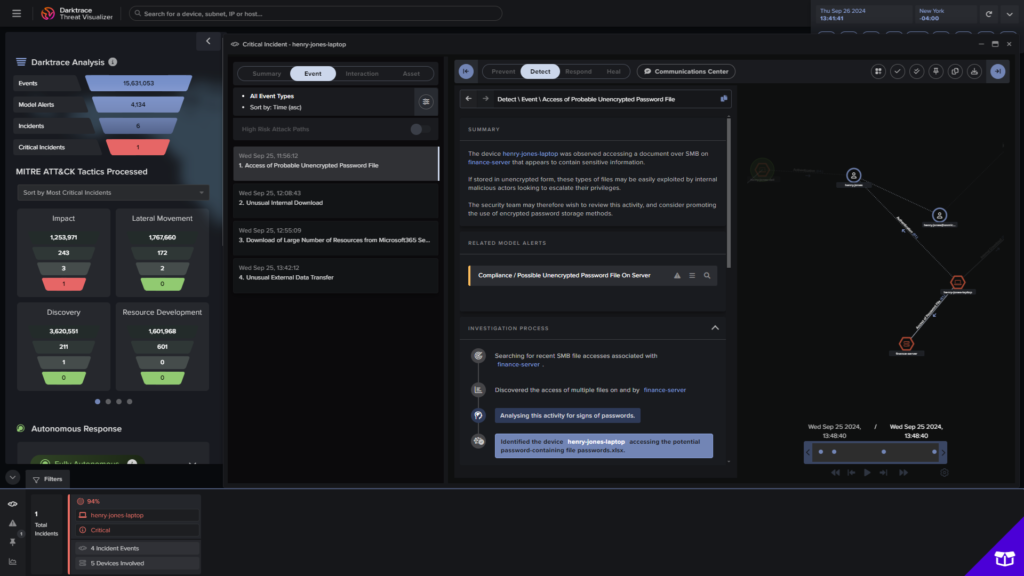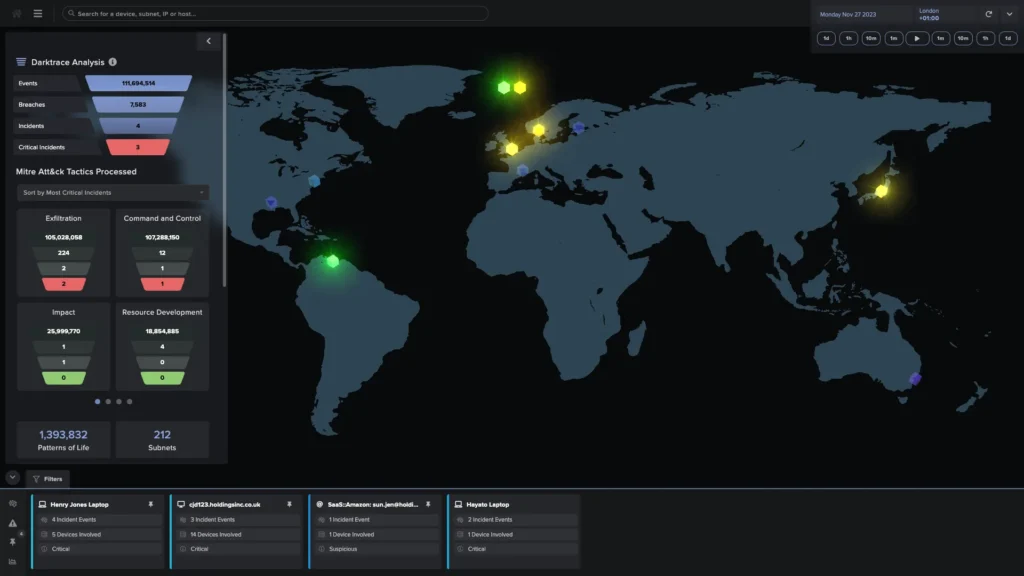
Artificial intelligence is transforming Britain’s cyber security landscape. It is strengthening threat detection, automating defence systems and helping analysts respond faster than ever before. But it is also empowering cyber criminals with more convincing phishing, automated malware and scalable attacks.
Here’s where the UK stands right now.
🛡️ 1) The National Cyber Security Centre Warns of AI-Enabled Threats
The National Cyber Security Centre (NCSC), part of GCHQ, has repeatedly warned that AI will lower the barrier to entry for cyber criminals.
In its recent assessments, the NCSC highlighted that generative AI tools are:
- Making phishing emails more convincing
- Assisting with malware code generation
- Supporting reconnaissance against organisations
🔗 NCSC annual review:
https://www.ncsc.gov.uk/annual-review
The centre stresses that AI does not create entirely new forms of cyber attack — but it makes existing methods faster, cheaper and more scalable.
Real-world impact
UK businesses — especially SMEs — face a higher volume of polished phishing attempts. The human element remains the weakest link.
🤖 2) AI as Defender: Automated Threat Detection

At the same time, AI is being deployed across UK organisations to:
- Detect anomalies in network behaviour
- Identify zero-day vulnerabilities
- Automate response to ransomware
Major banks and telecom providers now use machine learning models to monitor billions of data points daily.
The Information Commissioner’s Office (ICO) notes that organisations deploying AI must still comply with UK GDPR and ensure transparency in automated processing.
🔗 ICO AI guidance:
https://ico.org.uk/for-organisations/uk-gdpr-guidance-and-resources/artificial-intelligence/
The reality
AI in cyber defence is not optional for large enterprises anymore — it is infrastructure. Manual monitoring simply cannot keep pace with threat volume.
🎣 3) Deepfake and AI-Driven Social Engineering

AI-generated voice cloning and deepfake technology are now being used in targeted fraud attempts.
UK Finance has warned that authorised push payment (APP) fraud is evolving, with criminals using increasingly sophisticated impersonation techniques.
🔗 UK Finance fraud report:
https://www.ukfinance.org.uk/policy-and-guidance/reports-publications/fraud-the-facts
Practical concern
A convincing AI-generated voice of a company director could trick finance teams into transferring funds. Verification processes must adapt accordingly.
See our PDF download: AI Assisted Cyber Tools To Strengthen Security For Your Business
🏢 4) Government and Regulatory Response
The UK government is strengthening regulatory frameworks across:
- Online safety
- Critical infrastructure protection
- Financial resilience
The Bank of England has also raised concerns about AI-related cyber vulnerabilities in financial markets.
🔗 Bank of England AI roundtable summary:
https://www.bankofengland.co.uk/minutes/2026/february/summary-of-ai-roundtables-feb-2026
Meanwhile, the Online Safety framework aims to address AI-generated harmful content risks.
🔗 Government policy update:
https://www.gov.uk/government/publications/online-safety-act-explainer
⚖️ The Dual-Use Problem
| AI in Defence | AI in Offence |
|---|---|
| Faster malware detection | Automated phishing campaigns |
| Real-time anomaly monitoring | Deepfake impersonation |
| Predictive vulnerability scanning | AI-assisted hacking tools |
| Reduced analyst workload | Lower skill barrier for criminals |
Cyber security is now an AI arms race.
🧠 The Bigger Picture
Britain’s cyber security ecosystem is robust — anchored by the NCSC and strengthened by private-sector innovation. But AI is compressing the timeline between vulnerability discovery and exploitation.
Advertisement

- 【23.8-inch All‑in‑One PC with Core i5‑7300】Responsive everyday performance — 16GB RAM + 512GB SSD deliver fast boot, smo…
- 【Modern Connectivity & Fast Networking】Built‑in Wi‑Fi 6 and Bluetooth 5.3 ensure stable wireless connections; full I/O i…
- 【Space‑Saving, Ready‑to‑use All‑in‑One PC】Compact all‑in‑one form factor with included keyboard and mouse makes setup si…
For UK organisations, the new baseline includes:
- Multi-factor authentication
- Zero-trust architecture
- AI-assisted monitoring
- Continuous staff awareness training
🧾 Final Assessment
AI is not simply a threat multiplier — it is also the UK’s strongest defensive tool in cyber security.
The challenge ahead is asymmetry:
- Attackers need one success
- Defenders must stop everything
Britain’s advantage lies in regulatory clarity, strong intelligence capability and growing private-sector expertise. But complacency would be costly.
Help and Support
We have created Professional High Quality Downloadable PDF’s at great prices specifically for UK Businesses. Which include various helpful documents and real world scenarios your business might experience, showing what to do and how to protect your business. Find them here.